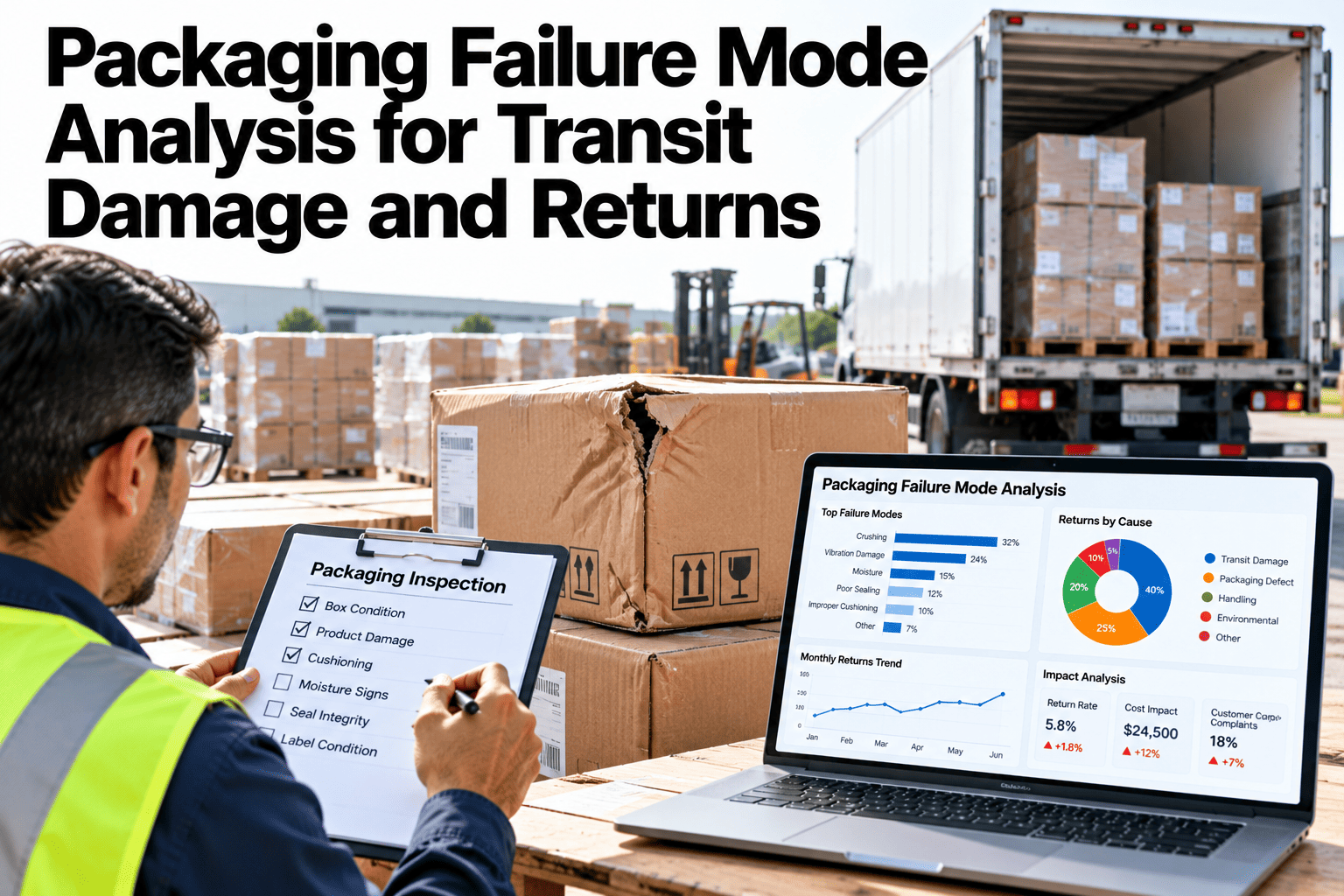
A return labeled "damaged in transit" tells a packaging team almost nothing useful on its own, since a crushed corner, a puncture, a moisture-soaked liner, and a vibration-loosened seal are four completely different failure modes that each point to a different fix, and lumping them all into one damage category is exactly how a packaging team ends up redesigning the wrong thing. Failure mode analysis only becomes actionable once damage is classified by type, scored by severity and occurrence, and traced back to the specific transport stage where it most likely happened. Classify your own transit damage returns by failure mode.
Stop Treating Every Return as the Same Damage
iFactory AI classifies transit damage by failure mode, scores severity and occurrence, and traces each failure back to the transport stage where it likely happened.
Four Failure Modes, Four Different Fixes
A packaging engineer handed a pile of returns marked simply "damaged" has to reconstruct the actual failure mode from scratch for every single case, and without that classification step a redesign effort tends to address whichever failure mode is most visible rather than the one actually driving the highest return volume.
Crush Damage
Compressive force exceeding the packaging's structural capacity, often from stacking.
Puncture Damage
A sharp or protruding element breaching the packaging during handling or transit.
Vibration Damage
Sustained movement loosening seals, fasteners, or internal product positioning.
Moisture Damage
Exposure to humidity or liquid compromising the packaging or product inside.
Classify Your Own Return Damage
Book a 30-minute session and see transit damage returns classified by failure mode using your own return data.
Severity and Occurrence, Scored Separately
A failure mode's priority depends on both how bad it is when it happens and how often it actually happens, and conflating the two leads a team to overreact to rare but dramatic failures while underreacting to common but modest ones.
| Failure Mode | Severity | Occurrence | Priority |
|---|---|---|---|
| Crush damage | High, often total loss | Moderate | High |
| Puncture damage | High, often total loss | Low | Moderate |
| Vibration damage | Low to moderate | High | High |
| Moisture damage | Moderate to high | Low | Moderate |
Tracing Damage to a Transport Stage
A failure mode narrows the problem; identifying the transport stage where it most likely occurred narrows it further still.
From Evidence to Corrective Action
Photos, return notes, and transit data together build the evidence base a corrective action is actually built on.
Rolling Out Failure Mode Analysis
iFactory AI connects to your existing returns and quality data, building failure mode classification from the information already captured on each return.
Expert Review
Vibration damage is the failure mode most packaging teams underweight in their corrective action priorities, since it rarely produces a dramatic-looking return photo, but its high occurrence rate often means it is quietly responsible for more total return volume than the more visually obvious failure modes getting most of the attention.
Frequently Asked Questions
Does this require photos on every return?
Photos improve classification accuracy where available, but the system also works from return notes and transit data alone when photos are not captured. Support can confirm what evidence your current process captures.
Can the failure mode taxonomy be customized to our products?
Yes, the taxonomy is calibrated to your specific product and packaging types rather than using a generic damage category list that may not fit your actual failure patterns.
How confident can we be in the transport stage attribution?
Confidence depends on how much transit visibility data is available for a given shipment; stronger tracking data produces a more confident stage attribution. See stage attribution confidence on a call.
Can this prioritize corrective actions automatically?
The severity and occurrence scoring surfaces a priority ranking, though the final corrective action decision remains with your packaging engineering team.
Does this integrate with our existing returns management system?
Yes, it connects to your existing returns data rather than requiring a separate logging process for damage classification. Ask support about your specific returns system.
Fix the Failure Mode That's Actually Costing You
iFactory AI classifies transit damage by failure mode and traces it to the right transport stage. Book a demo on your own returns data.