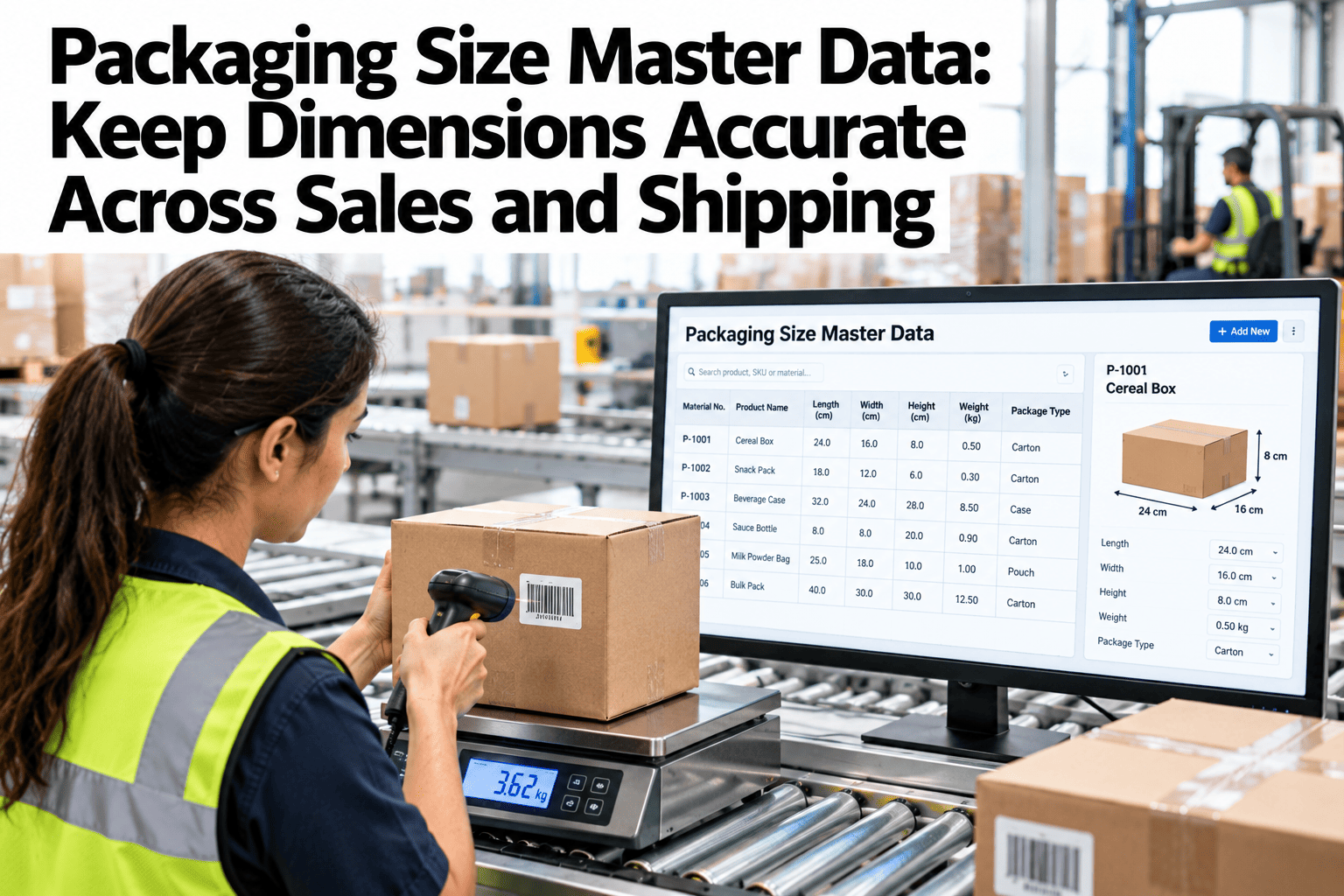
A product's carton dimensions get measured once, usually during initial packaging design, and then referenced by every downstream system for years afterward: the sales catalog, the shipping rate calculator, the warehouse slotting plan, the carrier invoice reconciliation. The trouble is packaging changes more often than that single measurement gets updated, and once sales data, shipping data, and the actual physical carton drift apart, every calculation built on top of the dimension record becomes quietly wrong. Keeping that single source of truth accurate is what a working packaging master data process looks like across sales and shipping.
One Carton Measurement, Feeding Every System That Needs It
iFactory AI keeps SKU-to-carton dimension records current and consistent across sales, shipping, and warehouse systems, with a clear owner for every change.
Why Dimension Data Drifts Out of Sync
No single system is usually "wrong." Each one is working from whatever dimension record it was given at a different point in time, which is exactly how drift happens without anyone making an obvious mistake.
Packaging Changes, the Record Doesn't
A carton redesign on the production floor doesn't automatically trigger an update to the dimension figure sitting in a sales catalog or shipping rate table.
No Single Owner for the Record
When packaging, sales, and logistics teams each keep their own copy of a dimension figure, there's no one responsible for reconciling them when they disagree.
Estimates Get Treated as Final Values
A rough estimate entered early in product development, meant to be refined later, often never gets replaced with an actual measured figure.
Who Should Own What in the Dimension Record
Clear ownership doesn't mean one person does everything, it means every field in the record has exactly one team responsible for keeping it current.
| Data Element | Typical Owner | Trigger for Update |
|---|---|---|
| Physical dimensions | Packaging engineering | Any carton or packaging design change |
| Weight | Packaging engineering or operations | Material or product formulation change |
| Sales catalog listing | Product or catalog management | New SKU launch or dimension update received |
| Shipping rate configuration | Logistics or supply chain | Confirmed dimension update from packaging |
Without a defined trigger for each update, a dimension change can sit correctly in packaging engineering's own files for months before it ever reaches the shipping system that actually quotes rates against it.
Find Where Your Dimension Data Has Drifted
Bring a sample of SKUs to a 30-minute session and compare the dimension figures currently on file across your sales and shipping systems.
A Measurement Process That Actually Stays Current
A one-time measurement process eventually drifts. A process with a defined trigger for remeasurement stays accurate as packaging evolves.
Version Control and Exception Handling
A master record is only trustworthy if changes to it are tracked and disagreements between systems get flagged rather than silently ignored.
An Illustrative Comparison: Dimension Accuracy Over Time
The figures below are a labeled illustrative composite, not a reported customer result, showing how dimension record accuracy can trend with and without a defined ownership and update trigger process.
Dimension data problems are rarely caused by anyone being careless, they're caused by nobody being specifically responsible. The fix isn't a one-time cleanup project, it's assigning a clear owner to each data element and defining exactly what event should trigger a remeasurement, so the record stays current as packaging naturally evolves rather than requiring a periodic manual audit to catch up.
Frequently Asked Questions
How do we find out how out of date our current dimension data actually is?
Comparing a sample of your highest-volume SKUs' recorded dimensions against a fresh physical remeasurement is the fastest way to gauge how significant the drift actually is before committing to a full data cleanup effort. Run a sample comparison on your top SKUs in a short session.
Who should own the master dimension record if multiple teams currently keep their own copy?
Packaging engineering is usually best positioned to own the physical measurement itself, since they're closest to any design change, while downstream teams should pull from that single record rather than maintaining independent copies that can drift apart. Ask the iFactory AI team how to structure ownership for your organization.
What triggers should require a remeasurement, specifically?
Any physical change to packaging material, carton construction, or product formulation that could affect exterior dimensions or weight is a reasonable trigger, along with a periodic check on high-volume SKUs even without a known change, since not every packaging adjustment gets formally logged. Define remeasurement triggers for your catalog in a demo.
Can this integrate with our existing PIM or ERP system?
A master dimension record is built to feed the product information management or ERP system you already use, rather than operating as a disconnected spreadsheet that still needs to be manually synced to every downstream system. Discuss integration with your current PIM or ERP on a call.
How does accurate dimension data connect to our dimensional weight audit work?
A dimensional weight audit is only as reliable as the baseline dimension figures it compares against, so clean master data is a direct prerequisite for that audit actually finding real packaging improvement candidates rather than chasing data errors. Connect your master data cleanup to your audit process with the support team.
Give Every System the Same Trustworthy Dimension Record
iFactory AI keeps packaging dimension data owned, current, and consistent across sales and shipping. Book a walkthrough built around your own SKU catalog.