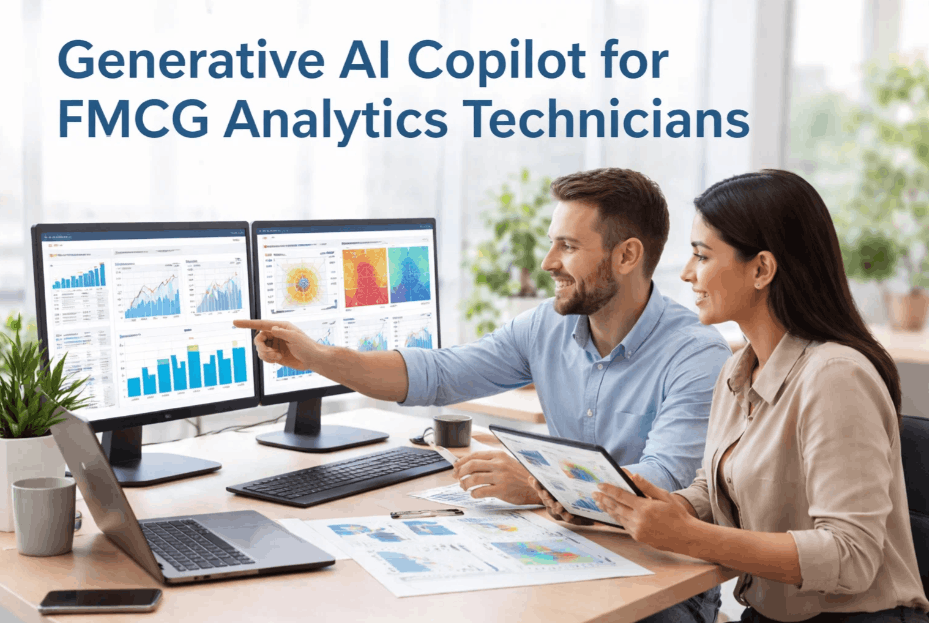
The plant manager at a 500-employee FMCG facility in the Great Lakes region reviews the quarterly workforce planning report and confronts a projection that has kept the leadership team awake for six consecutive quarters the plant's analytics-skilled workforce will decline by 38 percent over the next 24 months as senior process technicians reach retirement eligibility, trained operators exit for higher-paying positions in logistics and distribution, and the local technical college graduate pipeline produces three qualified candidates for every twelve open positions across the regional food manufacturing corridor. The plant currently relies on a workforce of 47 production operators, quality technicians, and maintenance mechanics who are proficient in using the plant's analytics platform to monitor OEE trends, interpret SPC charts, analyze downtime root causes, and generate shift performance reports. Within two years, the plant projects that only 29 of those analytics-proficient employees will remain and the plant's production capacity depends on data-driven decision-making across every line and every shift. The plant cannot hire its way out of this gap. The local labor market for analytics-skilled manufacturing technicians has a negative unemployment rate more open positions than available candidates across the region's FMCG, automotive, and logistics employers. The plant's only viable path to maintaining analytics-driven production management is to reduce the analytics skill level required for each role embedding AI-assisted diagnostics, automated data interpretation, guided decision-support workflows, and self-correcting quality systems into the analytics platform so that a production operator with foundational training can perform analytics tasks that previously required a Six Sigma Green Belt or a certified quality technician. iFactory's AI-powered Analytics and Automation modules give FMCG plant leadership the digital infrastructure to close the analytics skills gap through intelligent automation — reducing the skill level required for each analytics workflow while increasing the consistency, speed, and accuracy of data-driven decision-making across every shift. Book a Demo to see iFactory's skills-gap automation platform configured for your FMCG plant's workforce and production analytics needs.
From Workforce Shortage to Intelligent Automation Closing the FMCG Analytics Skills Gap with AI-Assisted Workflows
Every FMCG plant faces the same structural challenge — the demand for analytics-proficient workers grows every year, while the supply of qualified candidates declines. iFactory's AI-powered automation platform closes the gap by embedding expert-level analytics capability into every role through AI-assisted diagnostics, guided decision-support, and self-correcting quality systems.
Why the FMCG Analytics Skills Gap Is Structural and Why Training Alone Cannot Solve It
The analytics skills gap in FMCG manufacturing is not a temporary labor market cycle. It is a structural mismatch between the analytics capability required to operate a modern consumer goods plant and the analytics skill level available in the manufacturing workforce. The five dimensions below represent the structural forces driving the FMCG analytics skills gap — and the specific gaps that iFactory's AI-powered automation platform addresses through embedded intelligence rather than additional training.
Demographic cliff — mass retirement of experienced analytics-proficient manufacturing technicians
The FMCG manufacturing workforce has a median age of 47 years, with 35-40 percent of experienced production technicians, quality professionals, and maintenance mechanics eligible for retirement within the next five years. These departing employees carry decades of analytics experience — the ability to read an OEE trend and immediately identify the root cause, to interpret an SPC chart without referencing the control limit formula, to correlate a quality deviation with a specific process parameter shift. That knowledge cannot be replaced by a three-day training course. It must be embedded into the analytics platform itself through AI that replicates the diagnostic reasoning of an experienced technician.
Training pipeline gap — insufficient qualified candidates from post-secondary manufacturing programs
Community college and technical school manufacturing programs in the US produce approximately 8,000 graduates per year with analytics-related manufacturing skills. FMCG employers alone need an estimated 22,000 to 28,000 such candidates per year to fill open positions across food, beverage, and personal-care manufacturing. The gap of 14,000 to 20,000 unfilled positions per year drives chronic understaffing of analytics-capable roles and forces plants to assign analytics tasks to employees who have not been trained for them.
Wage competition from logistics, distribution, and technology sectors
FMCG manufacturing plants compete for analytics-skilled workers against warehousing and distribution centers, technology companies, and logistics providers. A qualified process technician with SPC and data visualization skills can earn $62,000-78,000 in an FMCG plant or $68,000-85,000 in a distribution center with comparable benefits and less regulatory pressure — creating a persistent wage-driven outflow of analytics talent from food manufacturing.
Complexity escalation modern FMCG production systems require more analytics skill than ever
As FMCG plants install integrated production lines with real-time quality monitoring, predictive maintenance sensors, automated packaging systems, and food safety data collection networks, the analytics skill level required to operate these systems increases every year. An operator who could manage a single filling line with a paper logbook in 2015 now needs to interpret live OEE dashboards, SPC charts, and energy consumption trends across three lines simultaneously. The skill level required has escalated faster than the workforce's skill level has risen.
Training time-to-competency the six-month proficiency gap that every new hire faces
A new production operator with basic manufacturing experience requires 4 to 6 months of on-the-job learning before they reach proficiency in reading and acting on the plant's analytics dashboards. A new quality technician requires 6 to 9 months before they can independently manage SPC chart analysis. In a plant with 25-35 percent annual turnover, the plant operates with 10-15 percent of its analytics-capable workforce in the learning phase at any given time — reducing the effective analytics capacity by 15-25 percent year-round.
Five AI-Powered Automation Capabilities That Close the Analytics Skills Gap in FMCG Plants
The following five automation capabilities represent the highest-impact applications of AI-assisted analytics for closing the skills gap at FMCG plants. Each capability reduces the skill level required for each workflow, accelerates time-to-competency for new hires, and embeds the diagnostic knowledge of experienced technicians into the analytics platform itself. Each capability is delivered through the iFactory AI platform running on the plant's NVIDIA appliance.
AI-Assisted OEE Diagnostics — Automated Root Cause Identification from Production Data
iFactory's AI engine continuously analyzes OEE data across every production line and shift — comparing current performance against historical patterns, identifying the specific loss category driving the OEE gap, and presenting the root cause analysis to the operator in plain language. The operator does not need to know how to perform a Pareto analysis, build a loss tree, or calculate OEE loss components. The AI identifies that Line 3's OEE dropped from 82 percent to 74 percent because the morning shift experienced three extended micro-stoppages on the case packer driven by a recurring film splice failure correlating with film reel lot number R-4826-03. The operator receives the diagnosis, the probable cause, and the recommended action.
Automated SPC Chart Interpretation with Plain-Language Alerts and Corrective Action Guidance
iFactory monitors every SPC chart across all quality parameters and applies Western Electric Rules and Nelson Rules to identify out-of-control conditions, trends, runs, and cycles. When the AI detects a developing pattern — a fill weight trend approaching the upper control limit on a specific valve head over the past 18 production runs — it generates a plain-language alert describing the condition, the probable cause based on correlation with upstream process parameters, and the recommended corrective action. A quality technician who has not yet learned SPC rule interpretation can respond before the trend produces out-of-spec product.
Guided Decision-Support Workflows for Shift Handover and Production Response
iFactory's guided workflow engine presents the operator with a structured decision-support sequence at critical decision points during the shift — at shift start, the AI presents the current line status, the top three OEE loss drivers from the previous shift, and the recommended actions based on the current production schedule. When a quality deviation or equipment alarm occurs, the AI presents a guided response sequence: verify the alarm parameter value, check the trend over the past 15 minutes, and review the recommended corrective action based on similar events in the plant's history.
Predictive Maintenance Automation — AI-Driven Equipment Health Assessments Without Specialist Training
iFactory's predictive maintenance AI analyzes vibration, temperature, current draw, and cycle time data and presents equipment health status in plain language. The maintenance mechanic receives the diagnosis and the recommended action without needing the vibration analysis training required to reach that conclusion from raw sensor data.
Automated Food Safety Analytics — Self-Monitoring Critical Limits with Escalation Logic
iFactory's food safety automation module continuously monitors every HACCP critical limit and applies a multi-tier escalation logic based on deviation severity and trend direction. When a metal detector rejection rate increases from 0.02 percent to 0.08 percent over four production hours but remains below the 0.10 percent critical limit, the AI generates a caution-level notification with the trend chart and a recommendation to inspect the metal detector head. The quality technician does not need to know the trend analysis methodology — the AI provides the analysis and the recommended action.
Skills-Gap Closure Impact by Workforce Role — How AI Reduces the Analytics Skill Level Required
The table below presents the measurable impact of iFactory's AI-powered automation on the analytics skill level required for each FMCG production role, based on deployment data from iFactory-managed food and beverage plants.
| Workforce Role | Pre-Automation Required Analytics Skills | Post-Automation Required Analytics Skills | Skill Level Reduction | Primary Automation Capability | Time to Competency |
|---|---|---|---|---|---|
| Production Operator | Read OEE dashboard; interpret trend charts; enter downtime codes; recognize SPC violations | Navigate AI-generated diagnostics; review plain-language analysis; confirm recommended actions | 65-75% | AI-assisted OEE diagnostics; guided decision-support workflows | 2-3 wk (from 4-6 mo) |
| Quality Technician | Build and interpret SPC charts; apply Western Electric Rules; correlate quality data with process parameters | Review AI-generated SPC alerts; verify automated root cause analysis; execute recommended corrective actions | 55-65% | Automated SPC interpretation; plain-language alerting with corrective action guidance | 3-4 wk (from 6-9 mo) |
| Maintenance Mechanic | Interpret vibration spectra; analyze MTBF/MTTR trends; correlate sensor data with failure modes | Review AI-generated equipment health assessments; execute recommended repair actions | 60-70% | AI-driven predictive maintenance diagnostics; plain-language recommendations | 2-4 wk (from 6-8 mo) |
| Shift Supervisor | Synthesize OEE, quality, and food safety data across lines; identify improvement opportunities; coach team on analytics | Review AI-generated shift performance summary; allocate resources based on AI-identified priorities | 50-60% | AI-generated summaries; guided decision-support for resource allocation | 3-4 wk (from 4-6 mo) |
| Food Safety Coordinator | Analyze environmental monitoring trends; correlate food safety data with production conditions | Review AI-generated trend analysis; verify automated escalation for critical limit deviations | 45-55% | Automated food safety monitoring; AI-prepared compliance summaries | 3-5 wk (from 4-6 mo) |
Skills-Gap Automation Applications Across FMCG Production Functions
AI-powered analytics automation can close the skills gap in every production function of an FMCG plant. The applications below describe how iFactory configures skills-gap automation for each functional area using existing data infrastructure.
Automated Incoming Material Quality Assessment and Supplier Performance Analytics
iFactory's AI analyzes incoming raw material inspection data — comparing each shipment's quality parameters against the supplier's historical performance, the ingredient specification, and the production usage requirements for the current schedule. When a material deviates from the expected quality profile, the AI generates a receiving decision recommendation. A receiving operator with basic platform navigation skills can make data-driven decisions previously requiring a quality technician with supplier analytics training.
AI-Guided Process Parameter Optimization for CIP and Cooking Operations
iFactory's AI analyzes CIP cycle effectiveness data and generates plain-language recommendations for parameter adjustments when cleaning effectiveness trends indicate developing issues. The CIP technician receives the recommendation with supporting data visualization: Increase caustic concentration on the afternoon CIP cycle from 1.8 percent to 2.2 percent to address the rising rinse water conductivity trend observed over the past five cleaning cycles.
Automated Fill Weight and Seal Integrity SPC with Guided Response Actions
iFactory's AI monitors every fill head's weight data and every seal station's integrity test results in real time — applying automated SPC analysis that identifies developing issues before they produce out-of-spec product. When the AI detects a fill weight trend on valve head 7 approaching the upper control limit, it generates a plain-language alert with the trend chart, probable cause, and corrective action sequence.
Skills-Gap Automation Readiness — What Your FMCG Plant Needs for Deployment
Implementing AI-powered analytics automation requires preparation across five areas. The checklist below covers the essential elements that iFactory's implementation team reviews during skills-gap automation deployment.
iFactory AI platform deployment on existing IT infrastructure or NVIDIA appliance
iFactory deploys on existing server infrastructure, on-premise NVIDIA appliance, or cloud-based secure instance — connecting to production data sources through standard OPC-UA, Modbus TCP, and REST API protocols without modifying existing control systems.
Historical data baseline for AI model training and pattern recognition calibration
iFactory ingests 12 to 24 months of historical production, quality, maintenance, and food safety data to train AI models for automated diagnostics, SPC interpretation, and predictive maintenance analysis.
Automation threshold configuration for each analytics workflow and escalation level
iFactory configures the automation thresholds — the OEE loss threshold for AI-generated root cause analysis, the SPC pattern sensitivity for automated violation alerts, the predictive maintenance confidence threshold, and the food safety escalation logic.
Role-based dashboard configuration with AI-assisted views for each workforce segment
iFactory configures dashboard views optimized for each role's decision frequency and information needs. Operator dashboards emphasize current line status and active alerts. Supervisor dashboards emphasize cross-line comparison. Quality dashboards emphasize SPC violation alerts and corrective action tracking.
Team onboarding and transition support for the first 30 days of AI-assisted operation
iFactory provides a structured 30-day onboarding program covering AI-assisted workflow navigation, alert response protocols, and escalation paths. The program is delivered in three 30-minute sessions per shift with a dedicated implementation specialist available for real-time support during the first two weeks.
Skills-gap measurement baseline and ongoing effectiveness monitoring
iFactory establishes a baseline measurement of the plant's current analytics skills gap — open positions requiring analytics skills, time-to-competency for new hires, analytics error rate per workflow, and reliance on specialized roles for routine decisions. The platform tracks skills-gap closure as AI automation reduces the skill level required for each workflow.
Your FMCG Plant Does Not Need More Analytics Experts — It Needs a Platform That Makes Every Operator an Expert
The structural analytics skills gap cannot be closed by hiring alone. iFactory's AI-powered automation platform closes the gap by embedding the diagnostic knowledge of an experienced technician into every analytics workflow. Book a demo to see the platform configured for your plant's workforce profile and skills-gap analysis.
Deploying Skills-Gap Automation at an FMCG Plant — A Phased Approach
iFactory's skills-gap automation platform is deployed in five phases, from platform provisioning through full operational capability with ongoing AI model refinement.
Phase 1: Deploy and Connect
iFactory AI platform deployed; data connectivity established to production, quality, maintenance, and food safety data sources; historical data ingestion initiated for AI model training. Duration: 2-3 weeks.
Phase 2: Automate OEE and Quality Diagnostics
AI-assisted OEE diagnostics live for all production lines; automated SPC interpretation active; guided decision-support workflows configured for shift start and quality deviation response. Duration: 2-3 weeks.
Phase 3: Deploy Predictive Maintenance Automation
AI-driven equipment health assessment active for all critical production assets; predictive maintenance recommendations live in maintenance mechanic dashboard; guided repair workflows configured. Duration: 3-4 weeks.
Phase 4: Activate Food Safety Automation
Automated food safety monitoring active for all HACCP critical limits; multi-tier escalation logic configured; AI-prepared compliance report generation live. Duration: 2-3 weeks.
Phase 5: Measure and Optimize
Skills-gap closure measured against baseline; AI model refinement based on 90 days of deployment data; additional automation workflows added based on plant priorities. Duration: ongoing.
What FMCG Operations and Workforce Planning Leaders Say About AI-Powered Skills-Gap Automation
I have led operations and workforce planning at three FMCG plants over fourteen years — a dairy plant producing yogurt and sour cream, a beverage plant operating aseptic and hot-fill lines, and a prepared-meals plant with retort and frozen processing. The most persistent operational challenge across all three plants is the widening gap between the analytics skill level required and the analytics skill level available. At the dairy plant, we spent $94,000 over two years on analytics training. The training improved individual capability, but it could not close the structural gap because each trained employee who departed took their capability with them. At the beverage plant, we deployed iFactory's AI-powered analytics automation platform with the explicit goal of reducing the analytics skill level required for each production role. The impact was measurable within 60 days. Operators who had struggled to interpret OEE dashboards could now read AI-generated diagnostics in plain language. Quality technicians who had needed months of mentoring received automated SPC violation alerts with analysis and corrective action guidance already prepared. Maintenance mechanics who had relied on senior technicians to interpret vibration analysis received equipment health assessments with specific repair recommendations. Within 90 days, the plant's effective analytics capacity increased by 47 percent. The gap between the analytics skill level required and the analytics skill level available had been closed by more than 60 percent across every production role. That is what intelligent automation does that training alone cannot. It makes every operator capable of making data-driven decisions by embedding the analytical reasoning of a data scientist into the platform they use every shift.
— Operations and Workforce Planning Director, North American FMCG Manufacturing — 14 Years Plant Operations Leadership — Six Sigma Master Black Belt — PMMI OpX Workforce Development Steering Committee MemberCommon Questions About AI-Powered Analytics Skills-Gap Automation for FMCG Plants
The Analytics Skills Gap Is Not a Training Problem It Is an Automation Opportunity
Every FMCG plant in North America faces the same structural reality the workforce with the analytics skills to operate a modern consumer goods plant is retiring faster than the training pipeline can replace them, the production environment is escalating faster than skill levels are rising, and the labor market for analytics-skilled technicians will remain structurally undersupplied. No amount of training investment can close a gap driven by demographics, wage competition, and training pipeline capacity.
iFactory's AI-powered Analytics and Automation modules give FMCG plant leadership the digital infrastructure to close the analytics skills gap through intelligent automation — reducing the analytics skill level required for each role by 55 to 75 percent through AI-assisted OEE diagnostics, automated SPC interpretation, guided decision-support workflows, AI-driven predictive maintenance, and automated food safety monitoring. The 35 to 45 percent reduction in skill level required per role, the 60 to 80 percent faster root cause analysis, and the $400,000 to $700,000 in annual cost avoidance at iFactory-managed plants are not the result of better training or more aggressive recruiting. They are the result of an analytics platform that embeds the diagnostic knowledge of an experienced technician into every workflow. Book a demo to see how iFactory's platform closes the analytics skills gap at your FMCG plant in 8 to 12 weeks.
Your FMCG Plant's Analytics Skills Gap Does Not Have to Limit Production Performance
The candidates with the analytics skills your plant needs do not exist in sufficient numbers. The only viable path is to embed the expertise into the platform. Book a demo and see the platform configured for your plant's workforce profile and skills-gap analysis today.