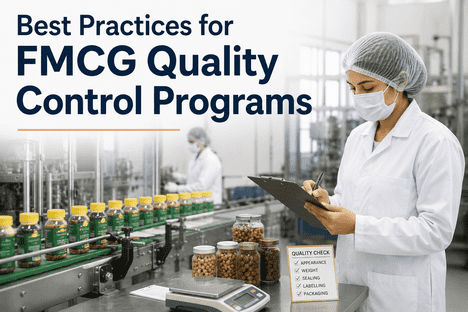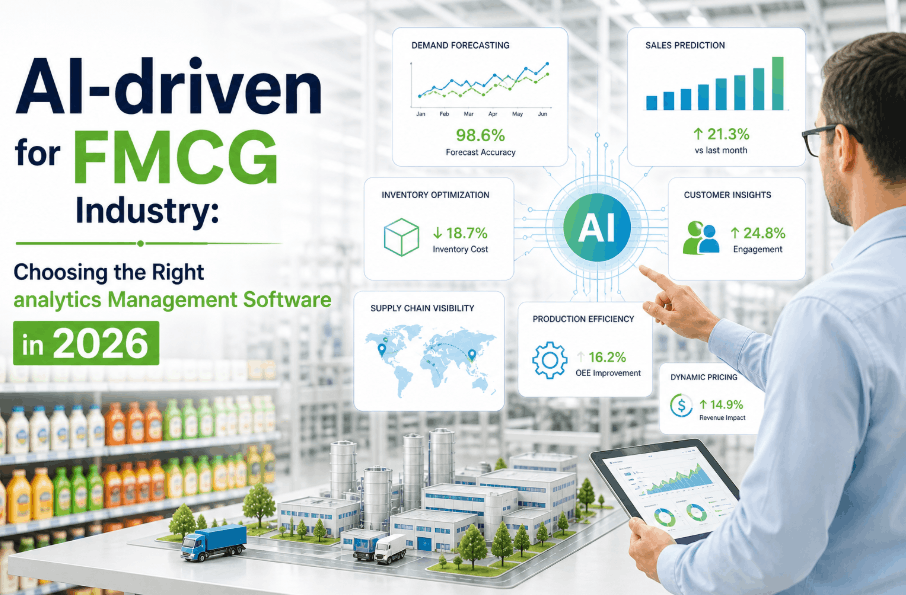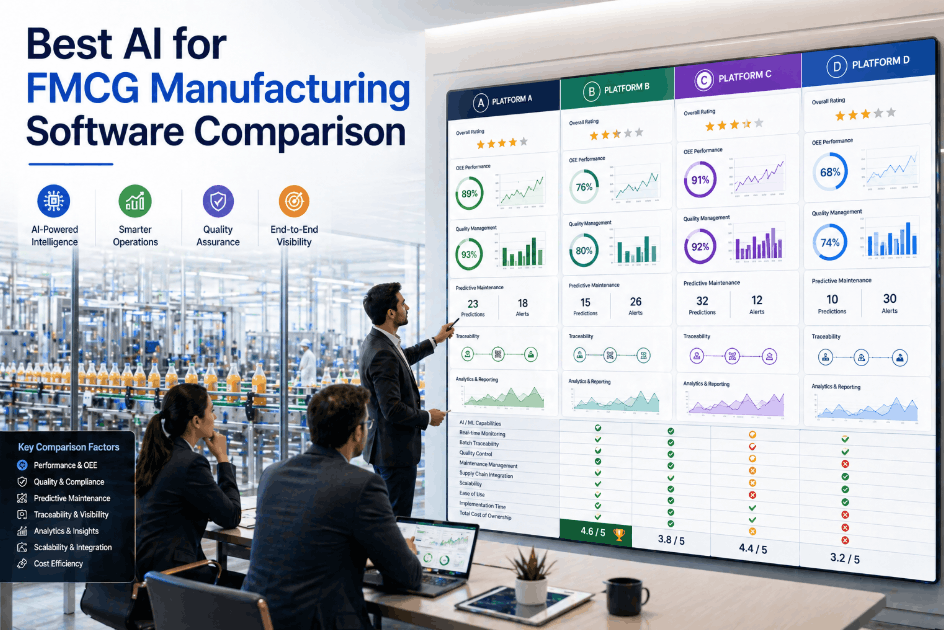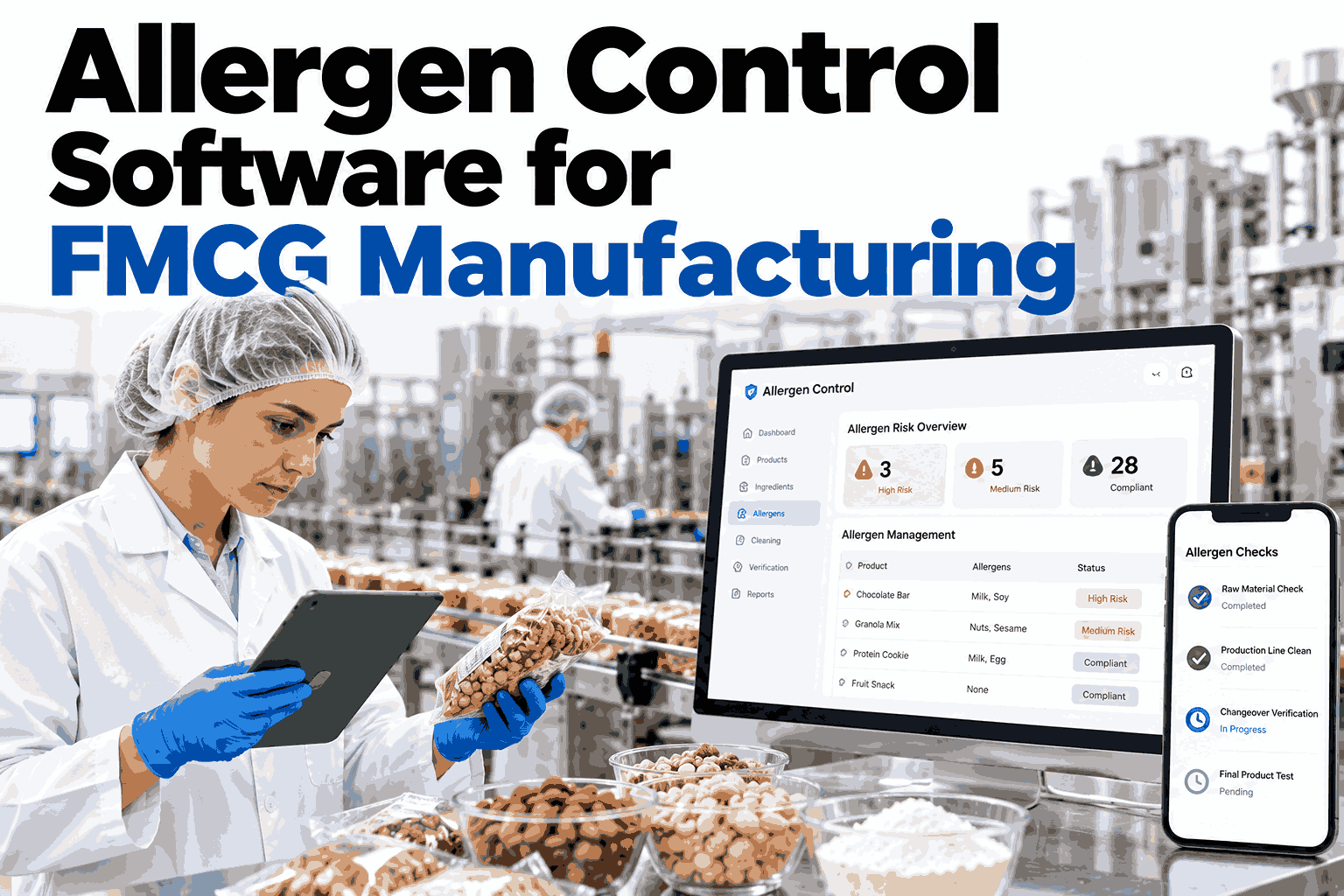
Undeclared allergens are among the most common reasons food products get recalled, and most trace back to the same few moments on the floor: a changeover that was signed off but never verified, a wrong film roll on a packing line, or rework that went into the wrong batch. FMCG plants running many products on shared lines face this every shift. Allergen control software replaces memory and paper with enforced checks. Teams can map their allergen risks with the iFactory AI team before the next audit.
Allergen Control Software That Makes Every Changeover Provable
iFactory AI enforces cleaning gates, verifies labels against recipes, and keeps audit-ready records for plants running multi-allergen product ranges on shared lines.
Six Places Allergens Slip Into the Wrong Product
Cross-contact rarely comes from one dramatic failure. It builds from small gaps between departments, shifts, and systems, and each gap is a place where software can enforce what a procedure only requests.
Receiving and Storage
Allergen-containing ingredients arrive beside allergen-free ones. Without status tagging by lot, a damaged bag or a misplaced pallet can move an allergen into the wrong zone before production even starts.
Dispensing and Weighing
Shared scoops, scales, and containers carry residue between formulas. Dispensing records that tie each weigh-up to a recipe stop an operator from pulling the wrong ingredient under time pressure.
Shared Lines and Changeovers
Conveyors, mixers, depositors, and slicers are hard to clean fully. The risk sits in the gap between the cleaning that was planned and the cleaning that was actually completed and verified.
Rework Handling
Rework looks harmless because it is already product. Yet adding allergen-containing rework to a product that does not declare that allergen is a classic route to an undeclared allergen.
Packaging and Labeling
A wrong film roll, carton, or label is a frequently cited cause of undeclared allergens reaching shelves. The recipe can be perfect and the pack can still be wrong.
Tools, People, and Spaces
Utensils, uniforms, forklifts, and even air movement can carry allergen particles. Zoning rules and color-coded tools only work when someone confirms them every shift.
Software cannot clean a line, but it can make sure no line restarts until the people who cleaned it have proved it.
Know Which Allergens Your Program Must Control
The list you manage depends on where you sell. A plant exporting across regions often has to control more allergens than any single national list requires, which makes one configurable allergen register the starting point of the whole program.
United States: 9 Major Allergens
European Union: 14 Allergens
Filled chips appear on both lists, and outlined chips apply in the EU only. Other markets, including Canada, the UK, Australia, and Japan, keep their own lists, so the register in iFactory AI is configured per product and per destination market rather than hard-coded.
The Six-Step Changeover That Cannot Be Skipped
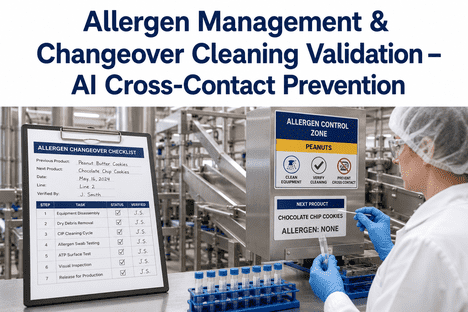
A changeover between allergen profiles is a sequence, not a single event. Software turns each step into a gate that must be completed, evidenced, and signed before the next one unlocks.
Stop and Isolate
Production stops, the last product is cleared, and the line is locked against restart. Rework, scrap, and finished goods are segregated and labeled by allergen status.
Dismantle and Expose
Guards, screens, nozzles, and hoppers come apart so hidden surfaces are reachable. Hard-to-clean points are listed per line, so no one has to remember them.
Clean by Validated Method
Wet cleaning, dry cleaning, or a combination is chosen for the equipment and the product, using the method validated for that allergen and that line.
Inspect Visually
A second person checks hidden areas against a defined list of inspection points. Visible residue means the cleaning is repeated, not signed off.
Verify With Testing
Allergen-specific tests confirm that residue is below the action level your program sets. A failed test sends the line back to cleaning rather than forward to production.
Release to Run
Quality releases the line only when every earlier gate is complete. The first pack and its label are checked before full production begins.
Skipping any one of these steps turns a documented changeover into a documented assumption. Teams can review their current changeover steps with the iFactory AI team to find which gates exist only on paper.
See a Changeover Gate Locked in Real Time
Book a 30-minute session and watch iFactory AI hold a line in changeover until cleaning, testing, and release are complete, using an allergen matrix like yours.
Cleaning Verification: Which Test Proves What
A line that looks clean is not proof that an allergen is gone. Different tests answer different questions, and mixing them up is a common reason cleaning validation fails an audit.
| Method | What It Detects | Typical Speed | Where It Fits |
|---|---|---|---|
| Visual Inspection | Visible residue only | Immediate | Mandatory first check, never the only check for allergens |
| ATP Swab | General organic residue | Under a minute | Hygiene indicator that does not identify a specific allergen |
| General Protein Swab | Protein residue of any source | Minutes | Screening aid, not specific to one allergen |
| Allergen Lateral Flow Test | A specific allergen protein | About 10 minutes | Fast on-floor verification before line release |
| Laboratory ELISA | A specific allergen, quantified | Hours to days | Validation and periodic confirmation of cleaning |
Speeds vary by kit and lab. Many programs pair a fast on-floor test for high-risk changeovers with periodic laboratory confirmation, and software keeps both result types in one record against the same changeover.
Allergen Matrix Management for Multi-Allergen Plants
Once a plant runs more than a handful of products, remembering which changeover needs which clean-down becomes impossible. A changeover matrix defines the answer for every pair of products in advance.
The matrix above is illustrative and follows one simple rule. When the next product declares every allergen the previous one carried, a standard clean is enough. When it does not, the cleaning level rises with the risk, and peanut or sesame carry-over demands the strictest level.
Sequencing Logic That Reduces Changeover Risk
Plants should confirm cleaning levels with their own hazard analysis and validation data, because the matrix records those decisions rather than replacing them. To see a matrix-driven changeover plan built from a real product list, join a live matrix walkthrough session.
Label Match: The Right Pack on the Right Product
A perfectly cleaned line can still ship the wrong declaration. Label match connects the approved recipe to the film, carton, and label used on the line, and stops the pack when they disagree.
Manual Label Control
Digital Label Verification
Three checkpoints catch most label errors, and each one is cheap when it happens early.
Receipt
Incoming labels and films are checked against the approved artwork version. Superseded versions are quarantined so they never reach a line.
Line Setup
Operators scan the roll or label against the work order before the first pack is made. A mismatch stops the line until it is corrected.
End of Run
Issued, used, and returned label counts are reconciled, and unused labels leave the line so they cannot appear on the next product.
Precautionary statements such as "may contain" are voluntary in the US and should reflect a real, assessed risk. They are not a substitute for cross-contact controls, and an accurate label cannot fix a contaminated product.
Rework, Ingredient Lots, and Supplier Changes
Some of the quietest allergen risks never touch a changeover. They arrive through a bin of rework, a reformulated ingredient, or a supplier switch that nobody linked back to the label.
Rework Stays With Its Own
Allergen-containing rework should return only to the same product or one that declares the same allergens. Each container carries its allergen profile and a destination rule.
Supplier Changes Trigger Review
A new supplier or reformulated ingredient can add an allergen with no change in the product name. Specifications tied to the recipe flag the change before the next run.
Lot-Level Allergen Status
Each ingredient lot holds its allergen declaration, so a recipe cannot be built from lots that conflict with the finished product label.
Stock in Motion Stays Tagged
Work in progress, open ingredients, and scrap bins keep their allergen status, which makes any transfer between areas visible and reviewable.
These controls are easy to describe and hard to sustain on paper, because they depend on people remembering a rule at the exact moment a deadline is closest.
Audit-Ready Records: Answer the Auditor Before They Ask
GFSI-benchmarked schemes such as SQF, BRCGS, and FSSC 22000, along with FSMA preventive controls in the US, expect plants to show that allergen controls are defined, followed, and verified. The proof lives in the records.
Paper can hold these answers too, but finding them across binders during an audit is where time and confidence get lost. A digital GMP record turns each question into a search.
A Composite Scenario: Five Products, Two Lines, One Close Call
A snack manufacturer ran five products across two shared lines. Changeovers were signed on paper, and label rolls were checked by eye at setup. The figures below are an illustrative composite, shown as a relative index with the starting point set at 100.
A routine internal audit found a changeover record with the test field blank, and a label roll for a nut-containing product staged beside one for a nut-free product. Nothing shipped wrongly, but the plant could not prove why. After moving to enforced digital gates, the same two risks became blocked actions instead of audit findings.
What iFactory AI Adds to Allergen Control
iFactory AI is smart manufacturing and industrial software built for regulated food floors. It combines digital GMP, enforced workflows, and audit-ready records so allergen control becomes part of how the line runs.
iFactory AI arrives pre-configured on an NVIDIA server that ships racked and ready with software pre-loaded. Rack it, connect power and Ethernet, and allergen gates start running. Scope covers cabling, network, ERP and MES integration, team training, and 24x7 remote monitoring.
Allergen Program Self-Check
Use these ten checks to find where your program depends on people remembering rather than systems enforcing.
Each unchecked box is a place where an auditor, or an allergic consumer, could find a gap before you do.
Frequently Asked Questions
What does allergen control software do that paper procedures cannot?
Paper asks people to follow steps, while software prevents the next step until the previous one is complete. It blocks line restarts, flags label mismatches, and keeps time-stamped evidence. See enforced allergen gates working on a live line in a short walkthrough.
Does software replace cleaning validation?
No. Validation proves that a cleaning method removes the allergen from specific equipment, and that work stays with your food safety team. Software enforces the validated method every time and records the proof, so the validation holds up in daily practice. Ask how validated methods are loaded into the platform.
How does the system stop a wrong label from reaching a pack?
Each label or film roll is checked against the work order before the first pack is made. A mismatch blocks the line until it is corrected, and end-of-run reconciliation closes the count. Talk through label match on your packaging lines with the iFactory AI team.
Can one system handle many allergens and many products?
Yes. The allergen register is configurable by product, ingredient, and destination market, and the changeover matrix covers every product pair. Adding a product adds its pairs for review, so the matrix does not turn into a spreadsheet nobody trusts.
How long does implementation take?
iFactory AI is delivered turnkey and is typically live in 6 to 12 weeks. The server arrives pre-configured, and scope covers cabling, network, ERP and MES integration, training, and remote monitoring. Plan a rollout timeline for your plant in a 30-minute call.
Make Every Changeover Provable Before the Next Audit
iFactory AI enforces allergen gates, verifies labels, and keeps audit-ready records for FMCG plants. Book a walkthrough using your own product list and allergen matrix.