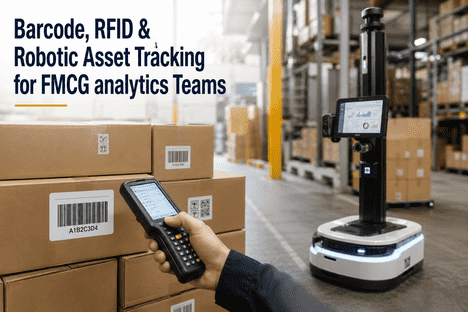
Every FMCG plant with 1,000 or more maintainable assets faces the same operational challenge: technicians waste 15–25 minutes per work order just locating and identifying the correct equipment, entering data manually, and reconciling paper records with digital systems. Across 50 work orders per day, that adds up to 12–20 hours of non-value-added labor equivalent to one and a half to two full-time maintenance technicians whose time is consumed by identification and data entry rather than actual repairs. Traditional asset tracking methods paper tags, spreadsheets, and manual data entry break down at scale, with asset registers diverging from physical reality by 15–30% within six months of the last physical audit. iFactory's Asset Tracking Platform combines barcode and QR code scanning, passive and active RFID tags, and autonomous mobile robots (AMRs) equipped with RFID readers and vision cameras to create a continuous, automated asset inventory and identification system that eliminates manual equipment search time, ensures 99.5%+ asset registry accuracy, and accelerates work order completion by 30–45%. Book a Demo to see iFactory's asset tracking platform configured for your FMCG plant's equipment layout, asset hierarchy, and maintenance workflow.
Eliminate Manual Asset Search Time and Accelerate Work Order Completion With Barcode, RFID and Robotic Identification
iFactory's multi-modal asset tracking platform combines barcode scanning, RFID tag reading, and autonomous robotic inventory to create a continuous asset visibility layer eliminating equipment search time, ensuring 99.5%+ registry accuracy, and reducing work order cycle time by 30–45% in FMCG plants with 1,000+ assets.
Barcode and QR Code Asset Identification
Industrial-grade barcode and QR code labels — resistant to moisture, temperature, chemicals, and abrasion — affixed to every maintainable asset enable instant identification via handheld scanners or mobile device cameras. When a technician scans a barcode, the work order, asset history, spare parts, and documentation are displayed automatically, eliminating manual equipment lookup and reducing identification time from minutes to seconds. Labels support all major symbologies including Code 128, QR, Data Matrix, and PDF417.
Passive and Active RFID for Bulk Asset Inventory
UHF RFID tags on assets and zones enable bulk inventory scanning — a single walk-through or robotic pass can identify and locate 500+ assets in under 60 seconds compared to 4–8 hours for manual visual verification. Passive RFID tags at $0.10–$0.50 per tag provide cost-effective identification for large asset populations, while active RFID tags with built-in sensors enable real-time location tracking for critical assets within 1–3 meter accuracy. RFID reads are integrated directly into the asset registry, updating last-seen timestamps and location data automatically.
Autonomous Mobile Robots for Continuous Asset Auditing
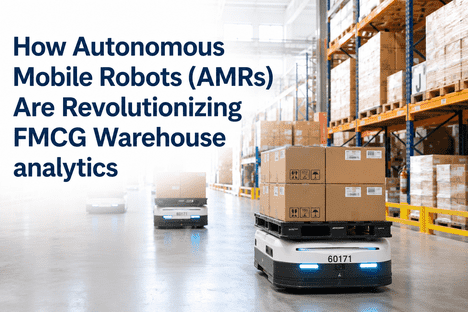
AMRs equipped with multi-directional RFID antenna arrays, 360-degree LiDAR, and high-resolution cameras patrol FMCG production and warehouse aisles on pre-programmed routes, continuously scanning RFID tags and capturing visual asset data. The AMR identifies missing tags, misplaced equipment, and changes in asset condition — flagging discrepancies in the asset registry automatically without human intervention. A single AMR can audit 2,000–5,000 tagged assets per 8-hour shift, replacing 2–3 full-time technicians previously dedicated to physical inventory verification.
Analytics Integration for Asset Intelligence
Every barcode scan, RFID read, and robotic audit feeds into iFactory's analytics layer, which tracks asset location history, identification frequency, work order cycle time, and registry accuracy over time. Analytics dashboards provide maintenance managers with real-time visibility into asset tracking completeness, technician identification efficiency, and inventory accuracy trends. AI models identify assets that are repeatedly difficult to locate, suggesting label replacement or relocation to reduce future search time.
Why Paper-Based and Spreadsheet Asset Tracking Fails in FMCG Plants With 1,000+ Assets
FMCG plants that rely on paper tags, spreadsheet asset registers, and manual data entry for equipment tracking share a common set of root causes that erode asset visibility and maintenance productivity over time. These are not isolated process gaps — they are systemic breakdowns that compound as the asset population grows and maintenance activity increases.
Without continuous automated verification, asset registers diverge from physical reality as equipment is moved, decommissioned, replaced, or re-tagged. Each divergence compounds the next — misplaced assets are recorded as missing, new assets are added without proper registry entry, and location changes go undocumented. Within six months, 15–30% of asset records contain errors in location, status, or identification data, undermining the reliability of every process that depends on accurate asset data.
Technicians arriving at a work order location must first find and positively identify the correct equipment among dozens of similar pumps, conveyors, motors, and valves in the same area. With faded or missing tags, contradictory location data, and similar-looking equipment, the search consumes 15–25 minutes per work order on average. For a plant with 50 work orders per day, that is 12–20 hours of lost productive labor — the equivalent of hiring 1.5–2 additional technicians just to compensate for poor asset identification.
Every barcode scan, RFID read, or robotic audit that replaces manual data entry eliminates a data quality failure point. Manual entry of asset IDs, work order numbers, and activity codes generates error rates of 3–8%, requiring downstream reconciliation effort that consumes 6–12 hours per week of planner and supervisor time. Automated identification via barcode, RFID, or robotic scanning reduces data entry error rates to below 0.1%, eliminating the reconciliation burden entirely.
Stop Losing Technician Hours to Equipment Search Start Every Work Order With Instant Asset Identification
iFactory's Barcode, RFID and Robotic Asset Tracking Platform eliminates manual equipment search, ensures 99.5%+ asset registry accuracy, and accelerates work order completion by 30–45% through multi-modal automated identification across all FMCG plant assets — deployed as a turnkey solution with label installation, RFID configuration, robotic route programming, and analytics dashboard setup.
Asset Tracking Technologies Paper Tags vs Barcode vs RFID vs Robotic for FMCG Operations
| Tracking Parameter | Paper Tags / Spreadsheets | Barcode / QR Code Scanning | Passive RFID | Active RFID + AMR Robotics |
|---|---|---|---|---|
| Identification speed per asset | 30–120 seconds (manual lookup) | 2–5 seconds (scan and display) | 0.1–0.5 seconds (bulk read) | Automated robotic bulk read |
| Bulk inventory time for 1,000 assets | 16–32 hours (manual visual) | 8–16 hours (scan each label) | 2–5 minutes (walk-through) | 15–30 minutes (robotic patrol) |
| Data entry error rate | 3–8% manual entry errors | <0.1% scanning errors | <0.01% read errors | <0.01% with auto-validation |
| Registry accuracy over 6 months | 70–85% (decays continuously) | 85–92% (improves with scan frequency) | 95–98% (improves with reader density) | 99.5%+ (continuous robotic audit) |
| Real-time location tracking | Not available | Last scan location only | Zone-level (3–5m with portal readers) | Location-level (1–3m with robotic RTLS) |
| Asset condition monitoring | Visual inspection only | Not available | Active RFID with sensors available | Vision + RFID + thermal from AMR |
| Technician time spent on identification | 15–25 min per work order | 2–5 min per work order | 1–2 min (bulk scan at entry) | Automatic via AMR handoff |
| Annual labor cost for 50 WO/day | $75,000–$125,000 | $12,000–$25,000 | $5,000–$12,000 | <$5,000 (AMR replaces manual) |
Asset Tracking Platform Deployment 5-Step Implementation Process
iFactory's multi-modal asset tracking platform is deployed across your FMCG plant in a phased approach that starts with high-value, high-work-order assets and expands to full plant coverage. The implementation is designed to deliver measurable productivity improvement within the first 30 days of deployment while building the foundation for comprehensive asset visibility.
Asset Population Identification and Tagging Strategy
Conduct a complete physical asset audit across all FMCG production lines, packaging areas, warehouses, and utility systems to identify every maintainable asset requiring tracking. Classify assets by criticality, work order frequency, and physical accessibility to determine the appropriate tagging technology — barcode labels for high-touch assets, passive RFID for bulk inventory assets, and active RFID with AMR coverage for high-value critical assets. Generate unique asset IDs aligned with existing asset hierarchy and ERP master data.
Label and Tag Installation With Registry Update
Install industrial-grade barcode/QR labels at standardized locations on each asset — typically at eye level on the equipment nameplate or control panel for optimal scanner accessibility. Apply passive RFID tags to assets designated for bulk inventory scanning. Deploy active RFID tags on critical assets requiring real-time location tracking. Update the asset registry with new tag IDs, installation dates, and location coordinates. Verify every tag read before completing installation.
AMR Route Programming and RFID Reader Infrastructure
Program autonomous mobile robot patrol routes covering all production zones, warehouse aisles, and utility areas. Install passive RFID portal readers at key entry and exit points for zone-level tracking of tagged assets. Configure active RFID reader infrastructure in critical asset areas. Calibrate AMR navigation using plant floor plan data with LiDAR-based obstacle detection. Define patrol frequency — typically 1–4 times per shift depending on asset criticality and audit requirements.
Analytics Dashboard Configuration and Workflow Integration
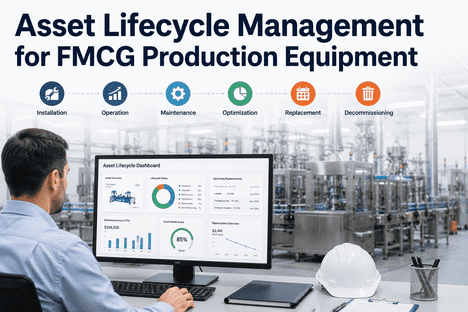
Configure asset tracking dashboards with real-time asset location maps, registry accuracy metrics, technician scan compliance rates, and work order cycle time analytics. Integrate barcode and RFID scan events with work order management system — automatic technician assignment, asset history display, and post-completion scan verification. Set up automated alerts for missing tags, misplaced assets, and assets not scanned within configured thresholds.
Technician Training and Continuous Improvement
Train maintenance technicians on barcode scanning workflow — scan before starting work, scan after completing work, and scan when reporting asset condition issues. Train supervisors on RFID bulk inventory workflow and AMR patrol monitoring. Establish scan compliance KPIs with monthly reviews. Conduct quarterly label and tag condition audits, replacing damaged or unreadable tags. Model retraining for AMR navigation optimization and analytics threshold refinement based on operational data.
"Over twelve years managing maintenance at multiple FMCG plants each with 2,000–4,000 assets, I have lived through the frustration of watching technicians spend 20 minutes of every hour looking for equipment while our work order backlog grew. Our asset registry was never accurate — we did a full physical audit every year, spent three weeks on it, and within four months the register was already diverging again. We tried barcode labels, but without continuous verification the labels got damaged, faded, or covered in product residue, and within a year we were back to searching manually. The combination of multiple identification technologies — durable barcodes for daily technician use, passive RFID for bulk zone inventory, and an AMR that patrols every night to catch discrepancies — is the first approach I have seen that actually solves the problem permanently. Our pilot plant saw technician search time drop from 18 minutes per work order to under 4 minutes, registry accuracy stay above 99% for eight consecutive months, and work order cycle time decrease by 38% — all while eliminating the annual two-week physical audit entirely. That is the kind of transformation that directly improves plant OEE and reduces maintenance cost per unit."
The Choice Is Simple Keep Losing 12–20 Hours Per Day to Manual Asset Search or Deploy Automated Identification and Reclaim Technician Productivity
Asset tracking in FMCG plants with 1,000+ assets is not a data management problem — it is a labor productivity problem disguised as an inventory accuracy issue. Each technician hour spent searching for equipment, manually entering asset IDs, or reconciling registry discrepancies is an hour not spent on preventive maintenance, root cause analysis, or value-added repairs. For a plant with 50 work orders per day and 2,000 maintainable assets, the annual cost of manual asset tracking — including technician search time, data entry errors, registry audits, and reconciliation effort — averages $95,000–$180,000 per year in non-value-added labor alone, before accounting for the maintenance backlog impact and equipment reliability consequences of delayed repairs.
iFactory's multi-modal asset tracking platform combining barcode and QR scanning, passive and active RFID, and autonomous mobile robots — eliminates manual identification entirely, ensuring every work order starts with instant asset identification, every asset location is continuously verified, and every registry record remains accurate above 99.5% without manual audits. The platform pays for itself within 4–8 months through technician productivity recovery, registry audit elimination, and work order cycle time reduction. For FMCG operations ready to eliminate equipment search time and accelerate maintenance delivery, book a demonstration with iFactory's asset tracking engineering team to see live deployment data from FMCG plants using barcode, RFID, and robotic identification.
Barcode, RFID and Robotic Asset Tracking — Frequently Asked Questions
Deploy Barcode, RFID and Robotic Asset Tracking Across Your FMCG Plant with iFactory
iFactory's multi-modal asset tracking platform combines barcode and QR scanning, passive and active RFID, and autonomous mobile robots to create continuous, automated asset visibility eliminating manual equipment search, ensuring 99.5%+ registry accuracy, and accelerating work order completion by 30–45% delivered as a turnkey deployment with full installation, configuration, and support.