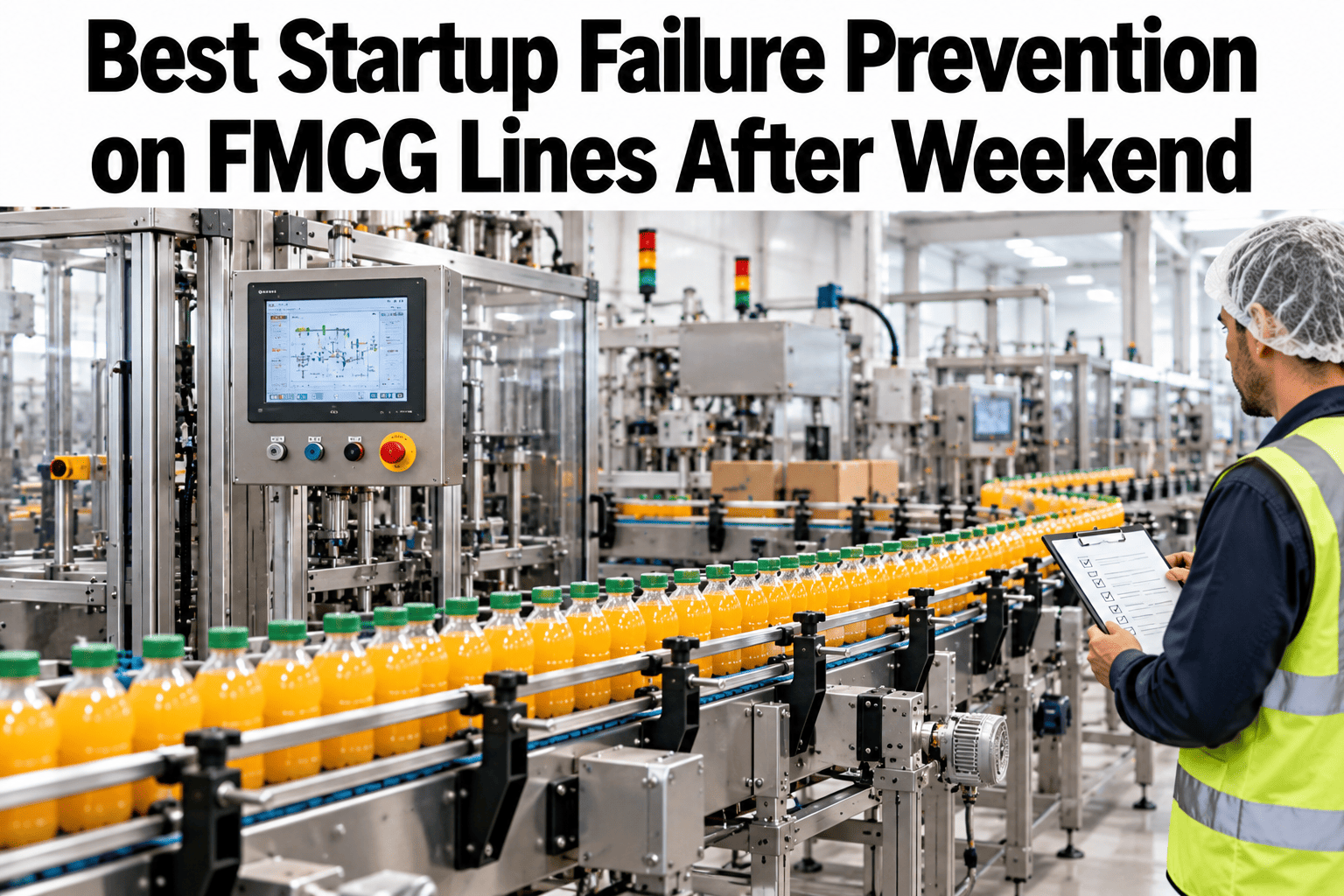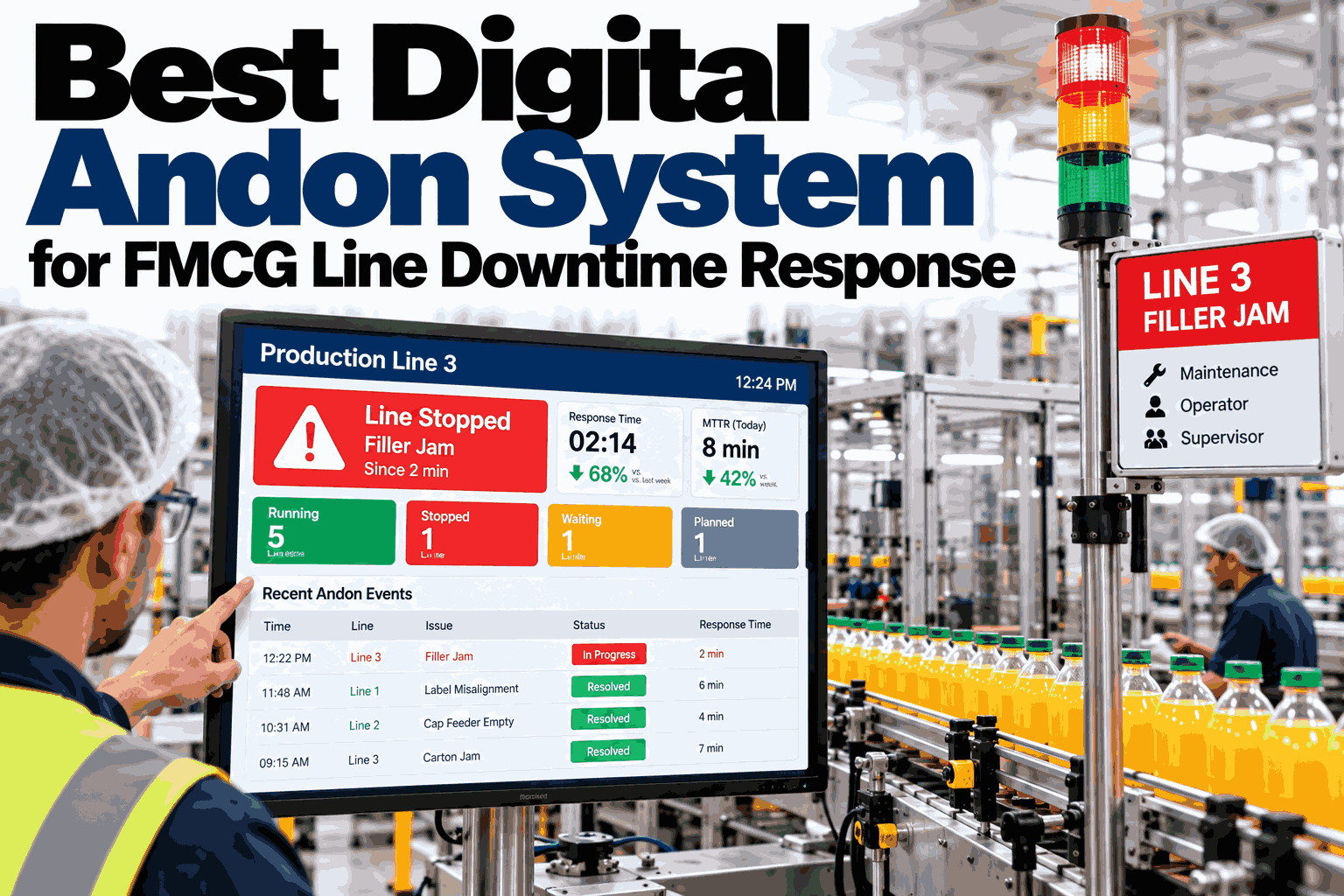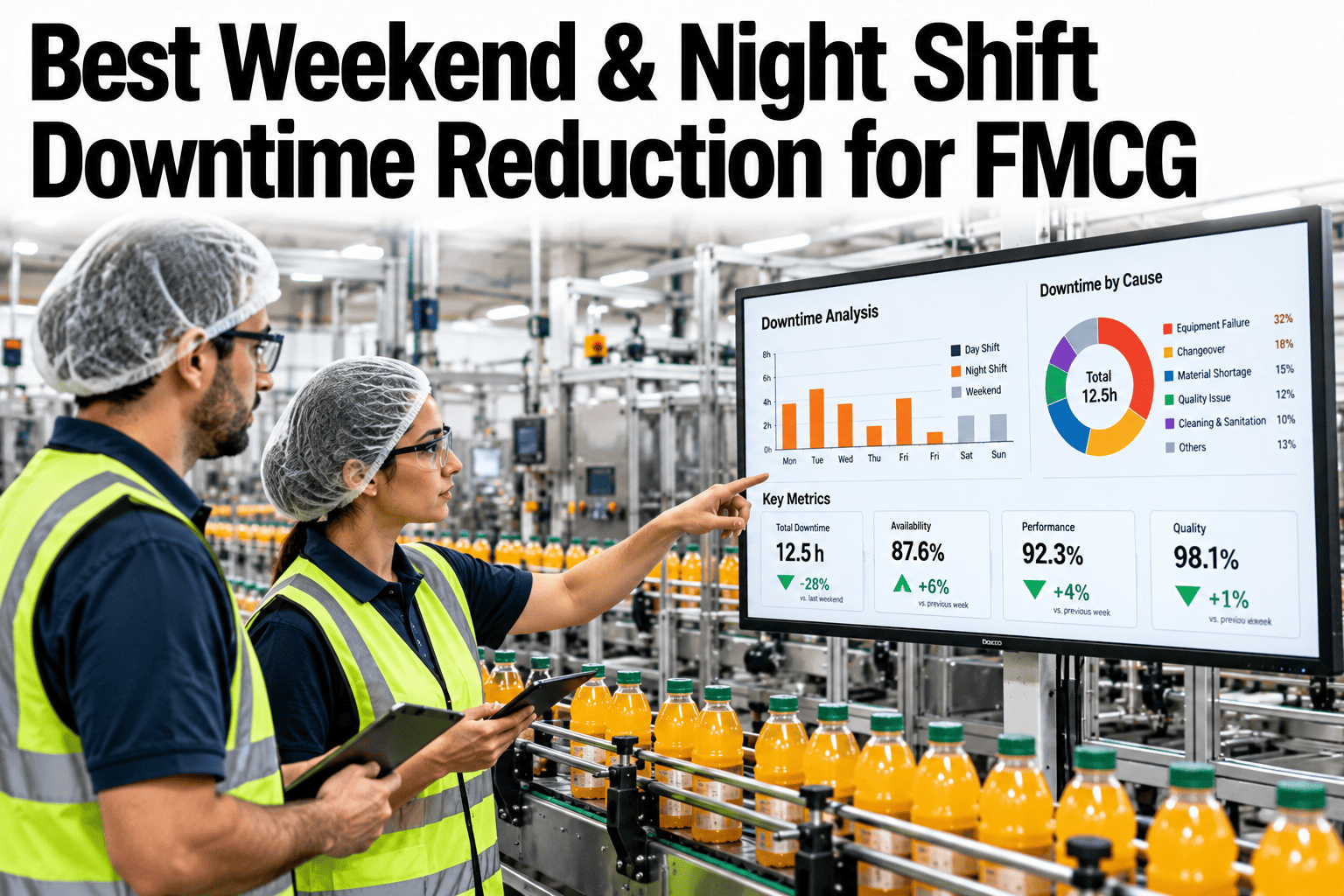
Downtime on an FMCG line is not evenly distributed across the week. Weekend and night shifts routinely run two to three times the downtime rate of a weekday day shift, not because the equipment behaves differently, but because the people and processes around it do: fewer technicians on site, slower escalation paths, and pre-shift checks that get rushed or skipped when the plant is running thin. The equipment is the same. The coverage around it is not. See your own off-hours downtime gap mapped out in a short session.
Close the 3x Downtime Gap Between Day Shift and Off-Hours
iFactory AI redesigns off-hours coverage with remote support and pre-shift readiness checks that close the gap, without adding headcount to every shift.
The Gap Is a Coverage Problem, Not an Equipment Problem
A fault that a day-shift technician resolves in ten minutes can sit unresolved for an hour on a weekend shift simply because the right expertise is not on site.
Adding a full technician roster to every off-hours shift is rarely affordable, which is why most plants have tried and abandoned that fix before. The gap closes through better escalation and preparation, not just more bodies.
Three Coverage Models Compared
Plants typically choose between three coverage approaches, each with different cost and effectiveness trade-offs.
| Model | Cost | Typical Resolution Speed | Best Fit |
|---|---|---|---|
| Full off-hours roster | High | Fast | High-value, high-risk lines |
| Minimal on-site, no backup | Low | Slow | Rarely recommended |
| Remote support model | Moderate | Fast for most faults | Most FMCG plants |
See Your Own Off-Hours Gap Mapped Out
Book a 30-minute session and iFactory AI will show where your weekend and night shift downtime concentrates.
How Remote Support Actually Works
The on-site technician stays in control. Remote support closes the expertise gap, not the staffing gap.
Fault occurs and the on-site technician attempts standard troubleshooting first.
If the fault exceeds their scope, a specialist is reached through a direct remote channel.
The specialist reviews live line data and guides the on-site technician through resolution.
The incident and resolution are logged for the day-shift handover and pattern tracking.
Pre-Shift Readiness, Prioritized
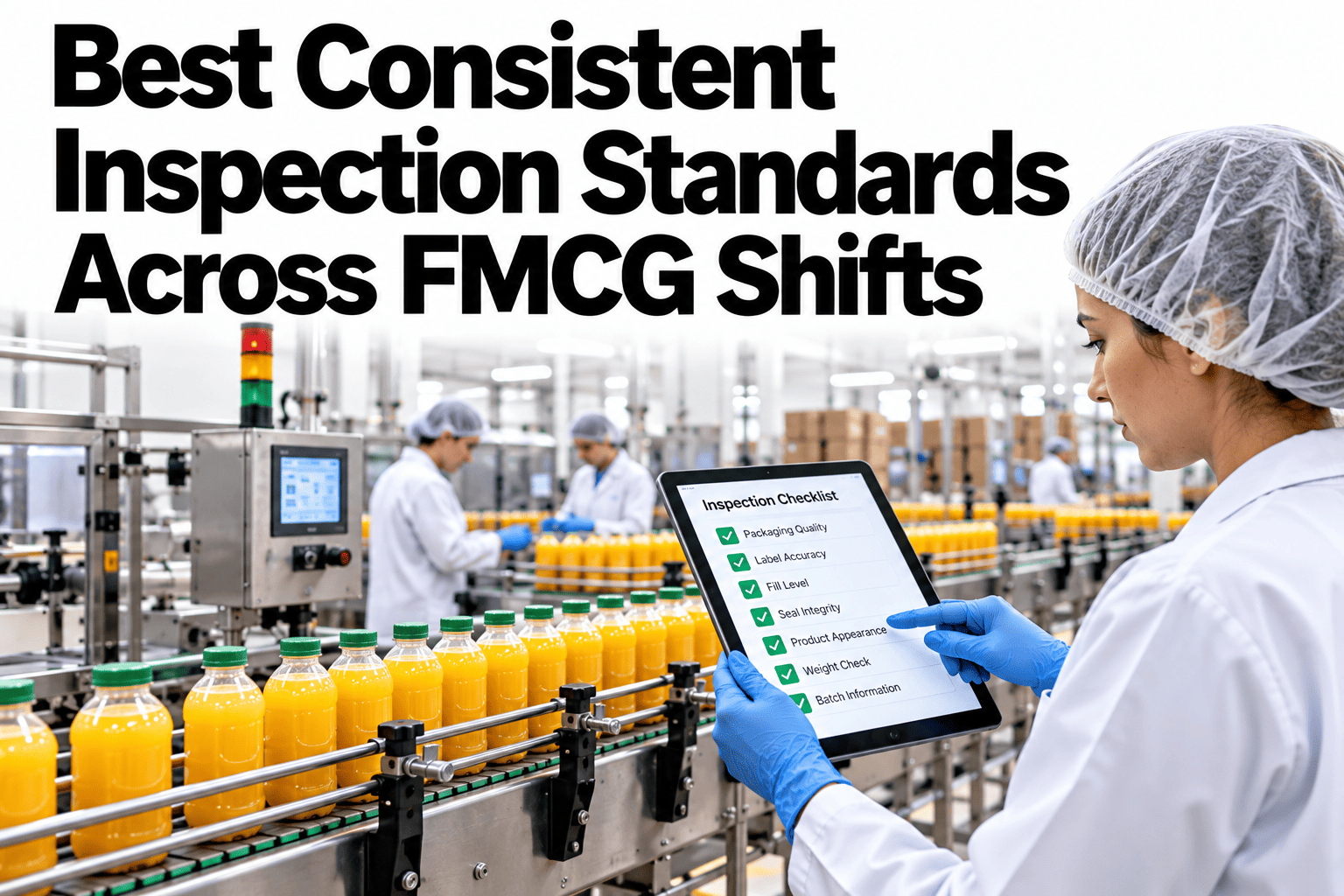
A short checklist, focused on the issues most likely to escalate off-hours, beats a long one that gets skipped under time pressure.
Critical Alarm Review
Any open or recent alarm is checked before the outgoing shift leaves, not discovered later.
Spare Parts Confirmation
Availability of parts tied to known recurring faults is confirmed before the shift starts.
Escalation Contact Check
Remote specialist availability for the shift window is confirmed in advance.
High-Risk Station Flag
Stations with recent instability are flagged for extra attention during the shift.
A Composite Shift Comparison
Downtime minutes per shift type, tracked over a month before and after coverage redesign.
Rolling It Out Across Shifts
iFactory AI arrives turnkey, built to connect existing line data to a remote support channel and structured readiness checks.
Frequently Asked Questions
Does this require hiring additional off-hours staff?
No, the model is built to close the expertise gap through remote support rather than matching day-shift headcount around the clock, which is usually the more affordable path for most FMCG plants. Support can walk through typical coverage costs for a plant your size.
Who provides the remote specialist support?
Remote support can be staffed by your own specialists on call, a shared pool across multiple sites, or a combination, depending on how your maintenance organization is structured. See remote support models discussed in a walkthrough.
How long is the pre-shift readiness check?
It is designed to run in a few minutes, focused on the handful of items most likely to cause an off-hours escalation, rather than a full equipment audit that competes with limited shift time.
Does this integrate with our existing alarm and CMMS systems?
Yes, the system connects to existing alarm feeds and CMMS records rather than requiring a separate parallel system, so incident history stays in one place.
How is the downtime gap measured before and after?
Downtime is tracked by shift type from existing production data, giving a clear before-and-after comparison once the coverage redesign is live. Ask support how this rolls into your downtime reporting.
Stop Letting the Clock Decide How Fast a Fault Gets Fixed
iFactory AI redesigns off-hours coverage with remote support and readiness checks that close the weekend and night shift gap. Book a walkthrough to see it on your own plant.