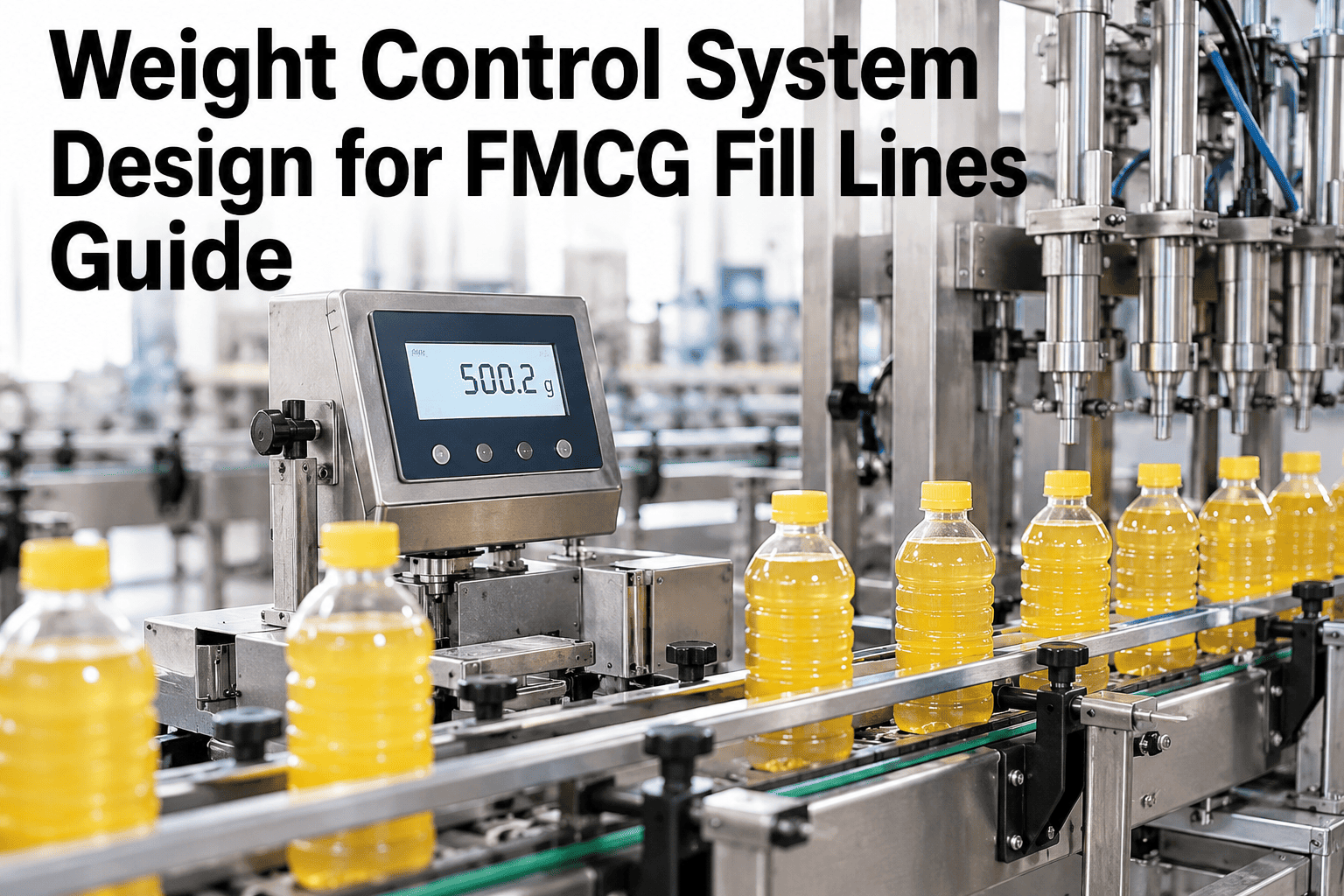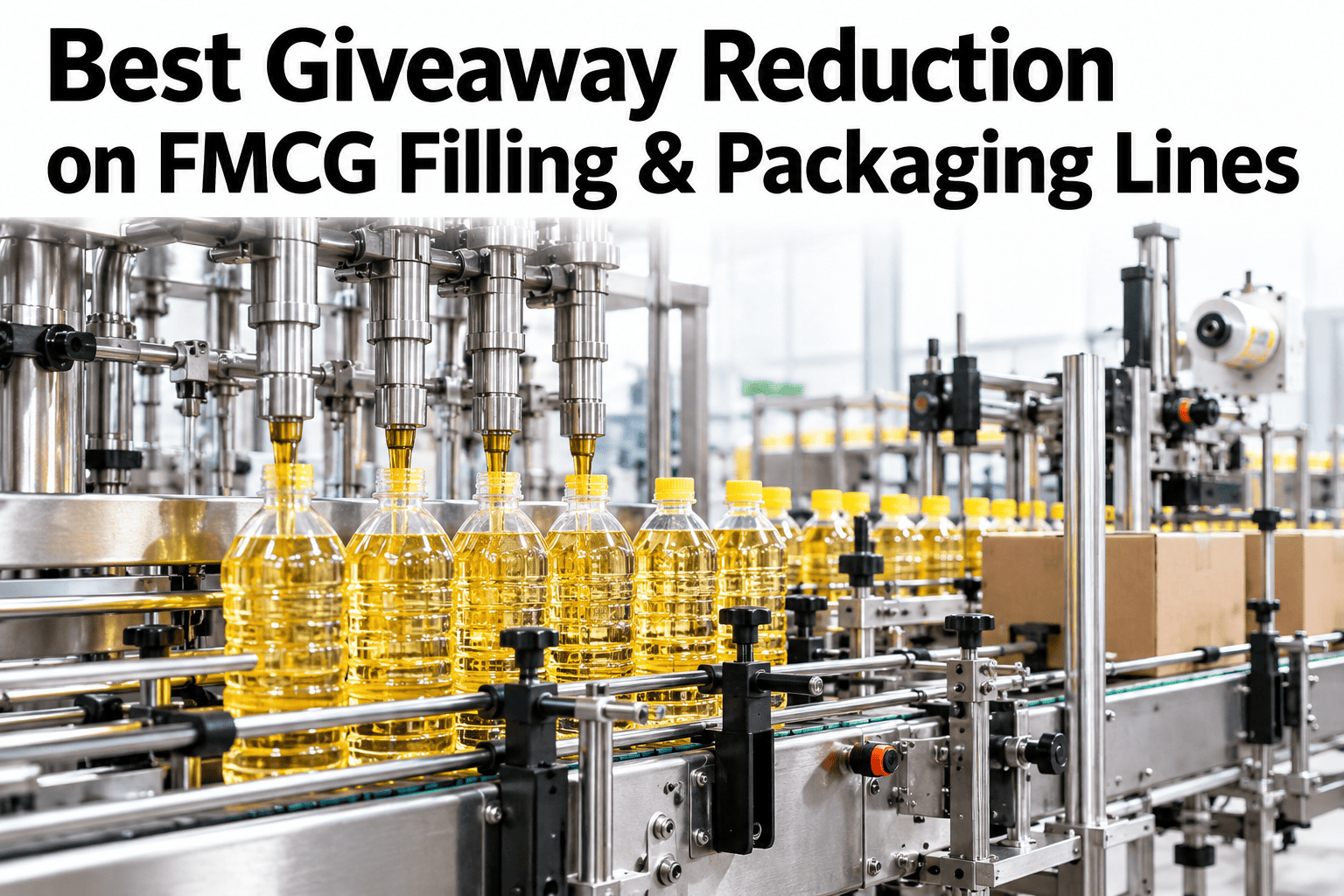
Every filler on an FMCG line runs a little heavy, on purpose, to stay safely clear of the legal minimum fill. That safety margin is called giveaway, and it's one of the few losses that never shows up as a reject, a stoppage or a complaint, which is exactly why it survives unnoticed for years. A filler running half a gram heavy per unit across a high-volume line adds up to real tonnage of product given away free, every single shift. Statistical control, target-weight optimization and feed-forward compensation together bring that margin down without risking an underfill. Packaging and filling line managers can see giveaway quantified on a real filler on iFactory AI against their own target weight.
The Loss That Never Shows Up as a Reject
iFactory AI combines statistical control, target-weight optimization and feed-forward compensation to bring giveaway down without risking an underfill.
Why Giveaway Survives Unnoticed
Overfill isn't a reject or a stoppage, so it never trips a notification.
Running heavy avoids the far more visible risk of an underfill complaint.
Half a gram looks trivial until it's multiplied by a full production run.
Quality owns underfill risk; giveaway cost often has no clear owner.
Three Levers for Reducing Giveaway
| Lever | What It Does | Where It Helps Most |
|---|---|---|
| Statistical control | Tightens the process variation around target weight | Lines with wide, inconsistent fill distribution |
| Target-weight optimization | Sets the aim point as close to the legal minimum as variation allows | Lines already running tight but aimed too high |
| Feed-forward compensation | Adjusts the next fill based on the last few readings, in real time | Lines with product density or moisture variation |
See How Much Giveaway Your Own Filler Is Running
Bring recent check-weigher data to a 30-minute session and calculate the real cost of your current margin.
Tightening Variation Before Moving the Target
Capture the real distribution of fill weight over time.
Address the causes widening the distribution before moving anything.
Move the setpoint closer to minimum now that spread is tighter.
Compensate for remaining variation in real time, fill to fill.
Wide Distribution vs Tight Distribution
A Composite Scenario: The Half Gram Nobody Costed Out
Picture a filling line running 0.6 grams heavy on average per unit, considered a safe, conservative margin by the team. Nobody has calculated what that margin costs across a full year of production volume.
Once tightened variation lets the target move 0.3 grams closer to minimum, the saved product across the year's run rate represents a material volume given away for free, recovered without the underfill risk the original margin was protecting against.
Where iFactory AI Fits
Measures real giveaway
Quantifies the actual margin being given away, in product and cost.
Tightens variation first
Identifies and addresses sources of fill weight spread before re-aiming.
Optimizes the target safely
Moves the setpoint only as close as the tightened variation allows.
Compensates in real time
Adjusts fill based on recent readings to hold the tighter target.
Expert Review
A packaging process engineering perspective, reviewed for accuracy before publication: giveaway is the loss I most often see completely uncosted on a plant's loss register, even though it's one of the easiest to calculate once someone measures the real fill distribution. Running the numbers on your own filler's current margin tends to produce a figure larger than people expect, and the fix doesn't require new equipment in most cases.
Frequently Asked Questions
How much giveaway is typical on an FMCG filling line?
This varies widely by product, filler type and how tightly the line's variation has been managed, so there's no single typical figure that applies everywhere. Measuring your own line's actual fill distribution against target weight is the only reliable way to know your real giveaway margin. See your own line's giveaway calculated from recent check-weigher data in a short session.
Is it safe to reduce giveaway without risking underfill complaints?
The key is tightening the process variation before moving the target weight closer to minimum, rather than simply lowering the target on a wide, inconsistent process. Done in that order, with statistical monitoring to confirm the variation is genuinely tighter, the underfill risk can be managed while giveaway comes down. Ask for a review of the safety margin appropriate for your process variation.
What is feed-forward compensation and how does it differ from feedback control?
Feedback control adjusts the next fill based on how far off the previous fill was, which always lags slightly behind real conditions. Feed-forward compensation anticipates a shift, such as product density changing, and adjusts ahead of time based on recent readings, which can hold a tighter target in the presence of ongoing variation. Explore whether feed-forward would help your specific filler and product.
Does reducing giveaway require new filler hardware?
Not necessarily. Much of the gain often comes from better statistical monitoring and target-weight tuning on existing equipment; feed-forward compensation may require an upgrade depending on your current filler's control capabilities. Scoping what's achievable with existing equipment first is usually the right starting point. Try an assessment of what's achievable with your existing filler.
How do we calculate the real cost of our current giveaway margin?
Multiply the average overfill per unit by production volume and raw material cost per unit weight, over whatever period you want to evaluate, typically a year for a meaningful figure. The result is often larger than teams expect precisely because the per-unit number looks small in isolation. Join a session that builds this cost calculation from your own volume data.
Stop Giving Away Product Nobody Has Costed Out
iFactory AI tightens variation and optimizes target weight to bring giveaway down safely. Book a walkthrough on your own filling line.