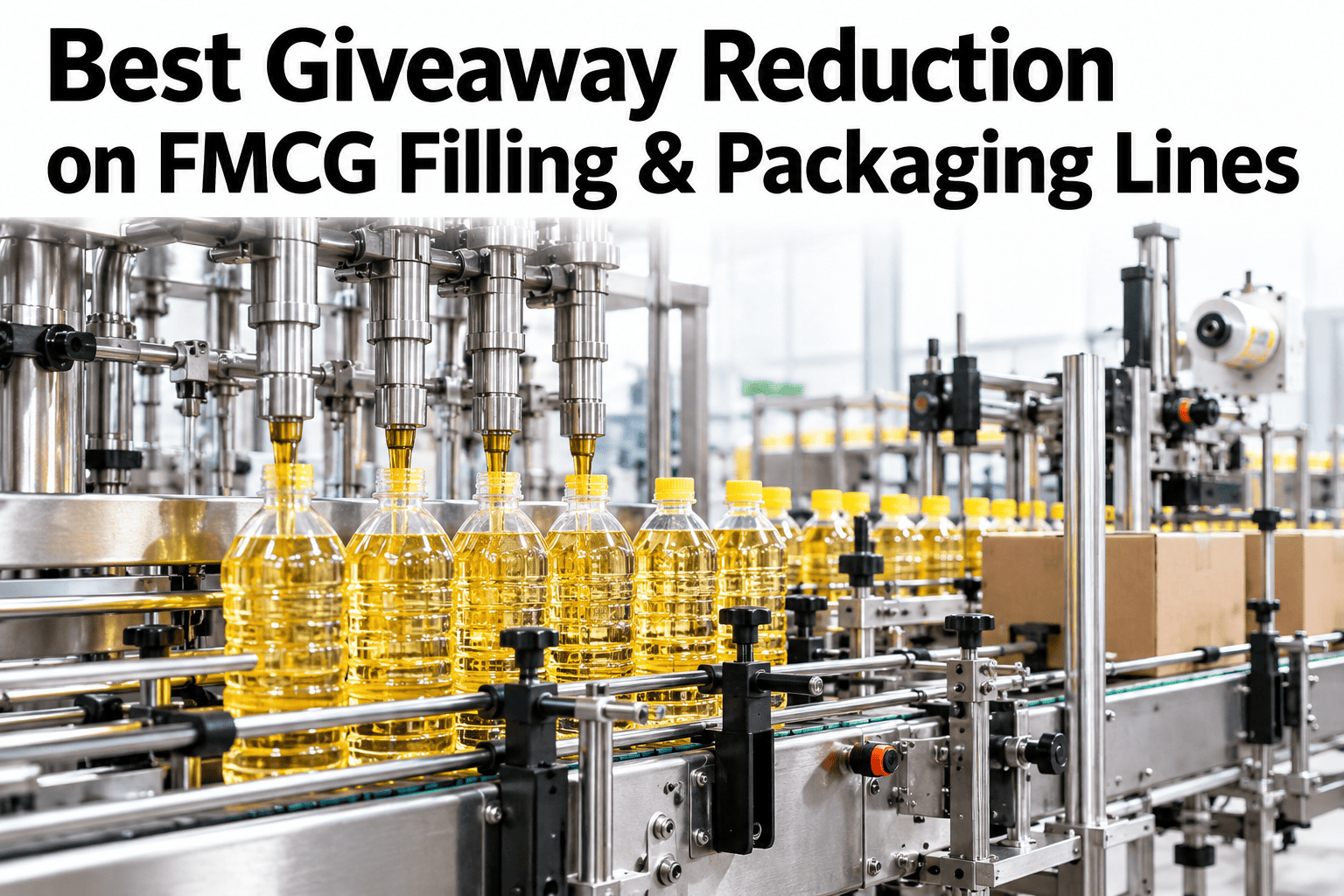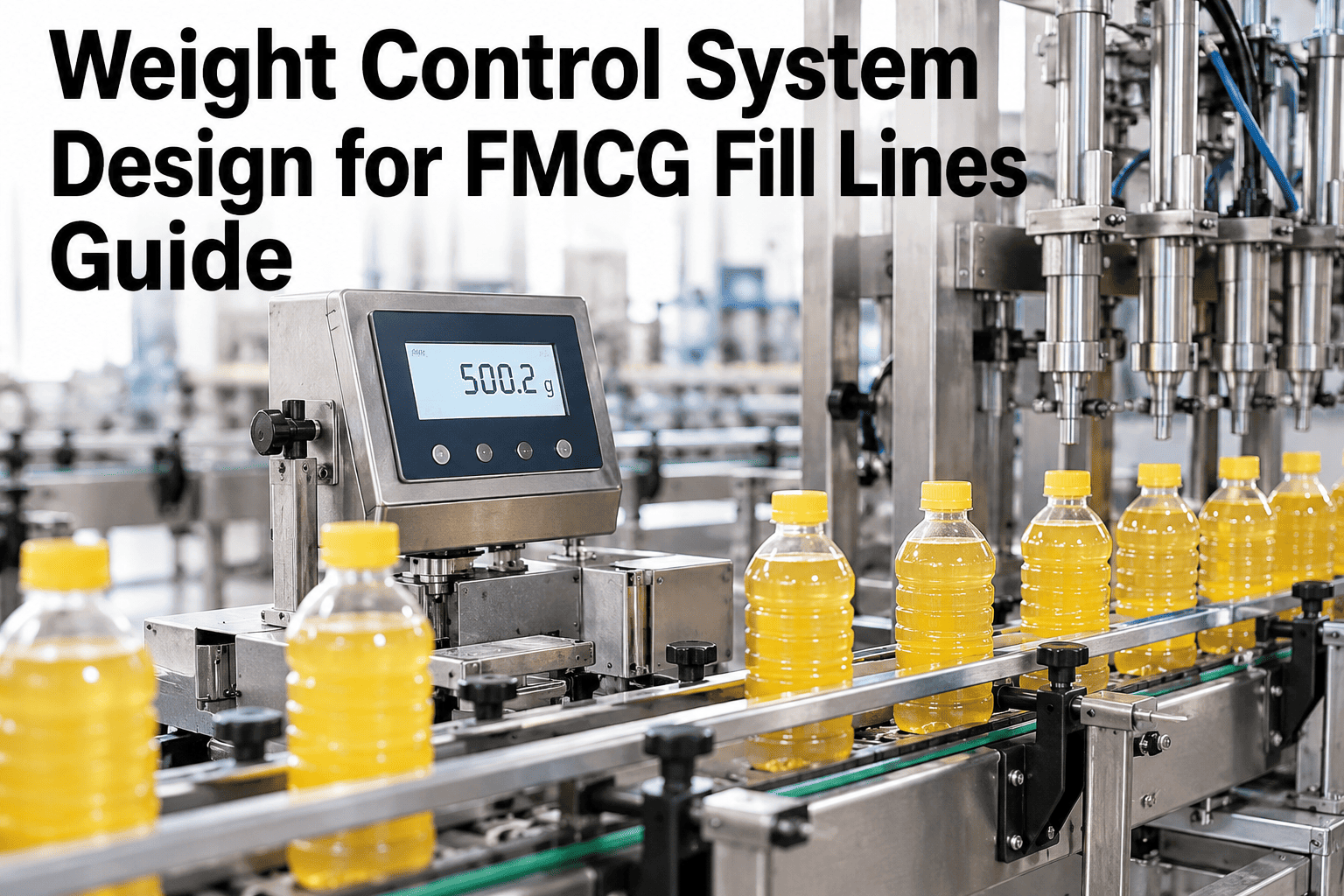
Every fill line runs slightly over target weight most of the time, not because anyone decided that was acceptable, but because running under target risks a regulatory violation while running over just quietly costs product. That built-in bias toward overfill, often called give-away, adds up to a meaningful share of total product cost across a full production run, yet most lines still rely on periodic manual checks rather than a system that actually closes the loop back to the filler. A properly designed weight control system, with the right sample plan, check-weigher placement, and closed-loop feedback to the filler, is what narrows that variance and recovers the give-away without risking underfill, and if you want to see this kind of system mapped against your own fill line, you can review a weight control design session with our team.
Stop Paying for Give-Away on Every Fill Line Run
A properly designed weight control loop, sample plan, check-weigher placement, and closed-loop feedback to the filler, that narrows fill weight variance and recovers give-away without risking underfill.
Why Most Lines Run Over Target and Stay There
Give-away is rarely a deliberate choice, it's the predictable outcome of a system with no automatic correction path back to the filler.
Building a Sample Plan That Actually Represents the Line
A sample plan needs to catch real variation without creating so much overhead that it never gets followed consistently.
| Sample plan element | What it determines | Common mistake |
|---|---|---|
| Sample frequency | How often units are pulled and weighed | Too infrequent to catch a developing drift early |
| Sample size per check | How many units give a statistically meaningful reading | Single-unit checks that mistake noise for a real trend |
| Trigger conditions | When a changeover or event requires extra sampling | No extra sampling after a changeover, when drift is most likely |
| Rejection and hold rules | What happens to product outside the acceptable range | Unclear hold procedure that delays the corrective response |
Extra sampling immediately after a changeover or material lot switch is the single most commonly missed trigger, since that's exactly when filler behavior is most likely to shift.
Check-Weigher Placement That Actually Catches Drift
Where the check-weigher sits on the line determines how quickly a drifting filler gets caught and how much product passes through before correction happens.
Map Check-Weigher Placement for Your Own Line
Share your line layout and current filler setup and we will help identify the best placement for closed-loop control.
What Changes When Feedback Reaches the Filler Automatically
The real shift from a monitoring system to a control system happens when the check-weigher's reading feeds directly back into the filler's own setting.
Translating Tighter Variance Into Recovered Give-Away
The business case for closed-loop control comes down to how much average fill weight can shift toward target once variance narrows.
What iFactory FMCG Specialists See Across Fill Line Projects
iFactory FMCG specialists who support weight control projects consistently find that check-weigher placement, more than the sophistication of the feedback algorithm itself, is what separates a system that genuinely closes the loop quickly from one that still carries meaningful lag between fill and correction.
They also note that the sampling trigger after a changeover is the detail most often overlooked in an initial system design, even though changeovers are reliably the period with the highest risk of filler drift going unnoticed.
What Fill Line Teams Ask About Weight Control Design
Design a Closed-Loop Weight Control System for Your Fill Line
Book a session with iFactory AI to design your sample plan, check-weigher placement, and closed-loop feedback together.