The quality assurance manager at a dairy protein manufacturer receives a customer complaint about a finished product lot distributed across 14 retail chains in three states. The regulatory requirement demands root cause identification within four hours and affected product isolation within 24 hours. Under the current system paper batch records, siloed ERP entries, and spreadsheet-based material tracking the QA team estimates a minimum of 18 hours just to identify which raw material suppliers contributed to the affected lots. By the time the traceability investigation completes, 72 hours have elapsed, and the recall covers 40% more product volume than necessary. iFactory's blockchain traceability platform closes the gap between regulatory expectation and operational reality delivering end-to-end supply chain transparency in real time, with cryptographic proof that no record has been altered.
Immutable Product Traceability from Raw Material to Consumer Verified in Seconds, Not Days
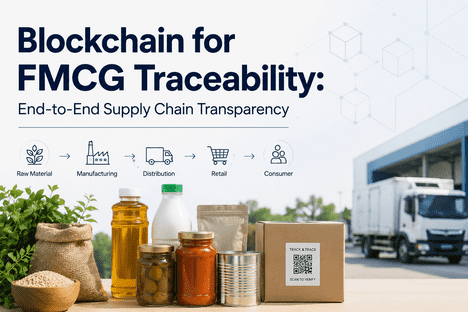
iFactory's blockchain-integrated traceability platform connects every supply chain event — raw material receipt, production batch, quality test, storage transfer, shipment, and retail delivery — into a single, immutable ledger. Recall scope determined in minutes. Consumer trust verified at every step.
A Single Platform That Connects Every Supply Chain Event into an Immutable Record
iFactory Blockchain Traceability is not a conventional ERP traceability module or a standalone blockchain experiment. It is a production-grade distributed ledger platform that ingests supply chain events from ERP systems, supplier portals, production line sensors, quality databases, and logistics tracking platforms transforming fragmented, siloed data into a single, cryptographically verifiable chain of custody. Every event raw material lot received, production batch started, quality test passed, temperature excursion recorded, shipment dispatched, delivery confirmed is written to the ledger with a timestamp, digital signature, and cryptographic link to the preceding event. The result is a complete, tamper-evident product history that any authorized stakeholder can verify in seconds. For FMCG manufacturers migrating from paper-based or ERP-limited traceability, iFactory replaces manual reconciliation, spreadsheet tracking, and multi-system cross-referencing with automated, blockchain-verified supply chain visibility. Book a Demo to see how your supply chain data converts to an immutable blockchain record.
Six Core Capabilities That Turn Fragmented Supply Chain Data into Verifiable Truth
Every capability is deployed on iFactory's blockchain infrastructure, live within 8–12 weeks, and configured to your specific supply chain structure, supplier network, and regulatory requirements.
Immutable Event Recording
Every supply chain event is recorded on iFactory's permissioned blockchain ledger with a cryptographic hash, timestamp, and digital signature. Once written, no record can be altered, deleted, or backdated — creating a tamper-evident chain of custody from raw material to consumer delivery.
Multi-Tier Supplier Event Capture
Raw material suppliers, co-packers, and logistics providers submit supply chain events directly to iFactory's ledger through secure APIs, EDI integrations, or supplier portal uploads. Each submission carries the supplier's digital signature, establishing cryptographic accountability across the full supply chain.
Instant Recall Scope Determination
When a quality incident occurs, iFactory's traceability engine traces every affected lot forward and backward through the supply chain in seconds — identifying the precise raw material lots, production batches, shipments, and retail destinations involved. Recall scope is determined with surgical precision, minimizing product pull volume and protecting brand equity.
Product Origin and Authenticity Verification
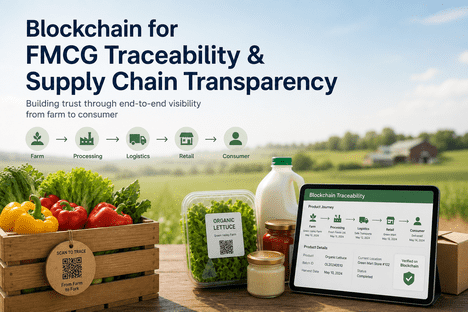
Consumers and retailers can verify product origin, ingredient sourcing, and supply chain journey through QR code scanning or batch lookup. Each verification returns the complete, immutable product history from the blockchain — building consumer trust through radical transparency.
Automated Audit-Ready Traceability Records
Regulatory traceability reports — including FSMA Section 204, EU Food Traceability Regulation, and country-specific requirements — are generated automatically from the blockchain ledger. Audit response time drops from days to minutes, with cryptographic proof that no record has been altered since creation.
Supply Chain Visibility and Trend Analysis
Real-time dashboards display supply chain event flow, supplier performance metrics, lot traceability completeness, and recall readiness scores. AI-powered analytics identify supply chain bottlenecks, supplier quality trends, and traceability gaps before they become compliance risks.
From Supply Chain Event to Immutable Blockchain Record in Four Steps
iFactory connects to your existing ERP, supplier systems, production systems, and logistics platforms in weeks, not months. No blockchain expertise required. Book a Demo to discuss your specific supply chain integration requirements.
Connect & Ingest
We integrate with your ERP, supplier portals, production MES, quality systems, and logistics platforms through pre-built connectors — capturing every supply chain event in real time without disrupting existing workflows.
Hash & Record
Each event is cryptographically hashed, timestamped, and digitally signed before being written to iFactory's permissioned blockchain. The hash links each event to the preceding event, creating an immutable chain of custody.
Verify & Trace
Authorized stakeholders — QA teams, regulatory auditors, retailers, and consumers — can verify any product's complete supply chain history in seconds. Forward and backward traceability queries traverse the blockchain graph to identify all related lots and events.
Report & Improve
Regulatory traceability reports, recall scope analyses, and supply chain visibility dashboards are generated automatically from the blockchain ledger. AI analytics identify traceability gaps and improvement opportunities continuously.
What Happens When FMCG Manufacturers Rely on Fragmented Supply Chain Data
Without blockchain-verified end-to-end traceability, every quality incident is a race against the regulatory clock. Here is what three common scenarios cost a typical FMCG manufacturer operating across multiple production lines and supplier networks.
Extended Recall Investigation Time
QA teams spend 12–24 hours manually tracing affected lots across ERP systems, paper batch records, and supplier communications. Each hour of delay expands the recall scope by 15–20% as product continues to move through the supply chain. At an average recall cost of $10M per incident across the food and beverage industry, every hour of delay adds significant financial exposure.
Excessive Recall Product Volume
Without precise lot-level traceability, manufacturers pull 3–5x more product volume than necessary — including unaffected lots from the same production period. The incremental cost of destroyed product, lost revenue, and logistics for excess recall volume averages $2.3M per incident for mid-size FMCG manufacturers.
Regulatory Non-Compliance Penalties
Failure to meet regulatory traceability response timelines — such as FSMA's 24-hour recall notification requirement — exposes manufacturers to fines, enforcement actions, and reputational damage. FDA warning letters related to traceability deficiencies increased 340% between 2020 and 2025, with average penalty costs exceeding $500K per incident.
What FMCG Manufacturers Achieve with Blockchain Traceability
iFactory Blockchain Traceability delivers measurable results from day one of full deployment. Here is what manufacturers achieve in the first year.
Why Blockchain Traceability Delivers Comprehensive Supply Chain Transparency
Cryptographic Immutability Eliminates Data Trust Issues
Traditional traceability systems rely on database integrity — a single administrator with write access can alter or delete records without detection. Blockchain's cryptographic linking makes every supply chain event tamper-evident: altering any record breaks the hash chain, immediately detectable by every node on the network. This cryptographic guarantee eliminates the trust deficit between supply chain partners and provides regulators with irrefutable proof of product history.
End-to-End Event Connectivity Replaces Siloed Data
FMCG supply chains generate events across dozens of systems — supplier portals, ERP, MES, quality management, WMS, TMS. Without blockchain connectivity, tracing a single product lot requires manual cross-referencing across all these systems. iFactory's platform connects every event into a single, traversable blockchain graph — enabling forward and backward traceability queries that span the entire supply chain in seconds. Talk to an Expert about your traceability integration requirements.
Supplier Accountability Through Digital Signatures
When raw material suppliers submit traceability events directly to iFactory's blockchain with their digital signature, they establish cryptographic accountability for the accuracy and timeliness of their submissions. This transforms supplier quality management from a trust-based relationship to a cryptographically verifiable system — supplier performance data becomes objective, auditable, and actionable.
Consumer Trust Through Radical Transparency
Modern consumers demand visibility into product origin, ingredient sourcing, and supply chain practices. iFactory's consumer verification portal enables shoppers to scan a QR code and view the complete, immutable product journey — from raw material farm or factory, through production and logistics, to the retail shelf. This transparency builds brand trust and creates measurable competitive advantage.
Blockchain Traceability at Scale: The Strategic Value of Immutable Supply Chain Transparency
FMCG manufacturers face an increasingly complex regulatory environment, heightened consumer expectations for supply chain transparency, and the ever-present risk of quality incidents that can damage brand value built over decades. iFactory's blockchain traceability platform replaces fragmented, trust-dependent supply chain data with a single, cryptographically verified record of every product's journey from raw material to consumer. The platform eliminates the critical gap between regulatory traceability requirements and operational reality — delivering recall scope determination in minutes rather than days, audit-ready records with cryptographic proof, and consumer-facing transparency that builds brand trust.
The 94% reduction in recall scope determination time is a regulatory compliance outcome. The 67% reduction in traceability labor cost is an operational efficiency outcome. The 4.1x ROI is a financial outcome. And the ability to provide consumers with verifiable product origin and journey details is a strategic competitive advantage in an increasingly transparency-driven marketplace. To assess what iFactory's blockchain traceability platform would deliver for your FMCG supply chain, Book a Demo with iFactory's supply chain solutions team.
Real Answers from FMCG Supply Chain Leaders
Stop Searching for Supply Chain Truth. Start Verifying It on an Immutable Blockchain Ledger.
Your FMCG supply chain generates thousands of events every day — but without blockchain traceability, you cannot prove a single record has not been altered. iFactory Blockchain Traceability gives you cryptographic certainty about every product's journey from raw material to consumer. Deployed in 8–12 weeks, integrated with your existing systems, accessible to every authorized stakeholder. Book a demo and we'll show you on your supply chain data.