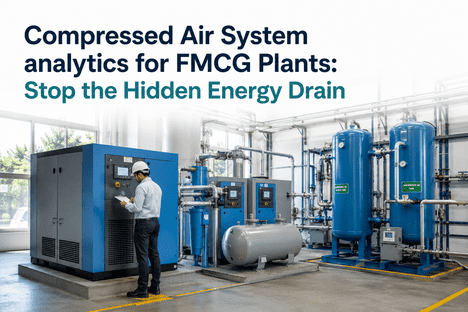
Compressed air is often called the most expensive utility on an FMCG floor, and leaks are the biggest reason why. A quarter-inch leak at typical plant pressure can waste thousands of kilowatt-hours a year, and a plant running dozens of leaks at once rarely notices until the compressor room starts running flat out just to keep up. This guide covers how leak surveys, artificial demand tests and pressure profiles find that waste and what reclaiming it typically looks like. Plants ready to see their own air system profiled can book a demo with the iFactory AI team.
Compressed Air Waste Detection for FMCG Plants
Ultrasonic leak surveys, artificial demand tests and pressure profile analytics that reclaim 20 to 40 percent of wasted air.
Why Compressed Air Hides Its Own Waste
Leaks are nearly silent at normal plant noise levels and invisible to the eye, so the only evidence most plants see is a compressor running longer hours than production alone would explain.
Three Ways to Find the Waste
No single method catches everything. The three used together build a complete picture of where air is being lost.
What a Leak Survey Typically Finds
The numbers below are illustrative, drawn from the shape of surveys plants commonly run, not a promise for your site.
| Leak Size | Estimated Annual Cost | Typical Count per Plant |
|---|---|---|
| Pinhole | Low, but compounds with count | Often the most numerous |
| 1/16 inch | Moderate | Common at hose fittings |
| 1/8 inch | Significant | Usually a handful per plant |
| 1/4 inch | Large, worth fixing immediately | Rare but costly when found |
Find the Leaks Costing You Every Day
Book a 30-minute walkthrough and see how iFactory AI flags compressed air waste from pressure and run-time data alone.
Reclaiming the Waste, Illustrative
A short worked example shows the scale of a typical reclaim project once leaks are repaired.
90-Day Path to a Managed Air System
A compressed air waste programme fits comfortably inside a single quarter.
Common Compressed Air Mistakes
The same patterns repeat across plants that have not yet organised an air waste programme.
Sizing the Repair Budget Before You Survey
One question slows down almost every compressed air programme before it starts: how much should we budget for repairs we have not found yet.
A rough rule holds across most plants. Repair parts and labor for a typical leak list cost a small fraction of the first year's energy savings, so the budget conversation is usually far shorter than the one about whether to survey at all.
| Plant Size | Typical Leak Count Found | Rough Repair Budget Share |
|---|---|---|
| Small, single line | 10 to 25 | Under a week of maintenance labor |
| Mid-size, multi-line | 25 to 60 | A small parts order plus scheduled labor |
| Large, multi-building | 60 and up | A phased repair plan across quarters |
Frequently Asked Questions
How much compressed air waste is normal?
Plants without an organised leak programme commonly lose twenty to forty percent of compressed air to leaks, while well-managed systems hold that closer to ten percent. The gap between those two numbers is usually the entire business case. Book a demo to estimate your own waste share.
Do we need special equipment for a leak survey?
An ultrasonic leak detector is the standard tool, and many plants bring in a specialist for the first survey, then repeat it in-house once trained. The tool itself is a modest investment compared to the savings found.
How is an artificial demand test different from a leak survey?
A leak survey finds individual leaks by location, while an artificial demand test measures total system flow during a no-production window to confirm how much air is being wasted overall, serving as a check on the survey's findings.
Can this connect to our existing compressor controls?
In most cases, yes. iFactory AI reads pressure and run-time data from existing compressor controllers without requiring new hardware on the compressors themselves. Ask support which compressor systems connect.
Beyond Leaks: Other Air System Waste
Leaks get most of the attention, but a few other habits quietly add to compressed air waste and are worth checking during the same survey.
Open blow-off nozzles used for cleaning or cooling, inappropriate use of compressed air where a fan or vacuum would do the job, and compressors sized for a peak that rarely happens all add unnecessary draw.
Stop Paying to Compress Air You Never Use
iFactory AI turns pressure and run-time data into a ranked leak list and a reclaim plan. Book a walkthrough built around your plant.