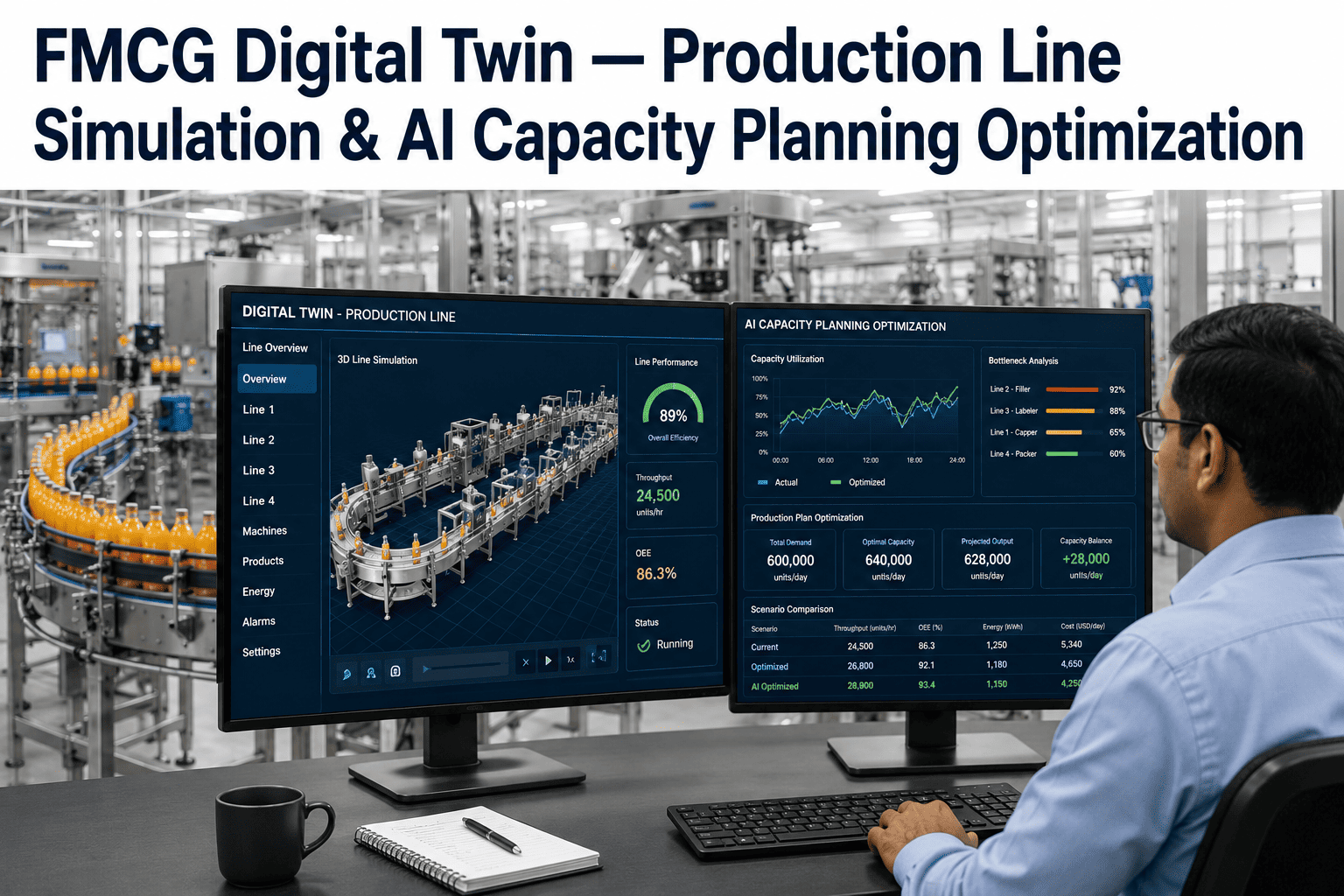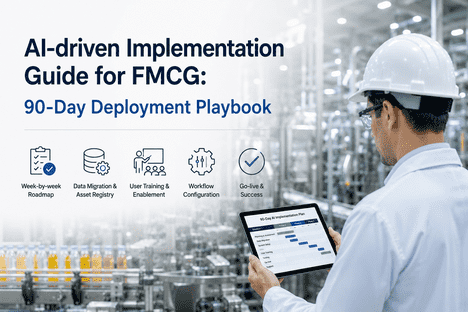
The FMCG plants that get stuck on digital twin projects are rarely the ones that moved too slowly, they're the ones that tried to model an entire plant's worth of assets at once, ran out of budget and patience before any line had a working twin, and ended up with nothing to show for a year of effort. A twin program that starts with one line, proves real value there, then expands asset scope deliberately before integrating across the plant, reaches a usable result in weeks instead of never. Building that sequence with real milestones attached is what a phased digital twin deployment actually looks like for an FMCG plant.
Pilot One Line, Then Expand, Then Integrate
iFactory AI's Digital Twin and Virtual Line Testing platform follows a phased rollout, proving value on one line before asset scope expands further.
Why a Big-Bang Twin Rollout Usually Fails
Modeling every asset across a plant simultaneously sounds efficient on paper and almost never delivers a usable result on schedule, for consistent, avoidable reasons.
Data Gaps Multiply Across Every Asset at Once
Every line has its own data quality issues, and discovering all of them simultaneously across a full plant overwhelms the team before any single line reaches a working model.
No Early Proof Point to Build Confidence
Without a working result on one line, stakeholders have nothing tangible to evaluate, which makes continued investment a harder conversation every month.
Skills Development Happens Too Slowly, Spread Too Thin
A team learning to build and validate twins needs focused repetition, which a scattered, plant-wide effort doesn't provide as effectively as a concentrated pilot.
The Three Deployment Phases
Each phase has a distinct goal and a distinct milestone that marks readiness to move to the next one.
| Phase | Goal | Milestone to Advance |
|---|---|---|
| Pilot Line | Build and validate one working twin against real line data | Model predictions match measured outcomes within a defined tolerance |
| Expand Scope | Add additional assets or lines, applying lessons from the pilot | A repeatable build process exists, not a one-off custom effort |
| Integrate | Connect twins across the plant into a shared view for planning | Cross-line what-if questions can be answered consistently |
Rushing from pilot to full integration without confirming the expand phase's repeatability is where many programs quietly lose the efficiency gains the phased approach was supposed to deliver.
Scope Your Own Pilot Line
Bring your plant layout to a 30-minute session and identify the best candidate line for a first digital twin pilot.
Skills Required at Each Phase
The skill mix a team needs shifts as the program moves from a single pilot toward plant-wide integration.
Value Checkpoints Worth Tracking
A checkpoint confirms the program is actually delivering value at each phase, not just progressing through a schedule.
An Illustrative Comparison: Phased vs Big-Bang Rollout
The figures below are a labeled illustrative composite, not a reported customer result, showing time to a working, validated twin under each approach.
The single biggest predictor of whether a digital twin program survives past its first year isn't the sophistication of the modeling, it's whether the team can point to one real decision the pilot twin actually changed. That one concrete proof point does more to secure continued investment and stakeholder patience than a technically impressive model that hasn't yet answered a question anyone on the floor actually asked.
Frequently Asked Questions
How do we choose the right line for a pilot?
A good pilot candidate usually has reasonably clean existing data, a known operational pain point worth answering with a what-if question, and enough production volume that a result is meaningful without being so complex that it extends the pilot timeline unnecessarily. Identify your best pilot candidate in a short session.
How long should a pilot phase realistically take?
Most pilot phases are scoped in weeks rather than months, with the specific timeline depending on data readiness and process complexity, so confirming data availability early is what keeps the pilot on a realistic schedule. Ask the iFactory AI team for a realistic pilot timeline.
What does "expand scope" actually mean in practice?
It means applying the process, data connections, and validation approach proven on the pilot line to additional lines or assets, ideally ones similar enough to the pilot that the lessons transfer directly rather than requiring an entirely new approach each time. Plan an expansion sequence for your plant in a demo.
When is a plant actually ready to move to full integration?
Readiness generally depends on having a repeatable build process confirmed across at least a couple of expanded lines, rather than a fixed calendar date, since integrating prematurely before the expand phase has proven repeatability tends to reintroduce the same problems a phased approach was meant to avoid. Assess your readiness for integration on a call.
Does this playbook work for plants that already have a partial twin effort underway?
Yes, an existing partial effort can usually be assessed against these same phase milestones to identify which phase it's actually in and what's needed to advance, rather than requiring a restart from the beginning. Assess your current twin effort against this playbook with the support team.
Prove Value on One Line Before You Scale
iFactory AI's Digital Twin platform follows a phased deployment from pilot to full plant integration. Book a walkthrough built around your own plant.