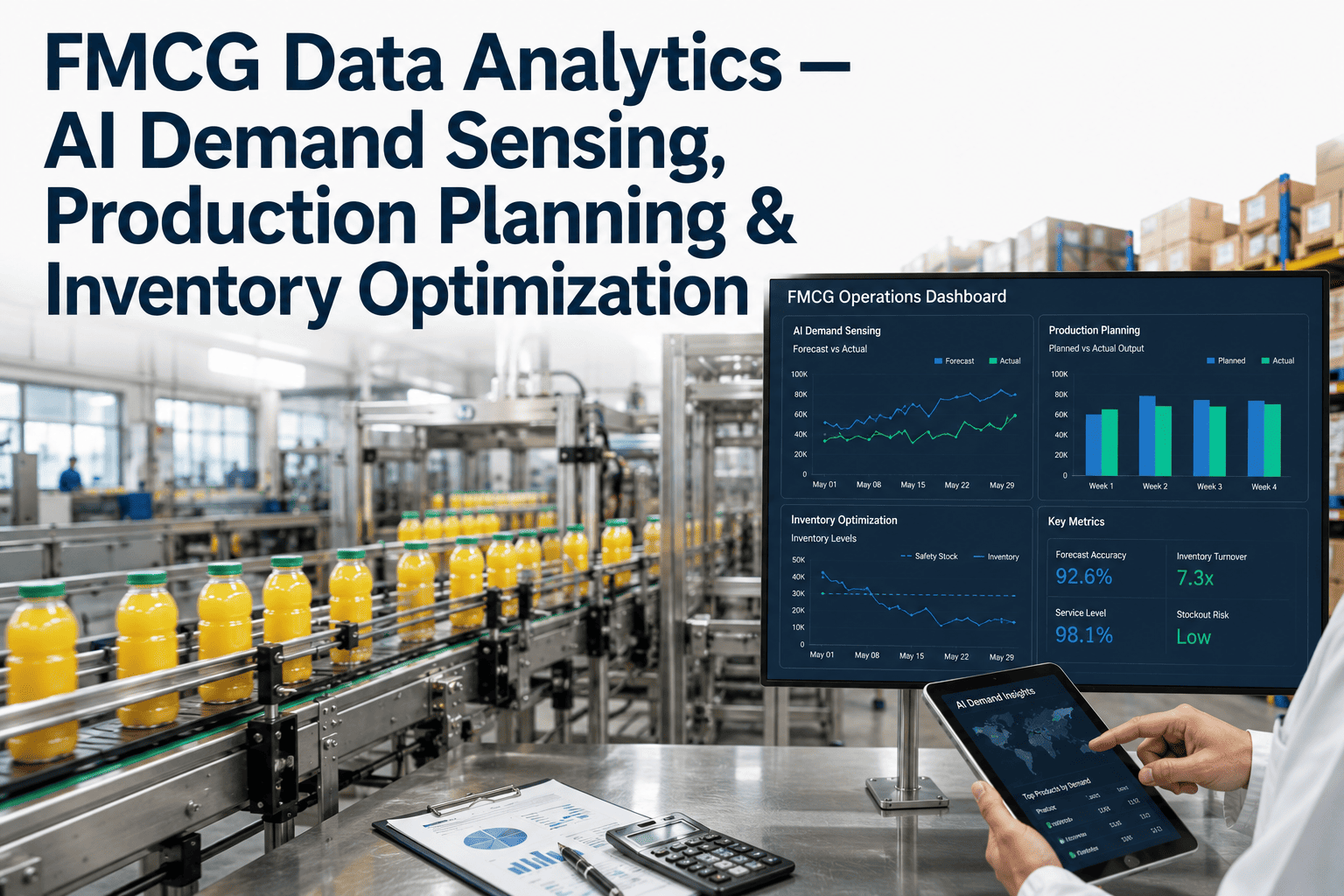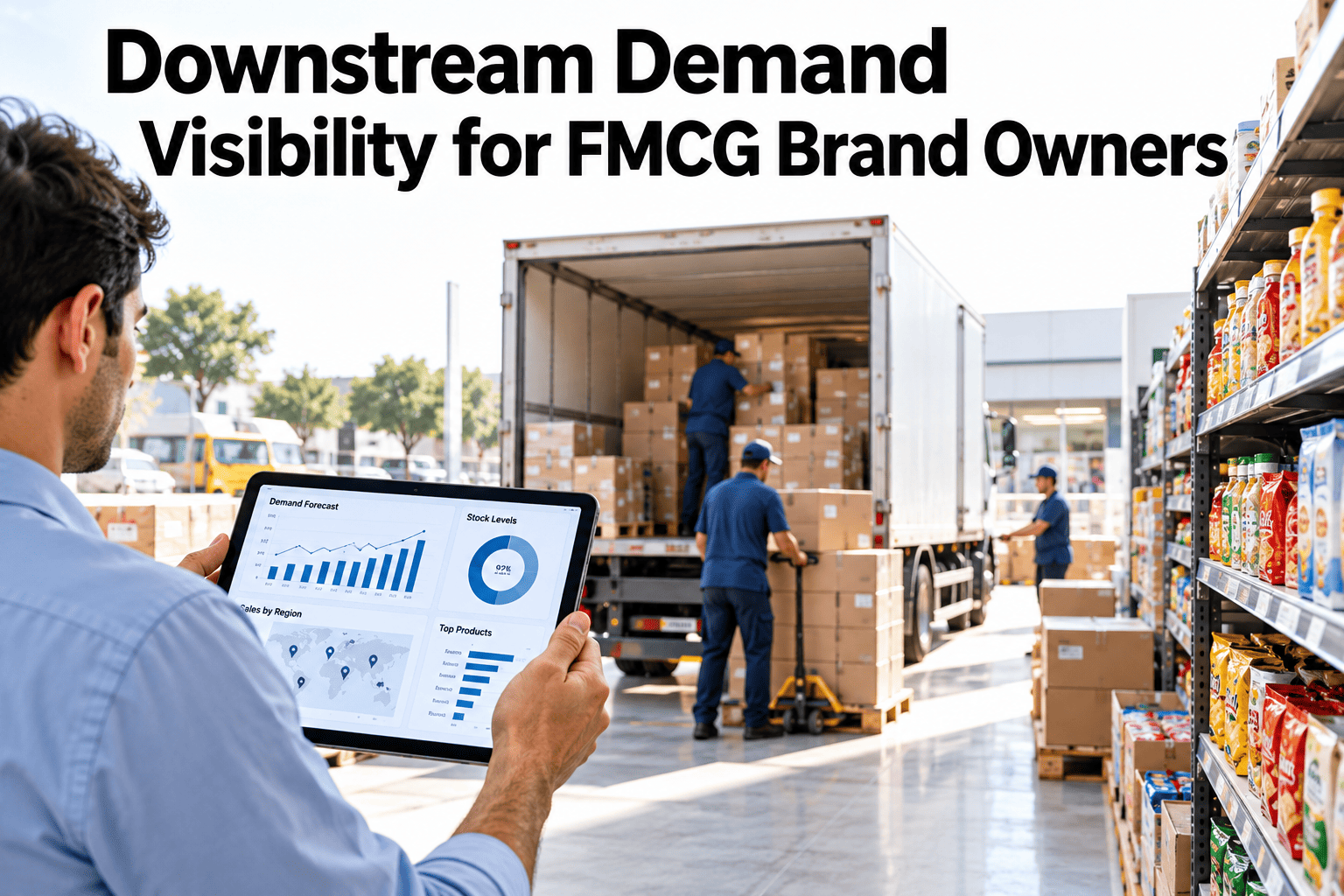
Traditional demand forecasting for FMCG brands leans heavily on shipment and sell-in data, which tells you what retailers ordered, not necessarily what shoppers are actually buying off the shelf. The gap between those two numbers is where most forecast error quietly accumulates, since a retailer building or drawing down safety stock can mask what real demand is doing for weeks at a time. Demand sensing closes that gap by pulling in signals closer to the actual point of purchase, retailer POS data, shopper card patterns, e-commerce velocity, and social signals, giving a brand a read on demand that moves in near real time instead of lagging behind the order cycle. If you want to see what demand-sensing signals look like against your own category, you can review a sample demand-sensing output with our team.
See What Shoppers Are Actually Buying, Not Just What Retailers Ordered
Demand sensing that unifies retailer POS, shopper card data, e-commerce velocity, and social signals, closing the gap between sell-in orders and real shelf-level demand.
Why Sell-In Data Alone Misleads a Demand Forecast
Sell-in volume reflects a retailer's own ordering and inventory decisions, which can diverge from actual shopper demand for extended periods without anyone noticing.
What Each Demand Signal Actually Reveals
Each signal source captures a different part of the shopper journey, and combining them gives a more complete picture than any single source alone.
| Signal source | What it reveals | Typical lead time advantage |
|---|---|---|
| Retailer POS | Actual units sold at shelf, by store and day | Days ahead of sell-in reporting cycles |
| Shopper card data | Repeat purchase behavior and basket composition | Early signal of loyalty shift or trial conversion |
| E-commerce velocity | Online demand trend, often moving faster than physical retail | Near real time, hours to days |
| Social signals | Emerging interest or sentiment shift before it shows in sales | Earliest possible trend indicator, though less precise |
Social signals carry the earliest lead time but also the most noise, which is why they work best as an early flag to investigate rather than a number to act on directly.
How These Signals Combine Into a Usable Demand Read
Raw signals from different sources need to be reconciled before they produce a trustworthy combined view.
See Demand Sensing Applied to Your Own Category
Share your available POS or e-commerce data and we will show how a combined demand signal compares to your current forecast.
Traditional Forecasting vs Demand-Sensing-Informed Forecasting
The underlying forecasting method does not need to be thrown out, demand sensing adds a faster-moving signal layer on top of it.
What iFactory Supply Chain Specialists See Across FMCG Demand Programs
iFactory supply chain specialists who support demand-sensing rollouts for FMCG brands find that e-commerce velocity tends to be the most immediately useful signal for brands just starting out, since the data is relatively clean and available with minimal lag compared to retailer POS feeds.
They also note that treating demand-sensing divergence as a trigger for human review, rather than an automatic forecast change, consistently produces better outcomes than fully automating the override, since category-specific context still matters in interpreting a signal correctly.
What Demand Planning Teams Ask About Demand Sensing
Bring Demand Sensing Into Your Forecasting Process
Book a session with iFactory AI to see retailer POS, shopper, e-commerce, and social signals combined into one demand view for your brand.