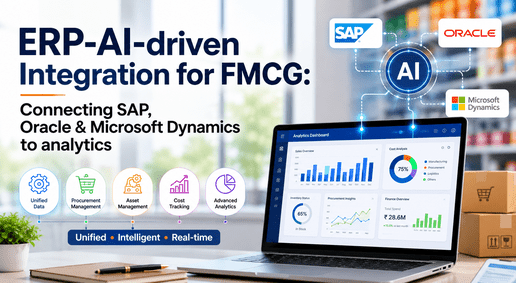
FMCG enterprises running SAP, Oracle E-Business Suite, or Microsoft Dynamics 365 generate massive volumes of data across procurement, production, inventory, logistics, and finance — yet most remain trapped in system silos, with analytics teams spending 60–80% of their time on data extraction and reconciliation rather than analysis. The gap between ERP data and actionable analytics creates delayed cost visibility, fragmented asset management, disconnected procurement insights, and reactive decision-making that costs FMCG manufacturers 3–8% of annual EBITDA in operational inefficiencies. iFactory's AI-Powered ERP Integration Platform breaks these silos by connecting SAP, Oracle, and Microsoft Dynamics with a unified analytics layer that synchronizes asset management, procurement, production, inventory, and cost data in real time — enabling FMCG operations teams to move from fragmented spreadsheets to a single source of truth with AI-driven predictive cost tracking, anomaly detection, and automated procurement optimization. Book a Demo to see iFactory's ERP integration platform configured for your FMCG operations and ERP landscape.
Connect SAP, Oracle & Microsoft Dynamics to AI-Powered Analytics for Unified FMCG Operations
iFactory's ERP Integration Platform synchronizes asset management, procurement, production, inventory, and cost data across your ERP systems into a single analytics layer — eliminating data silos, reducing reconciliation effort by 70–85%, and enabling AI-driven predictive cost tracking and procurement optimization for FMCG manufacturers.
ERP-to-Analytics Integration — Manual ETL vs Traditional Middleware vs AI-Driven Unified Platform
The table below compares three approaches to connecting ERP systems with analytics platforms across the critical data domains that drive FMCG operations. Manual ETL processes require dedicated data engineering teams and break when ERP systems are upgraded. Traditional middleware offers reliable data transport but lacks intelligent mapping, quality validation, and analytics context. iFactory's AI-driven unified platform provides pre-built connectors with intelligent data mapping, automated quality validation, and embedded analytics that turn ERP data into operational intelligence without custom development.
| Integration Domain | Manual ETL Processes | Traditional Middleware | iFactory AI-Driven Unified Platform |
|---|---|---|---|
| Data extraction method | Custom SQL scripts per table per ERP | Pre-built connectors with fixed schema mapping | AI-adaptive connectors with auto-schema discovery and incremental extraction |
| Data quality validation | Manual QA with periodic sampling | Rule-based validation in middleware layer | Automated quality checks with anomaly detection and auto-correction workflows |
| Asset management sync | Monthly batch extracts reconciled manually | Daily batch sync with manual exception handling | Real-time bi-directional sync with asset lifecycle status tracking and depreciation alignment |
| Procurement data integration | PO data extracted weekly with manual vendor matching | Daily PO, GR, and invoice sync with fixed mapping | Real-time procurement data integration with AI-driven vendor classification and spend categorization |
| Inventory cost tracking | Period-end inventory valuation manually extracted | Daily inventory snapshot with standard cost mapping | Real-time inventory valuation with AI-driven cost layer analysis and variance tracking |
| Production cost allocation | End-of-month manual allocation with spreadsheets | Fixed allocation rules in middleware | AI-optimized cost allocation with real-time material, labor, and overhead absorption tracking |
| Finance and analytics | Monthly GL extract with manual reconciliation | Daily GL batch with static chart of accounts mapping | Real-time GL sync with AI-driven account classification and predictive cash flow analytics |
| Update frequency | Weekly to monthly batch | Daily to hourly batch | Real-time sub-minute synchronization |
| Time to insight | 2–4 weeks from transaction to report | 1–3 days from transaction to dashboard | Seconds from transaction to analytics insight |
5 Root Causes of ERP Data Fragmentation and Analytics Disconnection in FMCG Operations
FMCG manufacturers that struggle with disconnected ERP data and delayed analytics insights typically share a common set of root causes spanning system architecture, data governance, process design, and organizational silos. These are not random data problems — they are predictable patterns that AI-driven integration can detect, correct, and prevent in real time.
Multi-ERP Landscape with Incompatible Data Models
FMCG enterprises operating across multiple regions and business units often run SAP for manufacturing, Oracle for financials, and Microsoft Dynamics for distribution — each with its own chart of accounts, asset classification, vendor master, and cost center structure. Manual mapping between these systems creates persistent data reconciliation issues, with asset registers differing by 15–30% across systems and procurement spend categories varying so widely that enterprise-wide category management becomes impossible. iFactory's AI-driven data mapping automates cross-system reconciliation using machine learning to identify equivalent records, normalize classifications, and maintain a unified data model.
Batch Processing Delays Creating Analytics Blind Spots
Traditional ERP integration relies on nightly or weekly batch data extracts that create 1–14 day latency between operational transactions and analytics visibility. For FMCG operations where raw material prices fluctuate daily, production schedules change hourly, and customer demand shifts in real time, this latency creates analytics blind spots that lead to suboptimal procurement decisions, inventory stockouts or overstocks, and missed cost-saving opportunities. iFactory's real-time integration platform synchronizes ERP data with sub-minute latency, eliminating the gap between transaction and insight.
Manual Data Quality and Exception Handling
ERP data quality issues — missing vendor classifications, incorrect cost center assignments, duplicate asset records, and inconsistent unit of measure conversions — are typically identified during monthly reconciliation cycles when finance teams manually review variance reports. By the time data quality issues are discovered and corrected, the operational decisions based on that data have already been made. iFactory's AI-powered data quality validation identifies anomalies in real time as data flows from ERP to analytics, automatically flagging exceptions, routing them for correction, and maintaining an audit trail.
Procurement and Vendor Data Silos
Procurement data in SAP ERP, vendor performance data in Oracle, contract management in Dynamics, and supplier quality data in disparate systems create a fragmented view of the supplier ecosystem. FMCG procurement teams lack unified visibility into total spend by category, vendor performance across regions, and contract compliance, preventing effective strategic sourcing. iFactory's AI-driven procurement analytics aggregates data across all ERP systems into a unified supplier intelligence platform with automated spend classification and vendor scorecards.
Asset Lifecycle Data Disconnected Across Systems
Asset master data in SAP PM, depreciation data in Oracle Financials, maintenance history in CMMS, and utilization data in production systems create a fragmented view of asset lifecycle cost and performance. FMCG operations teams cannot answer basic questions about total cost of ownership by asset class, optimal replacement timing, or maintenance cost trends by equipment type. iFactory's unified asset management analytics layer aggregates asset data from all ERP systems with maintenance and production data into a single asset intelligence platform.
AI-Powered ERP Integration Technology Stack for FMCG Operations
Effective ERP integration for FMCG operations requires a technology stack that connects SAP, Oracle, and Microsoft Dynamics data sources, maps disparate data models into a unified schema, validates data quality in real time, and delivers analytics insights through operational dashboards and AI-driven predictions. The platform must handle the volume, variety, and velocity of FMCG data while maintaining data integrity and providing audit-ready traceability.
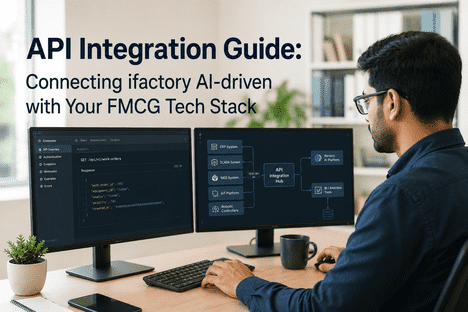
iFactory's integration platform includes pre-built connectors for SAP S/4HANA, SAP ECC, Oracle E-Business Suite, Oracle Fusion Cloud ERP, Microsoft Dynamics 365 Finance and Supply Chain Management, and Microsoft Dynamics AX. Each connector supports both REST API and database-level integration, providing flexibility for different network architectures and security requirements. The connectors automatically discover available tables, fields, and relationships within each ERP system, reducing connector configuration from weeks to days.
- SAP connector supporting RFC, BAPI, IDoc, OData, and CDS view extraction methods
- Oracle connector with multi-org support and descriptive flexfield auto-discovery
- Microsoft Dynamics connector supporting both Finance and Operations and CE data entities
- Incremental change data capture ensuring sub-minute latency for all transactions
- Bi-directional sync enabling analytics-driven actions to update ERP master data in real time
The most complex aspect of multi-ERP integration is mapping disparate data models — different chart of accounts structures, asset classification hierarchies, vendor master formats, and cost center definitions — into a unified analytics schema. iFactory's AI data mapping engine uses machine learning to analyze field names, data patterns, and value distributions across ERP systems, automatically suggesting mappings with 85–95% accuracy. Human analysts validate and refine mappings through a no-code mapping interface.
- ML-driven field mapping suggestions based on semantic analysis of table and column names
- Value mapping automation for code sets, status codes, and classification hierarchies
- Multi-ERP chart of accounts unification with AI account type classification
- Cross-system asset register reconciliation with fuzzy matching and confidence scoring
- Unified vendor master with automated duplicate detection and golden record creation
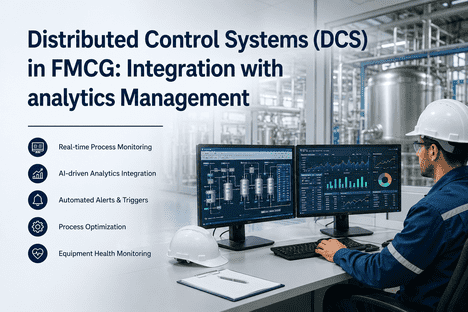
ERP data flowing into analytics must be validated for completeness, accuracy, consistency, and timeliness at every stage of the integration pipeline. iFactory's data quality engine applies automated validation rules — schema conformance, referential integrity, value range checks, cross-system consistency checks, and trend-based anomaly detection — at the point of extraction, during transformation, and at analytics load. Data quality scores are tracked by source system, table, and field, with automated alerts for quality degradation.
- 200+ pre-built data quality validation rules configurable per ERP source and data domain
- AI-powered anomaly detection identifying unusual data patterns before they affect reports
- Data quality scorecards tracked by source system, table, field, and time period
- Automated data correction workflows with human-in-the-loop approval for critical adjustments
- Complete data lineage and audit trail for every record from ERP source to analytics dashboard
The purpose of ERP integration is not data synchronization — it is enabling operational intelligence that drives better decisions. iFactory's platform includes embedded analytics dashboards and AI models that consume unified ERP data to deliver actionable insights across asset management, procurement, cost tracking, and operations. Analytics outputs are accessible through role-based dashboards, automated reports, and API feeds to downstream systems.
- Unified asset management dashboard with lifecycle cost, utilization, and maintenance analytics
- AI-powered procurement analytics with automated spend classification and savings opportunity detection
- Predictive cost tracking with AI models that forecast cost overruns 2–4 weeks in advance
- Inventory optimization analytics with demand-driven reorder point recommendations
- Executive performance dashboards with cross-ERP financial and operational KPIs
The 5-Step Framework for ERP-AI Integration Deployment in FMCG Operations
Deploying AI-driven ERP integration follows a structured progression that builds from connector configuration to intelligent analytics. Each step targets specific data domains and integration patterns, delivering measurable value within weeks. iFactory's deployment methodology has been validated across FMCG manufacturers running mixed SAP, Oracle, and Microsoft Dynamics landscapes.
Measurable FMCG Operations Improvement from AI-Driven ERP Integration
FMCG manufacturers that deploy AI-driven ERP integration with unified analytics consistently report measurable operational improvements within the first 60–90 days of platform operation. The metrics below represent the range of outcomes documented across FMCG enterprises using iFactory's ERP Integration Platform.
From Fragmented ERP Silos to Unified, AI-Powered FMCG Operations Intelligence
FMCG enterprises running SAP, Oracle, and Microsoft Dynamics across their operations represent some of the most complex data landscapes in manufacturing — yet the value trapped in fragmented ERP data is precisely the competitive advantage that unified analytics can unlock. The gap between disconnected ERP systems and integrated analytics intelligence is the gap between 12-day reporting cycles and same-day close, between 70% data reconciliation overhead and 80% time spent on analysis, and between fragmented asset views and unified lifecycle cost intelligence.
AI-driven ERP integration closes this gap by replacing manual ETL and batch middleware with intelligent connectors, automated data mapping, real-time quality validation, and embedded analytics that turn cross-system ERP data into operational intelligence without custom development. The platform pays for itself within 3–6 months through reconciliation cost elimination, procurement savings capture, asset lifecycle optimization, and inventory cost reduction — and delivers continuous value as AI models improve with every transaction synchronized across your ERP landscape. For FMCG operations ready to break down ERP data silos and transform analytics from a bottleneck into a competitive advantage, book a demonstration with iFactory's ERP integration engineering team to see live deployments in multi-ERP FMCG environments.
ERP-AI Integration for FMCG — Frequently Asked Questions
Connect SAP, Oracle & Microsoft Dynamics to AI-Powered Analytics for Your FMCG Operations with iFactory
iFactory's AI-Driven ERP Integration Platform synchronizes asset management, procurement, production, inventory, and cost data across your entire ERP landscape into a unified analytics layer — eliminating data silos, reducing reconciliation effort by 70–85%, and enabling AI-driven predictive cost tracking and procurement optimization. Turnkey deployment in 4–8 weeks.