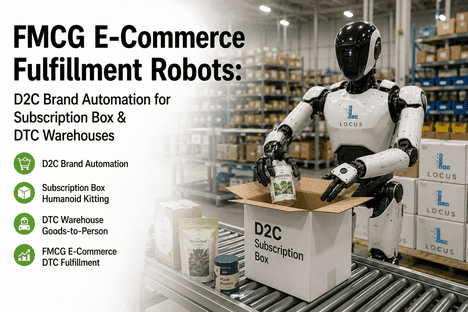
Every direct-to-consumer FMCG brand discovers the same inflection point between 500 and 2,000 orders per day. The packing bench that worked when the founder was hand-filling boxes during the brand's first year becomes a bottleneck that constrains growth. The error rate creeps from one mispick per 500 orders to one per 200, then one per 100, as seasonal temporary workers replace experienced order pickers. The subscription box that was supposed to ship every 30 days takes 35 days because the kitting line cannot keep pace with the subscriber acquisition cost that the marketing team is spending to grow the top line faster than the fulfillment operation can handle. The global e-commerce fulfillment market reached $112 billion in 2025, driven by D2C brands that now account for 18 percent of all FMCG online sales a share that is projected to reach 27 percent by 2030 as platforms like Shopify, BigCommerce, and WooCommerce reduce the friction of launching and scaling direct-to-consumer operations. But the same digital infrastructure that makes D2C brand creation accessible creates a fulfillment expectation gap: customers who order a subscription box of protein bars or a curated beauty bundle expect Amazon-style delivery speed from brands that are operating out of warehouse layouts designed for pallet storage, not piece-pick e-commerce flow. Robotics automation goods-to-person systems, autonomous mobile robots, collaborative pick-and-pack assistants, and automated kitting cells closes that gap by converting the manual, labour-intensive fulfillment operation into a scalable, repeatable, data-driven process that keeps pace with D2C growth without proportional headcount increases. iFactory's production monitoring, robotics AI integration, shift logbook, and inventory management modules were purpose-built to connect the automated fulfillment operation to the brand's order management, quality control, and continuous improvement systems giving D2C brand operators a single platform that manages the robotics, tracks the performance, and documents the compliance of every outgoing order.
D2C Fulfillment Automation · Subscription Kitting Robotics · Goods-to-Person AMR · Pick-Pack AI
Stop Scaling Headcount With Every 1,000 Orders. Start Scaling Automation With Every D2C Brand With iFactory's AI-Powered Fulfillment Robotics Platform.
Real-time robotics orchestration, subscription box kitting workflow management, goods-to-person AMR integration, pick-pack quality tracking, shift logbook digitisation, and OEE analytics for every fulfillment cell — all in a single platform designed for D2C brand operators, not robotics engineers.
Global e-commerce fulfillment market in 2025, with D2C brands representing the fastest-growing segment at 18% of online FMCG sales
Subscription Box Growth
$65B
Global subscription e-commerce market projected for 2026, growing at 17.5% CAGR as D2C brands shift to recurring revenue models
Warehouse Robotics Growth
23.4%
CAGR of warehouse robotics market — from $6.5B in 2025 to $28.3B by 2033, driven by labour shortages and D2C order complexity
Fulfillment Cost Impact
30–50%
Reduction in per-order fulfillment cost achievable through robotics automation — from goods-to-person AMRs to automated kitting and packing cells
The Four Pain Points That Make Manual D2C Fulfillment Unsustainable Past 1,000 Orders Per Day
The Walking Wastes
Order pickers in a manual warehouse walk 8 to 12 miles per shift.
Every step that an order picker takes to retrieve an item from a static shelf is non-value-added time. In a manual D2C warehouse, pickers spend 60 to 75 percent of their shift walking between locations rather than picking product. For a warehouse processing 2,000 orders per day, that translates to 120 to 180 hours of daily walking time across the picker team — hours that are paid as labour but produce no output. Goods-to-person robotics eliminates this waste by bringing the inventory to the picker. An AutoStore grid or a fleet of Locus Robotics AMRs can deliver product to the pick station in under 30 seconds from any location in the warehouse, converting 60 percent of walking time back into productive picking time and enabling a single picker to process 2.5 to 3.5 times more orders per shift.
The Subscription Kitting Bottleneck
Subscription boxes require 5 to 12 items per order — each one a manual touchpoint.
A subscription box is not a single-SKU order. It is a multi-SKU kitting operation that requires the operator to pick, assemble, inspect, pack, and label every item in the curated assortment. In manual operations, each touchpoint is an opportunity for error — wrong variant, wrong quantity, wrong insert, wrong label. Kitting errors in subscription boxes generate customer churn at rates 3 to 5 times higher than single-item order errors because the customer's entire experience of the brand is contained in that curated box. Automated kitting cells with collaborative robots reduce kitting time by 60 to 75 percent and eliminate mispicks through vision-guided item verification at every pick position.
The Seasonal Labour Trap
Peak season demand spikes 3 to 5 times above baseline — and temporary labour costs 40 percent more.
D2C brands face a fulfillment capacity problem that is mathematically impossible to solve with manual labour alone: they must staff for peak demand that occurs for 4 to 8 weeks per year while absorbing the cost of that overstaffing during the remaining 44 to 48 weeks. Temporary labour during peak season commands a 30 to 50 percent wage premium, requires 2 to 3 days of training before reaching acceptable productivity, and produces error rates 2 to 3 times higher than permanent staff. Robotics automation provides scalable capacity that matches demand without the seasonal labour penalty — AMR fleets can be deployed at any density up to the warehouse layout limit, and automated kitting cells run at consistent throughput regardless of the day of the week or the season of the year.
The Omnichannel Complexity
D2C, wholesale, Amazon FBA, and retail each demand different pick-pack-ship workflows from the same inventory.
A growing FMCG brand rarely sells through a single channel. The same inventory that feeds the D2C subscription box programme also supplies Amazon FBA shipments, wholesale pallets for retail distribution, and ship-direct orders for one-time purchases from the brand's Shopify store. Each channel has different pick quantities, different packaging requirements, different labelling standards, and different carrier integration needs. Managing all four workflows from the same warehouse without automation requires dedicated pick zones, separate packing stations, and parallel inventory buffers that multiply space requirements and inventory carrying costs. Robotics automation with flexible pick-and-pack workflows enables a single inventory location to serve all channels, with the robotics management system routing each order to the appropriate pick-pack-ship workflow based on channel rules.
Goods-to-Person Automation · AMR Fleet Orchestration · Subscription Kitting AI · Omnichannel Workflow Management · Pick Quality Tracking
Your Order Pickers Walk 10 Miles Per Shift. iFactory Lets Your Robots Walk Those Miles — While the Pickers Pick.
iFactory's fulfillment robotics platform orchestrates goods-to-person AMRs, automated kitting cells, and collaborative pick assistants from a single dashboard — with real-time order tracking, pick quality verification, shift logbook digitisation, and OEE analytics for every fulfillment cell. The result is per-order fulfillment cost reduced by 30 to 50 percent, pick accuracy above 99.9 percent, and scalable capacity that matches D2C order growth without proportional headcount increases.
How Goods-to-Person Robotics, Automated Kitting, and AI-Powered Orchestration Convert Order Data Into Shipped Packages — A Six-Stage Fulfillment System
iFactory's fulfillment robotics platform integrates goods-to-person automation, subscription box kitting robotics, and omnichannel workflow management through a six-stage system that converts every incoming order into a picked, packed, labelled, and verified shipment without manual intervention beyond the packing station. Understanding this system is essential for D2C brand operators evaluating fulfillment automation — because the throughput of the fulfillment operation depends on the orchestration of the automation layers, not the speed of any single robot or picker.
01
Order Intake & Channel Routing
Orders from Shopify, Amazon, WooCommerce, and direct API feeds are ingested into the iFactory orchestration engine. Each order is classified by channel, priority, and fulfillment workflow — D2C single-SKU, subscription box kitting, wholesale pallet, or Amazon FBA prep. The engine assigns each order to the appropriate pick-pack-ship workflow based on channel-specific rules, packaging requirements, and carrier integration preferences.
02
Goods-to-Person Inventory Delivery
AutoStore bots, Locus AMRs, or comparable goods-to-person systems retrieve inventory pods or totes from the storage grid and deliver them to the assigned pick station. The iFactory robotics AI module calculates optimal pod retrieval sequences to minimise bot travel time and station idle time, achieving an average inventory-to-station delivery time of under 20 seconds in a well-configured layout.
03
Vision-Guided Pick Verification
AI vision cameras at each pick station verify that the correct SKU, variant, and quantity have been picked before the item moves to the packing zone. Mispicks are detected in under one second and flagged for immediate correction before they reach the shipping lane — eliminating the cost of returns and customer dissatisfaction that result from unverified manual picking.
04
Automated Kitting & Subscription Box Assembly
Collaborative robots at kitting cells assemble subscription boxes item by item, following the curated assortment plan defined in the order. Each item is picked from the delivered tote, verified by vision, placed in the box, and confirmed against the kitting manifest. When all items are confirmed, the box moves to the packing station for insert placement, closure, and labelling.
05
Automated Packing, Labelling & Manifesting
The packing station applies channel-specific packaging — D2C branded boxes, Amazon FBA poly bags with ASIN labels, wholesale cartons with pallet labels. Carrier-appropriate shipping labels are printed and applied automatically. The manifest is generated and transmitted to the carrier at the moment the label is applied, eliminating the batch manifesting delay that adds 2 to 4 hours to order-to-carrier handoff in manual operations.
06
Performance Analytics & Continuous Improvement
Every order, every pick, every kitting cycle, and every packing event generates data that flows into iFactory's OEE analytics and shift logbook modules. Fulfillment throughput per station, pick accuracy per operator, kitting cycle time per SKU, and packing cost per order are tracked and reported in real time. Variance outside the control limit triggers automated root-cause analysis and improvement recommendations.
The outcome of this integrated fulfillment system is measurable and repeatable: D2C brands deploying iFactory's robotics fulfillment platform report per-order fulfillment cost reductions of 35 to 50 percent within the first six months. A subscription box brand processing 3,500 orders per day reduced per-box kitting time from 6.2 minutes to 2.1 minutes over seven months, improved pick accuracy from 99.2 percent to 99.96 percent, and scaled to 6,000 orders per day during peak season without adding a single picker — recovering the full platform investment within 11 months.
Goods-to-Person vs Autonomous Mobile Robots vs Automated Kitting — Matching the Robotics Technology to the D2C Fulfillment Workflow
Not all D2C fulfillment operations have the same robotics requirements. A subscription box brand processing 500 curated kits per day has different automation needs than a private-label DTC brand shipping 5,000 single-SKU orders per day. iFactory's platform is robotics-agnostic — it integrates with the major goods-to-person storage systems, autonomous mobile robot fleets, and collaborative kitting cells, allowing the D2C brand operator to select the automation technology that matches their order profile, SKU count, and growth trajectory while managing all robotics through a single orchestration dashboard.
AutoStore & Cube-Based Goods-to-Person
Ideal for high-SKU-count D2C operations where inventory density and pick velocity are the primary requirements. AutoStore cubes store up to 4 times more inventory per square foot than static shelving, and the robots deliver totes to the pick station in under 30 seconds from any grid position. Best suited for D2C brands with 500+ active SKUs and order profiles that require frequent access to a broad inventory range. iFactory's robotics AI module optimises bot scheduling, tote replenishment timing, and pick station workload balancing across the grid.
Locus, 6 River Systems & AMR-Based Goods-to-Person
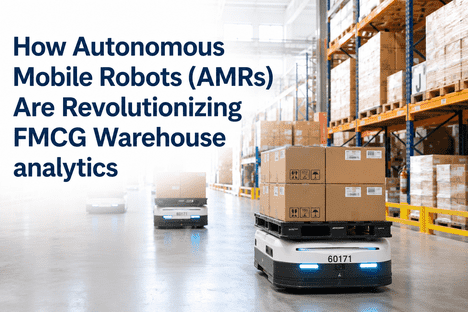
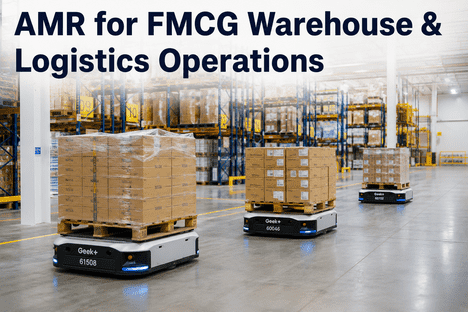
Best suited for D2C operations with mid-range SKU counts and order profiles that mix single-SKU picks with multi-item orders. AMRs navigate autonomously through the warehouse, carrying inventory shelves or totes to pick stations without requiring permanent infrastructure changes. AMR fleets can be scaled incrementally — add robots as order volume grows — making them ideal for D2C brands that are scaling from 500 to 5,000 orders per day and want to match automation investment to revenue growth.
Collaborative Robot Kitting Cells
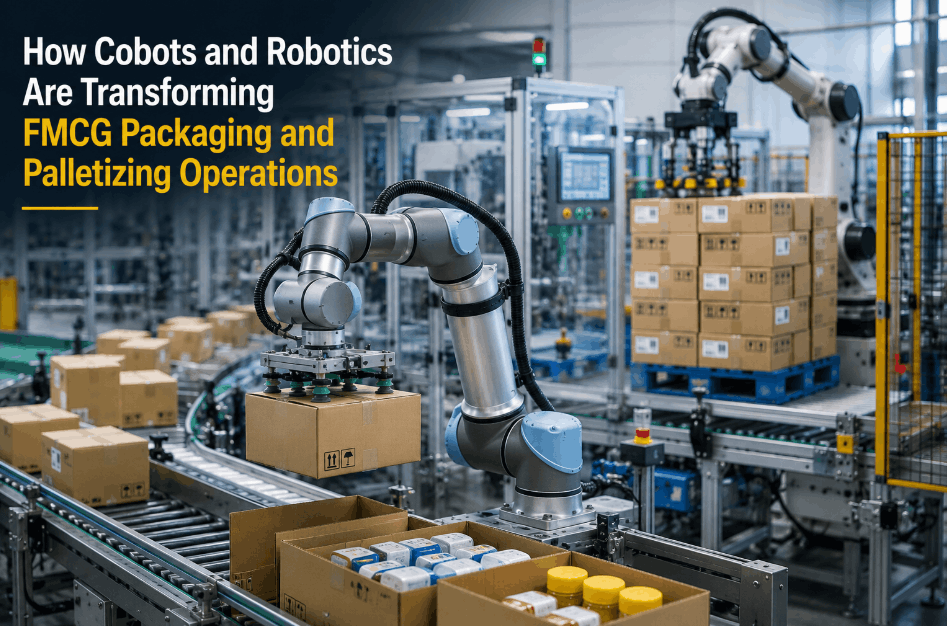
Designed specifically for subscription box assembly, sample kit packing, and curated assortment fulfillment. Cobots equipped with vision-guided grippers pick items from delivery totes and place them in the box according to the kitting manifest. A single kitting cell with one cobot and one operator can assemble 60 to 90 subscription boxes per hour — compared to 15 to 25 boxes per hour for manual kitting. Cobot kitting cells also eliminate the repetitive motion injuries that are the most common workplace safety issue in manual kitting operations.
The impact of matching robotics technology to fulfillment workflow is a step-change in both throughput and cost efficiency across every order type. D2C brands that deploy the correct mix of goods-to-person storage, AMR transport, and cobot kitting achieve per-order fulfillment costs of $2.50 to $3.50 — compared to $4.50 to $6.50 for fully manual operations — while reducing pick error rates from one per 200 orders to one per 5,000 orders and eliminating the seasonal labour scalability constraint that limits D2C growth.
Fulfillment Automation Maturity
The D2C Fulfillment Automation Maturity Model — From Manual Bench Packing to Fully Autonomous Omnichannel Fulfillment
D2C fulfillment automation follows a well-documented maturity progression. Each stage delivers measurable reductions in per-order cost and error rate, but the speed of progression depends on the digital infrastructure connecting the robotics layer to the order management and continuous improvement systems. iFactory's platform is designed to support brands at every maturity level while providing the data and orchestration foundation needed to advance to the next stage.
Stage 1
Manual Pick-to-Cart
Orders are picked by walking the aisles with a cart and paper pick list. Error rate: 0.5–2%. Fulfillment cost per order: $4.50–$6.50. Capacity limited by picker endurance and shift length. iFactory's shift logbook digitises pick manifests and tracks per-order cycle time.
Stage 3
AMR-Assisted Pick-to-Cart
AMRs follow pickers or deliver totes to pick stations. Walking time reduced by 50–60%. Error rate: 0.1–0.3%. Fulfillment cost per order: $3.00–$4.00. iFactory's robotics AI module manages AMR fleet orchestration and pick station workload balancing.
Stage 5
Fully Automated Omnichannel Fulfillment
Goods-to-person storage, AMR transport, cobot kitting cells, and automated pack-and-label lines serve all channels from shared inventory. Error rate: <0.01%. Fulfillment cost per order: $2.00–$2.80. iFactory's platform orchestrates all automation layers from a single dashboard.
How iFactory Accelerates Fulfillment Automation Maturity Progression
iFactory's fulfillment robotics platform provides the digital infrastructure for every maturity stage. At Stage 1, the shift logbook digitises pick manifests and captures per-order cycle time, establishing the baseline for automation investment justification. At Stage 3, the robotics AI module integrates with AMR fleets from Locus, 6 River Systems, or comparable providers — managing pick station assignment, robot routing, and workload balancing without requiring a dedicated fleet management software licence. At Stage 5, the platform orchestrates goods-to-person storage (AutoStore, OPEX, or comparable), AMR transport, cobot kitting cells, and automated packing lines from a single dashboard — with every pick verified, every order tracked, and every performance metric fed into the continuous improvement loop. Brands typically advance one full maturity stage every 4 to 6 months on the platform, compared to 12 to 18 months for brands managing automation through disconnected vendor-specific systems.
What iFactory's Fulfillment Robotics Platform Actually Does — Capabilities That Convert Every Order From a Cost Centre Into a Data Point
Robotics AI Orchestration & Multi-Vendor Integration
iFactory's robotics AI module integrates with AutoStore, Locus Robotics, 6 River Systems, GreyOrange, RightHand Robotics, and all major goods-to-person and AMR platforms through standard APIs — providing a single orchestration layer that manages robot task assignment, pick station workload balancing, inventory pod sequencing, and order-to-robot routing without requiring the brand to be locked into a single robotics vendor. The module also supports mixed-fleet configurations where AutoStore handles high-density storage and Locus AMRs handle pick-to-cart replenishment in the same warehouse.
Multi-Vendor IntegrationMixed-Fleet OrchestrationPick Station Load Balancing
Subscription Box Kitting Workflow Management
The kitting workflow engine manages every step of subscription box assembly — from curated assortment definition to cobot pick sequencing to box closure verification. Kitting manifests are generated from the subscription management platform and pushed to the cobot kitting cells as orders are released. Each item pick is verified by vision before it is placed in the box, and the completed box is weighed at the packing station to confirm item completeness before shipping. Brands using the kitting workflow engine report 40 to 60 percent faster box assembly times and a 90 percent reduction in kitting errors.
Every order in the fulfillment pipeline is tracked from intake to carrier scan with timestamps at each stage — order received, pick started, pick completed, kitting started, kitting completed, packed, labelled, manifested, and carrier-scanned. The carrier integration layer connects to UPS, FedEx, USPS, DHL, and regional carriers for rate shopping, label generation, and manifest transmission. The order-to-ship visibility dashboard gives the D2C brand operator a real-time view of the entire fulfillment pipeline with alerts for any order that exceeds the configured cycle time threshold.
End-to-End Order TrackingMulti-Carrier Rate ShoppingCycle Time Alerting
Fulfillment OEE Analytics & Shift Logbook
iFactory's OEE analytics module is configured for fulfillment operations — tracking pick throughput per station, kitting cycle time per SKU, packing cost per order, and overall fulfillment equipment effectiveness. The shift logbook captures every shift's performance data, quality incidents, and continuous improvement ideas — creating a complete digital record of the fulfillment operation's performance trajectory. Variance reports are generated automatically and highlight the specific stations, SKUs, or shifts where performance deviates from the control limits, enabling targeted root-cause analysis and rapid improvement.
What the Numbers Show — The ROI of Transitioning From Manual D2C Fulfillment to iFactory's Robotics-Powered Automation Platform
Manual Fulfillment (Before)
$4.50–$6.50
Per-order fulfillment cost for manual pick-to-cart operations, including labour, error-related returns, and packaging. Does not include the cost of seasonal labour premiums during peak periods or the customer lifetime value impact of delayed shipments.
Robotics-Powered Fulfillment (iFactory)
$2.00–$2.80
Per-order fulfillment cost after Stage 5 automation deployment — including amortised robotics hardware, platform subscription, and reduced labour. Error-related returns reduced by 90% and seasonal labour premiums eliminated.
Manual Fulfillment
0.5–2.0%
Pick error rate in manual operations — translating to 5 to 20 mispicks per 1,000 orders. Each mispick triggers a return costing $8 to $15 in reverse logistics and replacement shipping.
Robotics-Powered Fulfillment
0.01%
Pick error rate with vision-guided verification — fewer than one mispick per 10,000 orders. At this accuracy level, return-related costs are reduced by 90 to 95 percent and customer churn from fulfillment errors is virtually eliminated.
Our subscription box brand hit 1,200 orders per day and the manual kitting operation could not keep up. We were running three shifts, still shipping late, and the error rate was climbing as we hired temporary workers. We deployed an AutoStore grid with six cobot kitting cells integrated through the iFactory platform. The first week, we processed more orders than our best manual week with half the headcount. The pick accuracy went from 99.2 percent to 99.96 percent overnight because every pick is verified by vision before it touches the box. We scaled to 3,000 orders per day within four months without adding a single pick station. The platform paid for itself in eight months on reduced labour cost and returned orders alone. We are now planning our second AutoStore grid for the new product line.
The D2C FMCG brand that wins the next decade will not be the one with the best marketing spend or the most Instagram followers. It will be the brand that can fulfill every order — every subscription box, every Shopify impulse buy, every Amazon FBA replenishment — faster, more accurately, and at lower cost than its competitors. The brand that can scale from 500 orders per day to 10,000 orders per day without proportional headcount increases. The brand that can launch into three new sales channels from the same inventory base without adding warehouse square footage. The brand that can offer a better customer experience at a lower fulfillment cost than the D2C brands that are still operating on packing benches with paper pick lists and seasonal temporary workers.
Robotics automation for D2C fulfillment — goods-to-person storage, autonomous mobile robots, collaborative kitting cells, vision-guided pick verification, and automated packing lines — is not a future-state aspiration. It is a commercially available, proven technology stack that is being deployed today by D2C brands at every scale. AutoStore and Locus Robotics have installed thousands of systems globally. Cobot kitting cells from RightHand Robotics and Universal Robots are operating in hundreds of fulfillment centres. The technology that was previously available only to Amazon and Walmart is now accessible to any D2C brand that generates more than 500 orders per day. The missing piece has been the digital platform that connects these automation technologies to the brand's order management system, tracks their performance, and provides the continuous improvement infrastructure that converts raw automation potential into measurable fulfillment cost reduction.
iFactory's fulfillment robotics platform provides that missing piece. The platform gives D2C brand operators a single dashboard that orchestrates goods-to-person robots, AMR fleets, cobot kitting cells, and automated packing lines; manages subscription box kitting workflows with vision-verified pick accuracy; tracks every order from intake to carrier scan with cycle time alerts; and provides OEE analytics and shift logbook documentation that drive continuous improvement in fulfillment cost and quality. The platform is robotics-agnostic — integrating with AutoStore, Locus, 6 River Systems, GreyOrange, RightHand Robotics, and all major automation platforms — so the brand can select the best automation technology for its order profile and SKU count without being locked into a single vendor's ecosystem. Talk to an expert to learn how the platform maps to your brand's specific order profile, channel mix, and growth trajectory, or book a demo to see iFactory's fulfillment robotics platform in action on your own order data and warehouse layout.
Frequently Asked Questions
iFactory provides native connectors for Shopify, Amazon Seller Central, WooCommerce, BigCommerce, and custom OMS platforms via REST API. Orders from all channels are ingested into the iFactory orchestration engine, classified by channel-specific workflow rules, and routed to the appropriate pick-pack-ship process. For example, a Shopify D2C order for a subscription box is routed to the cobot kitting cell with the curated assortment manifest, while an Amazon FBA replenishment order for the same SKU is routed to the wholesale pick module with FBA-labelling requirements. The platform maintains real-time inventory synchronisation across all channels, preventing overselling and ensuring that inventory availability is accurate at the point of order intake. Connector setup for the first channel typically takes one to two days. Talk to an expert about your specific channel mix and OMS integration requirements.
Yes. The platform is robotics-agnostic and fully supports fleet-only AMR configurations from Locus Robotics, 6 River Systems, and comparable providers. AMRs are non-permanent infrastructure — they operate on the existing warehouse floor without requiring grid installation, floor modification, or structural changes. The AMR fleet can be deployed, scaled, and even relocated to a new facility as the brand grows. This makes AMR-only configurations ideal for brands that lease warehouse space, operate in multi-tenant fulfilment centres, or anticipate facility relocations within the next 12 to 24 months. The iFactory robotics AI module manages AMR fleet orchestration, pick station assignment, and robot routing regardless of whether the robots are delivering inventory pods or following pickers. Brands using AMR-only configurations achieve 40 to 60 percent of the fulfillment cost reduction available from full Stage 5 automation while maintaining maximum operational flexibility. Book a Demo to discuss the optimal automation configuration for your facility and lease constraints.
Subscription box variability is a core design requirement of the kitting workflow engine. When the brand's subscription management platform publishes a new monthly assortment, the kitting manifest is generated automatically and pushed to the cobot kitting cells as a reusable template. Each item in the assortment is mapped to its storage location in the goods-to-person system, and the cobot pick sequence is optimised for the specific item combination. The vision verification system is updated with the new item images and barcode data for the current assortment — a process that takes under 30 minutes for a 12-item box. The platform supports multiple active assortment templates simultaneously, enabling the brand to run legacy boxes, promotional variants, and the current monthly box through the same kitting cells without reconfiguration. Seasonal assortment changes with entirely new product categories are supported by updating the SKU-to-template mapping and allowing the model to learn the new items' pick characteristics during the first production run.
For a typical D2C brand processing 1,000 to 3,000 orders per day, the deployment timeline spans: weeks one to two for warehouse layout assessment, robotics vendor selection, and iFactory platform configuration; weeks three to six for robotics hardware installation, goods-to-person grid deployment (if applicable), and AMR fleet commissioning; weeks seven to eight for platform integration with order management systems, carrier setup, and kitting workflow template creation; week nine for system commissioning, operator training on the pick stations and tablet interface, and dashboard configuration; and week ten for go-live with the iFactory performance baseline established. D2C brands typically see the first measurable fulfillment cost improvement within two weeks of go-live as the visibility into pick accuracy and station throughput enables immediate process adjustments. The full platform investment — including robotics hardware, iFactory platform subscription, and integration — is typically recovered within 8 to 14 months through labor cost reduction, improved pick accuracy, and eliminated seasonal labour premiums. Book a Demo to discuss a deployment timeline and investment projection specific to your brand's order volume, SKU count, and channel mix.
The platform supports inbound receiving, returns processing, and inventory put-away in addition to outbound fulfillment. Inbound shipments from suppliers are received, inspected, and staged for put-away into the goods-to-person grid or AMR-served storage locations. Returns processing follows a configurable inspection workflow: each returned item is inspected, graded (resalable, refurbishable, or dispose), and routed to the appropriate inventory location or disposition channel. The inventory management module maintains real-time visibility into available, reserved, and incoming stock quantities across all storage locations and all sales channels. Returns processing throughput is tracked as a separate metric in the OEE analytics module, enabling continuous improvement in the returns operation — a capability that is increasingly important as D2C brands face return rates that can range from 5 to 20 percent depending on the product category.
Your D2C Brand's Orders Are Growing 40 Percent Per Year. Your Fulfillment Operation Should Scale With Them — Not Hold Them Back.
Goods-to-person robotics, AMR fleet orchestration, subscription box kitting automation, vision-guided pick verification, and omnichannel workflow management — all in a single platform designed for D2C brand operators, not robotics engineers.