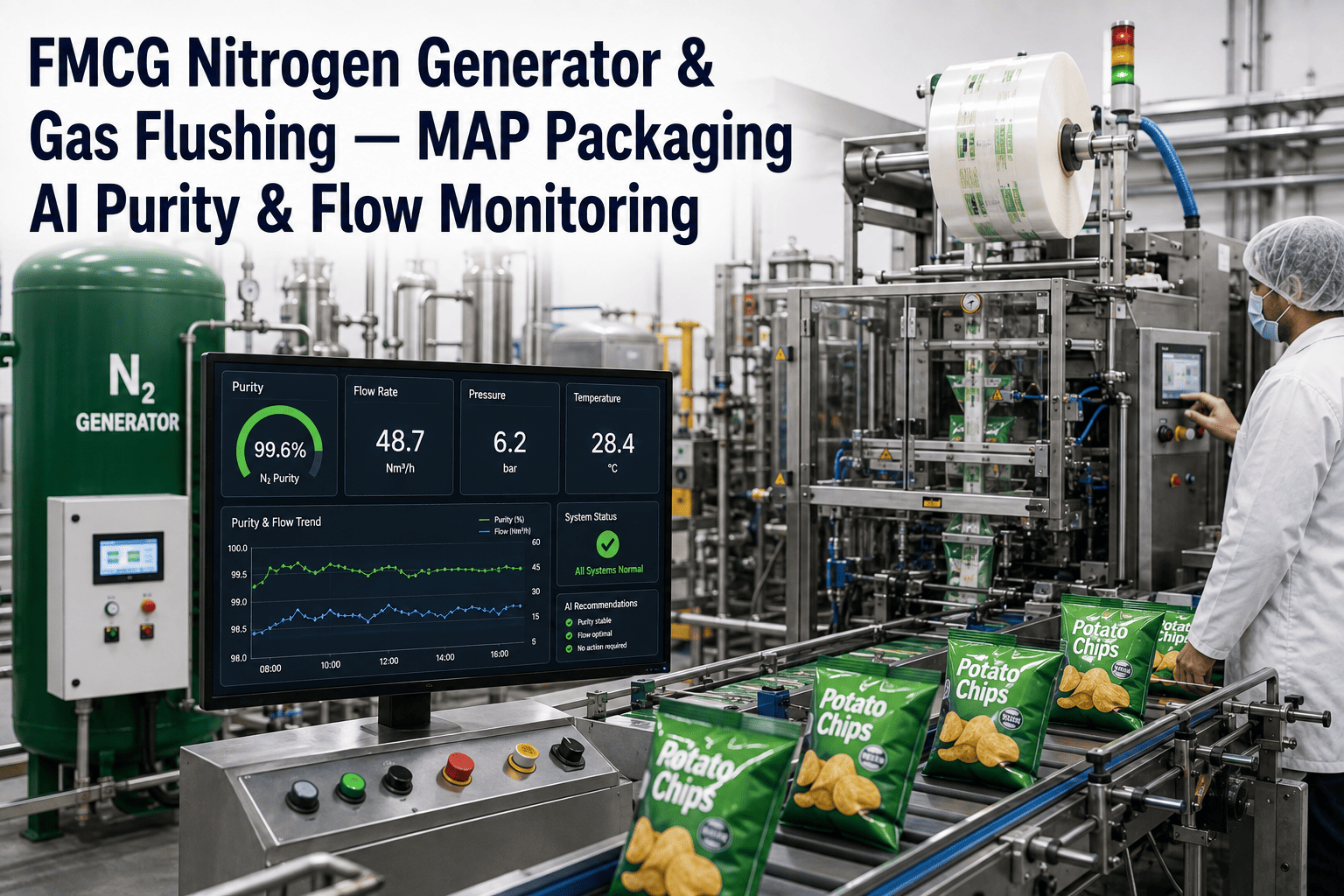
Modified atmosphere packaging only does its job if the residual oxygen inside the pack is actually low enough to slow oxidation and microbial growth the way the shelf life claim on the label assumes it will. That depends entirely on nitrogen purity and gas flushing flow staying within a narrow working range, and both of those drift for reasons that have nothing to do with the packaging line itself — a nitrogen generator's membrane or PSA beds degrade slowly, ambient humidity shifts purity output, and flow calibration drifts as valves wear. None of that shows up on a visual pack inspection. See how AI monitoring of nitrogen purity and gas flushing flow keeps MAP packaging within its residual oxygen target before a shelf life claim quietly stops holding true.
A Pack Can Look Perfect and Still Have the Wrong Atmosphere Inside
AI monitoring of nitrogen generator purity and gas flushing flow rate for MAP packaging, built to keep residual oxygen within target as generator and valve performance drift over time.
Three Ways Nitrogen Purity Degrades Without Anyone Noticing
A nitrogen generator producing gas for MAP packaging is a mechanical and chemical system with its own wear pattern, and that wear pattern doesn't announce itself the way a jammed conveyor or a stopped motor would. Membrane-based generators lose separation efficiency gradually as membrane fibers degrade with use. PSA (pressure swing adsorption) systems see their carbon molecular sieve beds slowly lose adsorption capacity over thousands of cycles. And ambient humidity swings between seasons change the moisture load the generator has to handle, shifting output purity even when the generator itself hasn't changed at all.
Track Purity and Flow Continuously, Not Just at Commissioning
iFactory monitors nitrogen generator purity and gas flushing flow rate continuously, flagging drift before residual oxygen levels move outside the target range for your packaging format.
Residual Oxygen Targets Vary by Packaging Format
| Packaging Format | Typical Concern If Oxygen Too High | Why Purity Precision Matters |
|---|---|---|
| Fresh Meat/Poultry MAP | Discoloration, accelerated spoilage | Narrow target range tied directly to shelf life claim |
| Baked Goods MAP | Mold growth, staling | Even small oxygen residuals accelerate quality loss |
| Ready Meals MAP | Off-flavor development, spoilage | Multi-component packs need consistent flushing across formats |
| Snack/Chip Packaging | Rancidity from oxidation | Long shelf life claims depend on very low residual oxygen |
What Continuous Monitoring Changes Day to Day
What Onboarding a Nitrogen System Involves
Most industrial nitrogen generators serving MAP packaging lines already have an integrated oxygen purity analyzer and flow meter as standard equipment, which means continuous monitoring can typically be built on data the generator is already producing rather than requiring new sensors. Onboarding starts by pulling historical purity and flow data alongside any available packaging-level residual oxygen test results, which lets the system learn the specific relationship between generator output and actual in-pack atmosphere for each packaging line and format the generator serves.
Because residual oxygen targets vary meaningfully by packaging format, the monitoring baseline is typically built separately for each product category a generator serves rather than applying one universal purity threshold across every line. Once the baseline reflects normal seasonal variation and typical equipment wear patterns, the system runs continuously alongside existing generator maintenance schedules, giving maintenance teams a data-backed trigger for membrane or bed replacement rather than relying solely on a fixed calendar interval that doesn't account for actual usage and ambient conditions.
Frequently Asked Questions
Give Your Nitrogen Generator a Continuous Purity and Flow Signal
iFactory tracks nitrogen purity and gas flushing flow continuously across every packaging format, catching drift before residual oxygen moves outside target.