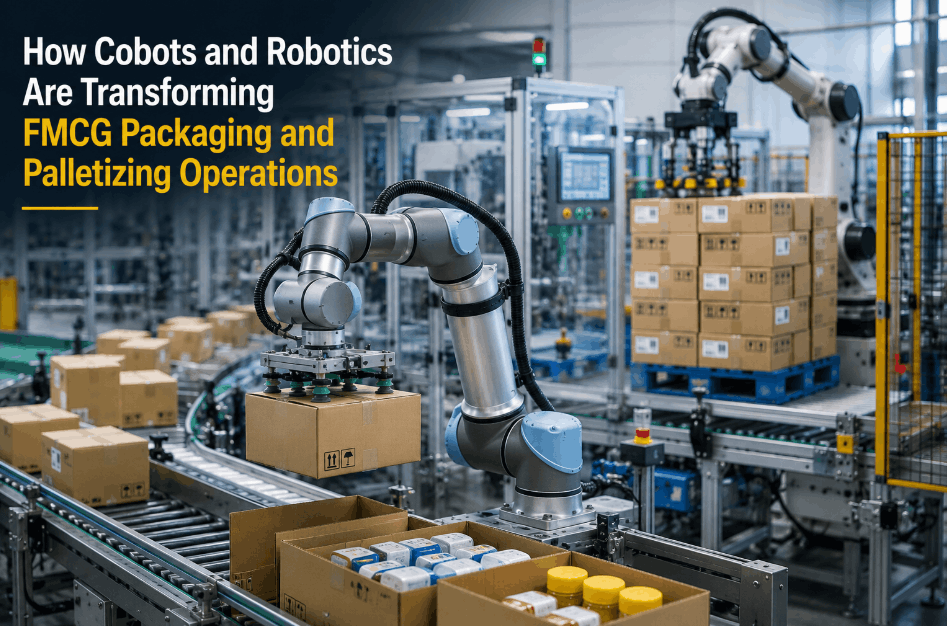
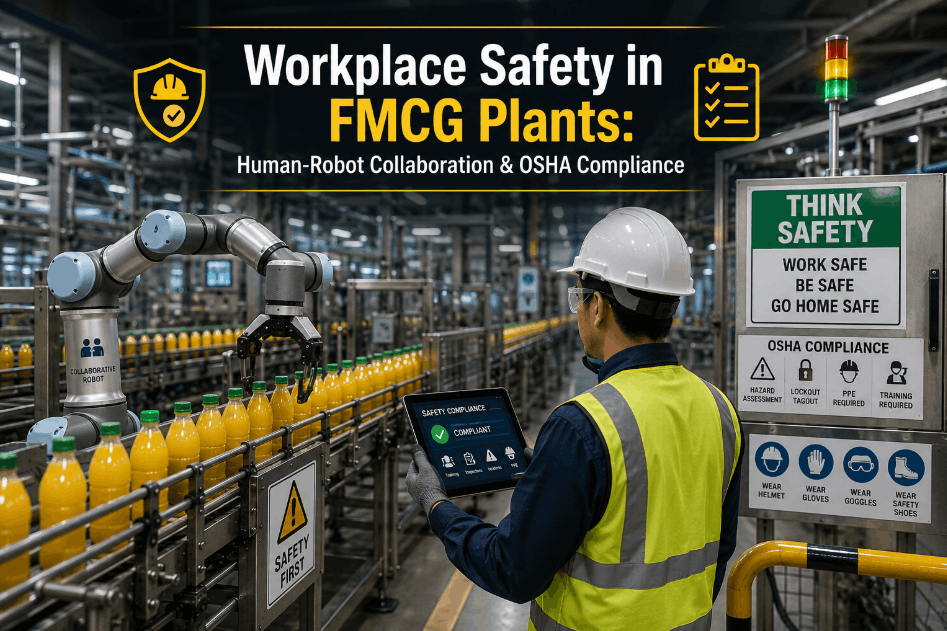
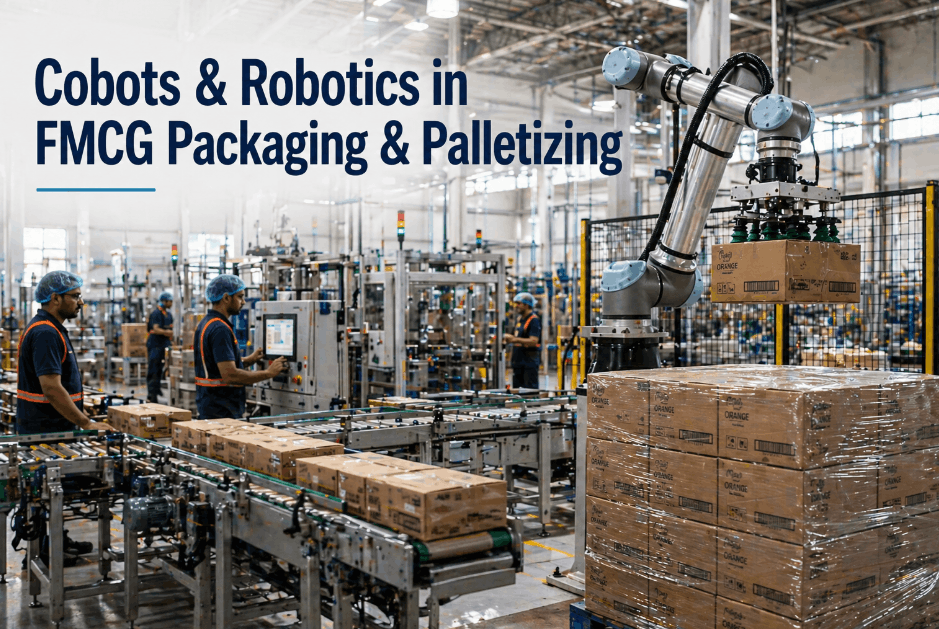
FMCG production floors across the globe are integrating collaborative robots at an accelerating pace — palletizing, case packing, pick-and-place, machine tending, and quality inspection tasks now share physical workspace with human operators on thousands of lines. A cereal manufacturer in Ohio deployed six collaborative palletizing robots expecting straightforward productivity gains. Within four months, two operators filed injury reports from awkward postures adopted to stay outside unmarked robot work envelopes, and a third operator triggered 140 protective stops in a single shift by repeatedly crossing a poorly calibrated safety scanner boundary — reducing line throughput by 31% that day. The robots were mechanically sound. The safety systems functioned as designed. The failure was in the human-robot interaction layer: workspace geometry that forced bad ergonomics, safety zones calibrated without operator workflow input, and zero structured reporting to connect these events to corrective action. When the plant reconfigured shared workspaces and connected every protective stop to incident workflows in iFactory AI's platform, protective stops dropped 89%, ergonomic complaints fell to zero, and palletizing throughput exceeded the original target by 17%. Book a Demo to see how iFactory AI manages human-robot collaboration safety across your FMCG floor.
FMCG · Robotics Safety · 2026
Human-Robot Collaboration & Safety for FMCG
ISO 10218/TS 15066 compliance · safety zone design · cobot risk assessment · operator training · protective stop analytics — ensuring safe, productive human-robot collaboration on high-speed FMCG production floors.
Why Traditional Safety Approaches Fall Short in Human-Robot Collaboration
The rapid deployment of cobots on FMCG production floors has outpaced the safety management systems designed to govern them. Legacy approaches — paper checklists, manual hazard logs, and quarterly OSHA audits — were designed for static human-only environments. They were never built to handle the dynamic risk profiles created by collaborative robots: variable operating speeds, software-defined safety zones, force-limiting sensors, and operators who interact with machinery without physical barriers. Four specific ceilings are visible across every FMCG operation deploying cobots at scale.
01
Paper-Based Risk Assessments
ISO 10218-2 requires documented risk assessments per cobot installation with task-specific hazard scoring. Paper assessments sit in binders, are never updated after commissioning, and do not trigger when end-effector or layout changes create new hazards.
Gap: Static Paper vs Dynamic Digital
02
Untracked Protective Stops
Each protective stop costs 15–45 seconds of restart time. At 50+ stops per shift, cumulative throughput loss exceeds 20%. Without structured tracking, plants cannot identify which zones, shifts, or operators drive stop frequency.
Gap: Blind vs Data-Driven
03
Missing Operator Training Records
62% of cobot incidents occur during manual intervention in automated cycles. Without documented training per operator per cobot cell — covering safe approach, E-stop locations, and Stop Before Touch procedures — plants cannot prove compliance.
Gap: Verbal vs Documented
04
Siloed Safety Data
Robot OEM dashboards track machine health — joint temperatures, cycle counts, fault codes. They do not track human factors: protective stop frequency, near-miss proximity events, ergonomic complaint correlation, or safety zone breach patterns.
Gap: Machine Data vs Human Factors
What Structured Safety Management Adds to Cobot Operations
The misconception some FMCG operators carry: collaborative robots are inherently safe because they have force-limiting sensors and stop on contact. ISO/TS 15066 compliance is not a property of the robot arm — it is a property of the complete application including end-effector, workpiece, speed profile, and workspace layout. A cobot wielding a sharp packaging blade or moving a 20 kg case stack at full speed is not inherently safe regardless of the robot's force-sensing capability. What changes with structured safety management is that every cobot cell has documented risk assessments, verified safety zone configurations, trained operators, and tracked protective stop patterns — creating the compliance record and operational visibility that force-limited hardware alone cannot provide. iFactory AI's platform, including its Safety Checklist and Incident Tracking modules, enables FMCG operators to deploy structured cobot safety programs without replacing existing robot OEM systems or production line infrastructure. Book a Demo to see how iFactory applies cobot safety management for FMCG operations.
Capability
Ad-Hoc Cobot Safety
Structured Safety Program
Risk assessment
Paper form at commissioning
Digital per-cobot risk register with auto-update on changes
Safety zone verification
Visual check at shift start
Photo-verified digital checklist with supervisor escalation
Protective stop tracking
Ignored or reset without analysis
Structured logging with pattern analysis per zone and shift
Operator training
Verbal pass-down at hire
Documented per-operator per-cell with expiry alerts
Incident reporting
Verbal to supervisor
Digital near-miss and incident capture with root cause analysis
Compliance documentation
Binder in safety office
Audit-ready ISO 10218 and OSHA records on demand
Shift handover
Verbal pass-down
Digital report with safety status and open items
Critical Failure Modes in FMCG Cobot Safety — What Structured Programs Catch
Collaborative robot safety incidents in FMCG environments follow identifiable patterns. ISO 10218 and ISO/TS 15066 force-limiting standards have made direct-contact injuries rare with properly configured cobots. The real failures — the ones that erode ROI, create injury claims, and drive operator pushback — fall into categories that traditional safety programs and robot OEM dashboards do not track.
U
Unplanned Manual Intervention
Operators reach into cobot work envelopes during active cycles to clear jams, adjust fixtures, or bypass perceived delays. Without Stop Before Touch procedures, these interventions create contact and pinch-point risks.
62% of cobot incidents
S
Safety Zone Miscalibration
Scanner fields and light curtains set during commissioning with an empty floor do not reflect real production conditions. Operator workflow paths cross poorly calibrated boundaries, triggering constant protective stops.
50+ stops per shift
T
Training Gaps
Operators assigned to cobot cells without documented training on workspace boundaries, safety system behavior, E-stop locations, and correct interaction procedures. Turnover and shift changes compound the gap.
4.7x higher incident rate
S
Sensor Drift & Bypass
Force-torque sensors, proximity detection, and speed monitoring drift from calibration or are intentionally bypassed to keep the line running. Contamination from food residue accelerates sensor degradation.
78% reduction with structured programs
The Keep / Retire / Transform / Replace Decision Matrix
Migration discipline starts here. Every safety artifact in your current cobot operation falls into one of four categories. Getting the categorization right in week one of the workshop saves quarters of debate later.
Keep
Core safety foundations
Robot OEM safety systems
Force-torque sensors & monitoring
Emergency stop infrastructure
Safety scanner & light curtain hardware
ISO/TS 15066 force-limit compliance
Established safety hardware. No business case to replace. Structured safety programs add the documentation, verification, and analytics layer on top.
Retire
Legacy safety layers
Paper risk assessment binders
Verbal shift handovers
Manual protective stop logging
Spreadsheet training tracking
Unstructured near-miss reporting
Replaced by digital checklists, automated stop analytics, and centralized compliance records. 70–90% reduction in administrative safety overhead.
Transform
Analysis workflows
Protective stop pattern analysis
Safety zone calibration verification
Operator training gap identification
Incident root cause trending
Shift handover safety reporting
Become digital workflows grounded in real-time data. Intelligence upgraded via iFactory Safety Checklist and Incident Tracking.
Replace
Notification & escalation layer
Verbal safety issue reporting
Manual escalation to supervisors
Paper-based safety audit logs
Unlinked training spreadsheets
Siloed incident records
Event-driven digital alert engine replaces manual notification. Safety-critical issues escalate automatically with full traceability.
Want this matrix applied to your specific cobot cells in a working session? Book a Demo to walk through every cobot installation and prioritize your safety program rollout.
Three Deployment Paths for Cobot Safety Programs
Same starting point, three valid destinations. The right path depends on cobot density, regulatory exposure, operator count, and existing safety infrastructure. Operators that pick the wrong path spend 12 months in pilot purgatory. Operators that pick the right path deploy in 6–10 weeks.
Path A
Augment in Place
6–8 weeks
Digital safety checklists and incident tracking deployed alongside existing cobot operations. Shadow mode for 4 weeks. No changes to robot OEM systems or existing safety infrastructure.
Full digital safety program replaces paper risk assessments and verbal training records. OEM dashboards retained for robot health. Protective stop analytics activated with shift handover integration.
Complete migration from ad-hoc cobot safety to structured digital program. All cobot cells covered. Full compliance documentation for ISO 10218, ISO/TS 15066, and OSHA audit readiness.
Pick the Right Cobot Safety Path for Your Production Floor
iFactory AI's FMCG safety practice runs a focused workshop against your specific cobot cells, existing safety documentation, operator training status, and regulatory requirements. You leave with a defended path recommendation, a 12-week deployment plan, and a risk reduction projection grounded in your actual protective stop data.
Generic safety management platforms handle inspection workflows. FMCG-aware platforms handle the integration reality — cobot OEM system connectivity, ISO 10218/TS 15066 compliance alignment, protective stop data ingestion, operator training lifecycle management, and audit-ready documentation for OSHA and GFSI food safety auditors. Eight criteria separate platforms that deliver production-grade cobot safety from platforms that create more paperwork.
01
Cobot OEM integration
Ask:
"Does your platform ingest protective stop events, safety interlock status, and cycle data from Universal Robots, FANUC, ABB, Doosan, and KUKA?"
Manual stop logging fails within weeks. Production-grade platforms receive stop events and safety status automatically via OPC UA or OEM API — no operator data entry required.
02
ISO 10218 compliance alignment
Ask:
"Are your risk assessment templates, safety checklists, and incident workflows aligned with ISO 10218-2 Section 5.4 and ISO/TS 15066 force-limit validation requirements?"
Platforms without standard-aligned templates require custom configuration. Production-grade platforms ship with ISO-aligned workflows that map directly to audit requirements.
03
Protective stop analytics
Ask:
"Can your platform identify which cobot cells, zones, shifts, and operators drive protective stop frequency above target thresholds?"
Stop counting without pattern analysis does not fix the root cause. Advanced platforms provide multi-dimensional stop analytics to pinpoint calibration and workflow issues.
04
Operator training lifecycle
Ask:
"Does your platform track training per operator per cobot cell with certification expiry, retrigger on workspace changes, and block unassigned operators?"
Training records not linked to specific cobot installations do not satisfy ISO or OSHA audit requirements. Cell-level training tracking is the minimum compliance bar.
05
Safety zone verification
Ask:
"Does your platform enforce photo-verified safety zone boundary inspections at configurable intervals with automatic escalation on non-compliance?"
Floor tape degrades and safety barriers shift. Digital checklists with photographic evidence create the verifiable inspection record that OSHA and internal auditors require.
06
Lockout/tagout for cobot cells
Ask:
"Does your platform digitize LOTO procedures as step-by-step mobile workflows with photo verification at each energy isolation point?"
Multi-robot production cells require complex energy isolation sequences. Missing or skipped isolation steps are the leading cause of serious LOTO-related injuries in automated FMCG environments.
07
Shift handover integration
Ask:
"Does your platform auto-generate cobot safety status reports at shift change with digital sign-off from outgoing and incoming operators?"
Verbal pass-downs miss critical safety information. Structured digital handover with safety interlock status, open incidents, and training compliance ensures every shift starts with complete safety awareness.
08
Deployment timeline commitment
Ask:
"When does the first verified safety checklist reach your production floor in live operation?"
6–8 weeks is the Path A benchmark. 8–12 weeks for Path B. 10–14 weeks for Path C. Vendors quoting 6+ months are building custom development rather than deploying a production-grade platform.
Want to score your shortlisted safety platforms against this 8-criterion framework? Book a Demo to run a vendor evaluation working session with our FMCG safety team.
The ROI Math — What Structured Cobot Safety Delivers for FMCG
The business case for structured cobot safety management in FMCG is not about software cost — it's about cost avoidance on OSHA penalties, injury claims, lost production from excessive protective stops, and operator turnover driven by poor workspace design. Plants moving from ad-hoc to structured cobot safety programs see measurable improvements across four metrics in the first quarter post-deployment.
−78%
Cobot incident reduction
Structured safety protocols with documented risk assessments and training reduce cobot-related events by 78% while maintaining operational efficiency.
−89%
Excessive protective stops
Workspace optimization through structured stop analytics reduces protective stops from 50+ per shift to fewer than 5 — recovering 85%+ full-speed operating time.
$0
Willful OSHA violation exposure
Documented compliance programs with photo-verified inspections, signed training records, and structured incident investigations eliminate the conditions for willful citation classification.
6–12 mo
Typical ROI payback
Full investment recovery through eliminated OSHA penalties, reduced injury claims, recovered production time, and lower operator turnover on cobot lines.
Expert Perspective
"The single biggest mistake FMCG operators make in cobot safety is treating collaborative robots as inherently safe because they have force-limiting joints and stop on contact. They don't fully understand that 'collaborative' is a property of the application, not the robot. A cobot with a sharp end-effector, a heavy workpiece at full speed, or an uncalibrated safety scanner is not safe regardless of the robot's force-sensing capability. What makes cobot safety real is a documented, verified, and continuously monitored safety program: risk assessments that get updated when end-effectors change, safety zones that get verified every shift, operators who are trained and certified per cell, and protective stop data that gets analyzed for pattern improvement. The plants that get this right see incident rates drop 78% and throughput increase because operators trust the system and protective stops drop from 50 to fewer than 5 per shift. The plants that skip the structured program get the first near-miss, the first OSHA citation, and a 12-month detour rebuilding their safety program from scratch."
— FMCG Robotics Safety Practice, 2026 industry insight
6–12 wk
deployment with pre-configured FMCG cobot safety templates
78%
reduction in cobot safety incidents with structured programs
Zero rip
of existing robot OEM systems or safety hardware required
Conclusion: The Cobot Safety Decision Has Three Right Answers
Ad-hoc cobot safety programs are not failing in FMCG — they are hitting an organizational ceiling that unstructured approaches cannot cross. Structured digital safety management adds the documentation, verification, and analytics layer that paper-based and verbal programs were never designed to deliver: ISO 10218-aligned risk assessments that stay current, photo-verified safety zone inspections that satisfy OSHA auditors, operator training records that auto-expire and recertify, protective stop analytics that identify root causes before injuries occur, and mobile-native shift handovers that ensure every operator starts with complete safety awareness. The modernization conversation has three valid answers depending on cobot density and regulatory exposure — augment in place (6–8 weeks), hybrid migration (8–12 weeks), or full safety modernization (10–14 weeks). All three keep existing robot OEM systems and safety hardware intact. All three deliver 78% reduction in cobot incidents and eliminate willful OSHA citation exposure within the first quarter. The decision worth making in 2026 is not whether to implement structured cobot safety — it is which of the three paths fits your specific production floor. Book a Demo to walk through your specific cobot cells and safety program requirements.
Run the Cobot Safety Workshop Built for Your FMCG Production Floor
iFactory AI's FMCG safety practice runs a 90-minute workshop against your real cobot cells, existing safety documentation, operator training status, and regulatory requirements. You leave with a defended path recommendation, the keep/retire/transform/replace matrix applied to your installations, and a risk reduction projection grounded in your actual safety data.
Do collaborative robots need safety cages like traditional industrial robots?
No — cobots are specifically designed for fenceless operation under ISO/TS 15066 power and force limiting requirements. The cobot continuously monitors contact force and stops within milliseconds if it detects unexpected resistance. However, no fence does not mean no safety program. You need a documented risk assessment per ISO 10218-2, validated speed and force limits for your specific application, and ongoing verification that safety functions remain within specification. iFactory AI auto-schedules these verification workflows and maintains the audit trail that OSHA and ISO auditors require.
What is the difference between ISO 10218 and ISO/TS 15066?
ISO 10218 is the international standard governing the design and integration of industrial robots, including collaborative robots. It defines the risk assessment methodology, safety function requirements, and installation verification protocols required for cobot deployments. ISO/TS 15066 is the technical specification that extends ISO 10218 specifically to collaborative robot applications — defining permissible contact forces and pressures for 29 body regions, speed limits, and safety-rated monitored stop conditions. FMCG facilities must implement both standards to achieve compliant human-robot collaboration.
How many protective stops per shift is too many?
Well-designed cobot workspaces average fewer than 5 protective stops per shift. Poorly designed workspaces exceed 30–50 stops per shift. Each stop costs 15–45 seconds of restart time. At 50 stops per shift, cumulative throughput loss exceeds 20%, negating the productivity gain the cobot was deployed to deliver. If your cobot cells exceed 10 protective stops per shift, structured stop analytics will identify the calibration issues, workflow conflicts, or zone design problems driving the frequency.
What OSHA regulations apply to cobots in FMCG plants?
OSHA regulations most relevant to human-robot collaboration in FMCG environments include 29 CFR 1910.212 (machine guarding), 29 CFR 1910.147 (lockout/tagout), and the General Duty Clause requiring employers to address recognized hazards. For collaborative robots specifically, OSHA references ANSI/RIA R15.06 and ISO 10218 as recognized industry standards for cobot safety zone design and risk assessment. Willful OSHA violations in FMCG robotics environments carry penalties exceeding $160,000 per citation.
Does structured cobot safety reduce throughput?
No — when properly implemented, structured safety programs increase throughput by eliminating the root causes of excessive protective stops. A cobot cell experiencing 50 protective stops per shift at 30 seconds per stop loses 25 minutes of production per shift. Reducing stops to fewer than 5 per shift recovers most of that time. In documented case studies, throughput gains of 17% were achieved after safety zone recalibration and workspace optimization driven by structured protective stop analytics.