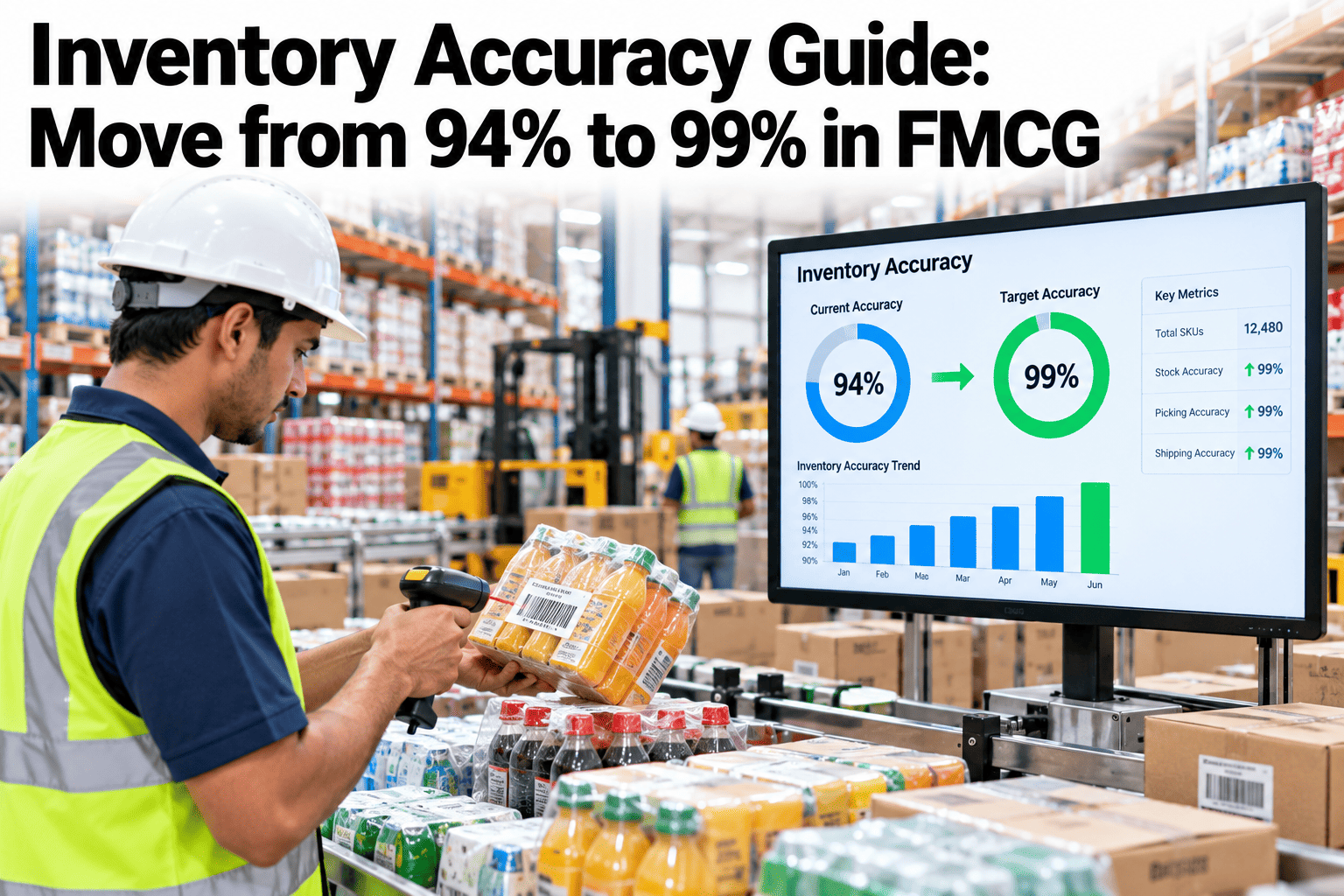
A warehouse with ninety-four percent inventory accuracy sounds healthy, yet it means about one record in seventeen is wrong, and across thousands of SKUs that adds up to constant surprises. Picks fail, orders ship short and safety stock grows to cover the doubt. Moving from ninety-four percent to ninety-nine does not need a new system. It needs smarter counting, early detection of errors and fixes at their source. To see where your accuracy gaps sit, you can review a record accuracy study with our team.
FMCG inventory accuracy
Move Inventory Record Accuracy From 94 Percent Toward 99
iFactory AI directs cycle counts to the records most likely to be wrong, flags anomalies as they happen and helps teams fix errors at the source.
Illustrative accuracy ladder
What accuracy costsWrong Records Spread Their Cost Across the Business
Inaccurate stock records rarely cause one big failure. They cause many small ones.
Failed picks
Pickers find nothing at the location
Short shipments
Orders go out incomplete
Excess buffer
Extra safety stock to cover doubt
Wasted counts
Teams count everything, not what matters
Five percentage points sounds small. On ten thousand stock records, it means six hundred wrong records instead of one hundred.
The measureDefine Accuracy Clearly Before You Improve It
Inventory record accuracy = records within tolerance / records counted
Agree the tolerance, such as exact match for high-value items and a small percentage for bulk goods, and apply it consistently.
Different sites measuring accuracy differently make network-level comparison meaningless. Fix the definition first.
Where errors come fromFive Common Sources of Record Errors
1
Receiving mistakes
Wrong quantity, lot or unit of measure at the dock.
2
Put-away errors
Stock placed in a different location from the record.
3
Picking mistakes
Wrong item or quantity picked and not corrected.
4
Unit of measure confusion
Cases, inners and each handled inconsistently.
5
Shrink and damage
Losses and write-offs not recorded promptly.
Counting finds errors. Fixing the source stops them returning.
Find Out Which Records Are Most Likely to Be Wrong
Share your adjustment and count history and see how iFactory AI would rank records by risk and plan smarter counts.
Count prioritisationCount Where Errors Are Most Costly and Most Likely
Counting everything equally wastes effort. A simple class system focuses attention.
| Class | Typical items | Count approach | Why |
|---|
| A | High value or high velocity | Frequent counts, often tied to triggers | Errors hurt most |
| B | Moderate value and movement | Regular scheduled counts | Balanced effort |
| C | Low value or slow | Less frequent counts | Errors matter less |
| Triggered | Any item with a warning sign | Count when triggered | Targets likely errors |
TriggersSix Warning Signs That Deserve an Immediate Count
Zero on hand with demand
The system shows none but orders keep coming.
Negative inventory
Records show impossible quantities.
Large adjustments
Unusual write-ups or write-offs.
Failed pick
A picker could not find the product.
Receipt discrepancy
Delivered quantity differs from the order.
Long idle stock
Stock that never moves may be misrecorded.
Triggers find errors days or weeks earlier than a scheduled count would.
Anomaly detectionHow Software Finds Errors Between Counts
1
Learn normal
Models learn usual movement and adjustment patterns.
2
Spot odd records
Unusual patterns raise a risk score.
3
Send a count task
The record joins a priority count list.
4
Learn from results
Count results improve future risk scores.
Anomaly detection supports counters. It does not replace the physical check.
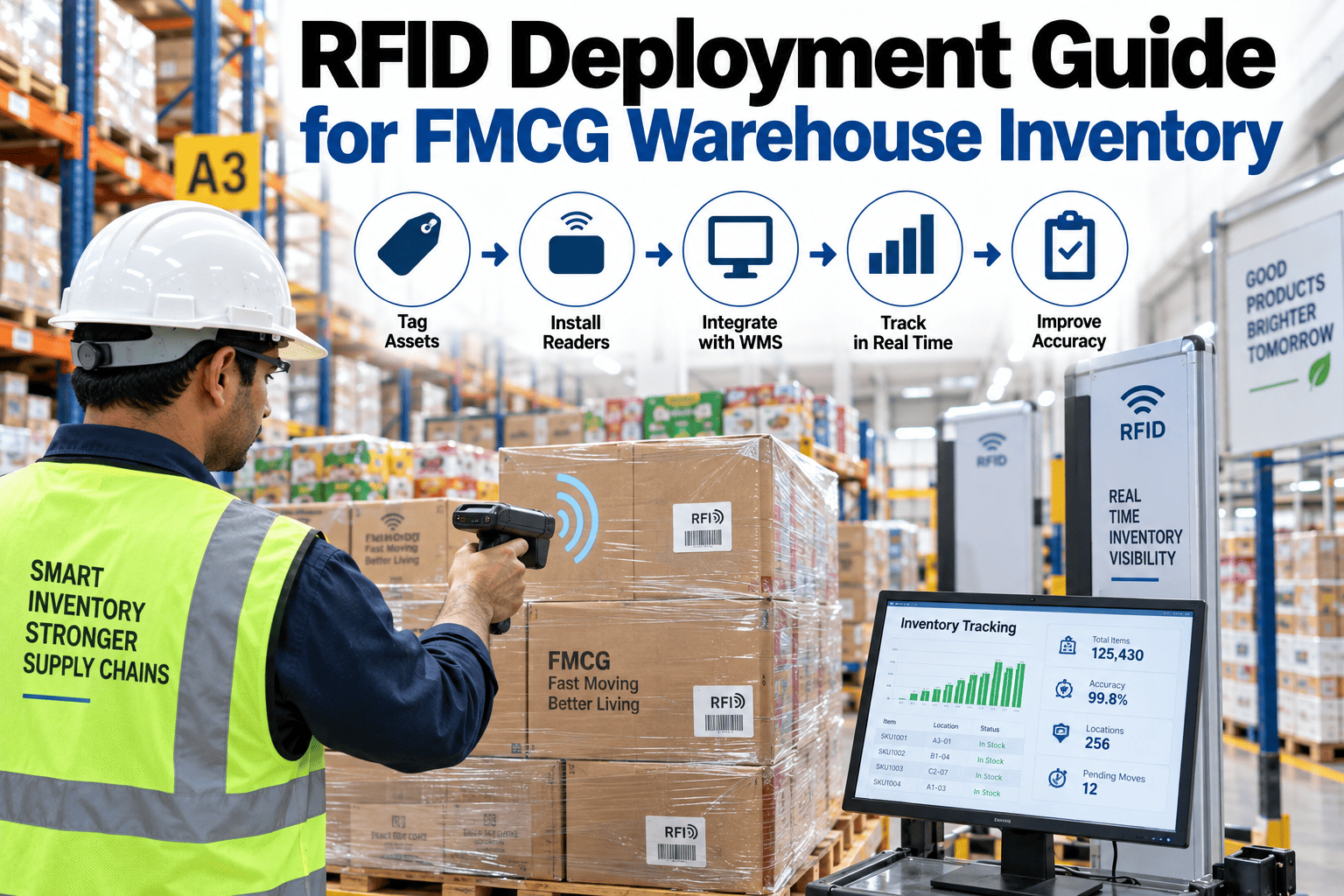
RFID and other tagsWhere Automatic Identification Helps
RFID can speed up counting where tags read reliably, but results depend on the product and packaging.
Manual counting only
Slow and labour intensive
Errors from tired counters
Small samples
Infrequent for most locations
With automatic identification
Fast bulk reading
Fewer manual mistakes
Larger coverage
More frequent confidence
Liquids and metal packaging can make tag reading harder. Test on your own products before investing.
What improvement looks likeBefore and After a Record Accuracy Programme
Track the same measures before and after. This view is illustrative.
A 90-day planThree Phases to Lift Accuracy
Days 1 to 30
Define accuracy, classify items and baseline counts.
Days 31 to 60
Introduce triggered counts and fix top error sources.
Days 61 to 90
Add anomaly detection and review results by site.
Accuracy definition and tolerance agreed
Items classified by value and movement
Triggered counts set up
Top error sources assigned to owners
Anomaly alerts reviewed weekly
Count results fed back to receiving and picking
Accuracy tracked by site and class
Owner named for each site
Expert reviewWhat a Supply Chain Accuracy Lead Would Check First
Accuracy improves when counts lead to root cause fixes. A counting programme that only corrects numbers keeps paying for the same errors.
Verdict
Strong when counts are risk-based and results change receiving and picking habits.
Watch for
Impressive accuracy percentages measured with loose tolerances.
Do next
Rank records by risk and fix the single largest error source first.
Frequently asked questionsWhat FMCG Teams Ask About Inventory Accuracy
Is 99 percent accuracy realistic?
Many sites can approach it with disciplined counting, clear definitions and root cause fixes, though results depend on SKU count, product type and operations. Set your target from a measured baseline.
Test a target on your data.
How often should we cycle count?
It depends on value, velocity and error risk. High-value or fast-moving items need frequent counts, while slow, low-value items can wait. Triggers add counts exactly where problems appear.
Ask about count frequency.
What is the biggest source of record errors?
It varies, but receiving, put-away and picking errors are common. A short study of count discrepancies by process step shows where yours come from.
Plan a discrepancy study.
Can RFID reach 99 percent on its own?
Not by itself. It can help counting speed and coverage, but tag reading depends on products and packaging, and process errors still need fixing.
Ask about RFID suitability.
How do we keep accuracy high once improved?
Keep triggered counts, anomaly alerts and monthly reviews running, and feed discrepancies back to the teams that cause them. Accuracy drifts when attention fades.
Plan a sustainment routine.
Count smarter, fix at the source
Close the Gap Between Your Records and Reality
Book a session with iFactory AI to rank your records by risk, plan smarter counts and build a route from today's accuracy toward ninety-nine percent.