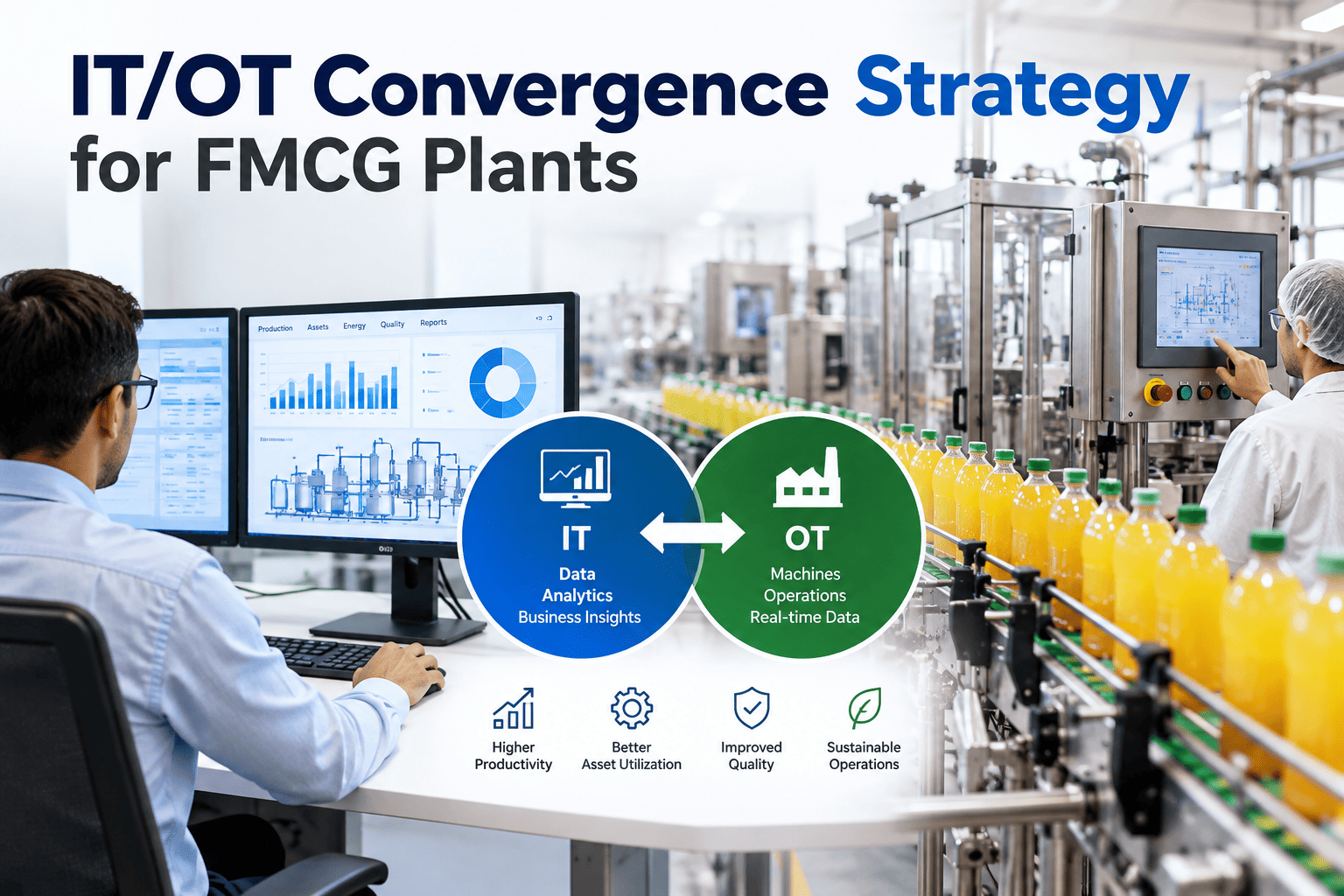
For decades, the network running a plant floor's PLCs and sensors and the network running the enterprise's ERP and analytics platforms have lived in genuinely separate worlds, built by different teams with different priorities, different security models, and often no formal communication channel between them at all. IT/OT convergence is the deliberate work of bridging that gap — organizationally, architecturally, and from a security standpoint — and it is a prerequisite for almost any enterprise-wide AI or analytics initiative, since none of those initiatives can function if plant floor data cannot reach enterprise systems reliably and securely. Plants beginning this work can start with a conversation with iFactory's support team about what a practical convergence architecture looks like for a specific plant landscape.
The Wall Between Plant Floor and Enterprise Was Built for a Reason — It Still Has to Come Down
Organizational, security, and architectural patterns that connect OT and IT without compromising either side are what make enterprise-wide AI and analytics actually possible.
Plant Floor
Enterprise
Why OT and IT Grew Apart in the First Place
OT systems were built and are still maintained around uptime, safety, and deterministic real-time control, where a security patch applied at the wrong moment can stop a production line, while IT systems were built around data governance, scalability, and a much faster patch and update cadence appropriate for office and enterprise systems. Neither priority is wrong for its domain, but the difference in culture and tooling means a straightforward network connection between the two, without careful architectural planning, introduces real risk to the side that was never designed to tolerate the other's operating assumptions.
The Three Dimensions Convergence Has to Address
A successful convergence strategy treats organizational, security, and architectural work as three parts of the same project rather than three separate initiatives running independently.
Organizational Alignment
OT and IT teams need a shared governance structure and clear decision rights over the connection points between their domains, rather than each team assuming the other will defer to them by default.
Security Architecture
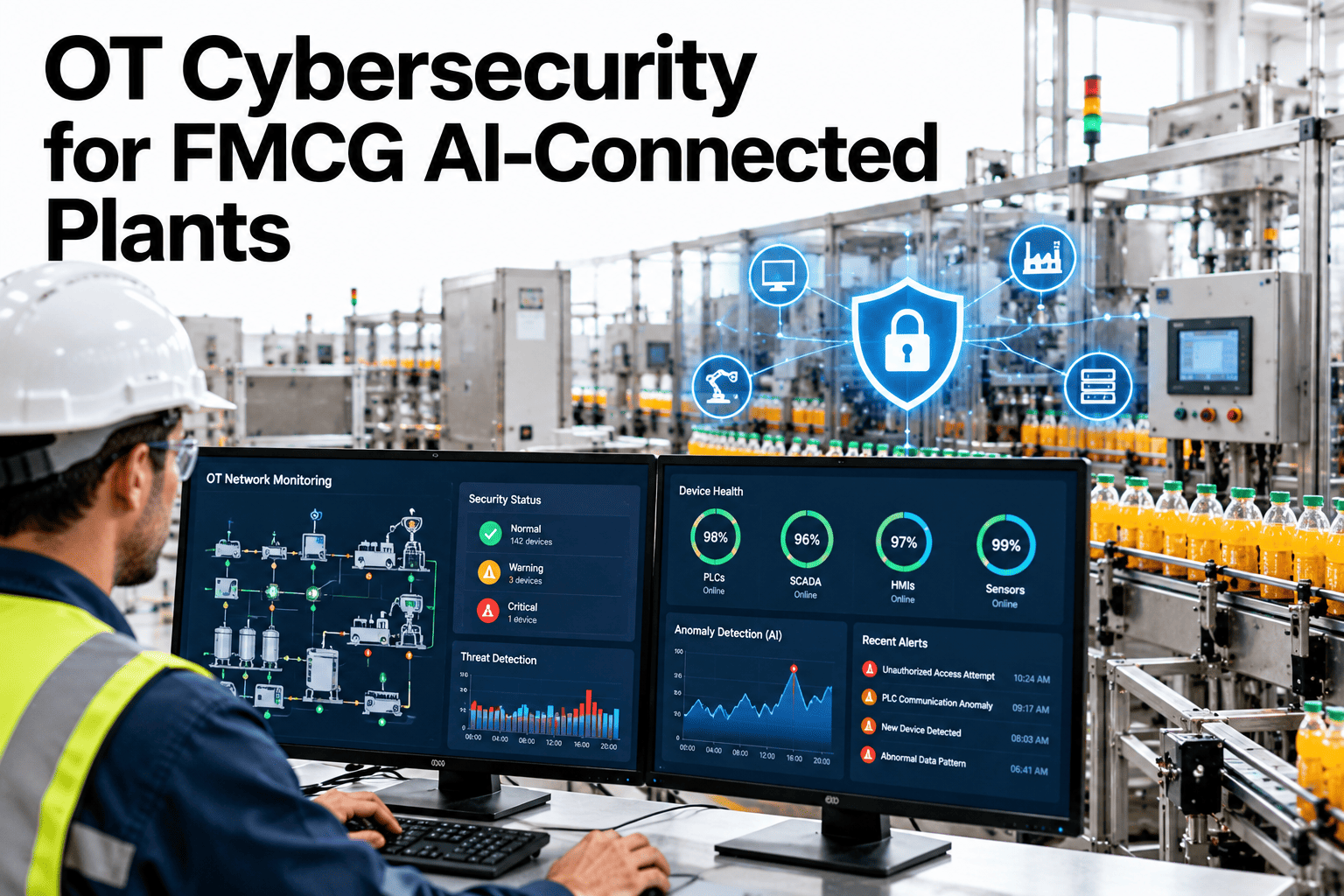
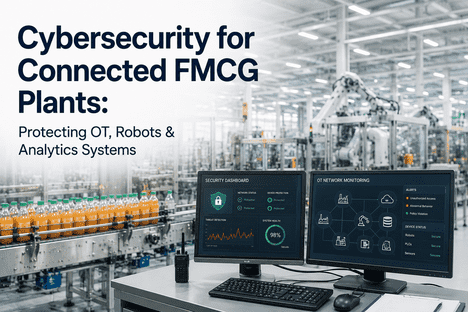
A properly segmented network with clearly defined data flow paths between OT and IT zones protects the plant floor's real-time systems from IT-side vulnerabilities while still allowing data to flow where it needs to.
Technical Integration
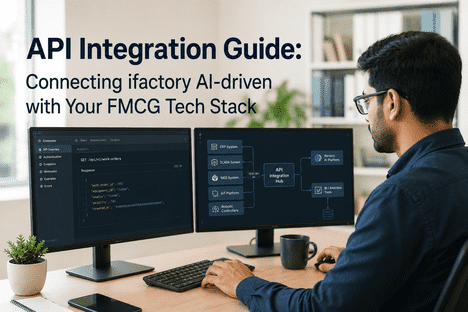
Standardized data collection and transformation patterns that work across different equipment vendors and protocols are what let the connection scale beyond a single, custom-built pilot integration.
Bridge Plant Floor and Enterprise Without Compromising Either
Book a 30-minute walkthrough of how iFactory structures secure, scalable IT/OT convergence architecture for FMCG plants.
Security Architecture Patterns Compared
How data actually flows between OT and IT zones has significant security implications, and the pattern chosen should match the plant's risk tolerance and existing network maturity.
| Pattern | How Data Moves | Security Profile |
|---|---|---|
| Direct Network Connection | OT and IT networks bridged directly | Weakest, exposes OT to IT-side vulnerabilities |
| Demilitarized Zone (DMZ) | Data passes through an isolated intermediate zone | Moderate, widely used industry standard pattern |
| Unidirectional Data Diode | Data flows one way only, OT to IT | Strongest, but limits bidirectional control use cases |
Building a Governance Model That Prevents Unilateral Decisions
The rework in the scenario above traces back to a governance gap, not a technical one, and closing that gap is usually simpler and cheaper than the architecture itself.
Establish a Joint Review Board
A standing group with representation from both OT and IT reviews any project that touches the boundary between the two networks before design work begins.
Define Shared Architecture Standards
A documented, pre-approved set of connection patterns, such as a standard DMZ design, removes the need to debate security architecture from scratch on every new project.
Require Security Sign-Off Before Build
Making security review a gate before implementation begins, rather than a check afterward, is exactly the change that would have prevented the rework in the scenario above.
A Composite Scenario: The Integration Project That Restarted After a Security Review
An FMCG manufacturer's IT team began a project connecting plant floor sensor data to a new enterprise analytics platform, moving quickly to demonstrate value to leadership. The initial architecture used a direct network bridge between the OT and IT networks, a decision made by the IT team without involving plant floor engineering, since the connection appeared to be a straightforward data pipeline from their side.
A security review triggered by the plant's OT engineering team, conducted only after the integration was substantially built, found that the direct bridge exposed several PLCs on the OT network to potential access from the IT side, a risk the OT team would never have accepted had they been consulted during the design phase. The project had to be substantially reworked to introduce a proper DMZ architecture with defined, monitored data flow paths, delaying the rollout and creating friction between the two teams that a joint governance process from the outset would have avoided entirely.
Mistakes That Undermine Convergence Efforts
Designing the Architecture Without Both Teams at the Table
A convergence architecture decided by only one side, as seen in the scenario above, misses risks and requirements the other side would have caught immediately, forcing costly rework later.
Treating Security Review as a Final Checkpoint Rather Than an Early Input
Bringing security review in only after a build is substantially complete, as happened in the scenario above, guarantees that any finding requires expensive rework rather than a cheap design change.
Building a Custom Integration Per Equipment Vendor
Without a standardized technical integration pattern, every new equipment vendor or protocol requires its own custom build, multiplying the effort required as the plant landscape grows.
Assuming Convergence Is Purely a Technical Project
Convergence efforts that ignore the organizational and governance dimension tend to produce exactly the kind of unilateral decision and friction seen in the scenario above.
Is Your Convergence Effort Structured Correctly
OT and IT teams share a governance process for connection decisions
Joint decision-making at the design stage is what would have prevented the unilateral architecture choice that caused the rework in the scenario above.
Security review happens during design, not after the build is complete
Early security involvement catches architectural risk while it is still a design change, rather than after significant engineering work has already been invested.
A standardized integration pattern exists across equipment vendors
A reusable pattern for pulling data off different equipment types avoids the multiplying custom-integration burden that would otherwise accompany plant landscape growth.
Frequently Asked Questions
What is the difference between IT and OT security priorities?
IT security prioritizes data confidentiality, integrity, and relatively frequent patching to address emerging vulnerabilities, while OT security prioritizes system availability and safety above all else, since an unplanned outage on a production line can have safety and financial consequences that a typical office IT outage does not carry. This difference in priority is exactly why a direct network bridge, as attempted in the scenario above, creates risk that neither team would accept once both perspectives are properly considered together.
What is a DMZ architecture and why is it commonly used for IT/OT convergence?
A demilitarized zone, or DMZ, is an intermediate network segment that sits between the OT and IT networks, allowing data to pass through defined, monitored pathways without a direct connection between the two zones, which is the industry-standard pattern that the manufacturer in the scenario above eventually had to adopt after their initial direct-bridge approach was found to expose OT systems to unnecessary risk.
How should organizational ownership of IT/OT convergence be structured?
Most successful convergence efforts establish a joint governance body with representation from both OT and IT, with clear decision rights over architecture choices that affect both domains, rather than leaving the decision entirely to whichever team happens to initiate a given project, which is precisely the gap that led to the rework described in the scenario above.
Can IT/OT convergence be done incrementally, or does it require a full architecture overhaul?
Convergence can and typically should be done incrementally, starting with a pilot connection using a proper security pattern like a DMZ from the outset rather than a shortcut direct connection, and expanding the pattern to additional plants and equipment types as it proves reliable. The mistake in the scenario above was not attempting incremental progress — it was skipping the proper security architecture even at the pilot stage, which meant the incremental approach still had to be reworked once the gap was found. Book a demo to see how iFactory structures an incremental, secure convergence rollout.
What is the first step for a plant beginning IT/OT convergence work?
The first step is establishing joint governance between OT and IT teams before any architecture decisions are made, since this is exactly the step that was skipped in the scenario above and directly caused the costly rework that followed. Once that governance structure exists, a security-reviewed pilot connection, using a DMZ or equivalent pattern from day one, gives both teams confidence before expanding the approach further. Plants beginning this process can reach iFactory support for guidance on structuring it.
Connect Plant Floor and Enterprise Without Compromising Either Side
iFactory structures IT/OT convergence with joint governance, proper security architecture, and reusable integration patterns built in from the start. Book a walkthrough to see it running on a real plant landscape.