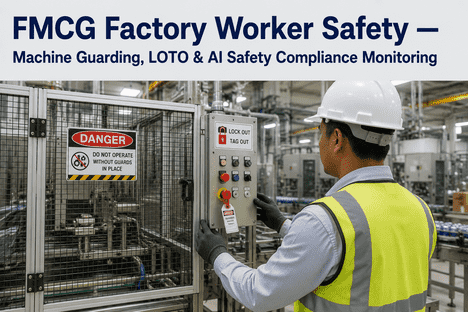
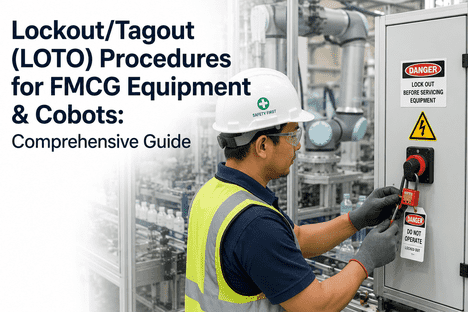
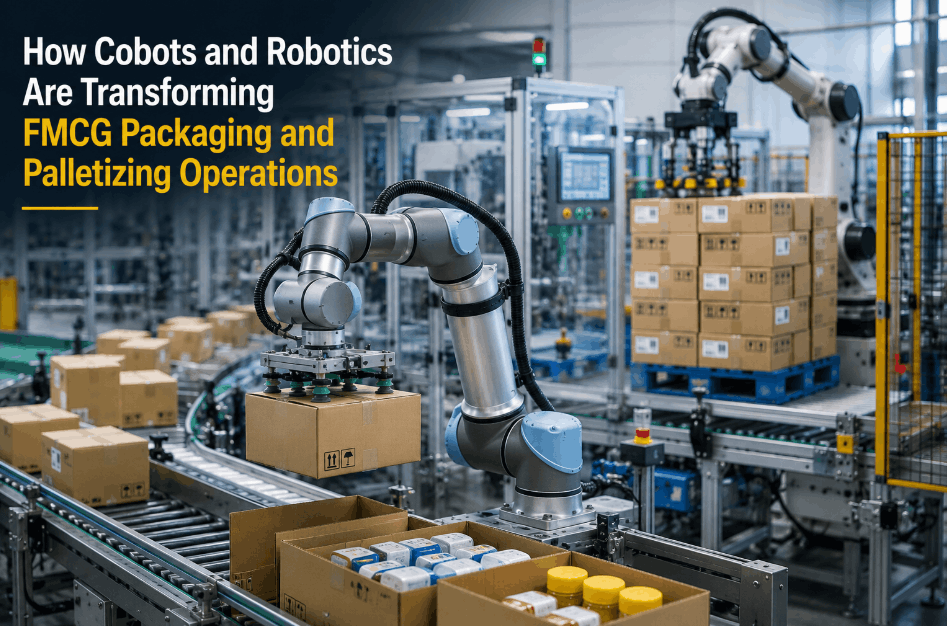
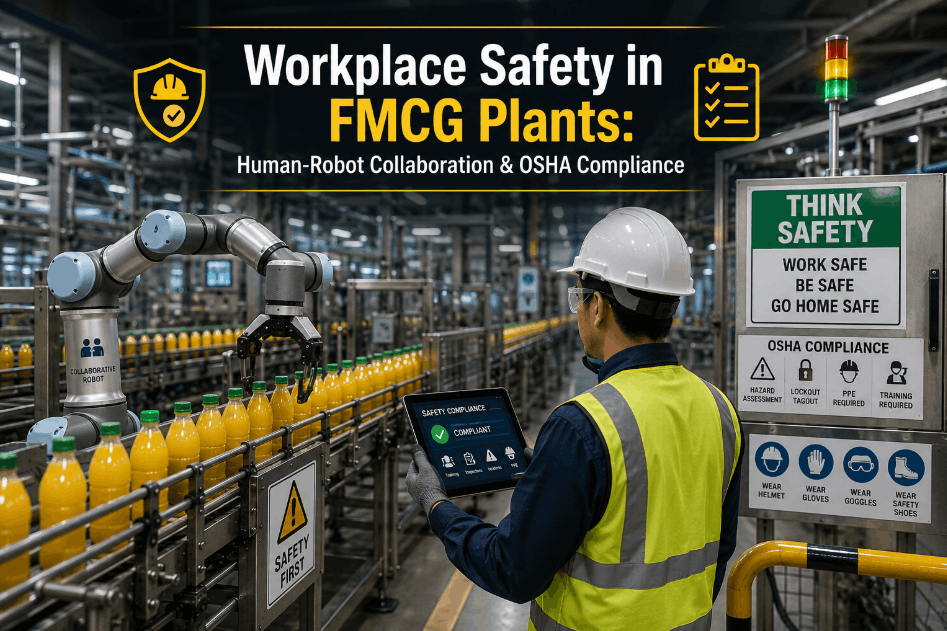
Lockout/tagout (LOTO) under OSHA 29 CFR 1910.147 is the fifth most-cited standard in American manufacturing, with 3 248 violations and $13.5 million in proposed penalties recorded in 2024 alone. In FMCG plants — where filling lines run 400+ containers per minute, packaging machines cycle every two seconds, and collaborative robots operate without physical guarding — a single energy-isolation failure can cause catastrophic injury, hours of unplanned downtime, and OSHA penalties exceeding $15 000 per violation. This guide examines equipment-specific hazardous energy sources, stored-energy risks, cobot isolation protocols, and how iFactory AI digitises LOTO workflows to reduce isolation errors by up to 67 percent and maintain continuous OSHA audit readiness.
Is Your FMCG Facility's LOTO Programme Ready for the Next OSHA Inspection?
iFactory AI digitises energy-control procedures, enforces zero-energy-state verification, and maintains a continuous audit trail — reducing isolation errors by 67% and cutting compliance preparation from weeks to minutes.
Why FMCG Equipment Demands Machine-Specific LOTO Procedures
FMCG production lines combine high-speed mechanical motion, pneumatics, hydraulics, electrical servo systems, and collaborative robots — all within arm's reach of operators. Each energy type requires a distinct isolation and verification procedure under the machine-specific energy-control plan mandated by OSHA 1910.147(c)(4). Generic LOTO programmes are the leading cause of isolation failures in FMCG facilities, because they fail to account for the unique energy profiles of each asset class.
The five primary hazardous energy categories in FMCG environments each present distinct isolation challenges that a compliant energy-control procedure must address individually.
- Electrical (480 VAC servo drives, 24 VDC controls): Capacitor banks in servo drives retain lethal charge for up to five minutes after disconnect. Isolation requires verified zero-energy state via a qualified electrician using a calibrated voltage meter.
- Pneumatic (80–120 psi actuators, grippers, blow-off stations): Trapped air in downstream lines and actuator cylinders can release stored energy even after main supply isolation. Bleed-down valves at every actuator and manual gauge verification are required.
- Hydraulic (fillers, compactors, palletisers): Accumulators can hold 3 000 psi for weeks after pump shutdown. Zero-energy verification must include accumulator discharge or mechanical blocking per the manufacturer's service manual.
- Mechanical (conveyors, wrappers, cartoners): Gravity-driven rollers, spring-loaded belt tensioners, and flywheel inertia create secondary motion risks after primary power isolation. Mechanical drop-stops and brake engagement must be confirmed.
- Collaborative robot (cobot) systems: Servo-motor back-drive, DC bus capacitors, battery-backed encoder circuits, and compressed-air end-effectors introduce non-obvious energy sources not covered by traditional LOTO programmes. A growing enforcement focus of OSHA's 2024–2025 National Emphasis Program on robotic hazards.
OSHA estimates that 42 percent of LOTO-related amputations involve energy released after the primary isolation point has been locked out — a statistic that underscores the critical importance of stored-energy verification in every FMCG LOTO procedure. iFactory AI's digital LOTO module generates machine-specific energy-control procedures from your equipment registry, ensuring every isolation point and stored-energy source is documented and verified before work begins.
Energy-Isolation Requirements by FMCG Asset Class
Each FMCG asset class has unique isolation points, stored-energy sources, and re-energisation sequences. The table below summarises the critical LOTO parameters for the six most common equipment categories found in food, beverage, and consumer goods production lines.
| Equipment | Primary Energy Sources | Stored Energy Risks | Isolation Points | Verification Method |
|---|---|---|---|---|
| Rotary Filler | 480 VAC servo, 120 psi pneumatics | Capacitor banks, pressurised product tank, spring-loaded fill valves | Main disconnect, pneumatic shut-off valve, product-supply block | Voltage tester, pressure-gauge check, manual valve actuation |
| Case Packer / Wrapper | 240 VAC motors, 80 psi pneumatics | Flywheel inertia, tensioned film rollers, pneumatic cylinder bleed | Motor disconnect, pneumatic lockout, film unwind brake | Spin-down timer, pressure gauge at zero, mechanical brake engage |
| Belt / Roller Conveyor | 480 VAC motor, 24 VDC sensors | Gravity-roller momentum, belt tension, capacitor in VFD | Motor starter lockout, VFD disconnect, emergency-stop latch | Visual belt-stop confirmation, voltage test at VFD bus |
| Palletiser / Depalletiser | 480 VAC servo, hydraulics 1 500 psi | Hydraulic accumulator, hoist gravity drop, clamp spring force | Hydraulic isolation valve, electrical main, mechanical drop-stop | Accumulator pressure gauge, mechanical stop pin insertion |
| Cartoner / Flow-wrapper | 240 VAC servo, 60 psi pneumatics | Cam-follower spring tension, pneumatic cylinder lock, glue-pot thermal | Servo-drive disconnect, pneumatic solenoid block, glue-pot power | Thermal cool-down check, cam-position visual, pressure gauge |
| Cobot (collaborative robot) | 48 VDC servo, 80 psi end-effector air | Servo-bus capacitor, back-drive kinetic, battery-backed encoder, air-cylinder spring | Robot controller disconnect, pneumatic shut-off, battery disconnect | Bus-voltage meter, arm-brake check, air-pressure gauge, encoder discharge |
OSHA 1910.147(c)(4)(i) requires each machine to have its own written energy-control procedure. iFactory AI's digital LOTO module automatically generates these procedures from your equipment registry, mapping each isolation point to the corresponding stored-energy verification step — eliminating the generic-procedure gaps that cause the majority of LOTO failures in FMCG facilities.
Stored-Energy Sources Most Frequently Missed in FMCG LOTO Procedures
The most frequently missed step in FMCG LOTO procedures is stored-energy verification after primary isolation. OSHA enforcement data indicates that 42 percent of LOTO-related amputations involve energy released after the main disconnect has been locked out. The following stored-energy sources are commonly overlooked in FMCG environments and must be addressed in every machine-specific energy-control procedure.
- Servo-drive DC bus capacitors: High-voltage DC bus capacitors in servo drives can hold 300–800 VDC for several minutes after power removal. Mandatory bleed-down time and bus-voltage verification with a qualified multimeter must be part of every electrical LOTO procedure.
- Pneumatic accumulator tanks and downstream lines: Even with the main air supply locked out, downstream tubing and actuator cylinders can retain 80+ psi. Remote bleed valves must be opened at every actuator, and zero pressure confirmed by gauge.
- Hydraulic accumulators: Bladder-type and piston accumulators maintain operating pressure independent of the pump. The procedure must specify manual dump-valve actuation or mechanical blocking before any hydraulic-line service begins.
- Spring-loaded mechanical actuators: Tensioned belts, counterweight systems, cam followers, and clamp springs store kinetic energy that can release unexpectedly during disassembly or manual rotation. Mechanical blocking or tension release must be documented.
- Gravity-driven loads: Vertical-axis robot arms, elevated conveyor sections, overhead hoists, and vertically articulated packaging-machine components require mechanical drop-stops or brake-locking before any servicing begins.
- Battery-backed control circuits: Cobot encoder batteries, UPS-backed PLCs, and wireless emergency-stop receivers maintain control-circuit energy even with main power off. Battery disconnection and control-voltage verification must be included.
Mitigation of stored-energy risks demands a documented zero-energy verification (ZEV) step for every energy type, performed by a qualified person. iFactory AI's digital LOTO checklists enforce ZEV sign-off with timestamped verification records before any repair work is permitted to begin — creating an auditable chain of compliance for every LOTO event.
Collaborative Robot (Cobot) Energy-Isolation Procedures
Collaborative robots present a unique LOTO challenge: they operate without safety guarding, use low-voltage servo systems that still contain hazardous stored energy, and share workspace with manual operators. The 2024 OSHA National Emphasis Program on robotic hazards specifically highlights cobot energy isolation as a critical gap in most facility safety programmes, and enforcement actions in 2025 have increasingly cited cobot LOTO deficiencies under 1910.147.
Cobot isolation requires a structured five-step protocol that addresses energy sources unique to collaborative robot systems — sources that traditional electrical LOTO procedures do not cover:
- Controller power disconnect and lockout — Isolate the robot controller at the dedicated disconnect switch. Apply personal padlock and tag per 1910.147(c)(5). Confirm zero voltage at the controller input terminals with a rated voltage tester.
- DC bus capacitor discharge and verification — Measure bus voltage at the servo-drive terminals using a qualified multimeter rated for the maximum bus voltage. Wait for voltage to drop below 50 VDC before proceeding. Typical discharge time is 2–5 minutes depending on drive model and bleed-resistor configuration.
- Brake-release verification — Cobot joints use spring-engaged, power-off brakes. Confirm each joint is in the braked state by attempting manual movement with a calibrated torque wrench. Any joint that moves without resistance indicates a brake fault requiring repair before servicing.
- Pneumatic end-effector isolation — Lock out the compressed-air supply at the solenoid manifold supplying the end-effector. Open downstream bleed valves at each actuator. Verify zero pressure at the gripper or tool with a calibrated pressure gauge.
- Battery and backup-power disconnect — Disconnect the encoder backup battery (typically located in the controller cabinet or at the base of the robot arm). Disconnect any UPS supplying the controller. Confirm control-circuit power-down via status-indicator lamps and voltage test at the control transformer secondary.
ISO/TS 15066:2016 (Robots and robotic devices — Collaborative robots) requires that all collaborative robot applications include a risk assessment that specifically addresses energy-isolation procedures. iFactory AI integrates with cobot controller outputs through read-only interfaces to provide real-time energy-status dashboards and digital LOTO permits that display current joint-brake status, bus-voltage readings, and end-effector pressure values on a single screen.
OSHA 1910.147 Compliance — Six Core Elements Mapped to FMCG and Cobot Applications
OSHA's LOTO standard establishes six core elements that every FMCG facility programme must satisfy. The table below maps each element to the specific considerations for FMCG equipment and cobot energy isolation described in this guide.
| OSHA Element | Requirement | FMCG / Cobot Application |
|---|---|---|
| 1910.147(c)(1) | Written energy-control programme | Document all FMCG and cobot-specific energy sources, stored-energy risks, and isolation procedures per asset. iFactory AI digitises the programme with version-controlled procedures. |
| 1910.147(c)(4) | Machine-specific procedures | Generate individual LOTO procedures for each filler, wrapper, conveyor, palletiser, and cobot cell. iFactory AI auto-generates procedures from your equipment registry. |
| 1910.147(c)(5) | Lockout/tagout hardware | Use group lockout boxes for multi-crew lines. Tagout-only requires equivalent-security hardware per 1910.147(c)(5)(ii)(C). iFactory tracks hardware assignments digitally. |
| 1910.147(c)(6) | Annual inspection | Conduct annual reviews of each procedure. iFactory AI includes automated annual-inspection scheduling with timestamped digital records for audit presentation. |
| 1910.147(c)(7) | Training and retraining | Qualified-person (electrical/mechanical) and affected-employee (operator) training for every energy source. iFactory tracks certification expiry and retraining schedules. |
| 1910.147(d)–(f) | Application, removal, and shift-change procedures | Verify zero-energy state before service. Remove locks and tags per shift-turnover protocol. iFactory's digital permits enforce shift-turnover lock reconciliation. |
OSHA's 2024–2025 enforcement data shows an 18 percent year-over-year increase in LOTO inspections in food-and-beverage manufacturing. Facilities that implement digital LOTO programmes with iFactory AI consistently demonstrate 100 percent audit readiness during surprise OSHA inspections, with every procedure, verification record, and training certification available on a tablet within seconds.
See iFactory AI's Digital LOTO Platform Configured for Your Facility — Live.
iFactory AI connects your equipment registry, energy-control procedures, and technician checklists on a single dashboard. Machine-specific procedures, zero-energy-verification enforcement, and an OSHA-ready audit trail — accessible from any tablet or smartphone.
Six-Phase LOTO Programme Implementation Roadmap for FMCG Facilities
Deploying a comprehensive LOTO programme for FMCG equipment and cobots typically follows a six-phase sequence. The durations below assume a single production line; multi-line facilities can parallelise phases two through five for faster deployment.
Energy-Source Inventory
Walk down every asset on the line. Identify all energy types, isolation points, and stored-energy sources for each machine. iFactory AI's equipment registry templates streamline this process, capturing the data needed for compliant machine-specific procedures configured for FMCG assets.
Procedure Authoring
Write machine-specific LOTO procedures for each asset. Include step-by-step isolation, stored-energy verification, and re-energisation sequences. iFactory AI auto-generates draft procedures from the equipment registry, which authorised personnel review and approve digitally — reducing authoring time from days to hours.
Hardware Procurement & Installation
Install lockout devices, hasps, group lockboxes, and padlocks at every isolation point. Label each point with the corresponding procedure ID. iFactory AI's digital LOTO module includes a hardware-asset mapping feature that tracks which devices are assigned to which isolation points.
Training & Qualification
Train authorised employees (qualified electricians and mechanics) on procedure execution for every assigned machine. Train affected employees (operators) on recognition of lockout devices and prohibition of servicing attempts. iFactory AI tracks certification status and schedules refresher training before credentials expire.
Digital Integration
Deploy iFactory AI's digital LOTO module. Import machine-specific procedures from the equipment registry. Configure digital checklists with zero-energy-verification sign-off steps. Integrate with cobot controller read-only interfaces for real-time energy-status dashboards. Connect with existing CMMS for automated work-order generation from LOTO events.
Annual Audit & Continuous Improvement
Conduct first annual inspection of each procedure per 1910.147(c)(6). Use iFactory AI's audit dashboard to identify compliance gaps, update procedures based on inspection findings, and demonstrate continuous improvement to OSHA inspectors. All inspection records, procedure revisions, and training certifications are maintained in the digital audit trail.
Expert Perspective: What Changes When LOTO Goes Digital in an FMCG Plant
The most significant operational shift that digital LOTO delivers in an FMCG environment is not any single software feature — it is the elimination of the procedural gaps that paper-based systems cannot close. In a conventional plant, LOTO procedures live in three-ring binders at each machine, paper checklists are completed with pen signatures, and verification steps are self-reported without independent confirmation. iFactory AI replaces this fragmented system with a unified digital workflow that connects procedure access, verification enforcement, and audit documentation on a single platform.
We had a solid paper-based LOTO programme on paper — procedures written, training documented, annual inspections completed. But when OSHA showed up after a near-miss on a filler line, the gap between what our programme said and what our technicians actually did became painfully clear. Three of our six filler procedures were out of date. Two had missing signature blocks on the zero-energy verification step. One technician had been using a generic procedure for a machine that had been retrofitted with a new servo drive six months earlier — the generic procedure didn't mention the DC bus capacitor discharge step at all.
We deployed iFactory AI's digital LOTO module across the plant in about ten weeks. The equipment registry walk-down alone found seventeen energy sources we had never documented. The machine-specific procedures auto-generated from the registry eliminated the generic-procedure problem overnight. But the biggest change was the digital checklist enforcement — technicians now scan their badge at the lockout box, the procedure opens on their tablet, and they cannot mark the zero-energy verification step complete until they enter a voltage reading or pressure gauge value. That single change — enforced verification — eliminated our stored-energy gap entirely. Our annual inspection went from a week of binder-pulling to a three-hour dashboard review.
Deploy iFactory AI's Digital LOTO Platform at Your FMCG Facility in 10 Weeks
From equipment registry walk-down to live digital LOTO enforcement with OSHA-ready audit trail — iFactory AI's structured deployment sequence delivers measurable compliance and safety improvements within a single quarter, with no interruption to production operations.
Lockout Tagout for FMCG Equipment & Cobots — Frequently Asked Questions
Does OSHA require LOTO for collaborative robots?
Yes. OSHA's 2024 National Emphasis Program on robotic hazards explicitly includes collaborative robots. Any servicing or maintenance activity — including programming, end-effector changes, cleaning, and troubleshooting — that exposes an employee to hazardous energy requires compliant LOTO procedures under 29 CFR 1910.147. The 2025 enforcement data shows a marked increase in cobot-specific LOTO citations, particularly for failure to address stored electrical energy in servo-drive DC bus capacitors. iFactory AI builds compliant cobot LOTO procedures from your robot controller configuration data.
What is the difference between lockout and tagout in FMCG applications?
Lockout uses a padlock and hasp to physically prevent energy isolation — the authorised employee retains the only key. Tagout uses a warning tag only, without a physical lock. OSHA 1910.147(c)(5)(ii)(C) permits tagout only when the tag provides equivalent levels of safety through additional training, secondary verification, and anti-removal features. In FMCG environments where high-speed equipment can re-energise without warning (e.g., a servo drive receiving a restart command from a PLC), lockout is the preferred and strongly recommended method. iFactory AI's digital LOTO module supports both lockout and tagout workflows with appropriate procedural controls for each method.
How long must servo-drive capacitors be discharged before servicing FMCG equipment?
Discharge time varies by drive model and manufacturer. Typical FMCG servo drives (Allen-Bradley Kinetix, Siemens SINAMICS, Rockwell PowerFlex) require 2–5 minutes of bleed-down through internal bleed resistors before the DC bus voltage drops below 50 VDC. The machine-specific LOTO procedure must specify the required wait time for each drive model, and a qualified person must verify the voltage at the drive bus terminals with a calibrated meter before work begins. iFactory AI's digital LOTO checklists include a mandatory voltage-reading entry field for this verification step, ensuring compliance regardless of the technician's experience level.
Can a single LOTO procedure cover multiple machines on a shared FMCG production line?
OSHA 1910.147(c)(4)(i) requires each machine to have its own documented energy-control procedure. A shared procedure that covers an entire filling line is compliant only if it individually addresses the isolation points, stored-energy sources, and re-energisation sequence of every machine on the line. In practice, most multi-machine procedures fail compliance review because they omit machine-specific stored-energy steps (e.g., a filler's capacitor bank is documented but the downstream capper's pneumatic accumulator is not). iFactory AI's digital LOTO module supports group-procedure grouping with individual machine checklists, giving you a single line-level view with machine-specific verification steps for each asset.
How often must LOTO procedures be inspected under OSHA 1910.147?
OSHA 1910.147(c)(6) requires an annual inspection of each energy-control procedure. The inspection must be performed by an authorised employee who does not use the procedure being inspected, and must be documented with a written certification that identifies the machine, the procedure, the inspection date, and any identified deviations or corrective actions. iFactory AI's digital LOTO module includes automated annual-inspection scheduling with email notifications to the designated inspector, digital inspection forms with pre-populated procedure content, and an audit-dashboard that displays inspection status across all assets in real time.