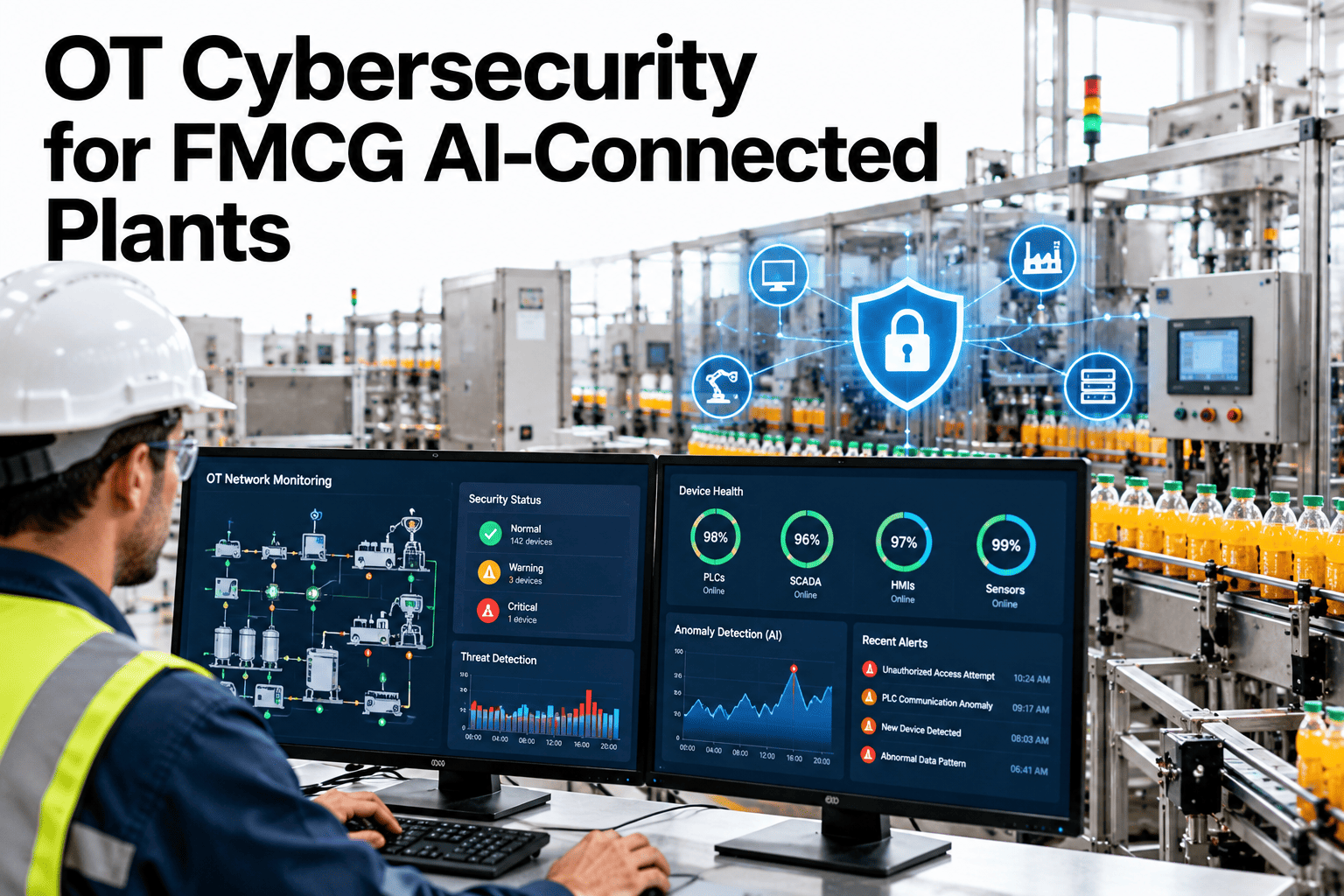
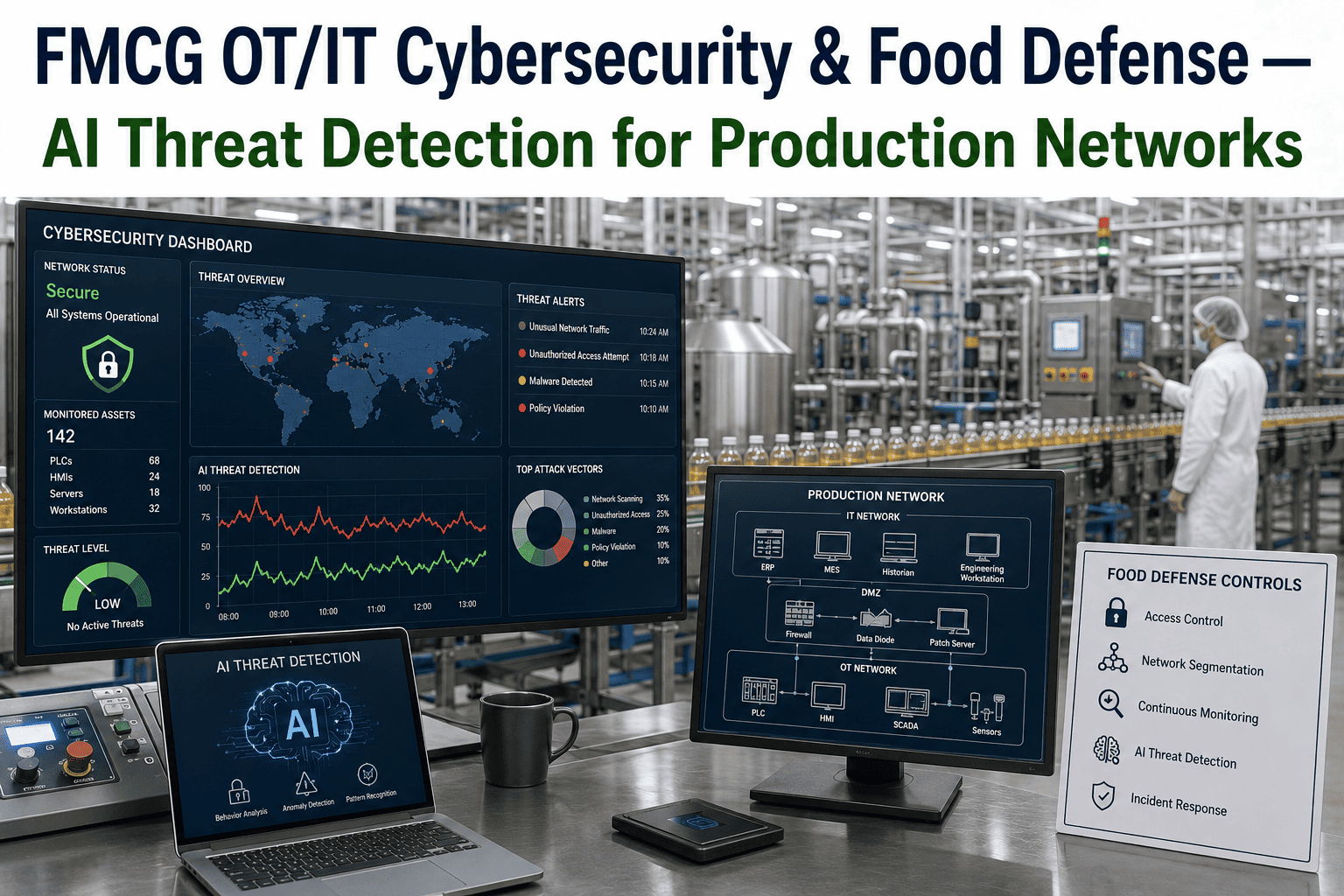
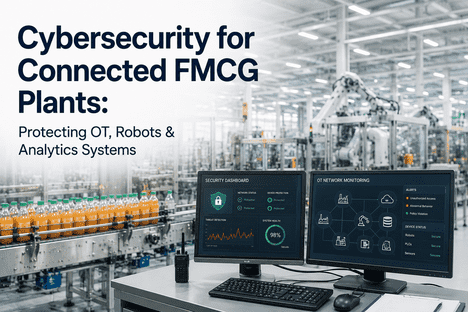
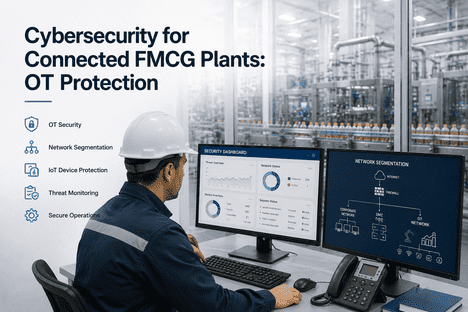
FMCG plants want AI systems to read data from lines, packers and utilities, yet every new connection to the plant floor is a possible path for an attacker. OT cybersecurity solves this tension by separating networks into zones, controlling every crossing and managing who and what can log in. The Purdue model gives a clear picture of where AI should sit and how data should travel. Done well, AI can see the data it needs without reaching the controls. To review your own design, you can walk through a secure data path with our team.
IT/OT convergence and AI foundations
Connect AI to Plant Data Without Opening a Door to Your Controls
iFactory AI is designed around segmented networks, one-way data flows and tight identity control, so AI gets the data it needs and the plant stays protected.
Layers of a protected plant network
ProcessControlSupervisorySite operationsIndustrial DMZEnterprise
The riskConvergence Brings Benefits and New Attack Paths
Connecting plant data to analytics and AI creates value. It also joins networks that were once separate.
Ransomware
Attacks that spread from office networks
Remote access
Vendor and staff connections left open
Legacy devices
Old controllers with weak built-in security
Downtime
Safety and output at risk when systems fail
The answer is not to avoid AI. It is to design the connection so that data flows out while threats cannot flow in.
The Purdue modelSix Levels That Show Where Everything Belongs
The Purdue reference model describes a plant as layers, from physical equipment up to business systems. It helps teams place systems and decide what may talk to what.
1
Level 0: Process
Sensors, drives and the physical equipment itself.
2
Level 1: Basic control
PLCs and controllers that run the machines.
3
Level 2: Supervisory
HMIs and SCADA that operators use to watch and adjust.
4
Level 3: Site operations
Historians, MES and local servers for the whole site.
5
Industrial DMZ
A buffer zone between plant and business networks.
6
Levels 4 and 5: Business and enterprise
ERP, corporate IT and external connections.
The model is a guide, not a rule book. Modern plants add cloud and wireless links, so each design should be reviewed for those paths.
Where AI should sitKeep AI Out of the Control Layers and Feed It Through the DMZ
A common safe pattern copies data from the plant to a buffer zone and lets AI read it there.
HistorianMES dataLine data collector
Industrial DMZ with a read-only data copy
AI platformAnalytics and BIAlerts and reports
AI reads a copy. It does not connect directly to controllers, which keeps the control layers out of reach.
Review the Data Path From Your Lines to AI
Share your network layout and see how iFactory AI could read plant data while keeping control layers protected.
SegmentationZones and Conduits: Only Allow the Traffic You Can Explain
Segmentation divides the network into zones and controls every crossing, called a conduit. The IEC 62443 series describes this approach for industrial systems.
| From | To | Allowed traffic | Control |
|---|
| Line controllers | Historian | Process data out | One-way or tightly filtered |
| Historian | DMZ replica | Selected tags | Scheduled or streamed copy |
| DMZ | AI platform | Read-only data | Firewall and authentication |
| AI platform | Plant controls | Nothing direct | Blocked by design |
| Vendors | Plant | Approved remote sessions | Jump host, approval and logging |
Write down every allowed flow and its reason. To check yours, ask our team for a zone and conduit worksheet.
IdentityControl Who and What Can Log In
Most serious incidents involve stolen or over-powerful credentials. Identity control closes that gap.
Operators
We use individual accounts, not shared logins.
Engineers
We get privileged access only when needed, with approval and logging.
Vendors
We connect through a controlled jump host, with sessions recorded.
AI services
We use dedicated service accounts with read-only rights.
Use multi-factor authentication wherever the system supports it, and remove accounts promptly when roles change.
Granting accessSix Steps From Request to Revoked
1
Request
A named person asks for access with a reason.
2
Approve
The system owner approves the minimum needed.
3
Grant
Access is created with an expiry date.
4
Monitor
Sessions are logged and unusual activity is flagged.
5
Review
Access is reviewed regularly.
6
Revoke
Access ends automatically or when no longer needed.
Two designs comparedDirect Connections Versus Brokered Access
Direct connection
AI reaches into the control network
One compromised system exposes all
Hard to audit who accessed what
Changes risk stopping production
Brokered, one-way access
AI reads a copy in the DMZ
A breach stays inside one zone
Every access is logged
Plant controls are untouched
Brokered access costs a little more to design but removes a whole class of risk.
MaturityMove Up One Level at a Time
Level 1: Know your assetsInventory every device and connection
Level 2: SegmentSeparate zones and filter conduits
Level 3: MonitorWatch traffic and logins for anomalies
Level 4: RespondPractise incident plans with operations
Asset inventory of OT devices
Network diagram with zones and flows
Industrial DMZ in place
AI access is read-only
Multi-factor authentication for remote access
Vendor access controlled and logged
Backups tested for key control systems
Incident plan agreed with operations
Expert reviewWhat an Industrial Security Lead Would Check First
Expert review
In OT, availability and safety come first. Security measures must be tested with operations so protection never becomes the cause of downtime.
VerdictStrong when AI reads from a DMZ copy and every crossing is explained and logged.
Watch forHidden direct links created by vendors, remote tools or old projects.
Do nextMap every connection into the plant and close the ones nobody can justify.
Frequently asked questionsWhat Plant Teams Ask About OT Security and AI
Can AI read plant data without touching the controls?
Yes. A common design copies selected data from the plant to an industrial DMZ, where AI reads it with read-only access. The control layers are never directly reachable from the AI platform, which reduces risk while keeping data useful.
See a secure data path.
What is the Purdue model and do we still need it?
It is a reference model that describes plant systems in levels from equipment to business IT. Modern plants add cloud and wireless links, but the model remains a helpful way to place systems and decide which connections are allowed.
Ask about applying the model.
How should we handle remote vendor access?
Route all vendor sessions through a controlled jump host with approval, time limits, multi-factor authentication and session recording. Avoid permanent remote links and shared accounts, since they are common causes of incidents. Review vendor access every quarter.
Discuss vendor access controls.
Does segmentation slow production data?
Well-designed segmentation adds little delay for data that flows out of the plant. The design effort goes into choosing which data to send and how often. Test any change with operations before it goes live.
Ask about performance planning.
Where should we start?
Start by listing every device and connection, drawing the real network and closing links nobody can justify. Then add the DMZ and move AI access behind it. Small, tested steps work better than a big rebuild.
Plan a first security step.
Secure by design
Let AI See the Data, Not the Controls
Book a session with iFactory AI to map your plant network, design a protected data path and set identity rules that keep production safe.