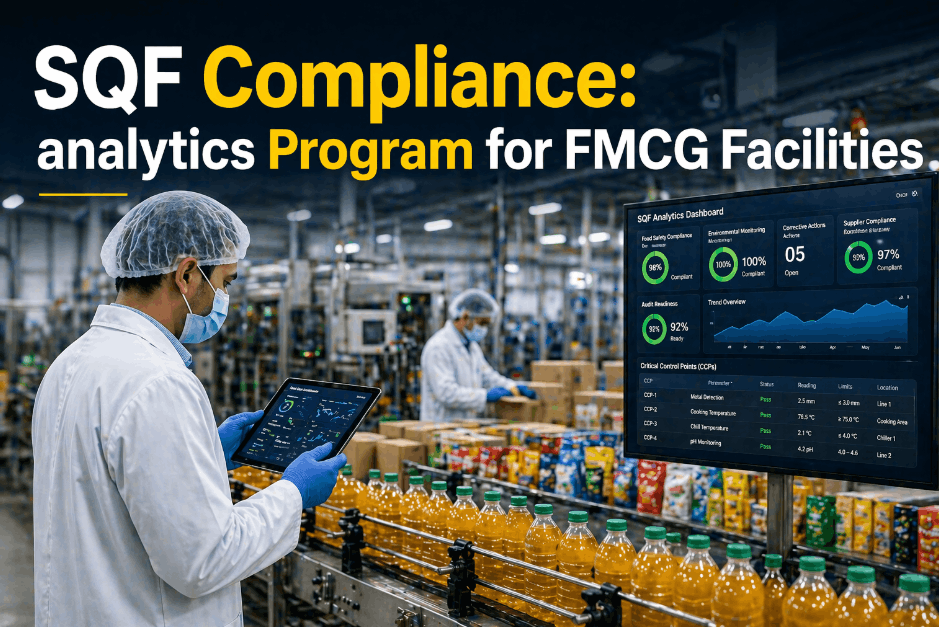
SQF Compliance analytics Program Requirements for FMCG Facilities
By Seren on June 9, 2026
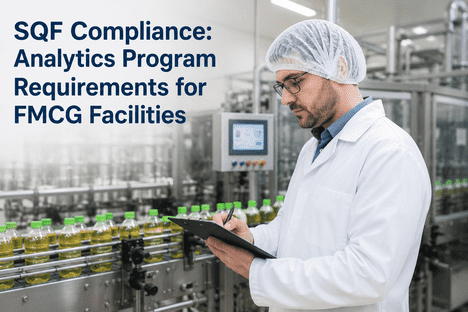
The quality assurance manager at a major FMCG facility had spent three months preparing for the SQF certification recertification audit. The prerequisite programs were documented, the HACCP plan was updated, and the internal audit findings had been closed. But when the SQF practitioner reviewed the equipment monitoring records, a gap emerged: the facility had no formal analytics program demonstrating that equipment performance data was systematically collected, analyzed, and used to drive preventive maintenance and corrective actions. SQF Code Edition 9 requires documented evidence that equipment is capable of producing safe, quality product — and that evidence must include trend analysis, out-of-specification investigations, and data-driven continuous improvement. Without an analytics program that generates this documented evidence, the facility risked a major non-conformance that could delay certification and cost millions in lost customer contracts. This guide covers exactly what SQF Code Edition 9 requires for analytics programs in FMCG facilities, how to build a compliant program, and how iFactory AI's compliance tracking and calibration management modules simplify the certification process.
SQF COMPLIANCE · ANALYTICS PROGRAM · EDITION 9
Meet SQF Code Edition 9 Analytics Requirements — Without the Documentation Burden
What SQF Code Edition 9 Requires for Analytics Programs in FMCG Facilities
SQF Code Edition 9 does not explicitly use the term "analytics program" in its code requirements, but the standard's focus on data-driven food safety and quality management creates a clear analytics mandate across multiple modules. The SQF Food Safety Code for Manufacture of Food Packaging (Module 9) and the SQF Quality Code both require documented evidence that equipment monitoring data is collected, analyzed, and used to drive decisions. The certification auditor will examine equipment calibration records, maintenance program effectiveness data, trend analysis reports, and the documented linkage between analytics findings and corrective actions. Without a formal analytics program, most FMCG facilities fail to produce the documented evidence trail that the auditor expects.
The specific SQF Code Edition 9 requirements that demand an analytics program fall into five categories: equipment calibration monitoring and drift trending, preventive maintenance effectiveness analysis, environmental monitoring data trending, pest control activity analytics integration, and finished product quality data analysis. For each category, the facility must demonstrate that data is collected at defined frequencies, that statistical analysis is applied to detect trends and out-of-specification conditions, and that the analysis results in documented actions. The SQF auditor will request evidence for each of these categories during the certification audit.
What the Facility Typically Has
Calibration records in a spreadsheet
Calibration dates and results logged manually. No drift trend analysis. No automatic flagging of instruments approaching out-of-tolerance.
Maintenance logs in the CMMS
Work order completion recorded. No analysis of maintenance effectiveness. No correlation between maintenance activity and equipment performance trends.
Environmental monitoring data on paper
Swab results and air sample counts recorded manually. Trend analysis requires manual data entry into a separate system. Out-of-trend detection is reactive.
What SQF Edition 9 Requires
Calibration analytics with drift trending
Automated calibration scheduling, drift analysis across calibration cycles, predictive flagging of instruments approaching out-of-tolerance, and documented corrective actions.
Maintenance effectiveness analytics
Equipment performance trend analysis linked to maintenance activity. Mean time between failure tracking. Preventive maintenance effectiveness scoring. Condition-based maintenance triggers.
Integrated analytics with action trails
All analytics data in a single platform with automated trend analysis, out-of-specification alerts, CAPA linkage, and auditor-ready reports. Zero manual data correlation.
Why Traditional Documentation Methods Fail the SQF Analytics Audit
Most FMCG facilities collect the data required for SQF compliance. The gap is not data collection — it is systematic analysis and documented action. Traditional documentation methods — spreadsheets, paper logs, disconnected systems — cannot produce the integrated analytics evidence trail that SQF Edition 9 auditors expect. The following table compares how each documentation method performs against SQF analytics requirements.
Spreadsheet-Based
Calibration logs, maintenance records, and environmental monitoring data maintained in separate spreadsheet files. Trend analysis requires manual data consolidation and statistical calculations.
SQF gap:
No automated trend detection. No documented linkage between analytics findings and corrective actions. Auditor cannot verify that data drives decisions. High risk of major non-conformance under SQF Element 2.4.1.
Paper Log System
Handwritten logs for equipment checks, cleaning verification, and pest control activities. Data exists on paper only. Analysis requires manual data entry and transcription, introducing errors.
SQF gap:
No statistical analysis possible without data entry. No trend visibility. No automated out-of-specification detection. Auditors routinely issue findings for facilities without electronic analytics capability under SQF Edition 9.
Disconnected Digital Systems
CMMS for maintenance, LIMS for lab results, and separate environmental monitoring software. Each system generates data but no integration for cross-system analytics.
SQF gap:
Auditor cannot see the integrated picture. Calibration drift in one system cannot be correlated with equipment performance in another. Manual integration required for each audit cycle.
The Five Pillars of an SQF-Compliant Analytics Program
An SQF-compliant analytics program rests on five pillars that correspond to the code's requirements for equipment monitoring, calibration management, environmental surveillance, pest control integration, and finished product quality analysis. Each pillar requires a documented data flow from collection through analysis to action. iFactory AI's compliance tracking and calibration management modules automate each pillar, generating the documented evidence trail that SQF auditors expect.
Pillar 1
Equipment Calibration Analytics and Drift Trending
SQF Code Edition 9 Element 11.5.3 requires that measuring and monitoring equipment be calibrated at defined intervals and that calibration records include drift trending analysis. The analytics program must track each instrument's calibration history, calculate drift rates between calibration cycles, and flag instruments approaching out-of-tolerance conditions before they produce inaccurate readings. iFactory AI's calibration management module automates drift trending by calculating the rate of change for each calibrated instrument and generating predictive alerts when drift projections indicate an instrument will exceed tolerance before the next scheduled calibration. The module also generates calibration effectiveness reports that demonstrate the calibration program is continuously improving.
Pillar 2
Preventive Maintenance Effectiveness Analytics
SQF Element 11.4.2 requires that preventive maintenance programs be documented and that their effectiveness be verified. The analytics program must track equipment performance metrics — OEE, MTBF, MTTR, defect rates — and correlate them with maintenance activity to determine whether the maintenance program is achieving its intended results. iFactory AI's compliance tracking module automatically calculates maintenance effectiveness scores by equipment type, maintenance type, and time period. The module correlates maintenance activity with equipment performance trends to identify which maintenance strategies deliver the best results and where the program needs adjustment.
Pillar 3
Environmental Monitoring Data Trend Analysis
SQF Element 11.7.1 requires environmental monitoring programs that include trend analysis of microbiological data. The analytics program must track swab results, air sample counts, and water quality data over time, detect shifts in baseline microbial loads, and trigger investigations when trends indicate emerging contamination risks. iFactory AI's platform automatically ingests environmental monitoring data, applies statistical process control methods to detect out-of-trend conditions, and generates environmental monitoring trend reports that satisfy SQF audit requirements without manual data correlation.
Pillar 4
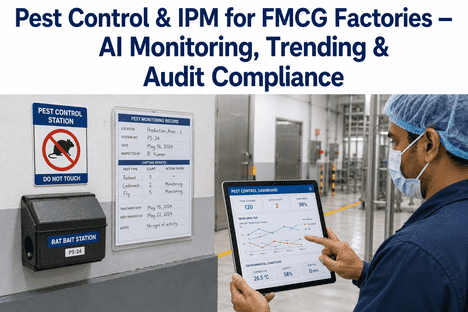
Pest Control Activity Analytics Integration
SQF Element 11.8.1 requires pest control programs with documented monitoring data and trend analysis. The analytics program must track pest activity levels across monitoring stations, detect seasonal or process-related activity patterns, and correlate pest activity with facility conditions such as temperature, humidity, and sanitation activities. iFactory AI integrates pest control monitoring data from electronic trapping systems and manual inspection logs into the same analytics platform used for calibration and maintenance data, providing a unified compliance view that SQF auditors prefer over disconnected record systems.
Pillar 5
Finished Product Quality Data Analysis
SQF Element 11.3.2 requires that product quality data be analyzed to identify trends and drive continuous improvement. The analytics program must track critical quality attributes — fill weights, package integrity, sensory attributes, shelf-life indicators — and detect shifts that could indicate emerging quality issues before they result in customer complaints or product releases. iFactory AI's quality analytics module applies multivariate statistical analysis to finished product data, correlating quality outcomes with upstream process conditions to identify root causes of quality drift and generate documented evidence of data-driven quality improvement.
How iFactory AI Automates SQF Analytics Program Documentation
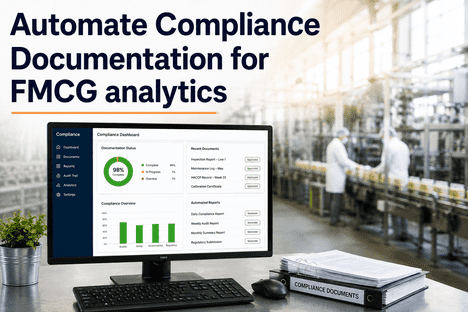
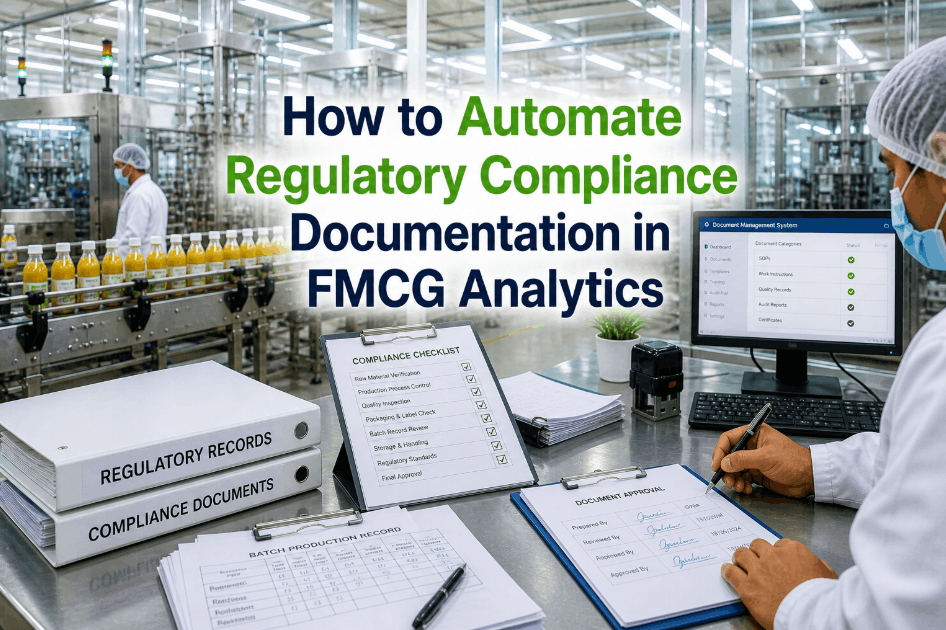
The most time-consuming part of SQF analytics program compliance is not the data collection or the analysis — it is the documentation. The SQF auditor needs to see that the analytics program is defined in a document, that data collection follows the defined plan, that analysis is performed at defined intervals, that findings are reviewed by qualified personnel, and that corrective actions are documented and tracked to closure. iFactory AI automates the entire documentation chain, from program definition through audit-ready report generation, eliminating the manual documentation burden that causes most SQF analytics non-conformances.
Audit Preparation Time
Manual system:
3-5 weeks
iFactory AI:
2-3 days
Manual audit preparation requires gathering calibration records, maintenance logs, environmental monitoring data, and pest control reports from separate systems and manually correlating findings. iFactory AI generates a complete SQF analytics evidence package with one click.
Documentation Completeness
Manual system:
60-70%
iFactory AI:
99%+
Manual documentation systems inevitably have gaps — missing calibration records, incomplete trend analysis, or corrective actions that were not documented. iFactory AI's automated system ensures every data point, analysis, and action is captured and timestamped.
Non-Conformance Risk Reduction
Manual system:
45-60% risk
iFactory AI:
Below 10%
Facilities with automated analytics programs consistently receive fewer SQF findings related to equipment monitoring, calibration, and data-driven decision-making. The documented evidence trail eliminates the most common source of non-conformances.
Analytics Program Coverage
Manual system:
2-3 pillars
iFactory AI:
All 5 pillars
Manual systems typically cover calibration and maintenance analytics but lack integration with environmental monitoring, pest control, and quality data. iFactory AI provides a unified analytics platform covering all five SQF analytics pillars.
Our SQF recertification audit was scheduled for May. In February, our internal audit identified that we had calibration records for every instrument but no calibration drift trend analysis. The SQF practitioner knew the data was there, but nobody had been performing the statistical analysis required to demonstrate that calibration drift was being monitored and acted upon. We deployed iFactory AI's calibration management module in March. By April, the system had automatically analyzed 18 months of calibration data, identified three instruments with accelerating drift rates, generated predictive alerts for all three, and created a calibration drift trend report that the SQF auditor reviewed in May. The auditor commented that our calibration analytics program was the most comprehensive she had seen in an FMCG facility of our size. The non-conformance that we were preparing for never materialized.
— Quality Assurance Manager, Confectionery Manufacturing Facility, Midwest USA
Deployment: From Data Connection to SQF-Ready Analytics in Weeks
iFactory AI's compliance tracking and calibration management modules are pre-configured for SQF Code Edition 9 requirements. The platform integrates with existing CMMS, LIMS, and environmental monitoring systems without requiring new hardware or infrastructure. The first SQF-ready analytics reports are typically available within two to three weeks of deployment.
Week 1
Data integration and system configuration
Connect iFactory AI to existing CMMS, calibration management system, LIMS, and environmental monitoring databases. Configure data pipelines for each of the five analytics pillars. Map existing data to SQF Code Edition 9 requirements.
Week 2
Analytics template configuration and baseline establishment
Configure calibration drift trending templates, maintenance effectiveness scorecards, environmental monitoring SPC charts, pest control activity trend dashboards, and product quality analysis views. Establish historical baselines for each analytics category.
Week 3
Validation and auditor-ready report generation
Validate analytics outputs against historical data. Generate sample SQF evidence packages for review. Train quality and maintenance teams on the platform. First SQF-ready analytics reports available for auditor review.
Week 4+
Continuous compliance monitoring and improvement
Automated analytics run continuously. Predictive alerts for calibration drift, maintenance effectiveness decline, environmental trend shifts, and product quality deviation. Quarterly compliance reports generated automatically for SQF management review meetings.
Conclusion
SQF Code Edition 9 has raised the bar for analytics program documentation in FMCG facilities. The standard now requires documented evidence that equipment monitoring data, calibration records, environmental surveillance results, pest control activity, and finished product quality data are systematically analyzed and that the analysis drives documented corrective actions and continuous improvement. Facilities without automated analytics programs face increasing audit scrutiny, longer preparation cycles, and a higher probability of non-conformances that can delay certification and affect customer relationships.
iFactory AI's compliance tracking and calibration management modules are purpose-built for FMCG facilities pursuing or maintaining SQF certification. The platform automates all five pillars of the SQF analytics program — equipment calibration drift trending, preventive maintenance effectiveness analysis, environmental monitoring trend detection, pest control activity integration, and finished product quality analysis — and generates the documented evidence trail that SQF auditors expect. Deployment requires no new hardware, no infrastructure changes, and no specialized analytics expertise. The platform integrates with existing CMMS, LIMS, and environmental monitoring systems to deliver SQF-ready analytics reports in weeks, not months.
Book a Demo to see how iFactory AI's compliance tracking and calibration management modules can prepare your FMCG facility for SQF certification with an automated, auditor-ready analytics program. Or Talk to an Expert to schedule a compliance readiness assessment for your facility.
Frequently Asked Questions About SQF Compliance and Analytics Programs
SQF Code Edition 9 does not use the term "analytics program" as a standalone requirement, but the standard's individual elements create a clear analytics mandate across multiple modules. Element 11.4.2 requires documented preventive maintenance with effectiveness verification, which demands maintenance analytics. Element 11.5.3 requires calibration records with drift trending analysis. Element 11.7.1 requires environmental monitoring trend analysis. Element 11.8.1 requires pest control activity trend analysis. Element 11.3.2 requires finished product quality data analysis for continuous improvement. Combined, these elements constitute a de facto analytics program requirement. The SQF auditor will expect to see a documented analytics program that defines data collection frequencies, statistical methods, review intervals, and the linkage between analytics findings and corrective actions. Facilities without a formal analytics program receive findings under multiple elements during SQF certification audits. Book a Demo to see how iFactory AI maps to each SQF element requirement.
The most common SQF non-conformances related to analytics programs fall into three categories. Missing calibration drift trend analysis is the most frequent finding — facilities have calibration records but cannot demonstrate that drift is being tracked and acted upon. The second most common finding is the absence of documented linkage between analytics findings and corrective actions — the facility collects data but cannot show that the data drove decisions. The third is disconnected analytics systems — calibration data in one system, maintenance data in another, environmental monitoring data on paper — with no integrated view that the auditor can review efficiently. All three non-conformance types are eliminated by an automated analytics platform that integrates data from all sources and generates a unified compliance evidence trail. Talk to an Expert to discuss the specific compliance gaps in your current SQF analytics program.
SQF Element 11.5.3 requires that measuring and monitoring equipment be calibrated at defined intervals and that calibration records include evidence of drift trending. An analytics program supports this requirement by automatically calculating drift rates between calibration cycles for each instrument, projecting when each instrument will reach its out-of-tolerance threshold, and generating predictive alerts for instruments requiring attention before the next scheduled calibration. The analytics program also generates calibration effectiveness reports that demonstrate the calibration program is achieving its objectives. iFactory AI's calibration management module automates the entire calibration analytics workflow — from drift calculation through predictive alerting through auditor-ready reporting. Book a Demo to see the calibration drift trending module in action.
An SQF-compliant analytics program must integrate data from at least five source categories. Calibration management systems or databases containing instrument calibration records, drift calculations, and out-of-tolerance events. CMMS platforms containing preventive maintenance schedules, work order completion records, and equipment performance data. Environmental monitoring databases or systems containing swab results, air sample counts, and water quality data. Pest control monitoring records from electronic trapping systems or manual inspection logs. Finished product quality databases containing fill weight data, package integrity test results, sensory evaluation scores, and shelf-life study results. iFactory AI's platform provides pre-built connectors for all major CMMS, LIMS, and environmental monitoring platforms, enabling unified analytics across all five data source categories without custom integration work. Talk to an Expert to verify compatibility with your current systems.
iFactory AI's platform integrates pest control monitoring data from electronic trapping systems and manual inspection logs into the same analytics engine used for calibration, maintenance, environmental monitoring, and quality data. Pest activity trends are automatically calculated by monitoring station location, pest type, and time period. The platform correlates pest activity with facility conditions — temperature, humidity, sanitation activity — to identify environmental factors that may be driving pest activity patterns. Out-of-trend pest activity thresholds are configurable per zone, and exceedances automatically generate corrective action requests linked to the pest control program. The platform generates SQF-compliant pest control trend analysis reports that satisfy Element 11.8.1 requirements without manual data correlation or report generation. Book a Demo to see the integrated pest control analytics dashboard.
Your Next SQF Audit Is Coming. An Automated Analytics Program Ensures You Pass.
iFactory AI's compliance tracking and calibration management modules automate all five pillars of the SQF analytics program — calibration drift trending, maintenance effectiveness, environmental monitoring, pest control integration, and product quality analysis. Pre-configured for SQF Code Edition 9. Deploys in weeks, not months.