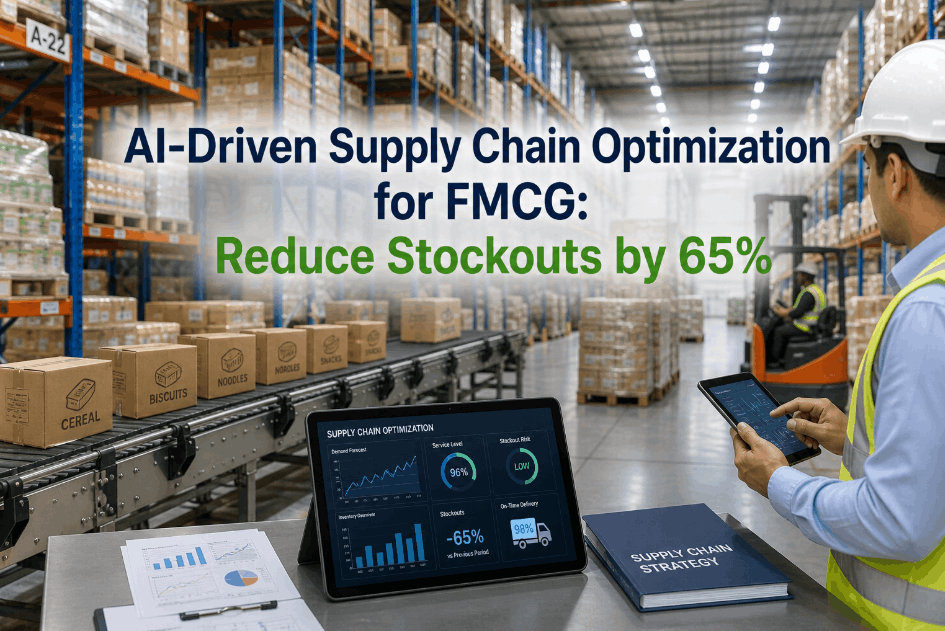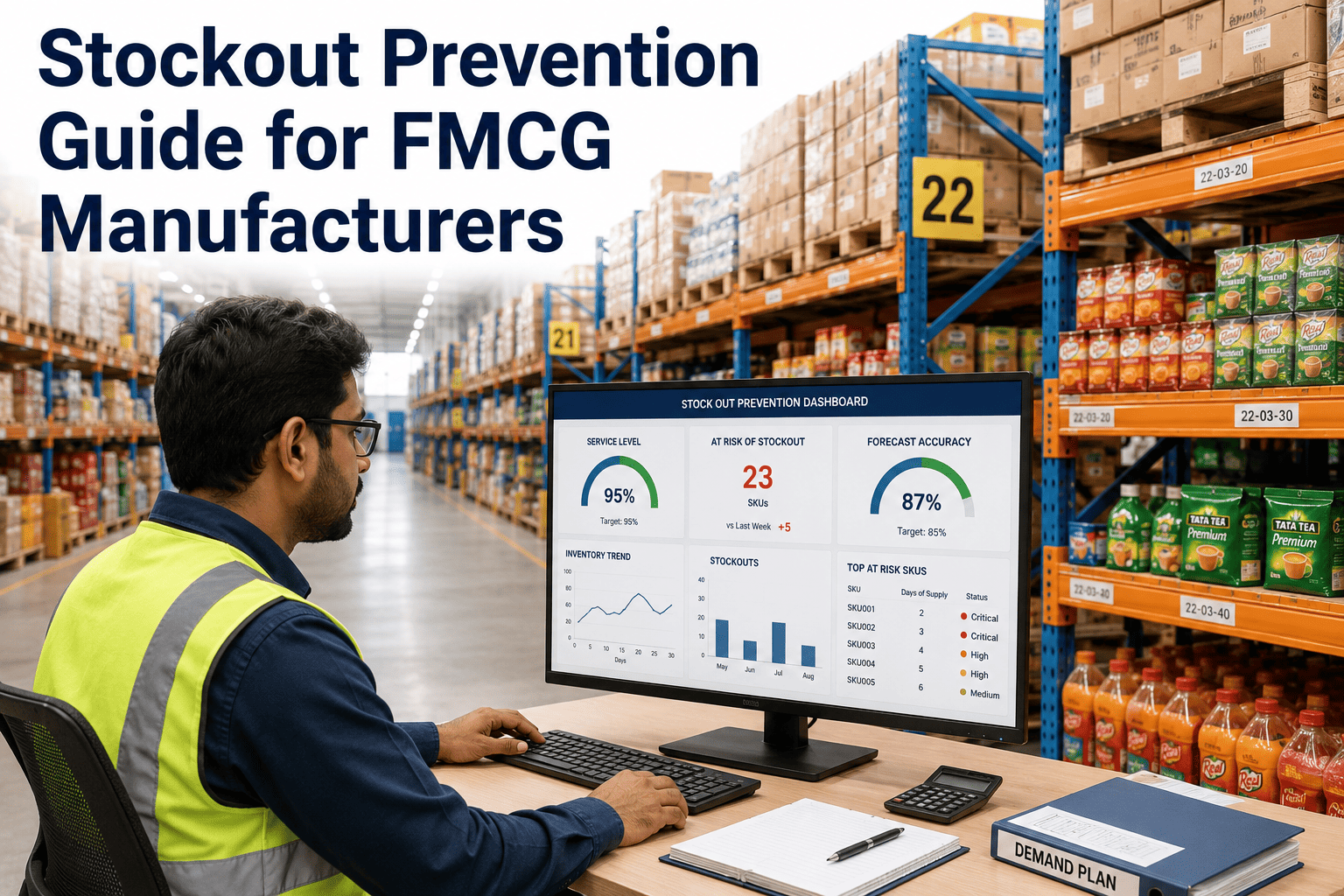
Roughly one in every thirteen FMCG products is missing from the shelf at any given moment, and the consumer standing in front of that empty space rarely waits around to find out when it will be restocked. Research across the category consistently shows that a meaningful share of shoppers switch to a competitor brand after just a couple of stockout experiences, which means the real cost of an empty shelf is not just the missed sale that day, it is the customer relationship that may never fully come back. Stockout prevention for FMCG manufacturers is ultimately about closing the gap between when a shortage becomes likely and when someone actually notices it, and that gap is exactly what modern signal detection and replenishment automation are built to shrink. Manufacturers ready to see how that works for their own SKU mix can start with a conversation with iFactory support.
By the Time a Stockout Shows Up in Your Report, the Sale Is Already Gone.
iFactory tracks sell-through velocity, safety stock thresholds, and replenishment timing continuously across your SKU network, flagging stockout risk while there's still a real window to act instead of after the shelf has already gone empty.
The Most Common Ways FMCG Manufacturers Get Blindsided by Stockouts
Stockouts rarely happen because nobody was watching inventory at all, they happen because the signal that mattered arrived too late or in a place nobody was looking. Understanding the specific pattern behind a given SKU's risk is the first step toward actually preventing it.
| Root Cause | Typical Warning Sign | Detection Method |
|---|---|---|
| Promotional Demand Spike | Sell-through accelerates faster than forecast | Real-time velocity tracking against baseline |
| Static Safety Stock Levels | Buffer never adjusted for seasonal shift | Dynamic safety stock recalculation |
| Distributor Lag | Reorder cycle trails actual sell-through | Live distributor stock sync |
| Supplier Lead Time Slip | Replenishment order arrives later than planned | Lead time variance monitoring |
| Forecast Model Drift | Actual demand consistently exceeds prediction | Continuous forecast accuracy tracking |
Three Stages of Stockout Prevention Maturity
Reactive Reordering
Replenishment happens after a stockout is already reported, treating each shortage as a one-off emergency rather than a pattern to prevent.
Fixed Safety Stock
A static buffer is set per SKU, reducing some risk but failing to adapt to seasonal demand shifts or promotional spikes.
Predictive Signal Detection
Live sell-through, distributor stock, and lead time data feed a continuous risk model that flags stockout probability days ahead of the actual shortage.
Catch the Stockout Before the Shelf Goes Empty, Not After
iFactory builds a continuous stockout risk model around your actual SKU velocity, safety stock, and distributor data, then turns each flagged risk into a scheduled replenishment action.
What a Stockout Actually Costs Beyond the Missed Sale
The direct lost sale from an empty shelf is usually the smallest part of the real cost. The larger damage tends to show up later, spread across several parts of the business that rarely get connected back to the original shortage.
Brand Switching
A meaningful share of shoppers who hit a stockout switch to a competitor product, and some of that switch becomes permanent rather than a one-time substitution.
Retailer Relationship Strain
Repeated stockouts on a given SKU affect a retailer's confidence in a brand's reliability, which can influence future shelf space and merchandising decisions.
Emergency Production Costs
Rushing production or expedited freight to cover a stockout typically carries a real cost premium compared to the same volume produced and shipped on schedule.
Distorted Future Forecasts
Lost sales during a stockout period understate true demand in historical data, quietly skewing the next forecast cycle toward under-ordering the same SKU again.
Building a Prevention Process That Actually Catches Risk Early
Track Sell-Through Velocity Continuously
Real-time sales data, not periodic snapshots, forms the baseline every risk calculation depends on.
Set Dynamic Safety Stock by SKU
Buffers adjust automatically based on demand variability, lead time, and seasonality instead of staying fixed year-round.
Pull In Distributor and Retail Signals
Downstream stock positions feed the same model, catching risk building at the shelf before it reaches the manufacturer's own systems.
Score and Rank Stockout Risk
Every SKU is scored continuously, surfacing the highest-risk items first rather than treating the whole catalog with equal urgency.
Trigger Replenishment Automatically
A flagged risk becomes a scheduled production or shipment action, closing the loop between detection and prevention.
A Composite Scenario: The Promotion That Didn't Run Dry
A packaged foods manufacturer launching a national promotion on a core SKU had a history of running short within the first week of similar campaigns in prior years, largely because the fixed safety stock buffer had been sized around normal, non-promotional demand. With a continuous stockout risk model tracking live sell-through against the promotional forecast, the system flagged accelerating velocity on day three, well ahead of the point where the fixed-buffer approach would have triggered a reorder.
The manufacturing team used the early flag to pull forward a planned production run by four days and expedite shipment to the two distribution regions showing the fastest sell-through. The SKU maintained shelf availability for the full six-week promotional window, a result the brand had not achieved in either of the two comparable promotions run the previous year.
Is Your Stockout Prevention Process Ready for the Next Peak Season?
You can name your highest stockout-risk SKUs today
If your planning team already has a shared list of the products most prone to running short, that's the right starting scope for a predictive rollout.
Your safety stock levels haven't been reviewed recently
Static buffers set months or years ago rarely reflect current demand variability, especially for SKUs that have grown or shifted seasonally since then.
You have some visibility into distributor or retail stock
Even partial downstream visibility significantly improves how early a stockout risk model can flag a genuine problem.
Your team can act on a flagged risk within days, not weeks
A prediction only prevents a stockout if production and logistics can actually respond to it before the shortage arrives.
Frequently Asked Questions
How early can a stockout actually be predicted before it happens?
Warning windows vary by cause, ranging from several days for gradual demand drift up to just hours for a sudden promotional spike or a late supplier shipment. The model provides a specific predicted timeframe per SKU rather than a single fixed number, since different root causes naturally give different amounts of lead time. Teams can see how this maps to their own SKU mix by reaching out to iFactory support.
Does this replace our existing safety stock calculations?
It builds on top of them rather than replacing the underlying logic entirely. Instead of a fixed buffer that stays constant regardless of conditions, the model recalculates safety stock dynamically based on current demand variability, lead time performance, and seasonality, using the same core inputs your team already tracks today.
Can this work if we don't have full visibility into distributor stock yet?
Yes, the model can run effectively on internal sell-through and production data alone, and distributor or retail signals simply sharpen the accuracy and lead time further once they're connected. Many manufacturers start with internal data and add downstream visibility as a second phase rather than waiting for full network visibility before beginning.
How does a flagged stockout risk turn into an actual production or shipment change?
Once a SKU crosses its risk threshold, the system generates a specific recommended action, whether that's an expedited production run, a shipment reallocation, or a distributor-level replenishment trigger, and routes it into the planning tools your team already uses. That direct handoff from prediction to action is usually the step that determines whether an accurate forecast actually prevents a stockout in practice. Book a demo to see the full workflow end to end.
Give Your Team the Warning Window They've Been Missing
iFactory turns live sell-through, safety stock, and distributor data into a continuous stockout risk model, so replenishment happens before the shelf goes empty instead of after.