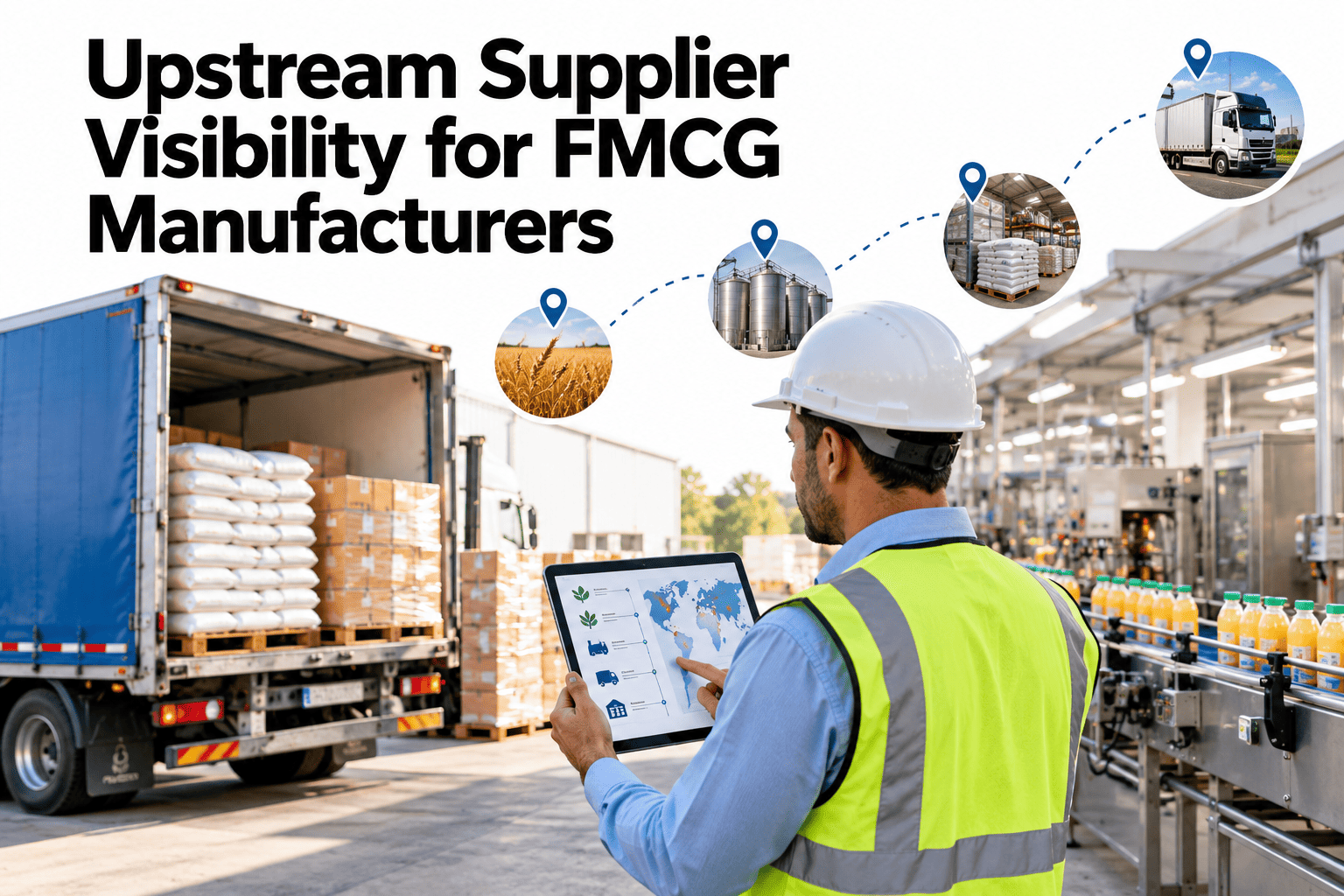
Most FMCG brands have solid visibility into their direct, tier-1 suppliers, since those relationships are contracted and managed closely. The real exposure usually sits one or two levels further back, at the tier-2 ingredient processor or the tier-3 raw material source that nobody has a direct contract with and almost nobody is actively monitoring. A disruption at that level, a factory closure, a regional shortage, a logistics bottleneck, often reaches the brand only when their tier-1 supplier can no longer fulfill an order, by which point the lead time to react has already shrunk considerably. Mapping and monitoring further upstream than the immediate supplier relationship is what actually gives a brand enough warning to act, and if you want to see how deep your own supplier map currently goes, you can review a supplier mapping exercise with our team.
See the Disruption Before Your Tier-1 Supplier Does
Tier-2 and tier-3 supplier mapping with disruption early warning, so a factory closure or regional shortage reaches you with enough lead time to act, not just enough time to react.
Why Visibility Drops Off Exactly Where Risk Increases
The relationship a brand manages most closely is usually also the most stable one, while the least visible tiers carry the most concentrated and least diversified risk.
What Tier-2 and Tier-3 Mapping Actually Involves
Mapping further upstream is less about new technology and more about a structured process for gathering and maintaining information most tier-1 suppliers are willing to share if asked directly.
| Mapping step | What it captures | Common source |
|---|---|---|
| Tier-1 sourcing disclosure | Which tier-2 processors each tier-1 supplier actually uses | Direct supplier questionnaire or contract clause |
| Tier-2 to tier-3 tracing | Raw material origin feeding each tier-2 processor | Industry databases and supplier disclosure |
| Concentration analysis | Where multiple tier-1 paths converge on the same upstream source | Cross-referencing the full mapped network |
| Ongoing refresh | Updates as suppliers change their own sourcing over time | Periodic re-survey and monitoring feeds |
Concentration analysis is often the single most revealing step, since it frequently surfaces that several "diversified" tier-1 suppliers are quietly drawing from the same single tier-2 or tier-3 source.
How Disruption Early Warning Actually Works
Once the map exists, monitoring external signals against it is what turns a static document into an active early warning system.
Find Out How Deep Your Supplier Map Currently Goes
Share your tier-1 supplier list and we will help assess how much upstream visibility you currently have.
Why Multi-Source Contingency Planning Depends on the Map
A contingency plan is only as good as the visibility behind it, since planning an alternate source requires actually knowing where the primary source's risk is concentrated.
What iFactory Supply Chain Specialists See Across FMCG Supplier Networks
iFactory supply chain specialists who run supplier mapping exercises for FMCG brands consistently find that concentration risk at the tier-2 or tier-3 level is more common than brands expect, often affecting ingredients considered low-risk simply because the tier-1 relationship itself felt diversified.
They recommend prioritizing mapping effort on the ingredients with the fewest known alternate sources first, since that is where an unmapped concentration risk would be most damaging if it materialized.
What Procurement Teams Ask About Upstream Mapping
Build Upstream Visibility Into Your Supply Chain
Book a session with iFactory AI to map tier-2 and tier-3 suppliers and set up disruption early warning for your own network.