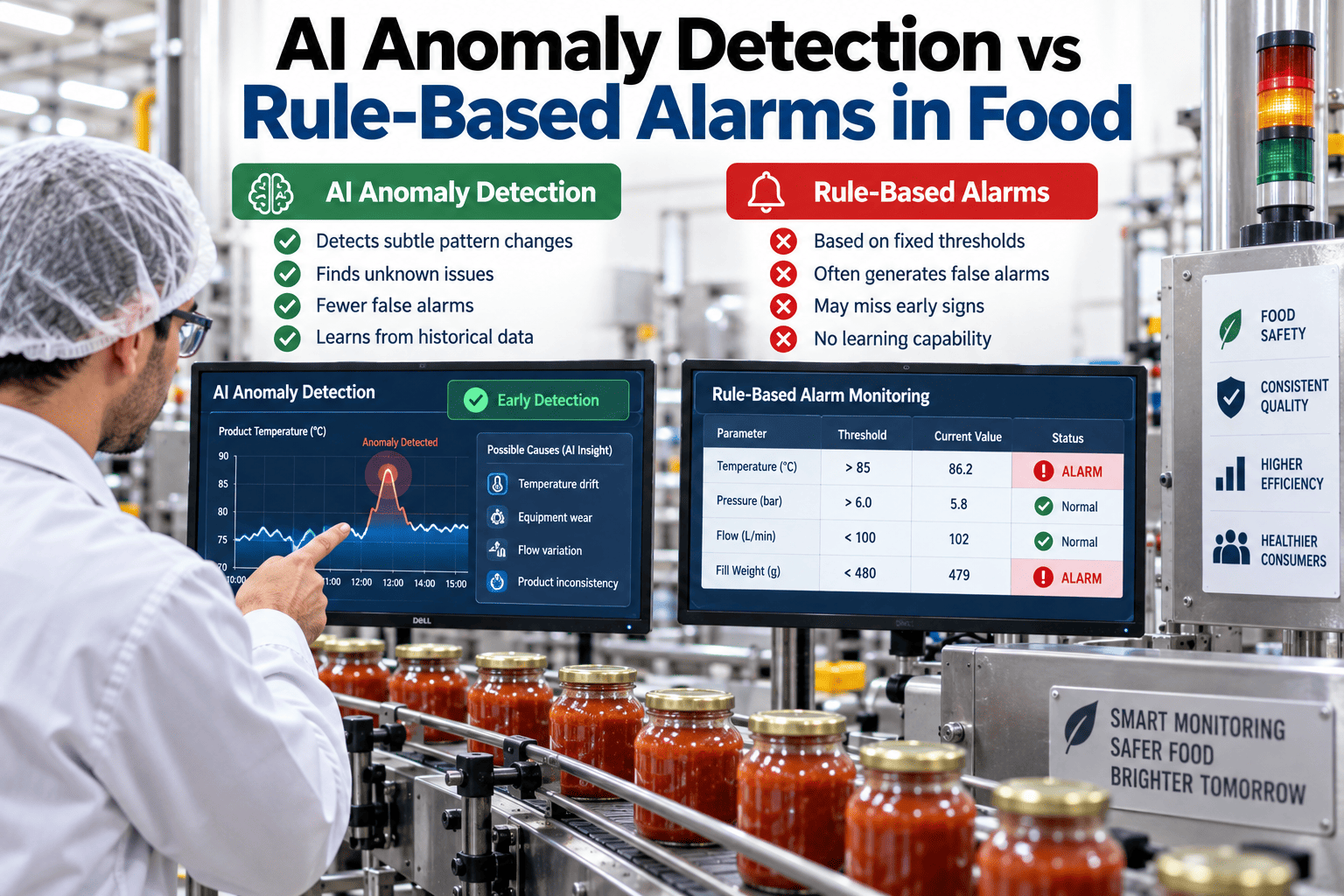
Walk into most food plant control rooms during a bad shift and you'll find an alarm screen scrolling faster than any operator could realistically read, with dozens of nuisance alerts burying the two or three that actually matter. Years of adding alarms after every incident, without ever removing the ones that stopped being useful, leaves operators trained to tune out the noise entirely, which is exactly the moment a genuine critical alarm gets missed. AI alarm rationalization cuts through that noise by grouping correlated events, learning which alarms consistently precede real failures, and surfacing only what actually requires action. Plants drowning in alarm floods can talk to iFactory support about what a rationalized alarm system looks like for their operation.
Your Operators Can't Act On An Alarm They've Learned To Ignore
iFactory's AI alarm rationalization engine correlates related events, suppresses chronic nuisance alerts, and surfaces the handful of alarms per shift that genuinely require operator action.
How A Rationalization Program Turns Noise Into Signal
Rationalizing an alarm system is a structured process, not a single filtering step, and each stage removes a different category of noise while preserving the alerts that genuinely protect people, product, and equipment.
Audit The Existing Alarm Inventory
Every configured alarm is cataloged along with its trigger frequency, so the analysis starts from a full picture of what's actually firing today.
Identify Chattering And Chronic Alarms
Alarms that repeatedly trigger and clear within seconds, or that never actually require operator action, are flagged as the first candidates for suppression or redesign.
Correlate Related Events
Multiple alarms that consistently fire together from the same root cause are grouped into a single consolidated alert instead of flooding the screen individually.
Set Priority By Real Consequence
Each remaining alarm is assigned a priority level based on the actual safety, quality, or downtime consequence of not responding, not the default setting from commissioning.
Monitor And Continuously Refine
Alarm performance is tracked after rationalization to catch any new chattering patterns before they rebuild into the same flood the program just eliminated.
Where Alarm Floods Actually Come From
Alarm overload almost never starts as a design flaw. It accumulates gradually as new alarms get added in response to incidents while old ones are rarely reviewed for whether they're still earning their place.
Every Incident Adds A New Alarm
Post-incident reviews frequently conclude with a new alarm added to prevent recurrence, but the corresponding review of existing alarms rarely happens.
Default Vendor Settings Left Unchanged
Equipment often ships with conservative default alarm thresholds that were never tuned to the specific process conditions of the plant running it.
One Root Cause, Many Individual Alarms
A single upstream issue, like a pressure drop, can trigger a cascade of downstream alarms that all fire separately instead of as one grouped event.
No Owner For Ongoing Alarm Review
Without a defined process for periodically reviewing alarm performance, the system only ever grows more alerts and never sheds the ones that stopped mattering.
| Alarm Pattern | Before Rationalization | After Rationalization |
|---|---|---|
| Chattering Sensor Alarms | Fires and clears dozens of times per shift on the same tag | Debounced or redesigned so it only fires on a sustained condition |
| Cascading Process Upsets | Ten to fifteen separate alarms from one root cause event | Grouped into a single consolidated alert pointing to the root cause |
| Low-Consequence Notifications | Treated with the same priority as safety-critical alarms | Reclassified to a lower priority tier that doesn't interrupt operator focus |
| Standing Or Stale Alarms | Left active for hours or shifts without being acknowledged | Escalation logic ensures unresolved alarms surface rather than aging silently |
Give Your Operators An Alarm System They Can Actually Trust
iFactory correlates and prioritizes alarms based on real consequence, so operators respond to what matters instead of learning to tune everything out.
A Composite Scenario: The Filling Line That Found Its Real Alarms Again
A beverage bottling plant had accumulated more than a decade of alarm configuration changes across its filling and packaging lines, to the point where operators regularly received well over a hundred alarms per shift and had developed informal habits for which ones to actually check. After an AI-driven rationalization pass grouped correlated events and reclassified low-consequence notifications, the plant identified that a large share of daily alarms traced back to just a handful of chattering sensors and cascading upset patterns.
Following the changes, the plant's operators reported far greater confidence responding to what appeared on screen, and a previously routine near-miss on a critical conveyor jam was caught and addressed within minutes because the relevant alarm was no longer buried under unrelated noise.
Common Mistakes In Alarm Rationalization Projects
Suppressing Alarms Without Root-Cause Review
Muting a chronic alarm without addressing the underlying process issue causing it just hides a real problem instead of solving it.
Rationalizing Once And Never Revisiting
New equipment and process changes introduce new alarm patterns, so a system rationalized once and left alone drifts back toward noise within a year or two.
Reclassifying Priority Without Operator Input
Priority changes made purely from historical data without checking with the operators who respond to those alarms daily can miss context the data doesn't capture.
Treating All Lines The Same
Different lines and processes generate very different alarm patterns, so a rationalization approach copied uniformly across the plant misses line-specific noise sources.
Is Your Alarm System Ready For Rationalization
You can pull historical alarm logs by tag and frequency
Even a few months of raw alarm history is enough to identify the chattering and chronic patterns worth targeting first.
Operators can describe which alarms they routinely ignore
Frontline knowledge of which alerts get tuned out is some of the most valuable input for prioritizing the rationalization effort.
Your control system supports alarm grouping and escalation logic
Most modern control and SCADA platforms already support the configuration changes needed once the rationalization plan is defined.
Leadership wants a measurable reduction in alarm-related incidents
A rationalization program delivers the most value when its success is tracked against real incident and response-time data, not just alarm counts.
Frequently Asked Questions
Will rationalizing our alarms mean we lose visibility into minor issues?
No, rationalization does not delete data or stop tracking minor conditions, it changes how and when that information reaches an operator's active attention. Low-consequence alerts are typically reclassified to a lower priority tier or logged for later review rather than removed entirely, so the underlying data remains available for trend analysis and reporting. The goal is to make sure operators are only interrupted for conditions that genuinely require immediate action, while everything else still exists in the historical record for engineers and reliability teams to review.
How long does a full alarm rationalization project typically take?
An initial pass focused on the highest-volume alarm sources can often be completed within a few weeks once historical alarm logs are available, since the analysis identifies the biggest offenders quickly. A more comprehensive rationalization covering every alarm in the system, including priority reclassification and correlation logic, typically extends over a few months as changes are validated on the floor. Most plants see meaningful noise reduction from the first phase alone, well before the full project is complete.
Do we need to change our control system or SCADA platform to do this?
In most cases no, because the alarm grouping, suppression, and priority logic can typically be implemented within the configuration of the control or SCADA system your plant already runs. The rationalization process focuses on how existing alarms are configured and correlated rather than requiring a new platform, which keeps the project focused on configuration changes your team can validate incrementally rather than a disruptive system replacement.
How do you decide which alarms are safety-critical versus low priority?
Priority is generally based on the real consequence of not responding to an alarm within a defined time window, considering safety risk, product quality impact, and potential downtime or equipment damage. This assessment typically combines historical incident data with input from operators and process engineers who understand the practical impact of each alarm condition. The result is a priority tier structure that reflects actual operational risk rather than default settings inherited from equipment commissioning.
Can alarm rationalization data also improve our maintenance response?
Yes, correlating alarm patterns with maintenance and failure history often reveals which recurring alarms are early indicators of a developing mechanical issue, turning what looked like operational noise into a useful predictive signal. Plants that connect rationalized alarm data with their maintenance systems frequently find they can act on developing problems earlier, since the relevant alert is no longer buried among unrelated noise. Book a demo to see how alarm and maintenance data connect in practice.
Turn Your Alarm System Back Into A Trustworthy Signal
iFactory rationalizes alarm floods into the handful of alerts your operators actually need to act on, restoring confidence in what shows up on screen.