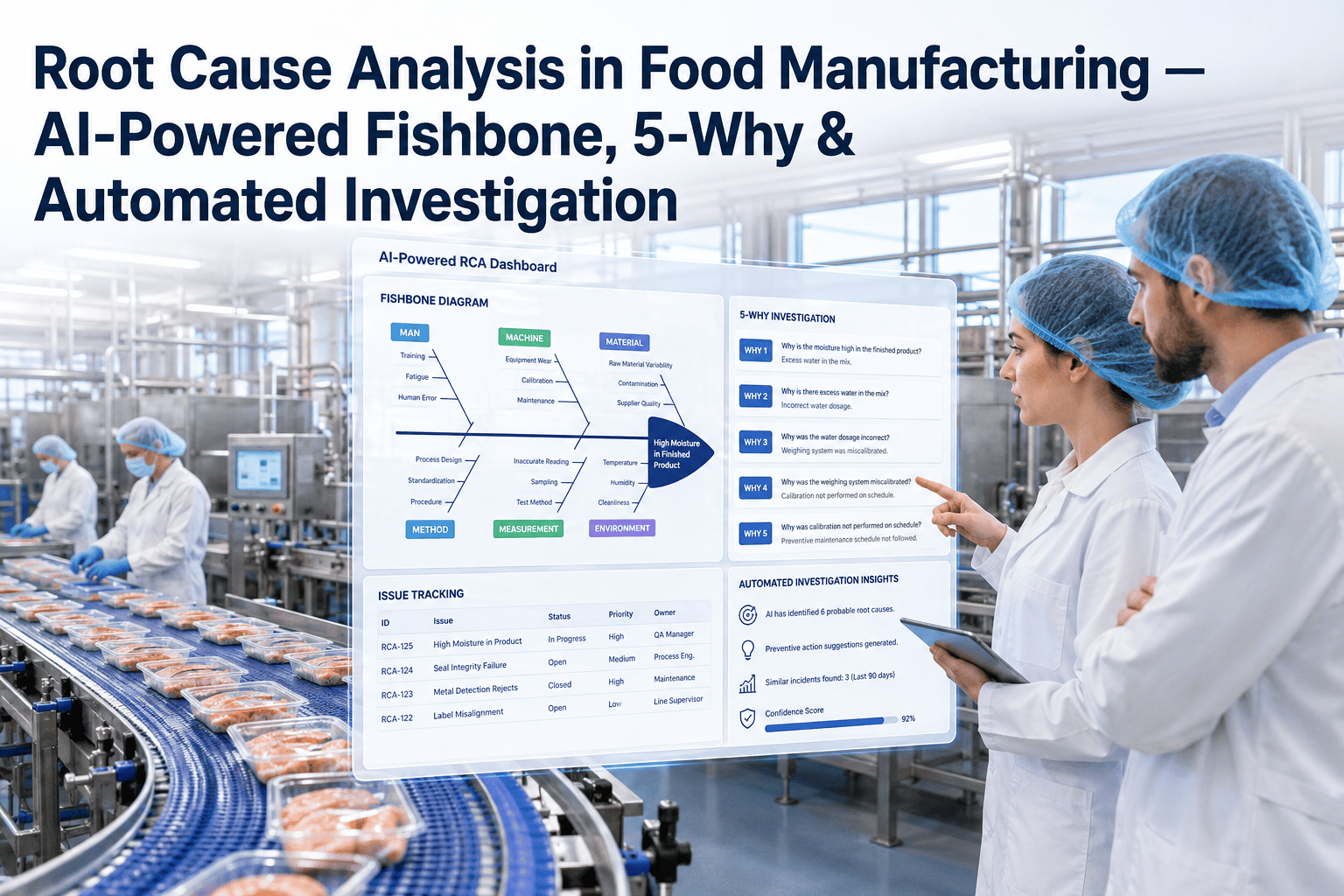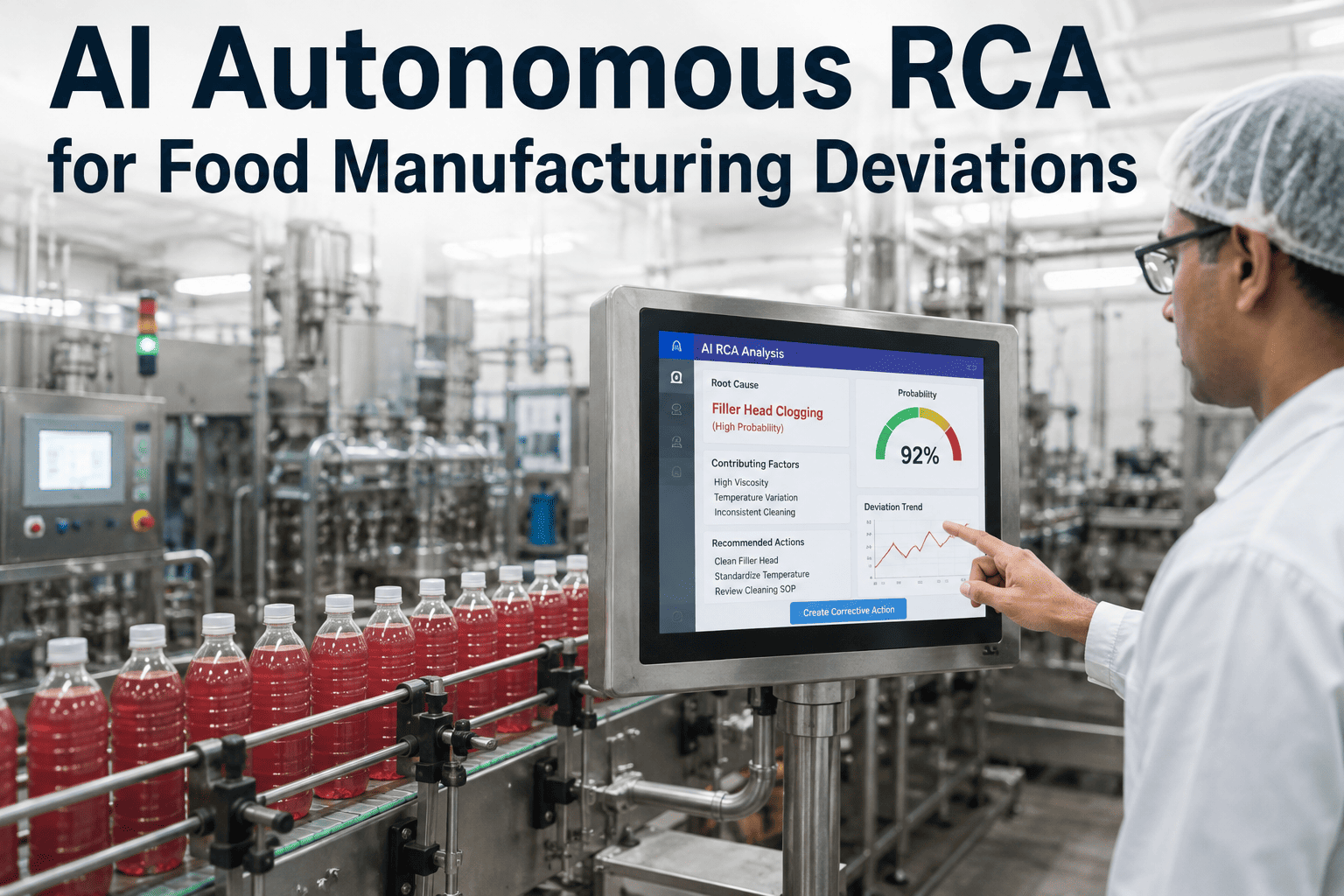
A quality deviation on a dairy line used to mean pulling three people into a conference room, printing out a week of batch records, and spending most of a Friday afternoon arguing about which shift's changeover actually caused the problem. By the time the investigation closed, the line had usually run the same recipe another dozen times, any one of which could have carried the same defect forward without anyone noticing. AI-driven root cause analysis compresses that entire week into a correlation the software runs the moment the deviation is logged, cross-referencing process, quality, and maintenance data before the shift even ends. iFactory's team has watched this shift investigation timelines from days to seconds across several F&B plants.
Go From Deviation Logged to Root Cause Identified Before the Shift Ends
AI correlates process parameters, quality results, and maintenance history the instant a deviation is recorded, replacing a manual investigation that used to take days with an answer that takes seconds.
Why Manual RCA Struggles to Keep Up With Deviation Volume
A single food plant running multiple lines and shifts can generate dozens of minor deviations a week, most of which never receive a full investigation simply because there isn't enough quality engineering time to give each one the attention it deserves. The ones that do get investigated manually still depend on someone remembering to pull the right batch record, the right sensor trend, and the right maintenance log, and cross-referencing them by eye. That process is slow even when it's done well, and it's the exact kind of pattern-matching work that a correlation engine can do continuously across every deviation instead of only the handful that get escalated.
What the AI Is Actually Correlating
The correlation engine doesn't just look at the moment the deviation was flagged. It reconstructs the window of time leading up to it across every connected system, looking for parameters that moved outside their normal range in a way that historically precedes this type of deviation.
Run a Past Deviation Through the Correlation Engine
Bring a deviation your team already investigated manually. We'll show you what the AI correlation would have surfaced, and how it compares to the conclusion your team reached.
How the Investigation Actually Runs
The sequence looks deceptively simple from the outside, but each step depends on data connections that most plants haven't built yet, which is why the setup work matters as much as the AI model itself.
Wondering whether your current LIMS and historian setup already has the data this needs? Ask our team to review your data sources before you commit to a pilot.
Why the AI's Output Still Needs a Human Reviewer
Autonomous doesn't mean unsupervised. The correlation engine surfaces a ranked set of hypotheses with the supporting evidence attached, but the final call on root cause and the corrective action still belongs to the quality team, because they carry context the data alone can't capture — a supplier change that hasn't been logged yet, or a known quirk in a specific piece of equipment. The value of the AI is narrowing days of manual cross-referencing down to a short list worth a human's attention, not replacing the judgment that decides what to do about it.
| Stage | AI Role | Human Role |
|---|---|---|
| Data correlation | Pulls and matches every relevant data source | Confirms data sources are complete and current |
| Hypothesis ranking | Orders likely causes by historical match strength | Applies context the data doesn't capture |
| Corrective action | Suggests actions tied to similar past cases | Approves and owns the final corrective action |
| Documentation | Auto-generates the investigation record | Signs off for regulatory and audit purposes |
What Plants See After Adopting Autonomous RCA
The most consistently reported change isn't speed alone, it's coverage — deviations that used to get a cursory look because there wasn't time for a full investigation now get the same correlation depth as a major incident, which surfaces recurring patterns that were previously invisible because no single investigation connected them.
Common Pitfalls When Adopting This Approach
The most common mistake is expecting the AI to replace the quality team's sign-off process rather than accelerate the investigation feeding into it — regulators still expect a documented, human-reviewed root cause, and a platform that skips that step creates compliance risk rather than removing it. A second mistake is deploying the correlation engine before the underlying data connections are solid, which produces confident-sounding hypotheses built on incomplete data. The correlation is only as good as the historian, LIMS, and CMMS feeds behind it, so validating those connections during a pilot matters more than the sophistication of the model itself.
Frequently Asked Questions
Give Your Quality Team an Answer Before the Shift Ends
Bring a past deviation to the call and see what autonomous correlation would have surfaced against your own historical data.