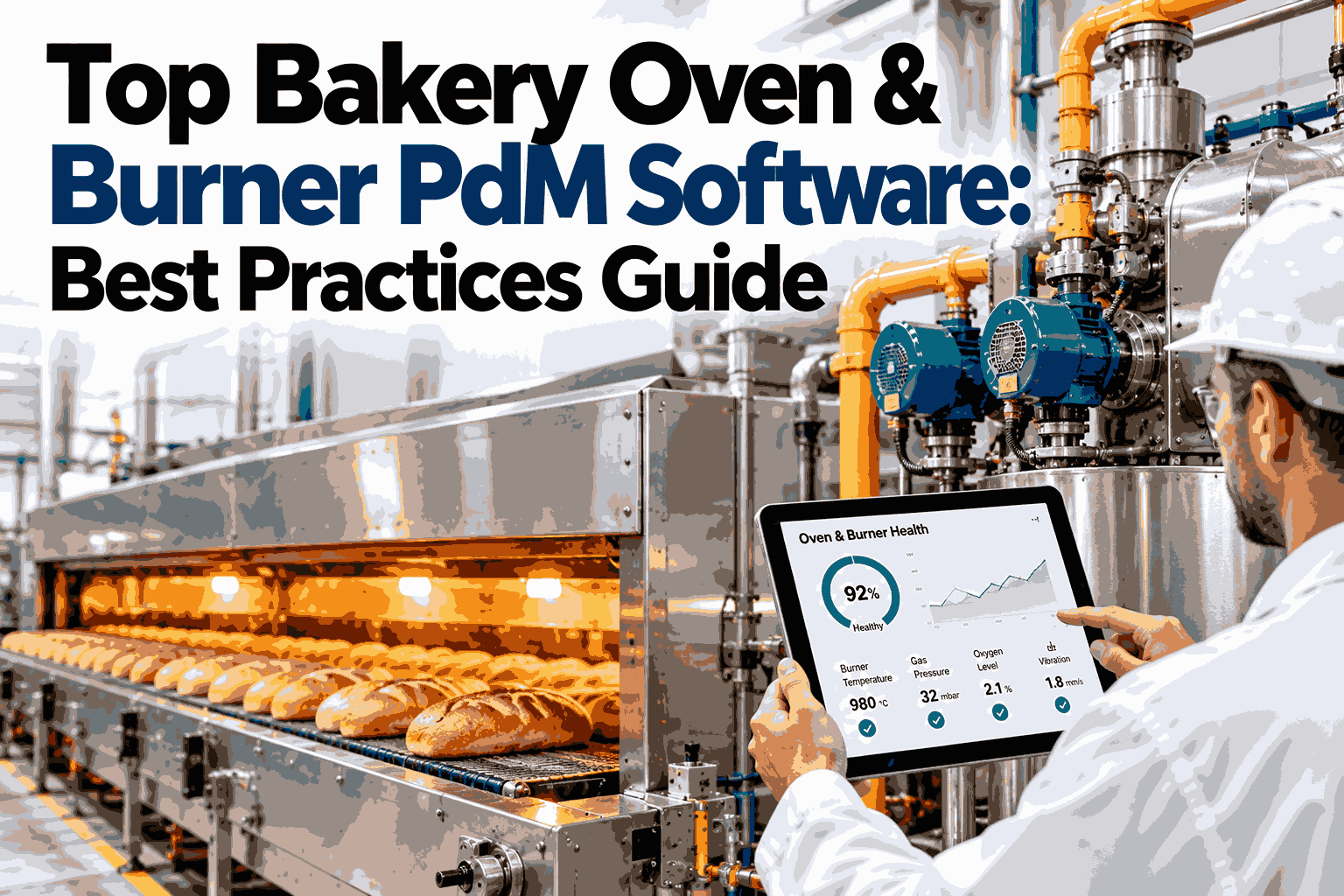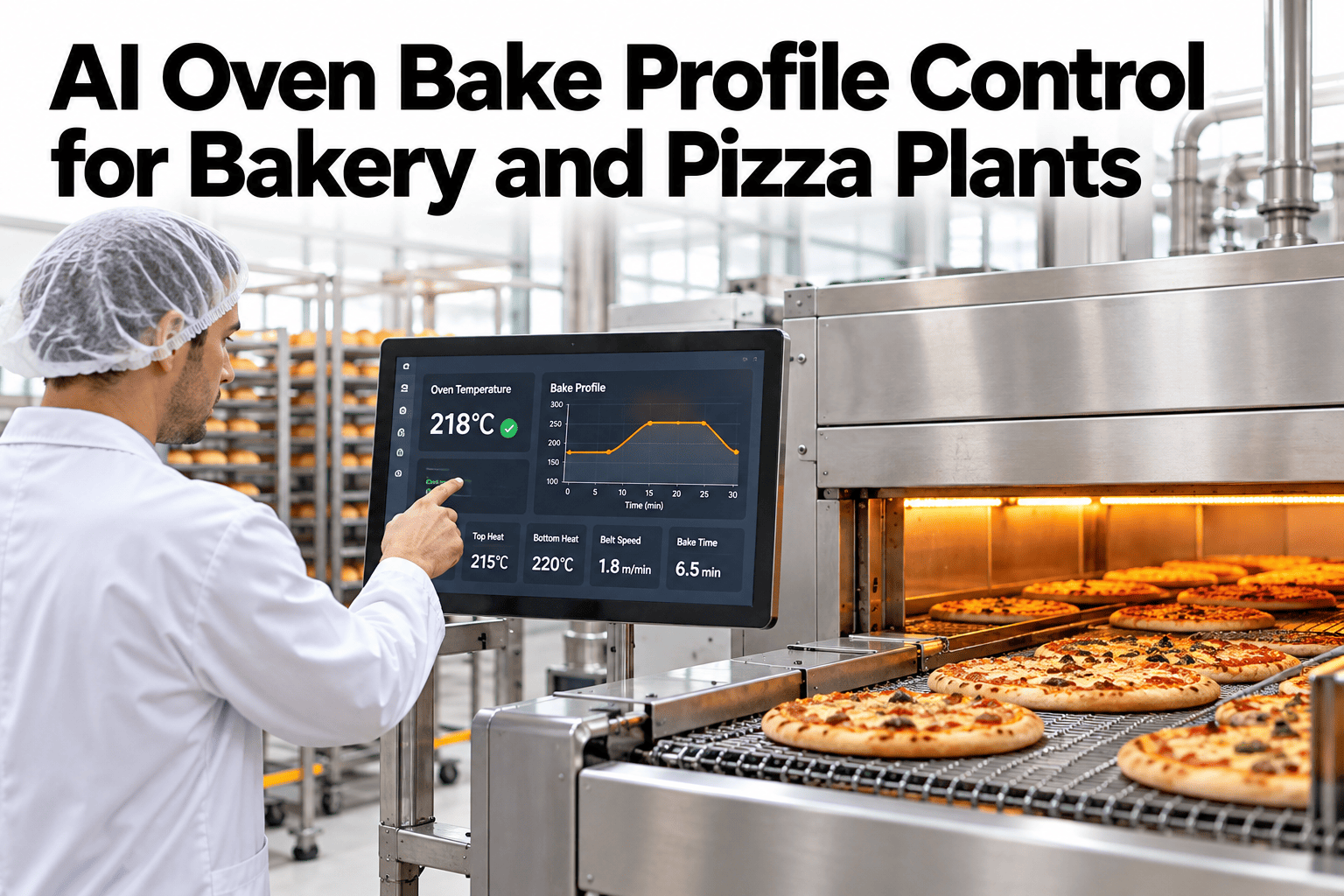
Dough does not arrive at the oven in the same condition twice. Humidity in the proofing room, flour hydration, fermentation time and ambient conditions all shift the dough's moisture and structure before it ever reaches the belt, and a fixed oven profile built for an average dough treats every batch as if none of that variation exists. The result shows up downstream as inconsistent crust color, uneven spring and moisture that drifts outside spec, problems that are hard to trace back to the oven because the oven setting never changed. Reading dough condition and belt speed live, and adjusting the bake profile to match, is what keeps output consistent even as the dough itself keeps changing. Process teams can see this applied to their own bake line on iFactory AI before the next humid proofing day throws off a batch.
The Dough Changed. The Oven Profile Should Too.
iFactory AI reads dough humidity and belt speed live and holds crust color, spring and moisture inside spec automatically.
Why a Fixed Bake Profile Fights the Dough It Is Given
A static temperature and time profile assumes consistent dough entering the oven, but dough moisture and structure vary with everything that happened upstream, from flour lot to proofing conditions to how long a batch sat before baking.
Ambient humidity in the proof box changes dough surface moisture batch to batch.
Different flour lots absorb water differently, affecting dough structure.
A batch sitting slightly longer or shorter than planned changes how it bakes.
A fixed belt speed does not account for dough that needs more or less time.
What Gets Monitored Through the Bake
| Input | What It Reveals |
|---|---|
| Dough surface humidity | How much moisture the crust will need to shed during baking |
| Belt speed and zone timing | How long the product actually spends in each heat zone |
| Zone temperature profile | Whether heat delivery matches what this specific batch needs |
| Crust color output | Confirms whether the adjusted profile actually hit the target |
Model Your Own Oven's Response to Dough Variation
Bring a recent inconsistent bake run to a 30-minute working session.
From Dough Entering to Crust Verified
Surface humidity and structure are assessed as the batch enters the oven.
Zone temperatures and belt speed shift to match this batch's needs.
Progress through each zone is tracked against the expected curve.
Color and spring at the exit confirm whether the target was met.
Why Checking Crust After Baking Is Always a Step Behind
A visual or manual crust check performed after the bake confirms what already happened, but by the time that check flags a problem, the batch is already finished and any correction only applies going forward, not to the product already affected.
Reading dough condition before it enters the oven moves the response earlier, addressing the input that would have caused the problem rather than discovering the output after it has already occurred, which is the difference between a correction and a catch.
A Scenario: The Humid Morning That Changed Everything
Picture a bakery running a standard pizza crust recipe on a morning when ambient humidity in the proofing area runs noticeably higher than usual, something nobody adjusts for because the oven profile itself never changes.
The dough entering the oven carries more surface moisture than the profile was tuned for, and without compensation, the crust takes longer to set and can finish with uneven color and a softer bite than the standard. A system reading dough humidity at the oven entrance can shift belt speed and zone temperature to account for the extra moisture before the first affected batch even finishes baking, rather than discovering the problem once a tray of inconsistent crusts reaches inspection.
Fixed Profile vs Live Dough-Responsive Control
What Changes for Quality Review, Not Just the Bake Itself
A quality team investigating an out-of-spec crust complaint benefits from the same adjustment history that helps operators, since the humidity and timing data behind a specific batch is already logged rather than needing to be reconstructed after the fact.
That shortens the time it takes to close a quality deviation considerably, since the question of what was different about that batch often has a direct answer sitting in the dough condition record rather than requiring a fresh investigation each time.
What Stays With the Baking Team
Why This Grows More Important as Product Variety Increases
A bakery running a single product on a dedicated line can sometimes get by with a carefully tuned static profile, since the variability it needs to absorb is limited to day-to-day dough condition changes alone.
A line running multiple products with different thickness, moisture and recipe characteristics faces a much harder static tuning problem, since no single fixed profile can be optimal for every product that passes through, which is exactly where dough-responsive control shows its clearest advantage over a one-size-fits-all setting.
Why Belt Speed Needs to Move Together With Temperature
Adjusting temperature alone without also considering belt speed often creates a new imbalance, since a hotter zone paired with the same dwell time can overcook the crust surface before the interior has fully set.
Treating belt speed and zone temperature as a single coordinated adjustment, rather than two separate knobs turned independently, is what keeps the internal and external bake progressing together, which is ultimately what crust color and spring both depend on.
Why Pizza Crust Faces Its Own Set of Challenges
Pizza crust carries additional variables beyond a standard bread bake, since toppings, sauce moisture and dough thickness at the center versus the edge all interact with the bake profile differently than a uniform loaf would.
A thinner edge bakes faster than a thicker center on the same profile.
Sauce and topping moisture pulls heat differently depending on coverage.
Different starting points need different compensation strategies.
Heat transfer method changes how quickly the base responds to adjustment.
Starting With the Product That Shows the Most Variation Today
Not every product on a shared oven line needs this approach applied on day one. Starting with whichever product shows the most inconsistency in current quality data gives the clearest early proof point before expanding further.
Where iFactory AI Fits
Reads dough condition
Checks surface humidity and structure as each batch enters the oven.
Coordinates speed and heat
Adjusts belt speed and zone temperature together, not separately.
Verifies the result
Confirms crust color and spring met target at the oven exit.
Keeps the team in control
Leaves recipe and override authority with the baking team.
Expert Review
A food process engineering perspective, reviewed for accuracy before publication: bake consistency problems are frequently diagnosed as an oven issue when the actual variation started upstream in proofing or dough handling, and a fixed oven profile has no way to compensate for conditions it was never designed to see. Reading dough condition directly, rather than assuming it, closes that gap. Reviewing a recent inconsistent bake run against your own dough data often shows exactly where the drift started. Confirm specific feature capabilities against your plant's oven systems and sensing hardware before relying on any workflow.
Frequently Asked Questions
Does this require replacing the existing oven control system?
No, it works alongside the existing oven controller by adjusting the profile the controller follows, rather than replacing the oven's underlying heating hardware. See how this integrates with your current oven setup and control panel without major downtime.
What dough measurement is needed for this to work?
Surface humidity sensing at or near the oven entrance is the most common starting point, with additional structural measurement added where available to further refine the adjustment. Ask about what dough sensing fits your current line, including options for retrofitting an existing oven without a major rebuild.
Can this handle multiple products on the same oven?
Yes, each product typically has its own target profile, and the system compensates toward whichever target is active for the batch currently moving through the oven. Explore multi-product bake profile management for a line running several distinct recipes.
How does this handle a genuinely new recipe being tested?
A new recipe starts with a defined target profile set by the baking team, and the compensation logic works from that baseline the same way it does for an established product. Talk through how new product trials would work with this setup before a formal launch.
How quickly does this typically reduce crust inconsistency?
Many lines see a noticeable reduction in color and spring variation within the first few weeks, since the conditions causing the most common drift, like proofing humidity swings, tend to recur regularly and get addressed quickly. See a realistic timeline for your own bake line and product mix.
Keep Crust Color and Spring Consistent, Whatever the Dough Brings
iFactory AI reads dough condition live and adjusts the bake profile to match. See this on your own bake line.