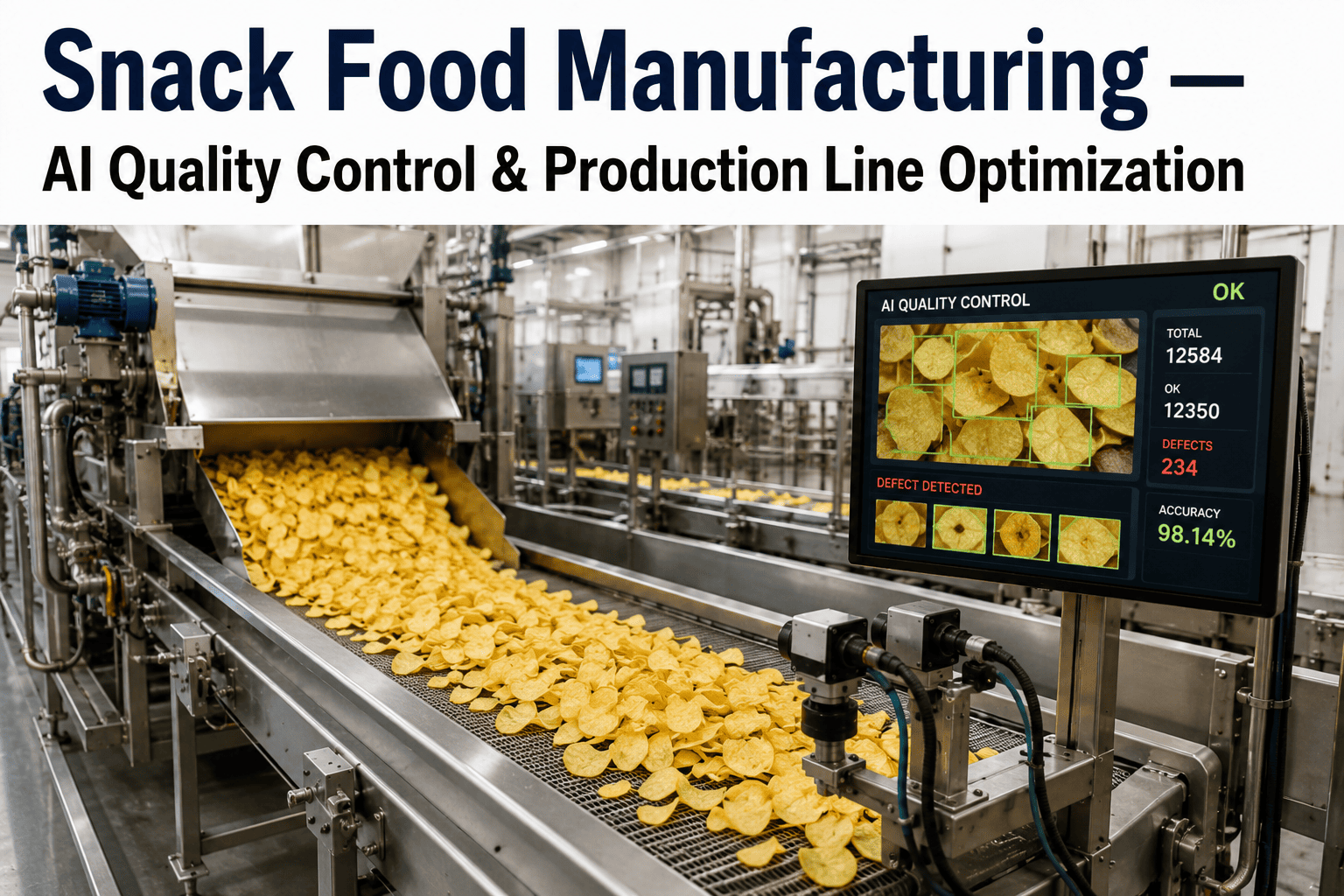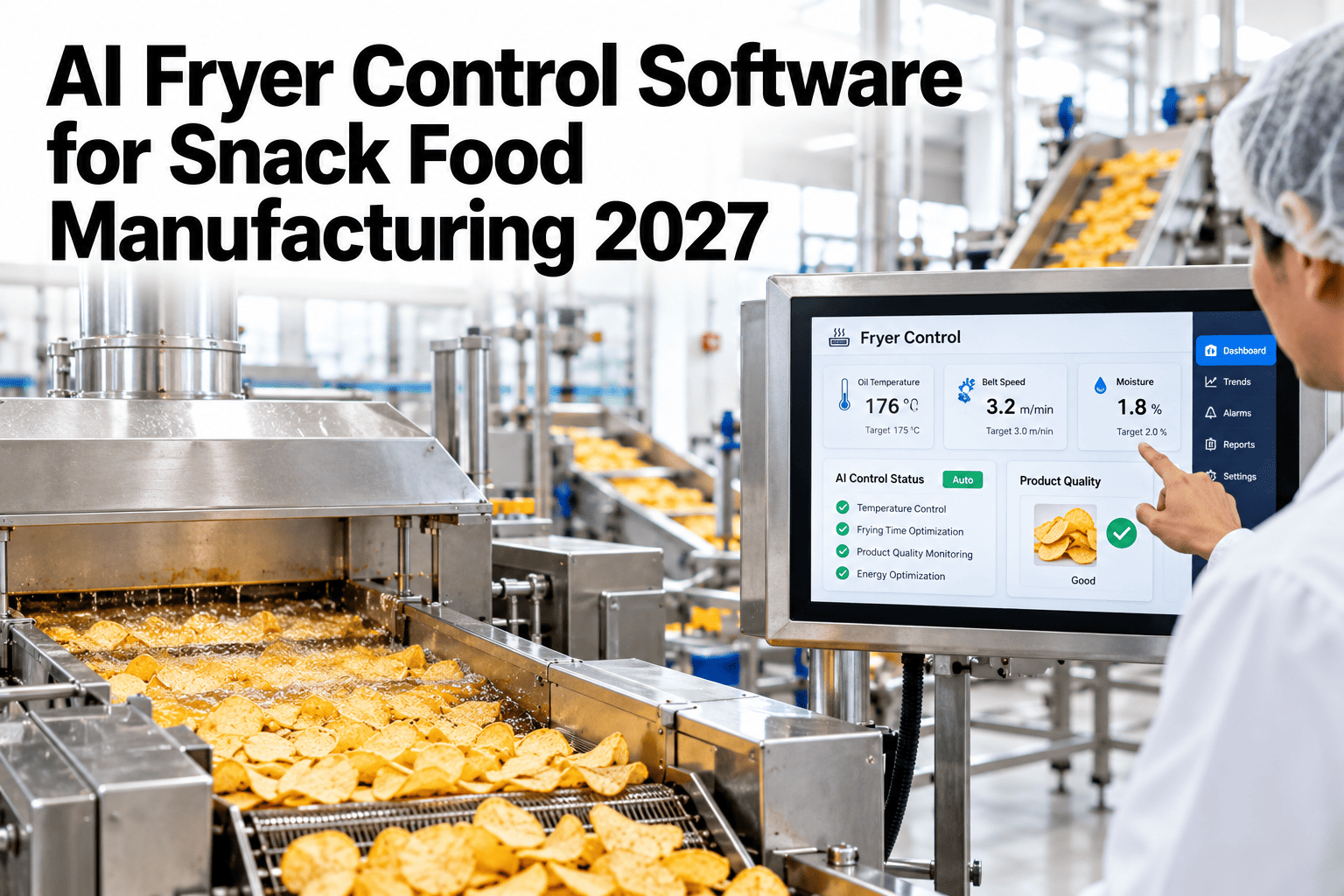
A fryer running the exact same set point all shift will still produce snack chips that taste slightly different at 9am, 1pm and 5pm, because oil temperature, product load and the moisture coming off a fresh batch of potatoes all shift throughout the day in ways a single static set point cannot follow. The fix is not a better operator watching the gauge more closely, it is a system that reads oil temperature, load and color together and adjusts continuously, the way an experienced fryer operator does intuitively but cannot do with perfect consistency across an eight-hour shift. Process teams can see this applied to their own fryer data on iFactory AI before the next crumb or load swing throws off a batch.
Texture Should Not Depend on What Time of Day a Batch Was Fried
iFactory AI models oil temperature, load and color together so fryer output stays consistent through crumb and load swings.
Why a Fixed Set Point Cannot Hold Texture Steady
Oil temperature control alone assumes the only variable that matters is the oil itself, but product load and raw material moisture move independently of the oil temperature set point, and both affect final texture as much as temperature does.
A heavier basket pulls oil temperature down faster than a light one, even at the same set point.
Raw material moisture shifts batch to batch, changing how fast color develops.
Oil takes time to recover after a heavy load, and the next batch often enters before it fully does.
A manual adjustment always lags behind the condition that prompted it.
What Gets Read Together to Hold Texture Steady
| Input | What It Signals |
|---|---|
| Oil temperature | The core driver of cook rate and color development |
| Basket or belt load | How much heat capacity is being pulled from the oil right now |
| In-line color reading | A direct check on whether the current settings are actually working |
| Recovery trend | How quickly oil temperature is returning to set point after a load |
Model Your Own Fryer's Load and Temperature Pattern
Bring a recent shift's data to a 30-minute working session.
From Reading to Adjustment
Oil temperature, load and color are read continuously, not at set intervals.
Current conditions are compared against the fryer's known response pattern.
Temperature or timing shifts to compensate before color drifts out of spec.
The color reading confirms whether the adjustment held the target.
Why Color Alone Is a Lagging, Not a Leading, Indicator
Checking color after a batch comes out tells a plant something went wrong only after the product has already been made, which means a manual, color-only quality check always costs at least one batch worth of product before a correction happens.
Reading oil temperature and load in real time, before color actually drifts, shifts the response earlier in the process, catching the conditions that would eventually produce an off-color batch rather than catching the off-color batch itself after the fact.
A Scenario: The Afternoon Batch That Ran Pale
Picture a snack line where morning batches come out consistently golden, but afternoon batches start trending pale, with nothing obviously different in the recipe or the set point on the panel.
The cause often traces back to a raw material delivery that came in slightly wetter than the morning's batch, something nobody would notice without checking incoming moisture directly. A system reading oil temperature, load and color together can catch the color drift within the first few afternoon batches and nudge the temperature or residence time to compensate, rather than waiting for a quality check hours later to confirm something had gone wrong.
Fixed Set Point vs Continuous Adjustment
What Changes for Quality Teams, Not Just Operators
A quality team reviewing texture complaints or out-of-spec batches gains a different kind of value from continuous monitoring, since the adjustment history itself becomes a record that explains why a particular batch turned out the way it did.
Instead of a quality investigation starting from scratch each time, with a review of the load, temperature and color data for the specific window in question, the explanation is often already sitting in the adjustment log, considerably shortening the time it takes to close out a quality deviation.
What Operators Still Control
Why This Matters More as Snack Lines Run Faster
Line speeds at many snack plants have crept upward over time as volume demands grow, and faster lines leave less margin for a slow manual response to a load or moisture swing before the effect shows up in a visible batch of product.
A control approach that worked acceptably at a slower line speed can become inadequate as that same line runs faster, simply because the window between a condition changing and a bad batch reaching packaging keeps shrinking as throughput increases.
Why Oil Recovery Time Deserves Its Own Attention
Oil that has not fully recovered from a heavy load before the next batch enters the fryer is effectively cooking at a lower temperature than the set point suggests, even though the displayed reading may look close to target by the time the next batch starts.
Tracking recovery trend as its own signal, not just the instantaneous temperature reading, catches this gap, since a fryer that recovers slowly after heavy loads needs a different compensation strategy than one that bounces back quickly, and treating both the same way produces inconsistent results across different load patterns.
Why Snack Food Fryers Face More Variability Than Many Other Fried Products
A snack food fryer running raw potato, corn or wheat-based product deals with far more upstream variability than a fryer processing a pre-formed, standardized product. Moisture content, slice thickness and starch composition all shift with the raw material, and each one changes how the product behaves in hot oil.
Varies by crop, season and storage conditions before it ever reaches the line.
Even small cutting variation changes cook time needed for the same color.
Affects browning rate independent of moisture or thickness.
Oil degrades gradually across a run, shifting heat transfer characteristics.
Building Confidence Before Expanding Beyond One Line
A plant with several fryer lines rarely wants to change every line's control approach at once. Starting with a single line, confirming the texture and consistency improvement holds up over several weeks, and then expanding is a more manageable path.
Where iFactory AI Fits
Reads inputs together
Combines oil temperature, load and color into one continuous model.
Adjusts proactively
Compensates for load and moisture swings before color drifts.
Tracks recovery
Watches how quickly oil returns to target after each load.
Keeps operators in control
Leaves recipe decisions and override authority with the team.
Expert Review
A food process engineering perspective, reviewed for accuracy before publication: fryer texture consistency is one of the clearer cases where the limiting factor is rarely the equipment itself, it is how quickly the control strategy can respond to conditions that are already changing faster than a manual adjustment can track. Continuous, multi-input control closes that gap without requiring a fundamentally different fryer. Reviewing a recent shift's load and color data is a fast way to see how much of your own variation traces back to this gap. Confirm specific feature capabilities against your plant's systems before relying on any workflow.
Frequently Asked Questions
Does this replace the fryer's existing temperature controller?
No, it works alongside the existing controller by adjusting the target based on load and color feedback, rather than replacing the underlying temperature control hardware. See how this integrates with your current fryer controls.
What if the in-line color sensor is not already installed?
Color feedback adds meaningful value, but a useful starting point can also be built from oil temperature and load data alone, with color added once that sensor is in place. Ask about a phased approach if color sensing is not yet installed.
How does this handle a genuine recipe change?
A recipe change updates the target profile the system compensates toward, so the same continuous adjustment logic applies, just aimed at a new target rather than the previous one. Explore how recipe changes are handled in your fryer setup.
Can operators see why an adjustment was made?
Yes, each adjustment is tied to the input data that triggered it, so an operator reviewing the shift log can see the load or color reading behind any given change. Talk through what adjustment history looks like for your team.
How long does it take to see a measurable texture improvement?
Many lines see a noticeable reduction in shift-to-shift variation within the first few weeks, since the most common causes of drift, like load and moisture swings, tend to recur daily and get addressed quickly. See a realistic timeline for your own fryer line.
Keep Texture Consistent From the First Batch to the Last
iFactory AI models oil temperature, load and color together to hold texture steady through the shift. See this on your own fryer data.