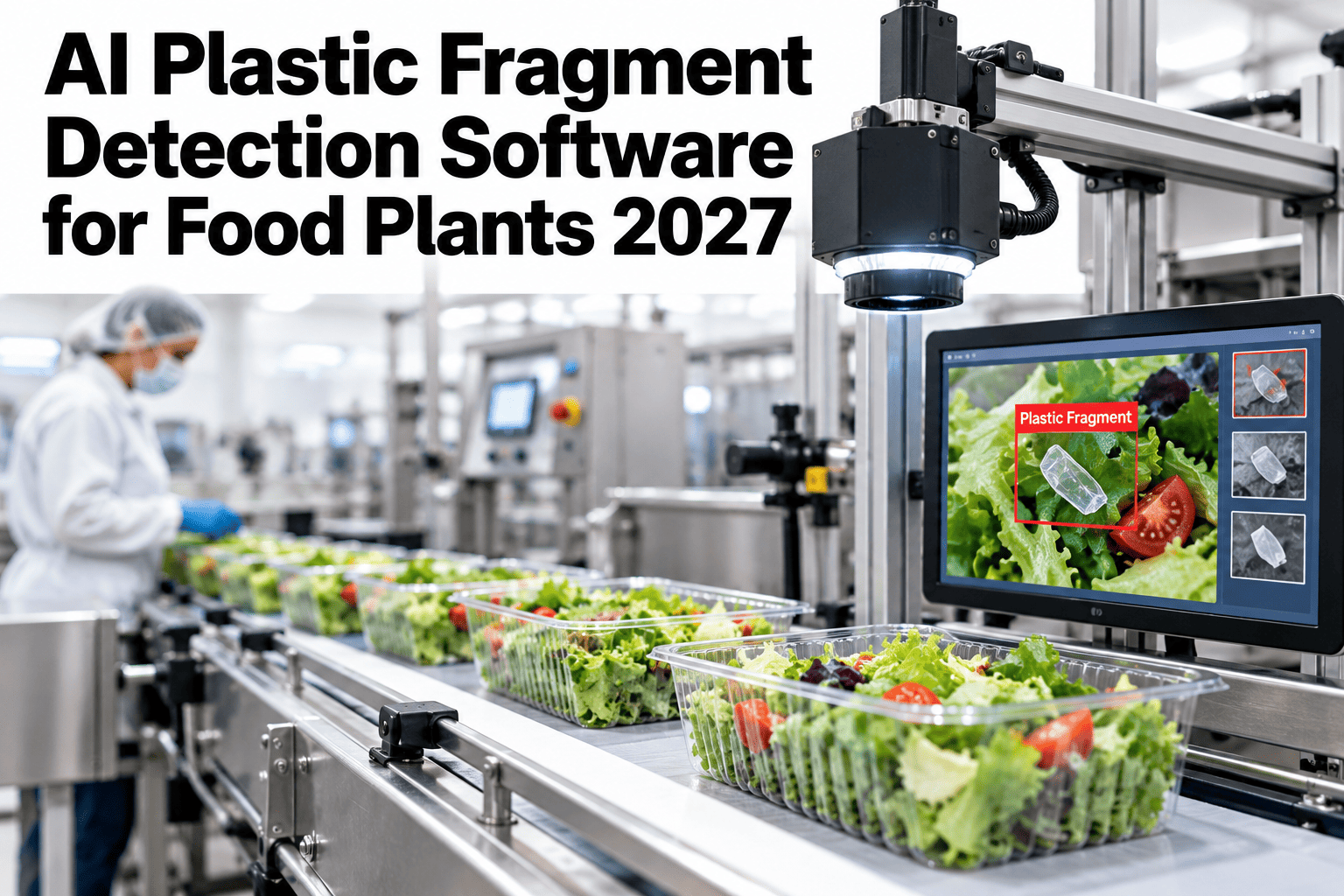
Plastic has no magnetic field for a metal detector to read and often no density contrast for an X-ray to flag, which makes it the material category that falls through the gap between two inspection methods built for a different physics entirely. A fragment chipped off a colored HDPE tote is at least visually distinct from most food products, but a torn piece of blue nitrile glove or a clear PET shard can be far harder, the glove because the tear exposes a less saturated edge and the PET because it is transparent by design. Training one detector against all three of these specific, common contamination sources is what a working plastic fragment detection setup looks like against your own packaging and PPE.
Three Plastic Sources, One Trained Detector
iFactory AI trains a single vision model against colored HDPE totes, blue nitrile gloves, and clear PET shards, the three most common plastic contamination sources on a food line.
Why Plastic Is the Hardest Material to Automate Against
Plastic contamination resists the two most established inspection methods in ways that are specific to the material, not a limitation of equipment setup or sensitivity.
No Metal Signature at All
A metal detector has nothing to register against plastic regardless of fragment size, orientation, or sensitivity setting.
Low Density Against Many Products
X-ray relies on density contrast, and many common plastics sit close enough to typical food product density to fall below a reliable detection threshold.
Transparency and Color Variation
Clear PET is deliberately hard to see by design, while colored HDPE and PPE items vary enough in shade and wear that a simple color filter approach misses real fragments.
Detection Difficulty by Plastic Source
Not every plastic fragment is equally hard to catch. Understanding the specific challenge of each source shapes how the detection model is trained and tuned.
| Source | Primary Challenge | Detection Approach |
|---|---|---|
| Colored HDPE Tote | Color blends with some product backgrounds | Trained on specific tote colors in use at the facility |
| Blue Nitrile Glove | Torn edges fade and lose saturation | Trained on torn-edge appearance, not just intact glove color |
| Clear PET Shard | Transparency makes the fragment nearly invisible to a plain camera | Edge and refraction detection rather than color-based matching |
A model trained generically on "plastic" without accounting for these specific differences tends to perform well on whichever source it saw most during training and poorly on the others, which is why source-specific training matters more than overall dataset size.
Test Detection Against Your Own PPE and Packaging
Bring a sample of your actual totes, gloves, and packaging to a 30-minute session and see how detection performs against your specific materials.
Training the Model on What's Actually in Your Plant
Generic training data rarely matches a specific facility's actual PPE brand, tote supplier, or packaging material closely enough to perform reliably from day one.
An Illustrative Comparison: Generic vs Source-Specific Training
The figures below are a labeled illustrative composite, not a reported customer result, showing how detection rate can change across the three source types depending on training approach.
The clear PET shard is consistently the hardest of the three sources, and teams that train only on intact packaging samples rather than irregular shard shapes tend to see the biggest gap between expected and actual performance. The glove and tote sources respond well to source-specific color and edge training, but transparent plastic genuinely needs a different detection principle built around edges and refraction rather than color matching alone.
Frequently Asked Questions
Can this detect clear plastic as reliably as colored plastic?
Clear PET requires a different detection approach built around edge and refraction cues rather than color matching, and while it is genuinely harder than colored plastic, a model specifically trained on transparent fragment shapes performs meaningfully better than a generic plastic detector. See clear fragment detection tested on your own packaging in a session.
Do we need to switch our glove or tote color to make this work better?
No, the model is trained on whatever colors and materials your plant already uses, so switching is not required, though a glove or tote color with stronger contrast against your specific products can make detection somewhat easier if a change is already being considered. Ask the iFactory AI team about your current PPE and tote colors.
How is this different from a generic foreign material AI system?
A generic system trained broadly across many material types often underperforms on any single difficult category, while source-specific training on your actual totes, gloves, and packaging shapes and colors produces a meaningfully higher detection rate for plastic specifically. Compare source-specific results on your own materials in a demo.
What if our packaging materials change seasonally or by supplier?
The model can be retrained or updated as packaging materials or PPE suppliers change, which is why documenting material changes as part of your supplier or packaging change control process keeps detection accuracy current rather than degrading quietly over time. Discuss a retraining process for material changes with the support team.
How long does training on our specific materials actually take?
Training time depends on how many material sources need coverage and how much sample imagery is available, but it fits within the broader rollout timeline rather than requiring a separate lengthy project before the system can go live. Get a training timeline scoped to your materials on a call.
Train Against the Plastic Actually in Your Plant
iFactory AI builds a detection model specific to your totes, gloves, and packaging rather than a generic plastic library. Book a walkthrough on your own materials.