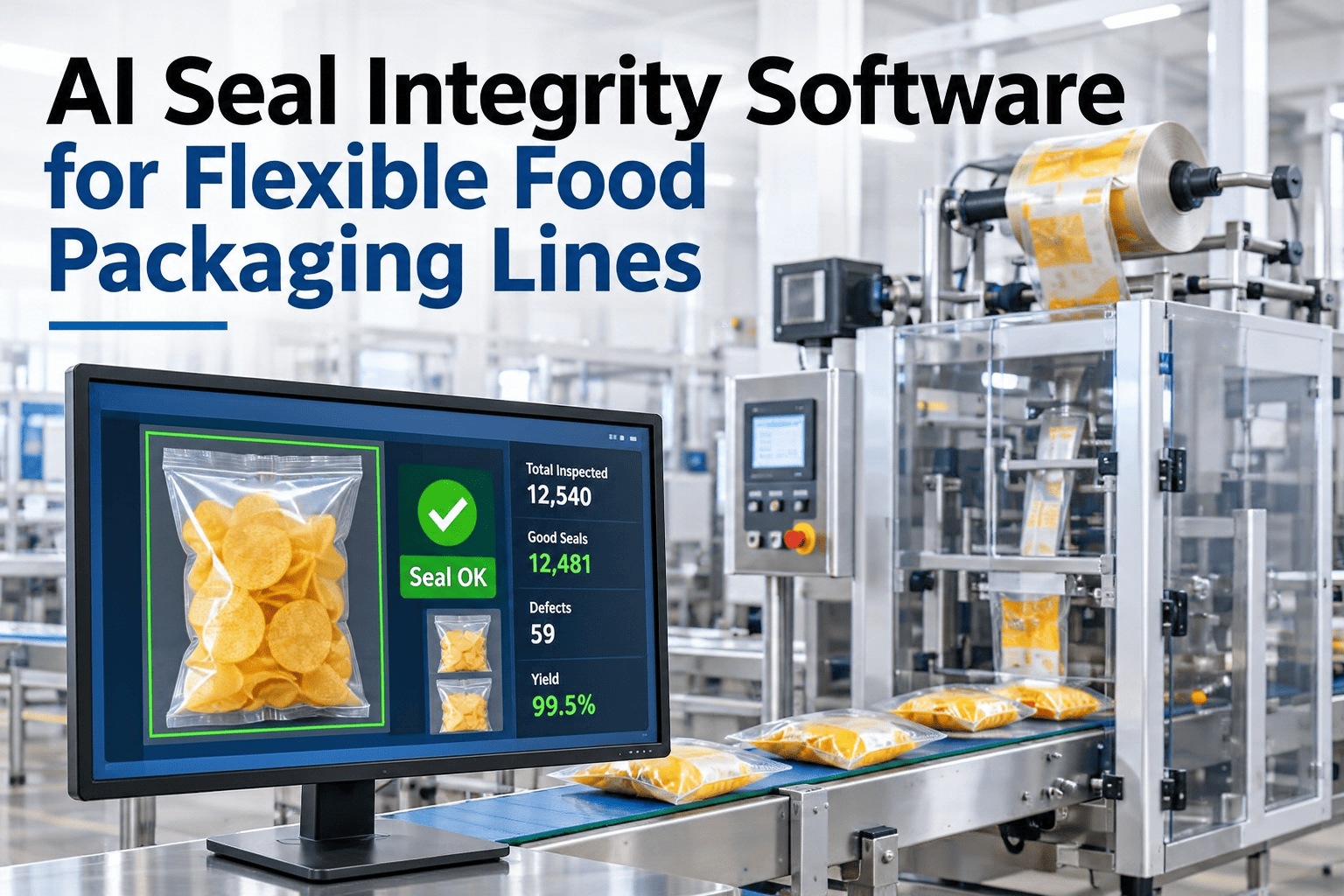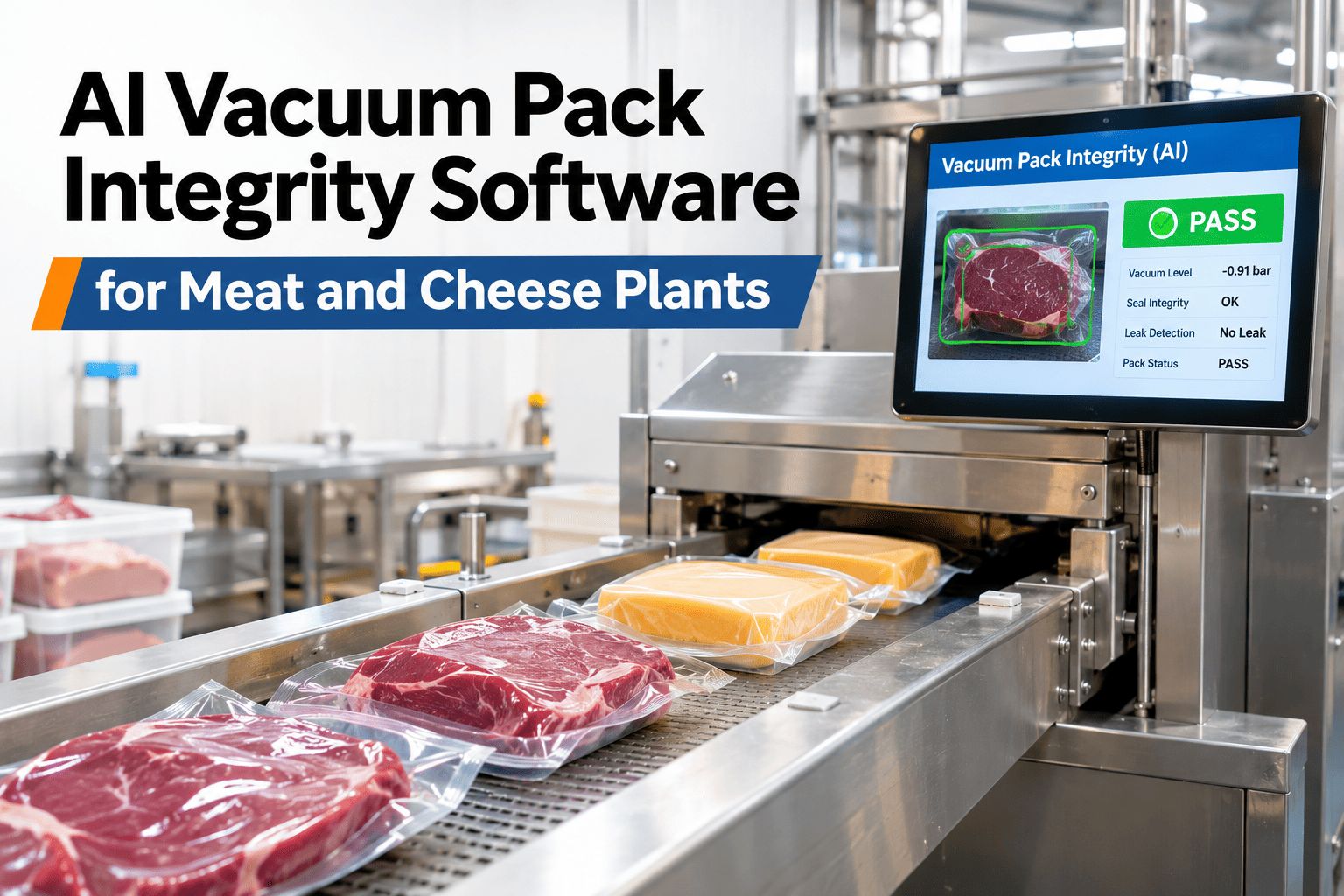
A vacuum pack that looks tight on the belt can still be losing vacuum slowly, and a wrinkle at the seal that looks cosmetic can be the exact spot a leak starts. AI vision vacuum pack integrity software reads loose vacuum, wrinkle-at-seal patterns and pouch damage on meat and cheese lines, catching the pack before it reaches a pallet rather than after a customer complaint. Even microscopic leaks can let oxygen or bacteria in and shorten shelf life, which is why meat and poultry processors are moving toward near zero-defect packaging standards, and plants can see a vacuum integrity model run against their own wrap-zone footage before changing anything on the line.
Catch a Loose Vacuum Before the Pallet Leaves the Wrap Zone
iFactory AI reads vacuum tightness, wrinkle-at-seal patterns and pouch damage on every pack, so a slow leak never gets a chance to reach a customer.
What Is AI Vacuum Pack Integrity Software?
Vacuum pack integrity software is a vision model trained to read the visual signatures of a sound vacuum seal — film drawn tight against the product, no gas pocket, no wrinkle at the seal line — against the signatures of a developing failure. iFactory, an on-premise AI platform for meat and cheese packaging inspection, runs this check at the wrap zone, before pallets move to cold storage or shipping.
Three Pack Styles, Three Different Failure Signatures
Vacuum pack, modified atmosphere tray and vacuum skin pack each fail differently, and a model trained on one will miss the others.
Compare Your Three Pack Styles on One Call
Bring footage from your vacuum, MAP tray and skin pack lines and see how one model reads all three failure signatures.
From Wrap Zone to a Cleared Pallet
Checklist Before Trusting a Vacuum Integrity Model
Frequently Asked Questions About Vacuum Pack Integrity Software
Can vision inspection replace a gas leak tester for modified atmosphere packs?
Not entirely. A gas leak tester measures transmission directly and catches leaks too small to see, while vision inspection catches visible film, seal and wrinkle defects at full line speed on every pack. The two methods are complementary rather than interchangeable. See both methods compared on a call for your specific pack type.
How does the system tell a cosmetic wrinkle from a wrinkle that causes a leak?
The model is trained on labelled examples of both, since a leak-causing wrinkle typically sits directly on the seal line and has a different depth and geometry than a cosmetic fold elsewhere on the pack. Ask support how wrinkle classes are separated for your film type.
Does this work across vacuum pack, MAP tray and vacuum skin formats on the same line?
Yes, when each format is trained with its own defect classes, since the failure signatures differ enough that a single generic class would miss format-specific defects. Confirm coverage for your product mix before committing to a camera layout.
What is a realistic target miss rate for vacuum pack defects?
Meat and poultry processors are increasingly targeting a standard closer to zero-defect packaging with comprehensive validation and traceability, rather than treating a sampled defect rate as acceptable. Ask support what a realistic target looks like for your current baseline.
How fast can this run without slowing the wrap zone?
Inline leak and vision inspection systems in this category are built to run at line speed, with laser-based leak testers checking up to 200 packs a minute without deforming the pack, and vision inspection designed to match that pace. Confirm your own line speed on a walkthrough before specifying hardware.
Move Toward Zero-Defect Vacuum Packaging
iFactory AI reads vacuum tightness, seal continuity and wrinkle geometry on every pack leaving your wrap zone. Book a walkthrough on your own line.