AI Vision Fill-Level Software for Jar and Bottle Packaging

By James Smith on November 26, 2026

ai-vision-fill-level-software-for-jar-and-bottle-packaging

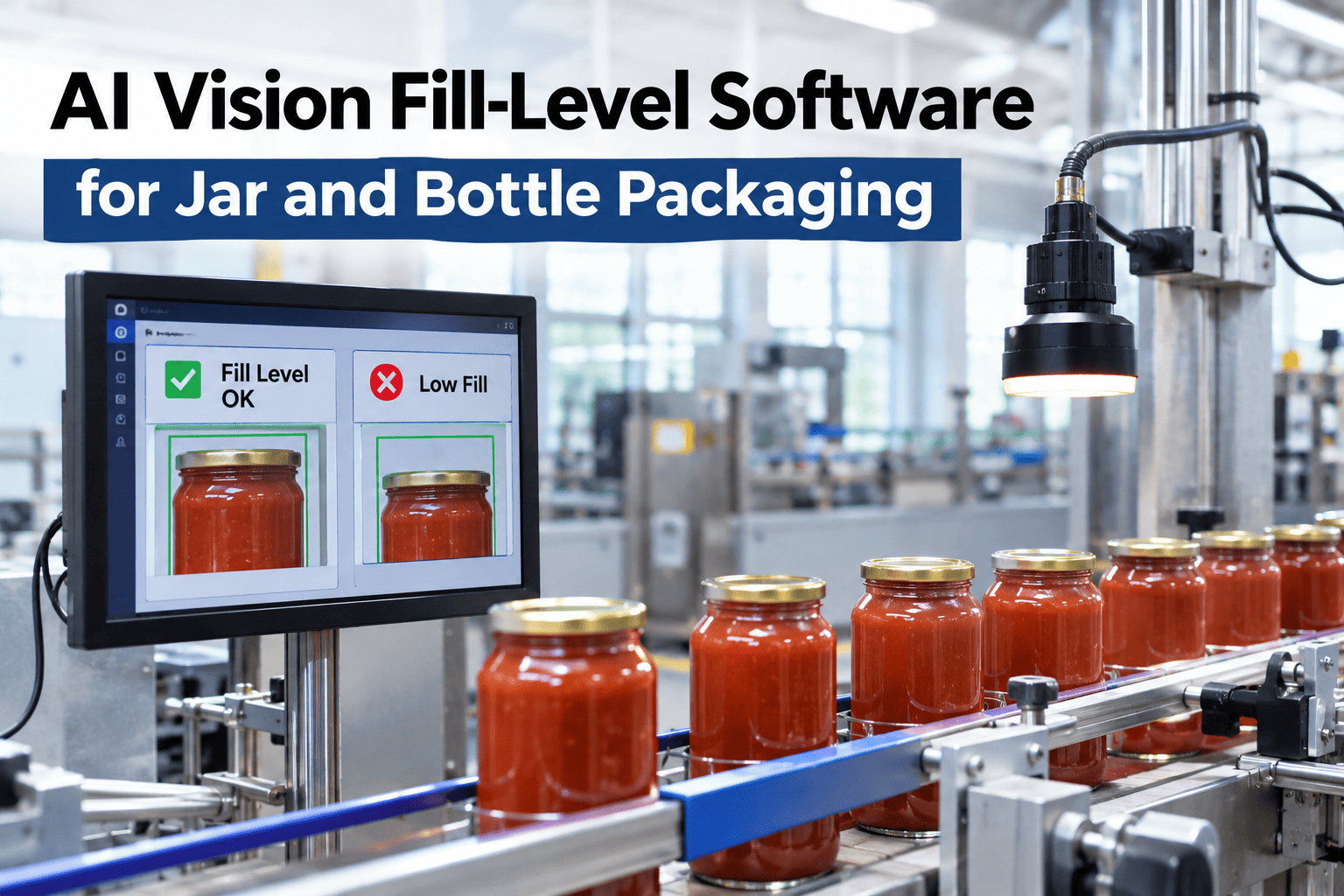
A load cell or a capacitive probe assumes the container is uniform and the product is consistent — neither assumption holds for a tinted glass jar, an opaque tub, or a product with natural density variation. iFactory, an on-premise AI platform with AI Vision Camera built in, reads fill level visually across transparent, tinted, and opaque containers alike. Packaging quality teams who want this coverage on their own jar and bottle lines can request a demo with our team.

AI Vision Fill-Level Software · Jar & Bottle Packaging, 2026

Where Probes and Load Cells Miss, Vision Still Reads the Line

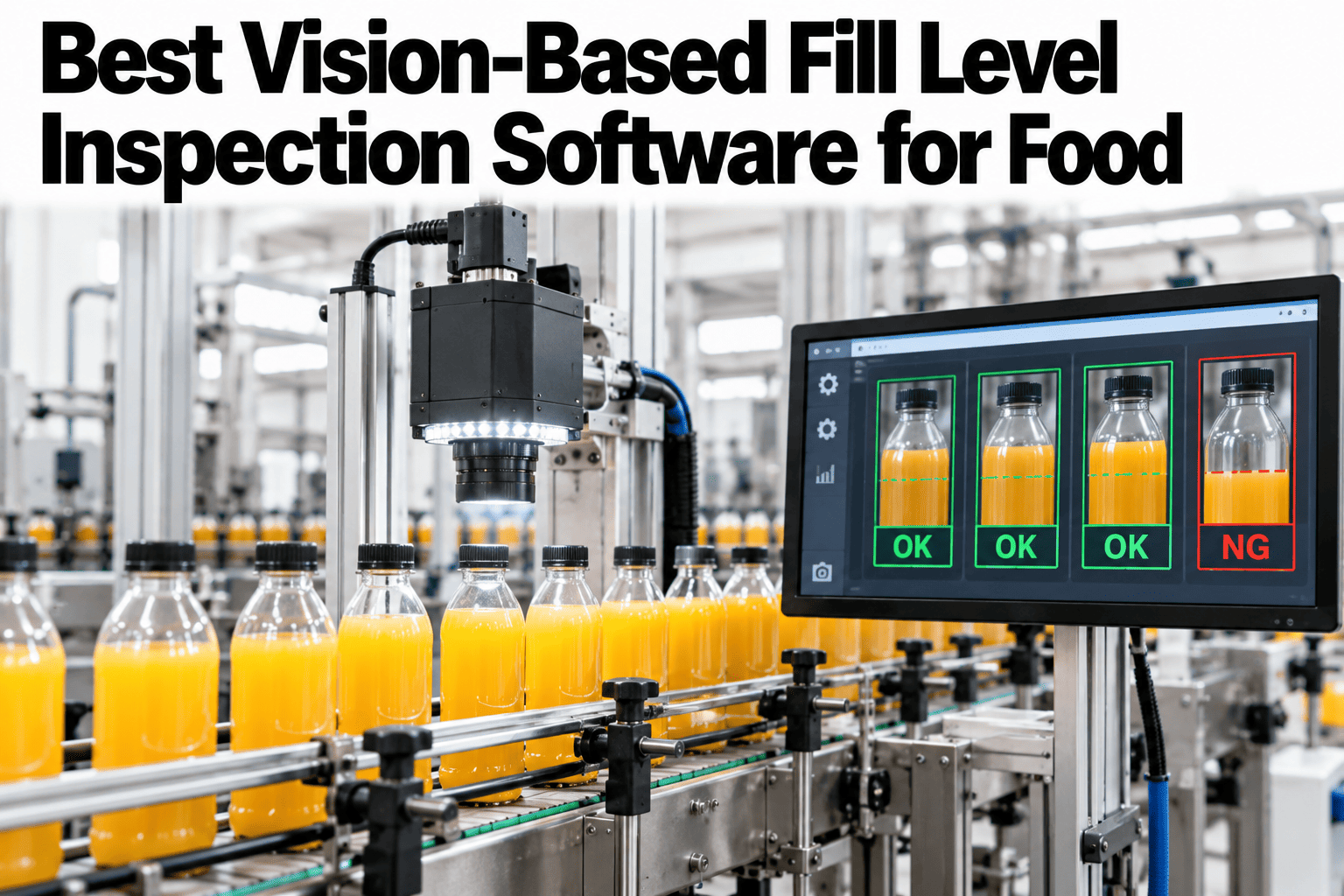
iFactory AI reads fill level across transparent, tinted, and opaque containers using vision, catching underfill and overfill conditions other methods can't see consistently.

Clear glass
Fill line visible directly
Tinted bottle
Contrast-adjusted detection
Opaque tub
Weight or thermal cross-check
Why standard methods miss fill issues

A Probe or Load Cell Can Be Fooled by the Container Itself

A capacitive or conductive probe needs consistent product density and container geometry to read accurately — a product with natural variation in viscosity or aeration, or a container shape that shifts the probe's reference point, degrades its accuracy. A check-weigh system measures total weight, which can mask a fill-level problem if packaging material weight varies slightly. Vision inspection reads the actual fill line directly, sidestepping both limitations where the container allows it.

Matching method to container type

Fill-Level Inspection Options and When Each Fits

Container typeBest primary methodWhy
Clear glass or PET Direct vision inspection Fill line is directly visible to a camera
Tinted glass or amber bottle Contrast-tuned vision inspection Vision can be calibrated for lower-contrast viewing conditions
Opaque container Check-weigh or thermal/X-ray cross-check Fill line isn't visible, so an alternate physical measurement is needed
What precision actually looks like

Fill-Level Accuracy Is Measured in Millimeters, Not Just Pass/Fail

Beyond go/no-go
Multi-dimensional imaging approaches can measure fill level to within roughly 0.5 mm, rather than a simple pass or fail call (industrial fill-level imaging patent literature, 2026).
Tighter thresholds, fewer false rejects
Precise measurement allows tighter acceptance limits while actually reducing unnecessary rejections.
Feedback to the filler
Fill-level data can feed back to the filler itself, enabling real-time operational adjustment rather than just a reject decision.

See What Vision Would Catch on Your Specific Container Mix

Share your container types — clear, tinted, or opaque — and iFactory AI will walk through the right fill-level detection approach for each.

Where in the line to check

Checking Fill Level Before the Seal Is Applied Matters

Catching an underfilled or overfilled container before it's sealed means the unit can be corrected or diverted without wasting a cap, lid, or seal material on a container that will be rejected anyway. A post-fill, pre-seal checkpoint is generally the most valuable place in the line to verify fill level for exactly this reason.

Why underfill and overfill carry different risks

Two Different Problems, Two Different Consequences

1
Underfill risk
Weights-and-measures compliance exposure and customer-facing short-fill complaints.
2
Overfill risk
Direct material cost increase and potential headspace issues affecting shelf life or seal integrity.
Expert review

What a Packaging Quality Manager Checks First

Fill-level inspection earns its place when the detection method is actually matched to the container type, not applied uniformly regardless of whether the fill line is even visible.
Verdict
Strong when opaque containers get a genuinely different detection method rather than a vision system straining to see through material it can't.
Watch for
A single fill-level threshold applied across container types with meaningfully different geometry or opacity.
Do next
Sort your SKU list by container transparency and confirm each category has a detection method actually suited to it.
Frequently asked questions

What Packaging Teams Ask About Fill-Level Vision

Can vision really read fill level through tinted glass?
Yes, with contrast-tuned lighting and camera calibration specific to the tint level — tinted glass is more challenging than clear glass but is still within reach of direct vision inspection in most cases. Discuss your specific glass tint and formulation.
What should we use for fully opaque containers?
Check-weigh systems or thermal and X-ray cross-checks are the standard approach for opaque containers, since the fill line itself isn't visible to a standard camera. Ask support about detection methods for your opaque containers.
How precise can fill-level vision measurement actually be?
Multi-dimensional imaging approaches have demonstrated measurement accuracy to within roughly 0.5 mm, which supports tighter acceptance thresholds while reducing unnecessary false rejections (industrial fill-level imaging patent literature, 2026). Discuss precision requirements for your product.
Does fill-level data feed back to adjust the filler automatically?
It can — fill-level measurements can be routed back to the filler to support real-time operational adjustment, rather than only triggering a reject decision after the fact. Ask support about filler feedback integration.
Where in the packaging line should fill-level be checked?
Post-fill, pre-seal is generally the preferred checkpoint, since catching an issue before sealing avoids wasting cap or seal material on a unit that will be rejected regardless. Talk through checkpoint placement for your line.
See the fill line, whatever the container

Catch Underfill and Overfill Across Every Container Type

Book a demo to see how iFactory AI handles fill-level inspection across your jar and bottle packaging.

Share This Story, Choose Your Platform!