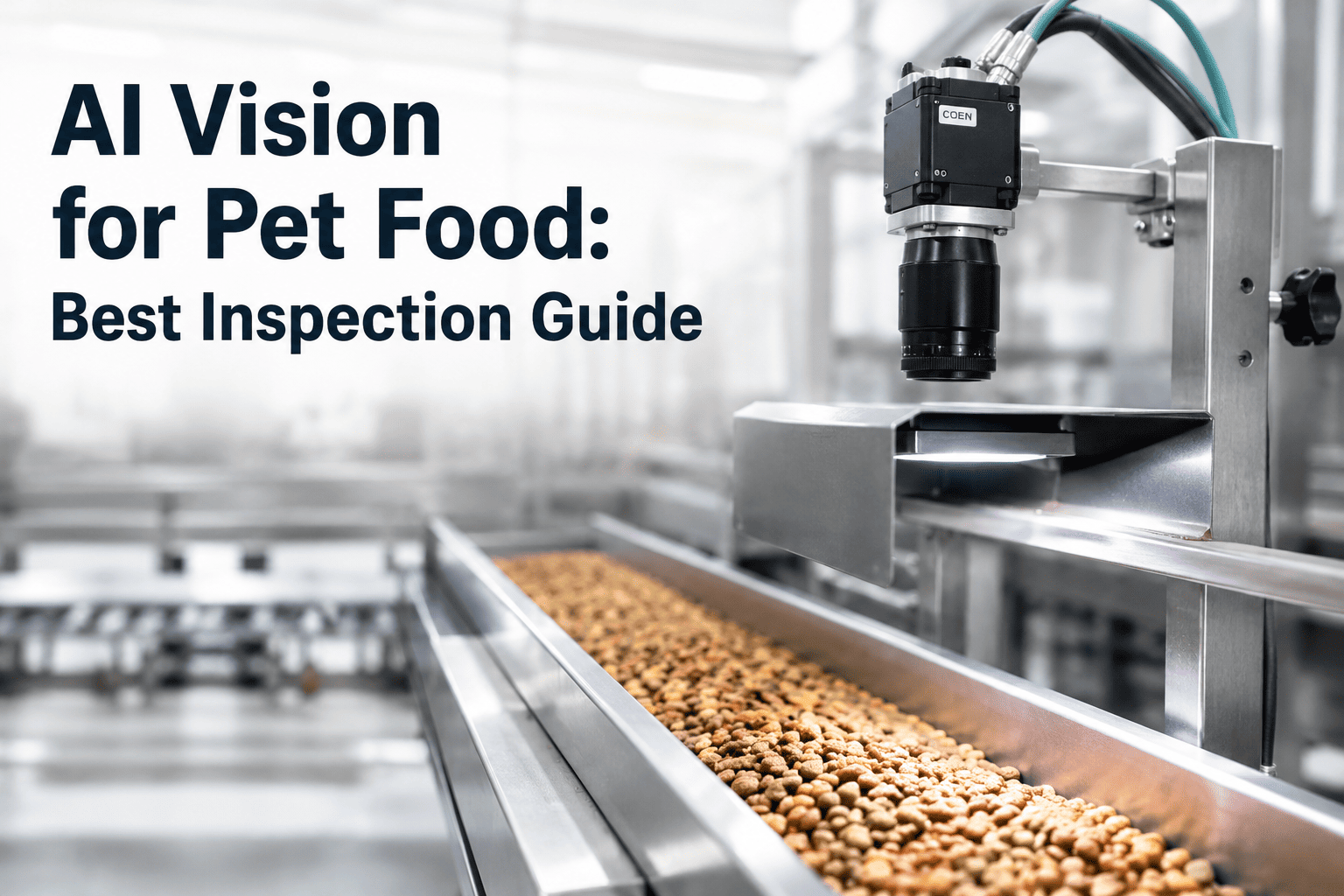
Pet food quality standards have quietly caught up to human food in the last few years, and the inspection expectations that come with that shift are real. A bag of kibble that runs noticeably darker than usual, contains a cluster of broken pieces, or carries a fragment of packaging film from the extrusion line is the kind of defect that used to slip through unnoticed and now shows up in a customer review within days. iFactory's vision inspection is built to catch that category of defect at extrusion and packaging speed, before it ever reaches a bag.
PET FOOD · KIBBLE · SHAPE, COLOR & CONTAMINATION
Kibble Quality Standards Have Caught Up to Human Food — Has Your Inspection?
Color scales that used to be judged by comparing a piece of kibble to a printed picture card are now measured objectively, piece by piece, at full extrusion and packaging line speed.
Why Kibble Color Used to Be a Judgment Call
Before objective vision-based grading, quality teams relied on printed picture-based color scales to train employees on what counted as acceptable versus too dark or too light for a baked kibble product. Those tools were only ever as consistent as the original photograph and the printer used to reproduce it, which meant the same batch could be judged differently depending on who was doing the check and what lighting they were standing under. A programmed color scale and shape template removes that inconsistency, checking every single piece against the same defined specification.
Shape Consistency
Length, width, and volume measured against the target extrusion profile for the current recipe.
Color Uniformity
Bake or extrusion color scored objectively against a defined acceptable range, replacing picture-card comparisons.
Broken Piece Detection
Fractured or malformed pieces flagged before they reach the bagging line.
Foreign Material
Packaging fragments and process residue identified at extrusion and pre-packaging checkpoints.
Replace the Picture-Card Color Check With an Objective Score
Every piece of kibble measured against the same defined color and shape specification, every batch, every shift.
From Extrusion to Bag: Where Inspection Fits
01
Raw Material Check
Incoming ingredients screened for color deviation, texture disorders, and contaminants before they enter the extruder.
02
Post-Extrusion Inspection
Shape, color, and structural integrity checked as product exits the extruder and dryer.
03
Coating and Treat Verification
For treats with embedded fillings or coatings, presence and specification of the center material confirmed piece by piece.
04
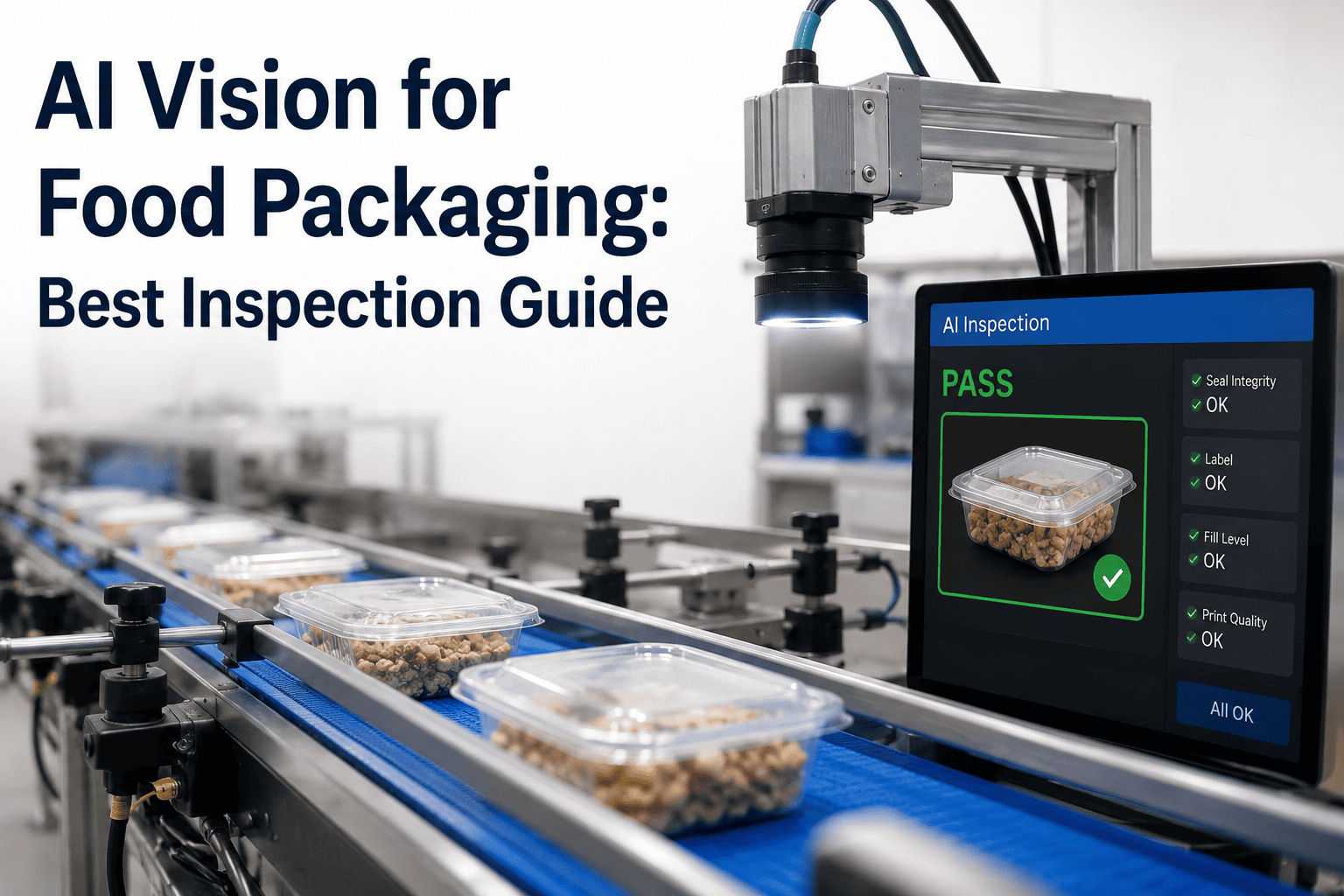
Bag and Seal Verification
Packaging seal integrity and lot, date, and barcode accuracy confirmed before palletizing.
Why Treats With Fillings Need a Different Kind of Check
A treat shaped like a bone with a visible center filling is a common product format in pet treats, and it presents an inspection challenge simple shape-checking cannot solve on its own. A vision system needs to confirm not just the external geometry but whether the center filling is actually present and meets the specification for color and volume, since a treat that looks correct from the outside but is missing its filling is still a defect a customer will notice immediately.
Multi-Flavor Lines Add Another Layer
Plants running several flavors or coatings on the same equipment face a sorting challenge beyond simple defect detection: distinguishing a spicy-style coating from a milder one, for example, based on subtle differences in surface sheen and reflective pattern that are effectively invisible to the naked eye but detectable through camera-based spectral analysis. This lets manufacturers run multiple flavors on shared equipment without cross-contamination risk between batches.
Manual Grading vs. Vision-Based Kibble Inspection
| Aspect | Manual Picture-Card Grading | AI Vision Inspection |
| Consistency between inspectors |
Varies by lighting and interpretation |
Same specification applied every time |
| Coverage |
Periodic sample checks |
Every piece at line speed |
| Multi-flavor lines |
Manual sorting risk of cross-contamination |
Spectral signature separates flavors automatically |
| Filled treat verification |
Cut samples checked periodically |
Center fill presence checked on every piece |
Give Your QA Team an Objective, Repeatable Standard
From raw material to bagged product, get a documented inspection record for every batch you ship.
Frequently Asked Questions
Can vision inspection tell the difference between kibble shapes for different formulas on the same line?
Yes. Recipe-based model profiles are trained on the specific shape, size, and color target for each formula, and the system switches profiles automatically at changeover so the correct specification is applied without manual reconfiguration. Details on multi-formula line setup are available through
iFactory Support.
How does the system detect foreign material that is close in color to the kibble itself?
The model is trained to recognize texture, shape, and surface signature differences beyond simple color matching, which allows it to distinguish contaminants like packaging fragments even when their color closely resembles the surrounding product, a category that basic color-threshold sensors often miss entirely.
Does this work for wet or semi-moist pet food as well as dry kibble?
The core inspection principles apply across pet food formats, though camera configuration, lighting, and model training differ meaningfully between dry extruded kibble, semi-moist treats, and canned or pouch wet food, since each has a different surface appearance and packaging process.
Can the system verify that a filled treat actually contains its center ingredient?
Yes, this is one of the more specialized checks available for treats with visible or embedded fillings. The system verifies both the presence of the center material and whether it meets the color and volume specification, catching treats that look correct externally but are missing or under-filled internally.
What's the typical starting point for a pet food plant new to vision inspection?
Most plants start with a single high-priority checkpoint, often post-extrusion shape and color grading or pre-bagging foreign material detection, before expanding to raw material and packaging verification.
Book a demo to scope the right starting point for your line.
PET FOOD · EXTRUSION QUALITY · OBJECTIVE GRADING
Bring Objective, Consistent Grading to Every Bag You Ship
See how iFactory's vision platform inspects kibble shape, color, and contamination at extrusion and packaging speed.