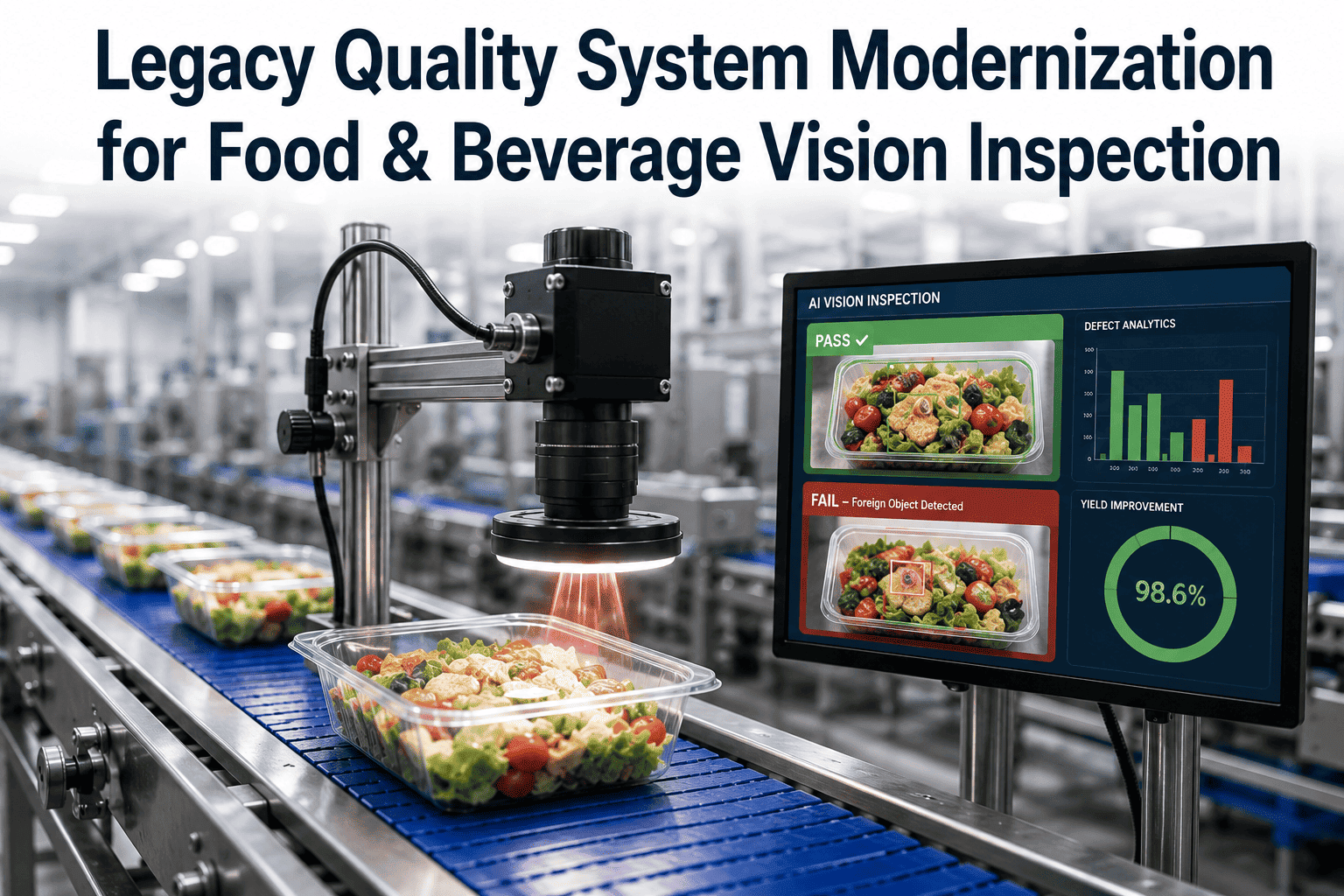
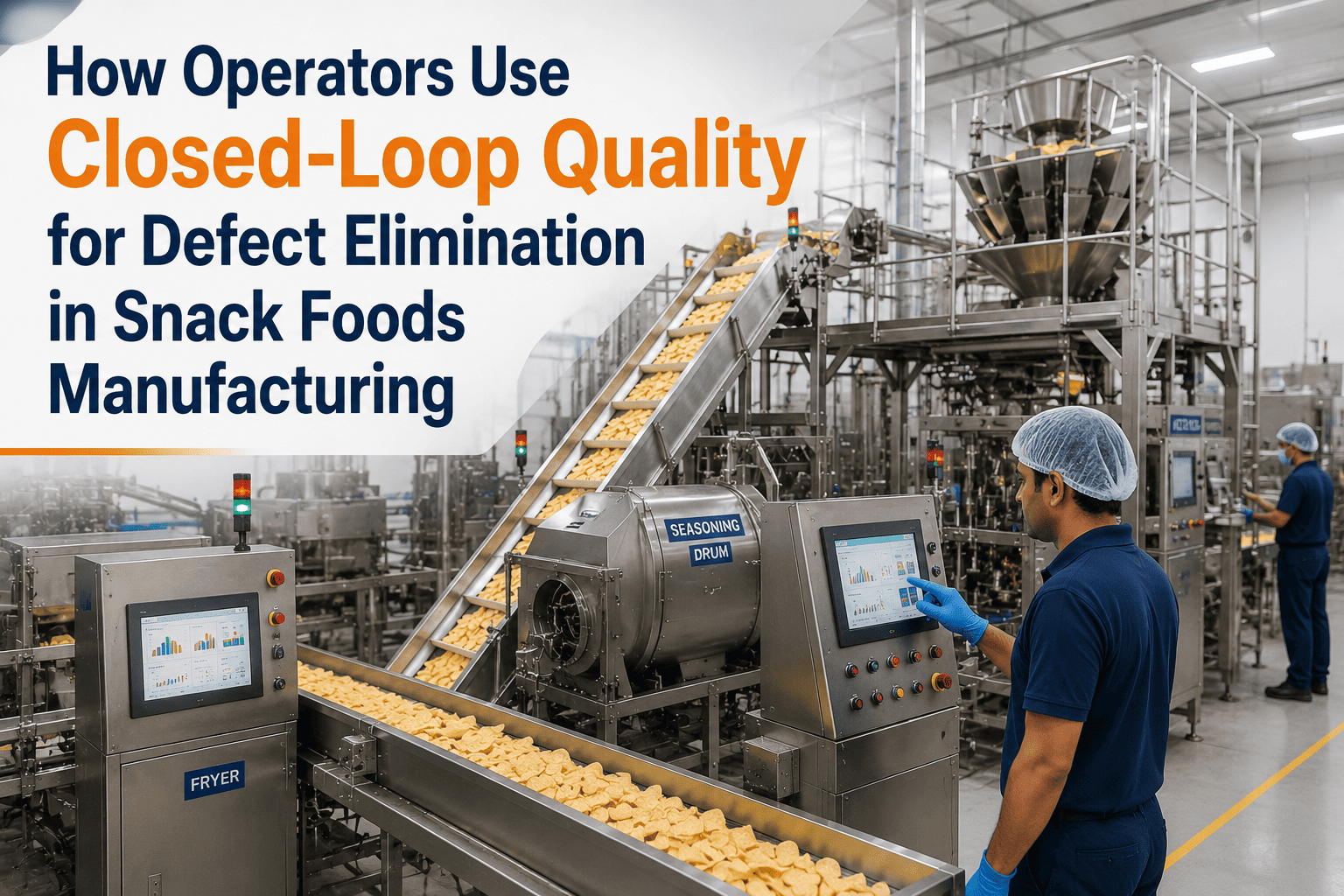
A fryer line running chips at full speed produces more product in one minute than a person could carefully examine in an hour. Somewhere in that stream are pieces that broke apart in the oil, chips with seasoning drifting thin on one side of the belt, and crackers coming out slightly the wrong shape after a die wore down. None of it looks dramatic bag by bag. Added up across a shift, it is scrap, customer complaints, and a seasoning drum running expensive product into the trash. iFactory's snack line inspection is built to catch exactly this category of slow-building loss before it shows up on the P&L.
SNACK FOODS · SHAPE · BREAKAGE · SEASONING COVERAGE
Catch the Problem at Bag 400, Not Bag 4,000
Seasoning drum wear and product bed depth drift gradually enough that an hourly manual check cannot see the trend forming. By the time a person notices, thousands of bags have already gone out under-seasoned or over-seasoned.
Four Defect Categories That Cost Real Money on a Snack Line
Snack production runs on tight margins per bag, which means small, continuous defects matter more than the occasional dramatic failure. A vision system tuned for chips, crackers, and extruded snacks typically watches four categories in parallel, each with a distinct visual signature and a distinct cost if it goes uncaught.
Shape and Breakage
Cracked, broken, or malformed pieces from oven or fryer stress, die wear, or handling on the conveyor.
Color and Scorch
Uneven bake or fry color, scorch marks, and blistering that signal a temperature or oil-quality problem upstream.
Seasoning Coverage
Thin, heavy, or patchy seasoning distribution across the product bed, usually tied to drum wear or angle drift.
Foreign Material
Packaging fragments, burnt debris, or process residue mixed in with product ahead of the bagger.
120/sec
Typical chip inspection rate a vision system can sustain on a high-speed line
8-12min
Lead time operators gain when drift is predicted before product goes out of spec
$2,160
Estimated material cost of a single undetected 12-minute moisture drift incident
40%
Typical reduction in process deviations within the first weeks of continuous monitoring
Watch Every Fryer, Drum, and Extruder in Real Time
Instead of an hourly hand-check, get a continuous read on color, shape, and seasoning coverage across the whole line.
A Night Shift Story That Plays Out More Often Than Plants Admit
Picture a tortilla chip line where the same fryer drifts a few degrees hotter every Tuesday around two in the morning, always corrected by hand once someone finally notices the color shift, always costing roughly the same chunk of throughput while the line runs out of spec. That kind of quiet, repeating pattern is exactly what continuous vision monitoring is good at catching, because it does not depend on a specific person happening to be looking at the right moment.
Why the Pattern Matters More Than the Single Event
A single bad batch is a one-time cost. A recurring pattern tied to a specific fryer, a specific shift, or a specific day of the week is a maintenance problem hiding in plain sight. Once every reject is timestamped and tagged to the equipment that produced it, root cause analysis stops being guesswork and becomes a matter of reading the trend line, which is usually all it takes to schedule the right fix before the pattern repeats again.
How Seasoning Coverage Actually Gets Measured
1
Camera captures product bed as it exits the seasoning drum, before bagging
2
Model reads coverage density and distribution pattern across the full width of the belt
3
Coverage score is compared against target range for the current SKU and recipe
4
Drift alert fires to the operator dashboard before enough product goes out of spec to matter
Manual Spot-Checks vs. Continuous Vision Monitoring
| Aspect | Manual Spot-Check | Continuous AI Vision |
| Check frequency |
Once per hour, if schedule allows |
Every piece, every second |
| Drift detection |
Found after product is already off-spec |
Flagged 8-12 minutes before threshold is crossed |
| Root cause tracing |
Relies on operator memory and notes |
Every reject tagged to equipment, time, shift |
| Consistency across shifts |
Varies by operator attentiveness |
Identical criteria applied around the clock |
Stop Losing Product to Drift Nobody Catches Until the Shift Report
A pilot on one fryer, one drum, or one extruder shows what continuous monitoring surfaces on your actual line data.
Frequently Asked Questions
Can one vision system handle multiple snack SKUs on the same line?
Yes, provided the model has been trained on each SKU's acceptable shape, color, and seasoning profile. Most deployments use a recipe-based model switch that activates the correct defect thresholds automatically when the line changes over, so no manual reprogramming is required at each SKU swap. Setup details for multi-SKU lines are available through
iFactory Support.
How does the system tell the difference between acceptable shape variation and an actual defect?
The model is trained on a large set of images spanning the natural range of acceptable product, not a single rigid template. This lets it distinguish normal variation in a hand-cut or naturally irregular product from genuine breakage or malformation, which is something older rule-based sensors consistently struggled to do.
Does seasoning coverage monitoring require changing the seasoning drum hardware?
No. The camera is positioned to observe the product bed as it exits the existing drum, so the seasoning application hardware itself does not need to change. What changes is visibility: coverage drift that used to go unnoticed for hours becomes visible within minutes of it starting.
What happens when a defect is detected mid-shift?
An alert is sent to the operator dashboard identifying the defect type, the equipment involved, and how far the current trend is from the action threshold, giving the operator time to make an adjustment before rejects accumulate. Rejects that do occur are logged with images for later root-cause review.
How long does a typical snack line pilot take to show results?
Most snack manufacturers see measurable reductions in process deviations within the first several weeks of a pilot, since baseline defect patterns tend to surface quickly once every piece is being inspected instead of a small hourly sample.
Book a demo to scope a pilot for your specific fryer, oven, or extrusion line.
SNACK FOODS · CONTINUOUS INSPECTION · REAL-TIME ALERTS
Give Your Line a Second Pair of Eyes That Never Blinks
See how iFactory's vision platform tracks shape, color, and seasoning coverage across your frying, baking, and extrusion lines in real time.