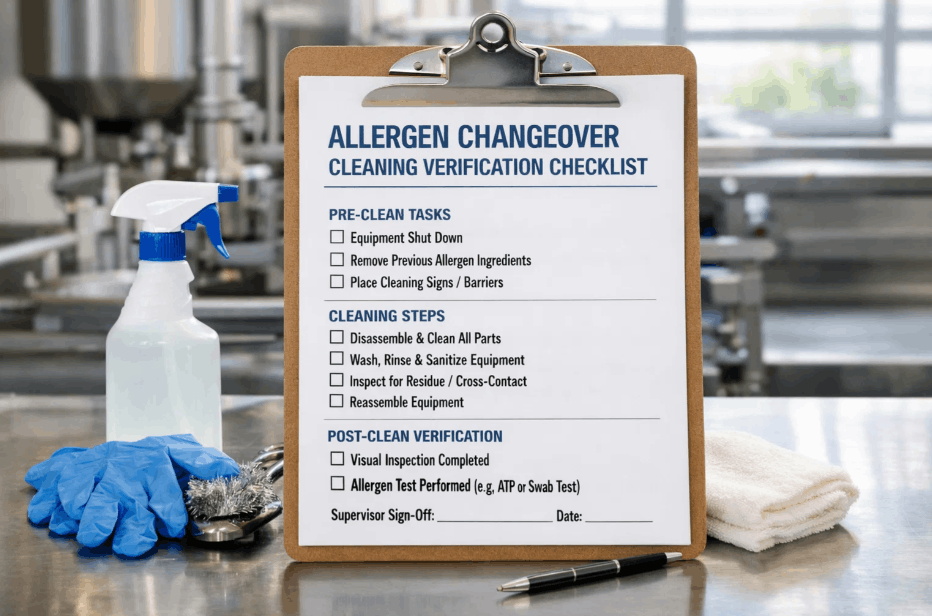
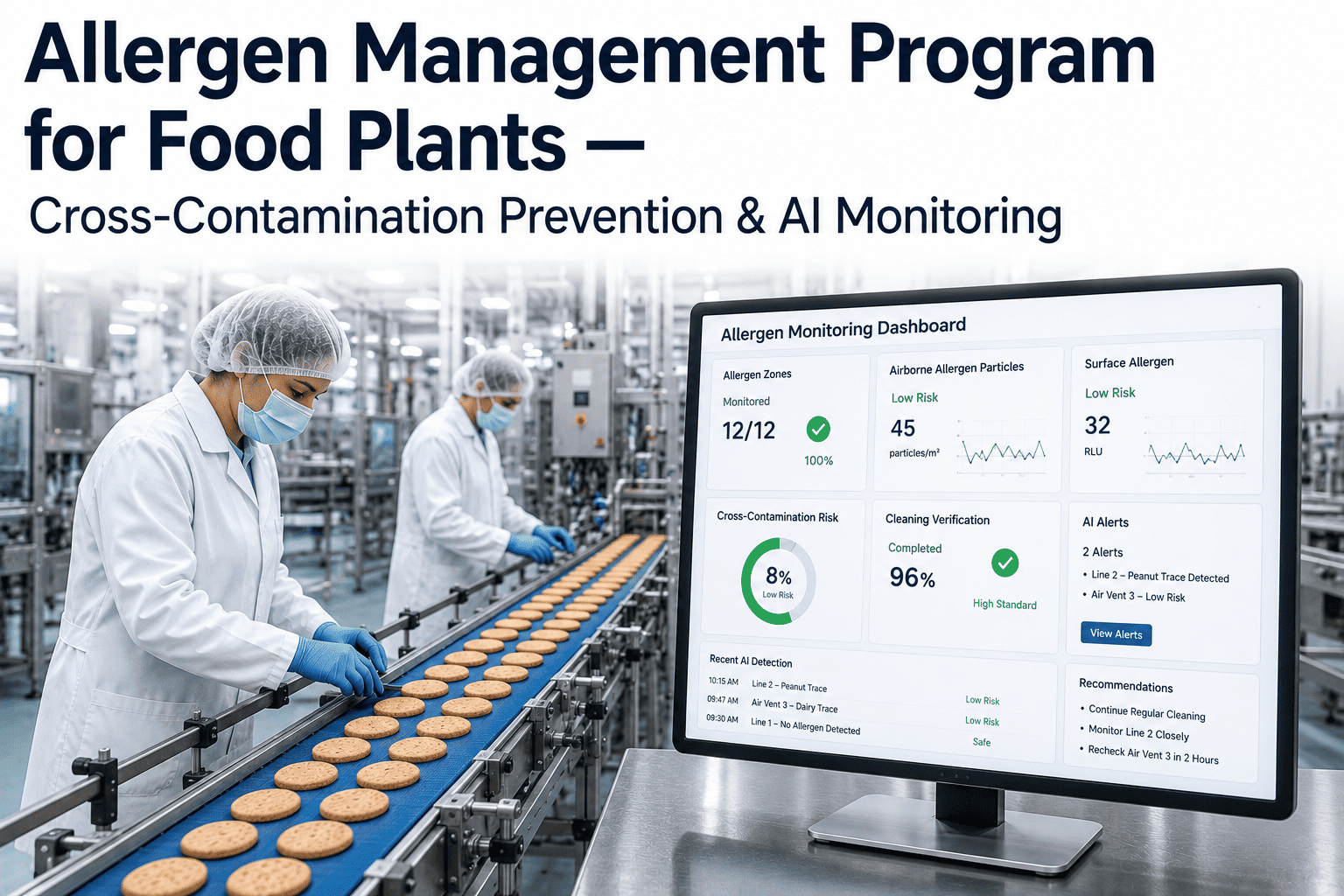
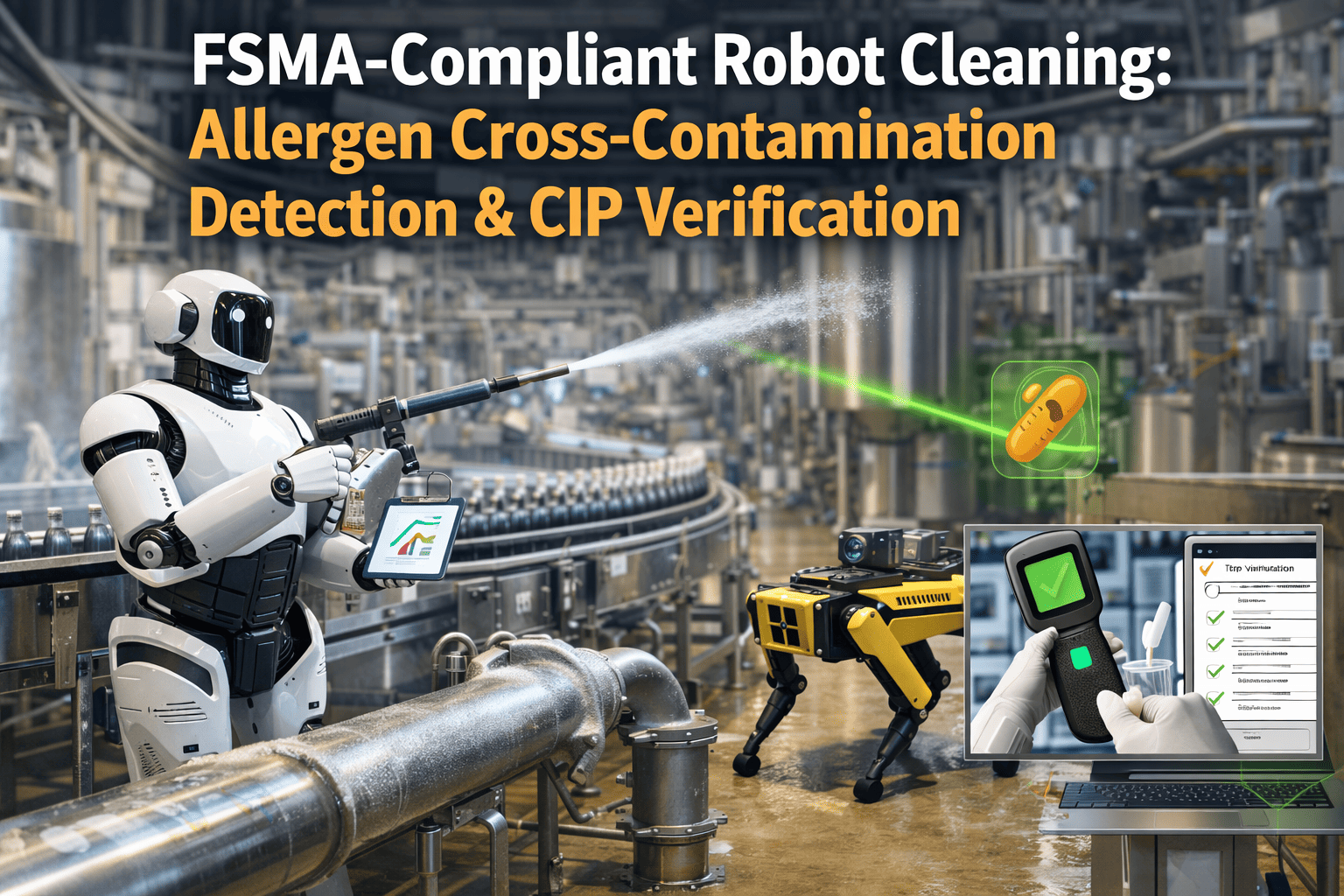
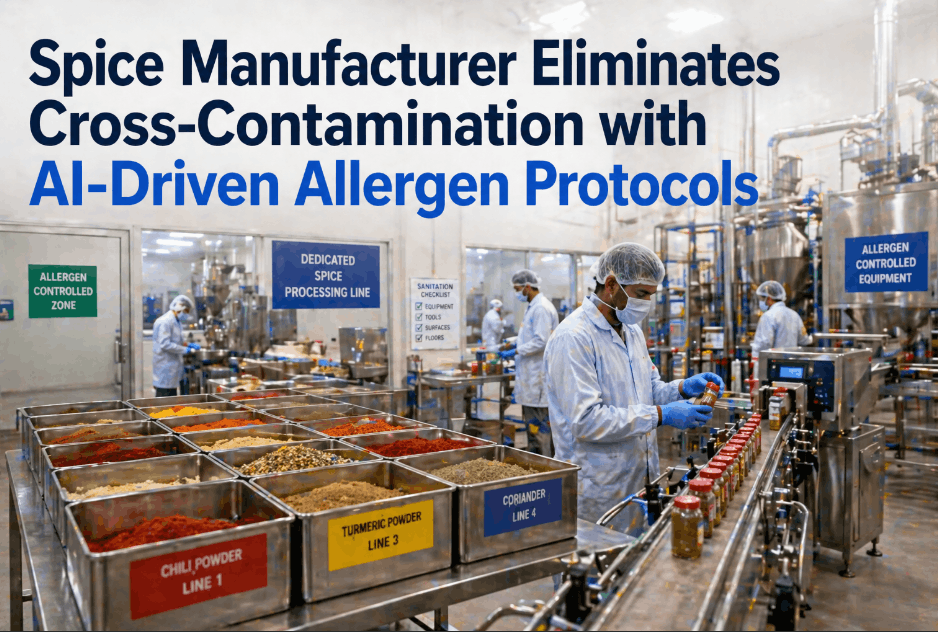
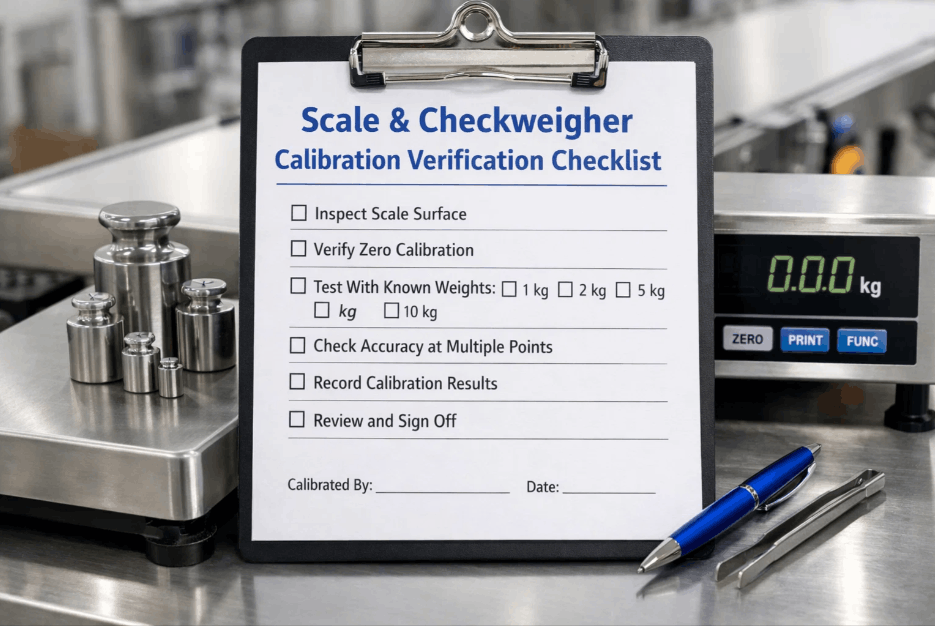
Allergen cross-contamination is a critical food safety risk. When products change on the same production line, complete cleaning and verification are mandatory. Visual inspection, ATP testing, and allergen-specific swab testing confirm allergen removal. Incomplete or undocumented changeovers lead to recalls, consumer harm, and regulatory violations. Book a Demo to automate allergen changeover workflows, verification, and compliance documentation for every production line transition.
Automate Allergen Changeover Cleaning VerificationSchedule allergen line changeovers, capture equipment disassembly photos, log cleaning protocols, conduct swab testing, and generate compliance documentation — for every allergen product transition in your facility.
Identify allergens before cleaning begins. Document what was produced last and what comes next. Undeclared allergens cause cross-contamination. Select the right cleaning protocol for your allergen pair. Book a Demo to automate allergen identification and protocol selection.
Disassemble all product-contact equipment. Remove mixer bowls, pump heads, valves, and tubing. Allergen hides in tight spaces and inaccessible zones. Every component must be fully accessible for cleaning and testing. Book a Demo to document disassembly with photos and checklists.
3. Cleaning Protocol Execution & Chemical Contact Time Verification
Execute validated cleaning protocols precisely. Use the correct chemical, temperature, and contact time. Monitor CIP flow and chemical concentration. Manual scrubbing reaches zones that spray cannot. Book a Demo to automate CIP cycle timing and monitoring.
Inspect all cleaned surfaces under bright light. Look for visible residue, discoloration, or caked product. If surfaces are not visually clean, repeat cleaning. Visual pass is required before ATP or allergen testing. Book a Demo to capture photos of cleaned equipment for verification records.
5. ATP Bioluminescence Testing & Organic Residue Verification
ATP detects organic residue, not specific allergens. Test at defined sampling points (mixer, pump, valve, tank, tubing). Results above action limit = repeat cleaning needed. ATP is fast confirmation, but allergen swabs are more specific. Book a Demo to manage ATP testing schedules and track results.
6. Allergen-Specific Swab Testing & Direct Allergen Residue Detection
Allergen swabs detect specific allergen proteins. Use allergen-specific test kits (peanut, milk, shellfish, tree nut, etc.). Positive result = more cleaning required. Test the same zones every time for trend comparison.
Reassemble equipment in a clean controlled area. Replace gaskets and seals with new food-grade components. Follow OEM assembly sequence and torque specifications. Test for leaks before production starts.
8. Allergen Changeover Verification Documentation & Production Release Authorization
Document every changeover step and verification result. Record previous product, incoming product, cleaning protocol, chemical type, contact time, visual inspection result, ATP results, allergen swab results, and QA sign-off. No signature = no production authorization.
9. Allergen Changeover Record Retention & Audit Trail Management
Keep changeover records organized and searchable. Store records digitally with consistent file naming. Track ATP pass rates and allergen swab results over time. Use trends to improve cleaning protocols. Retain records per regulatory requirements (typically 2-3 years).
Digitize Your Allergen Changeover Cleaning Verification ProgramiFactory auto-schedules allergen line changeovers, captures equipment disassembly and cleaning verification with photos and timestamps, logs ATP and allergen swab test results, and generates complete audit-ready compliance records for every allergen transition on every production line.
1. How often must allergen changeover cleaning be conducted?
Every time a production line transitions from an allergen-containing product to an allergen-free or different-allergen product, a validated changeover cleaning must be performed and verified. For facilities producing multiple allergen-containing products on the same line with different allergen profiles, changeover cleaning is required at every product transition. Some facilities with continuous allergen production lines may perform allergen changeover cleaning only when switching to an allergen-free product or to a different allergen class.
2. What is the difference between ATP testing and allergen swab testing?
ATP testing detects residual organic matter (protein, fat, carbohydrate) but does not identify specific allergens — it is a general cleanliness indicator. Allergen swab testing uses immunoassay or lateral flow technology to detect specific allergen residue (e.g., peanut protein, milk allergen). For high-risk allergen products, allergen swab testing is mandatory because ATP can pass while allergen residue remains. ATP is a fast screening tool; allergen swabs provide direct confirmation.
3. What equipment components are most difficult to clean during allergen changeovers?
Pump impellers, valve cavities, mixer blade mounting pockets, and tubing interiors are the highest-risk components. These have tight tolerances and product stagnation zones where allergen particles accumulate. Equipment with inaccessible internal cavities (sealed motors, gearbox housings not disassembled) cannot be reliably cleaned and should be replaced or retrofitted with accessible designs. If components cannot be disassembled and cleaned, they must be documented as non-validated zones with risk mitigation controls (e.g., product-free sealing, replacement equipment).
4. Can allergen changeover cleaning protocols be reused for different allergen pairs?
No. Each allergen pair (previous product → incoming product) requires its own validated changeover cleaning protocol. Peanut-to-dairy requires different chemical treatment than milk-to-shellfish. Allergen residue composition varies — some are protein-based (milk, peanut, shellfish) while others are lipid-heavy (tree nuts, sesame). A protocol validated for peanut residue may not be adequate for fish or sesame oil residue. The facility must document and validate a unique cleaning protocol for every allergen transition occurring in regular production.
5. What should be done if allergen swab testing detects residue after cleaning verification passes?
If allergen swabs are positive despite ATP passing and visual inspection clearing, it indicates the cleaning protocol is insufficient for that specific allergen. Do not authorize production. Immediately escalate to quality management and implement corrective action: increase CIP contact time, raise chemical concentration, extend manual scrubbing, or redesign the cleaning protocol. Retest after corrective action. Use this failure to identify and fix the gap in the validated protocol before future changeovers of this allergen pair.
Start Your Allergen Changeover Compliance Program with iFactoryJoin food and beverage manufacturers using iFactory to eliminate paper allergen changeover logs, automate verification scheduling, track ATP and allergen swab results in real time, and pass FSMA and SQF audits with complete, timestamped allergen control documentation for every production line.