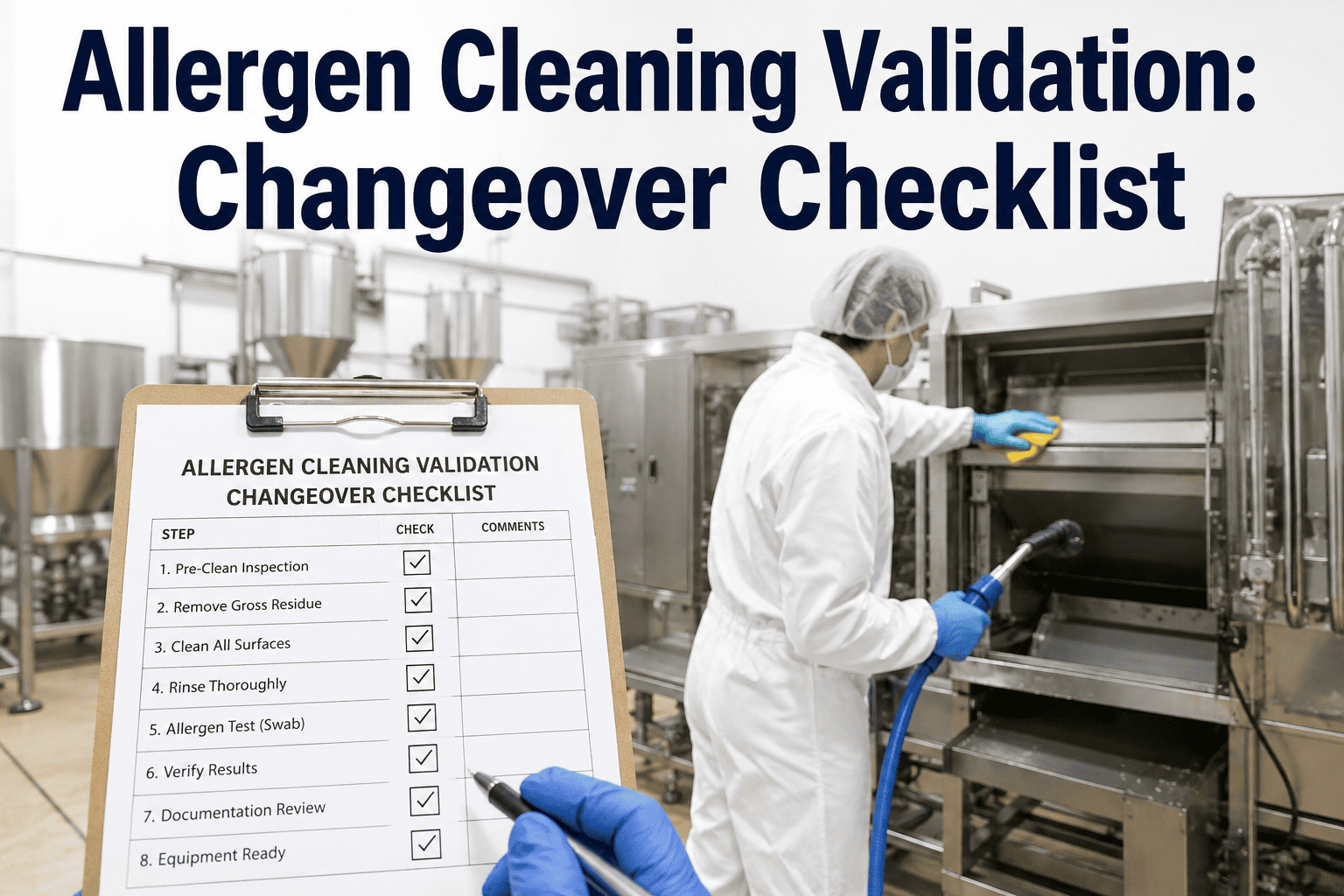
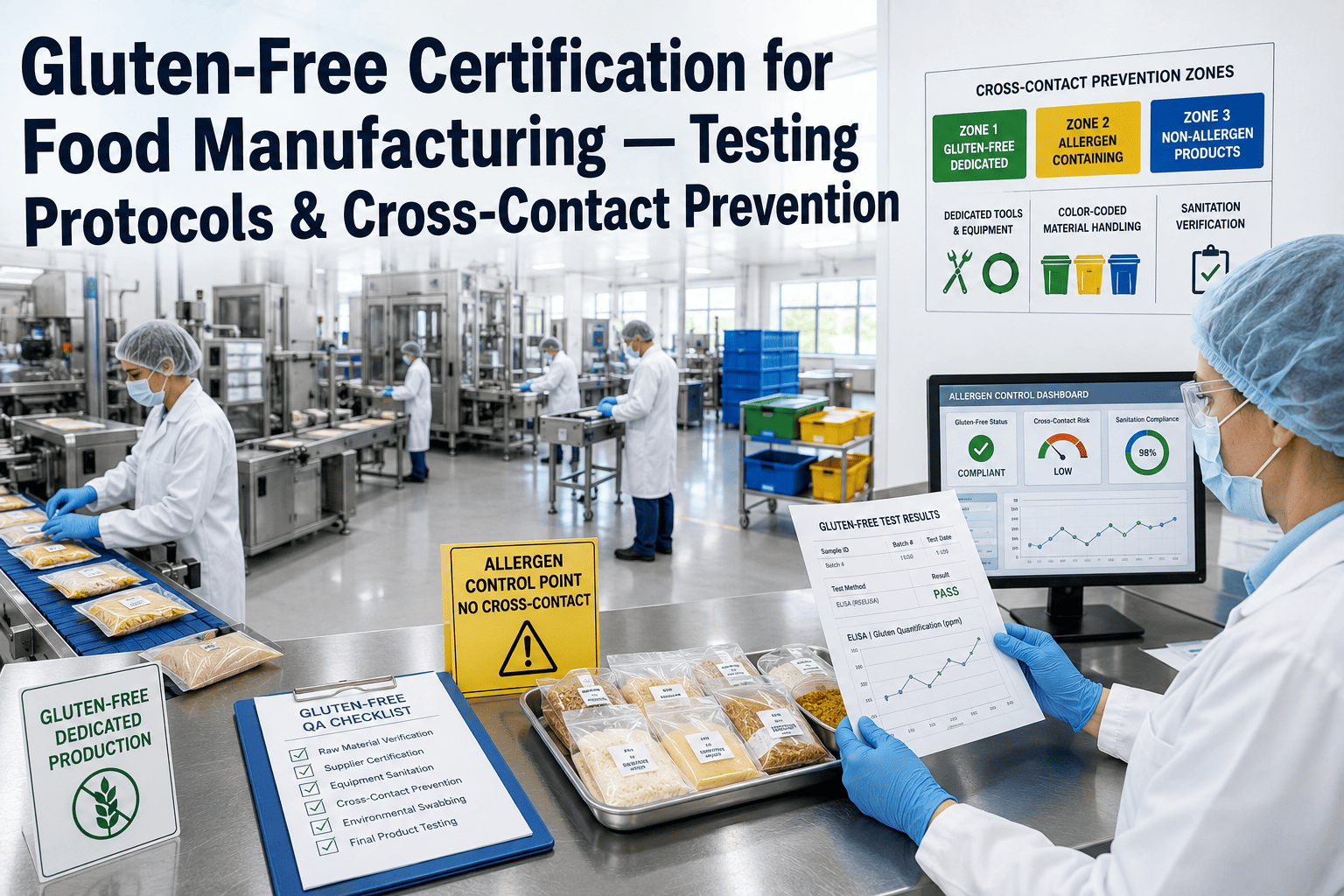
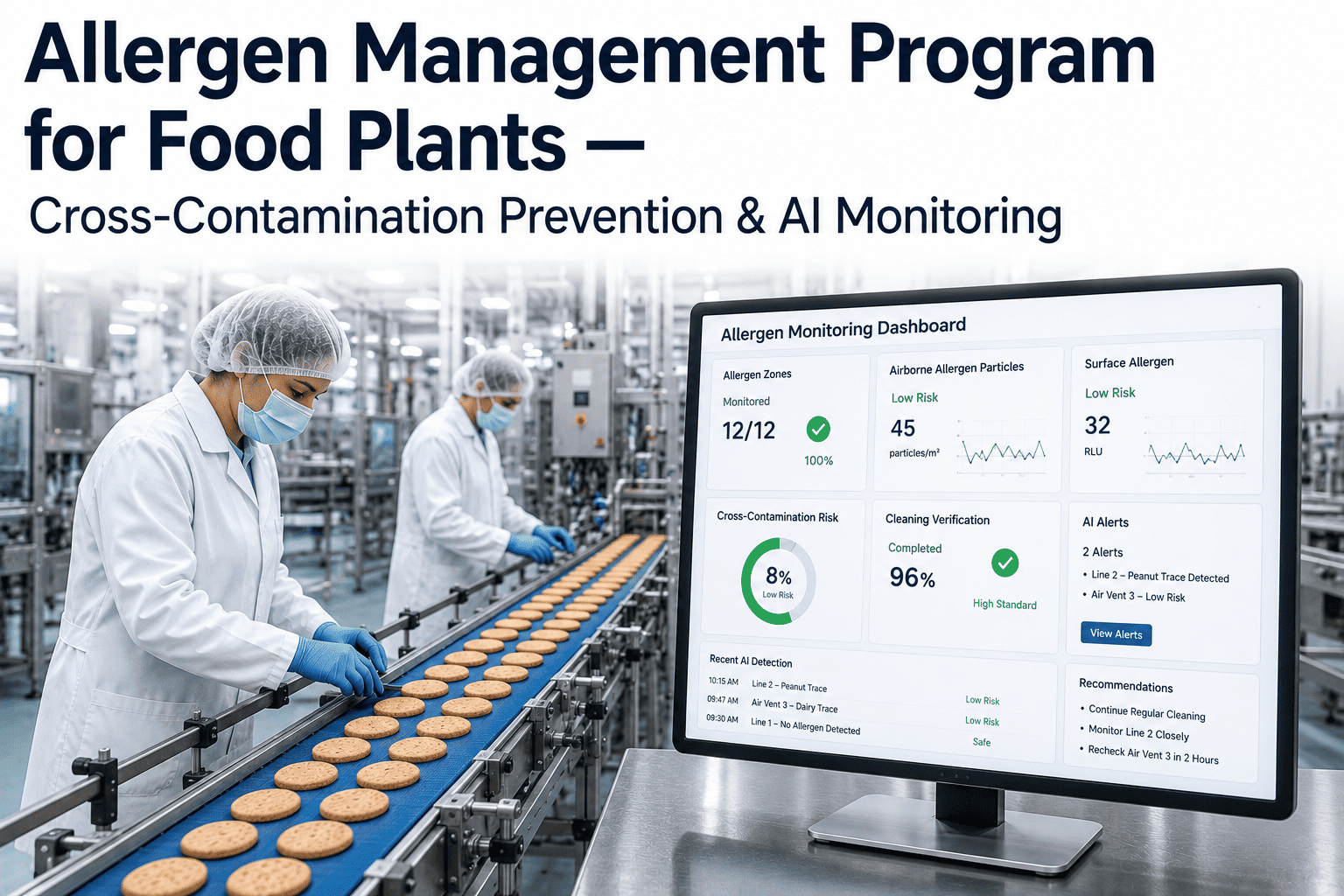
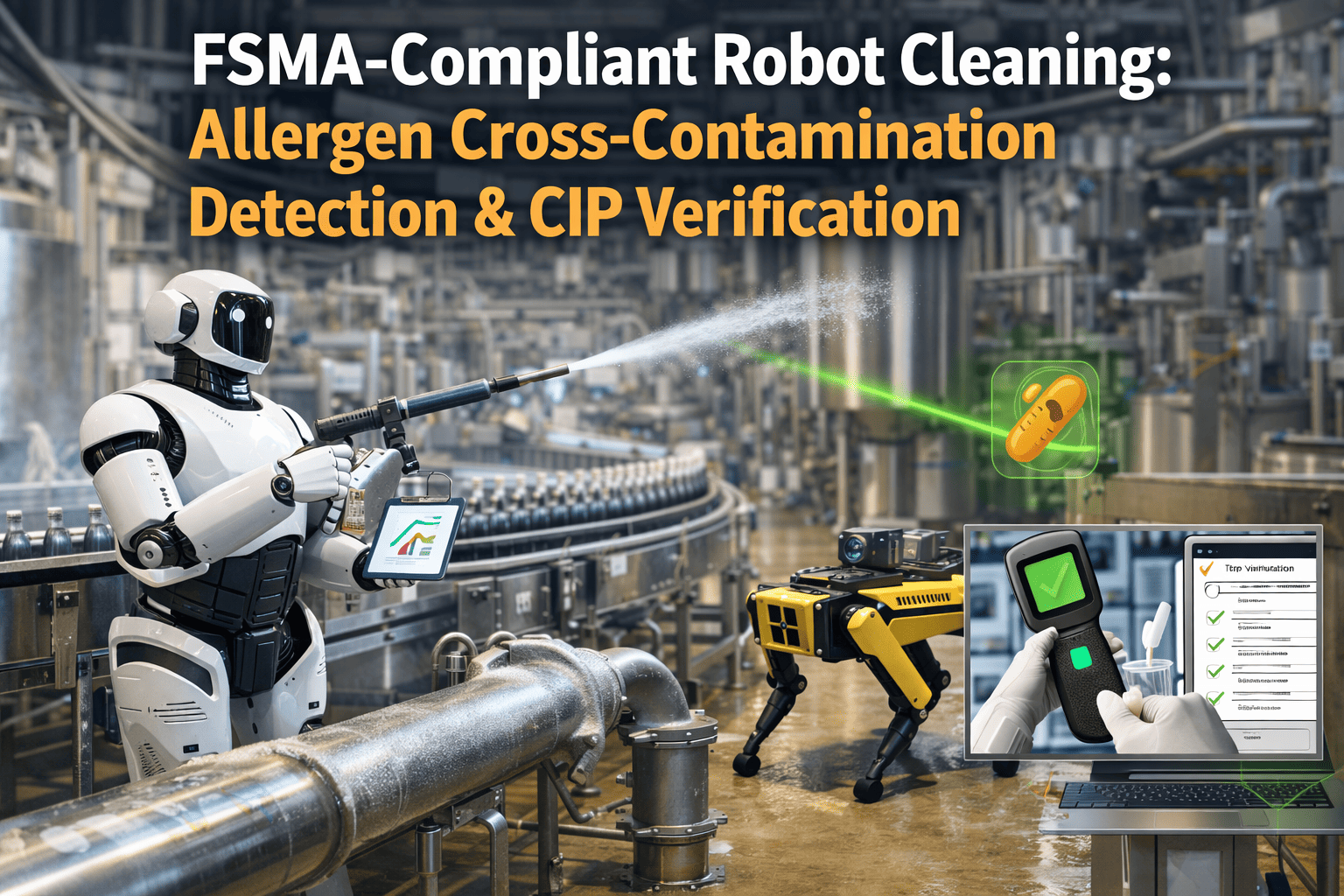
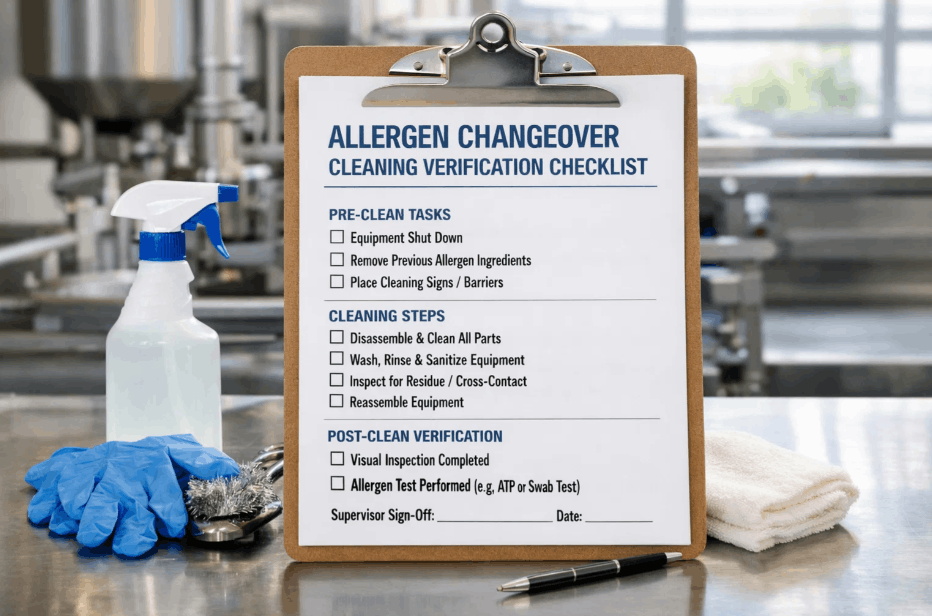
Allergen cross-contact is one of the few food safety failures that a standard CIP cycle can pass while still leaving a patient-threatening residue behind, because general soil removal criteria and allergen detection limits are not the same thing. A tank that looks clean, tests negative on ATP, and passes visual inspection can still carry enough peanut or milk protein to trigger an anaphylactic reaction in a sensitive consumer. Validating allergen removal as its own distinct control point, confirmed through ELISA swab testing rather than assumed from general cleaning results, is the only defensible approach, and it's the exact program a Book a Demo with iFactory's food safety team helps plants build.
ALLERGEN REMOVAL · ELISA VALIDATION · CHANGEOVER SAFETY
Prove Allergen Removal With Data, Not Assumptions
iFactory helps food plants build ELISA-validated allergen removal protocols for every product changeover, satisfying FSMA and GFSI allergen control requirements.
Why General Cleaning Validation Doesn't Cover Allergen Risk
Standard CIP validation confirms that visible soil, protein film, and microbial load have been reduced to an acceptable operational limit. Allergen detection limits are dramatically stricter, often measured in parts per million rather than the broader thresholds used for general sanitation, which means a cycle that fully satisfies routine cleaning validation can still leave allergen residue above a level that matters clinically. Treating allergen removal as automatically covered by general CIP validation is one of the most common gaps auditors find during a food safety inspection.
32
major food recalls in a recent year attributed to undeclared allergens from cross-contact
ppm
level of sensitivity ELISA testing provides, far below general soil detection thresholds
20 min
typical turnaround for a lateral flow allergen test versus lab-based ELISA confirmation
100%
of changeovers between allergen and non-allergen products that require dedicated verification
Validation Workflow
The Allergen Removal Verification Workflow at Product Changeover
A defensible allergen removal program follows a fixed sequence at every changeover between an allergen-containing product and a product without that allergen. Skipping steps under production time pressure is the single most common way allergen control programs fail during an actual audit review.
1
Identify Changeover Risk
Flag every production changeover where the outgoing product contains an allergen absent from the incoming product, and treat these changeovers as dedicated allergen control points requiring full CIP.
2
Run Full Validated CIP Cycle
Execute the complete validated CIP cycle for the equipment, using the same soil removal and chemical concentration parameters already established for general sanitation.
3
Swab Critical Control Points
Swab the specific equipment zones identified as highest risk for allergen retention, such as gaskets, valve seats, and low-flow dead zones, rather than only the easily accessible surfaces.
4
Run ELISA or Lateral Flow Test
Test swabs against the specific allergen assay for the product being removed, using ELISA for lab-confirmed sensitivity or lateral flow for rapid on-floor screening ahead of full lab confirmation.
5
Release or Re-Clean Based on Results
Release the line for production only when results fall below the assay detection limit, and re-clean and re-test any zone that fails before allowing the changeover to proceed.
ALLERGEN CONTROL · CROSS-CONTACT PREVENTION
Build an Allergen Removal Program That Survives an FDA Audit
iFactory helps you define changeover risk points, validated swab locations, and ELISA acceptance criteria for every allergen transition your plant runs.
Testing Method Comparison
ELISA vs. Lateral Flow vs. Visual Inspection for Allergen Verification
Each allergen detection method trades off sensitivity, cost, and turnaround differently, and most validated programs combine a fast on-floor screening method with periodic lab-confirmed ELISA testing to balance speed against confidence.
Allergen Detection Method Comparison
Frequently Asked Questions
CIP Allergen Removal Validation — Frequently Asked Questions
Is ELISA testing required for every product changeover?
Formal ELISA testing is typically reserved for initial validation of a changeover protocol and periodic confirmation, while faster lateral flow testing handles routine day-to-day changeover screening. The specific frequency should be defined in your allergen control plan based on risk assessment and applicable GFSI scheme requirements.
Which equipment zones carry the highest allergen cross-contact risk?
Gaskets, valve seats, low-flow dead legs, and any equipment area with limited spray coverage tend to retain allergen residue longest, since these zones often fall outside the primary cleaning flow path even when the rest of the vessel cleans effectively during a standard CIP cycle.
Can the same CIP cycle used for general sanitation also remove allergens?
Often yes, but this must be confirmed through allergen-specific testing rather than assumed. The physical and chemical action that removes general soil frequently removes allergen protein as well, but only ELISA or equivalent testing at the specific critical control points can confirm this holds true for your equipment and product combination.
What should happen if an allergen swab test fails after CIP?
The equipment should be re-cleaned, focusing additional attention on the specific zone that failed, and re-tested before the line is released. The failure should also be logged and reviewed to determine whether it reflects an isolated cleaning gap or a systemic issue with the changeover protocol itself.
How does allergen validation fit into an FSMA food safety plan?
FSMA preventive controls require documented, science-based verification that allergen cross-contact controls are effective, and ELISA-validated changeover protocols provide exactly the objective evidence FSMA inspectors expect to see, rather than a general statement that cleaning procedures address allergen risk.
ALLERGEN VALIDATION · FOOD SAFETY · 2026
Validate Allergen Removal at Every Changeover, Every Time
iFactory helps you build and document an ELISA-validated allergen removal program that satisfies FSMA and GFSI requirements with objective, test-based evidence.