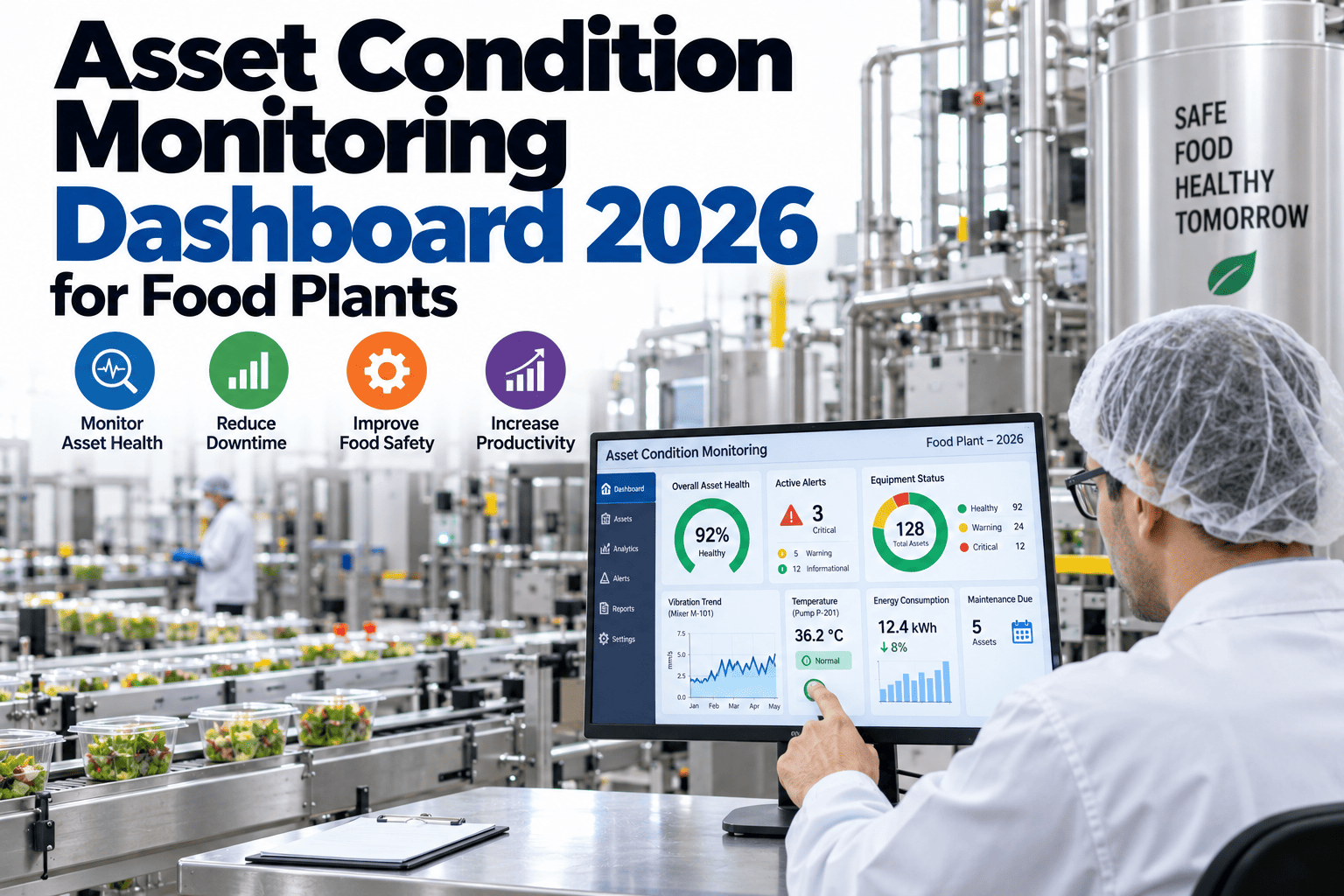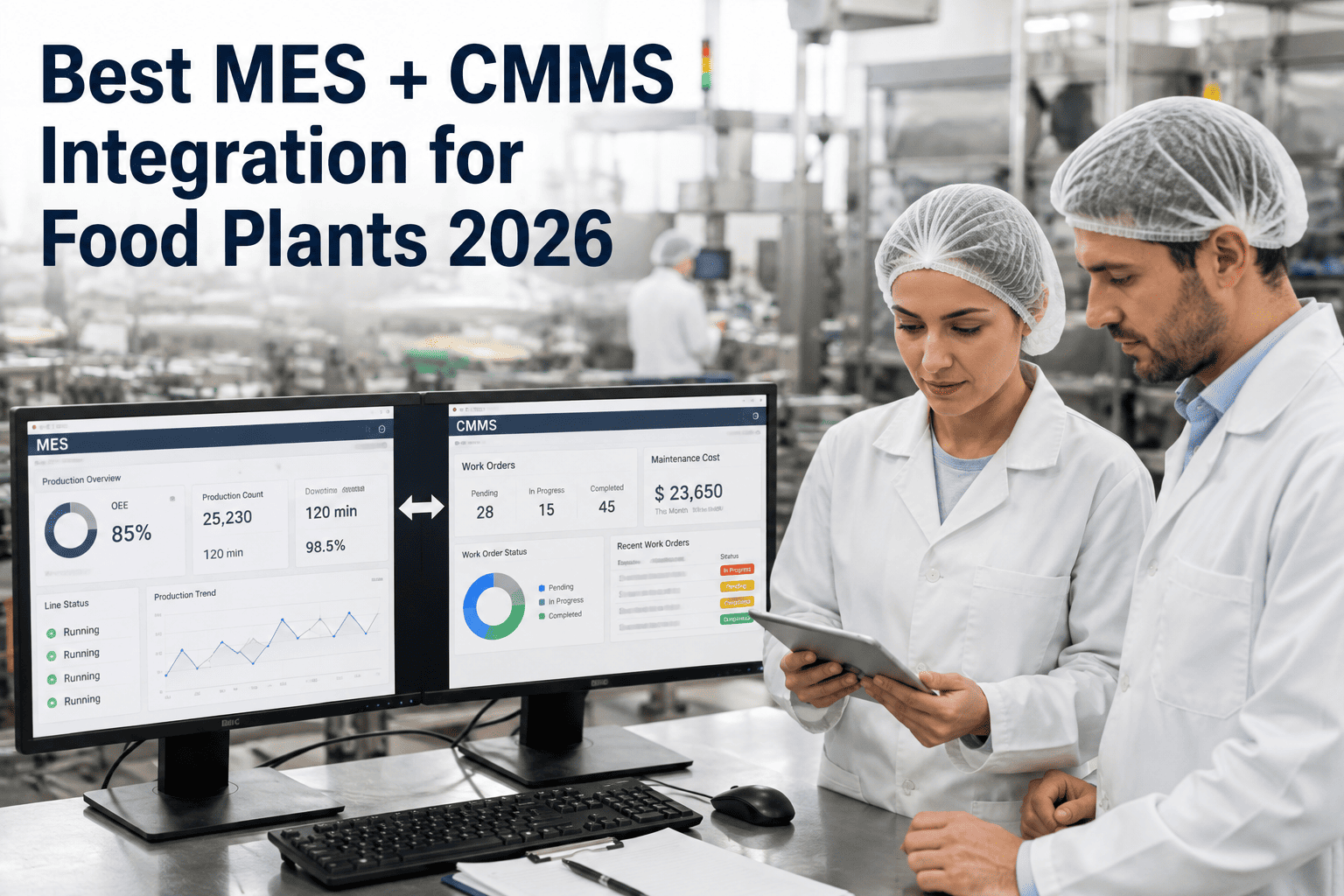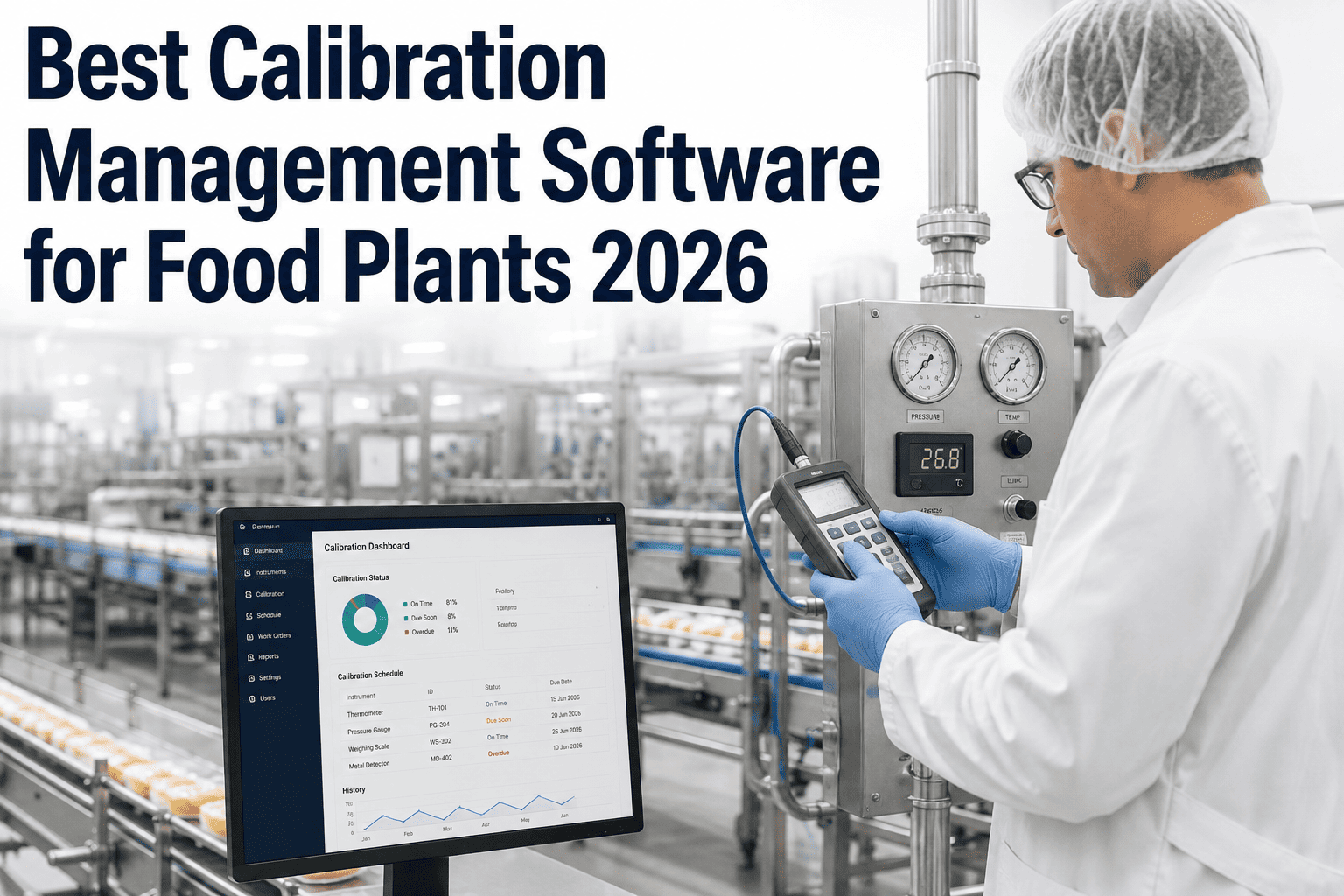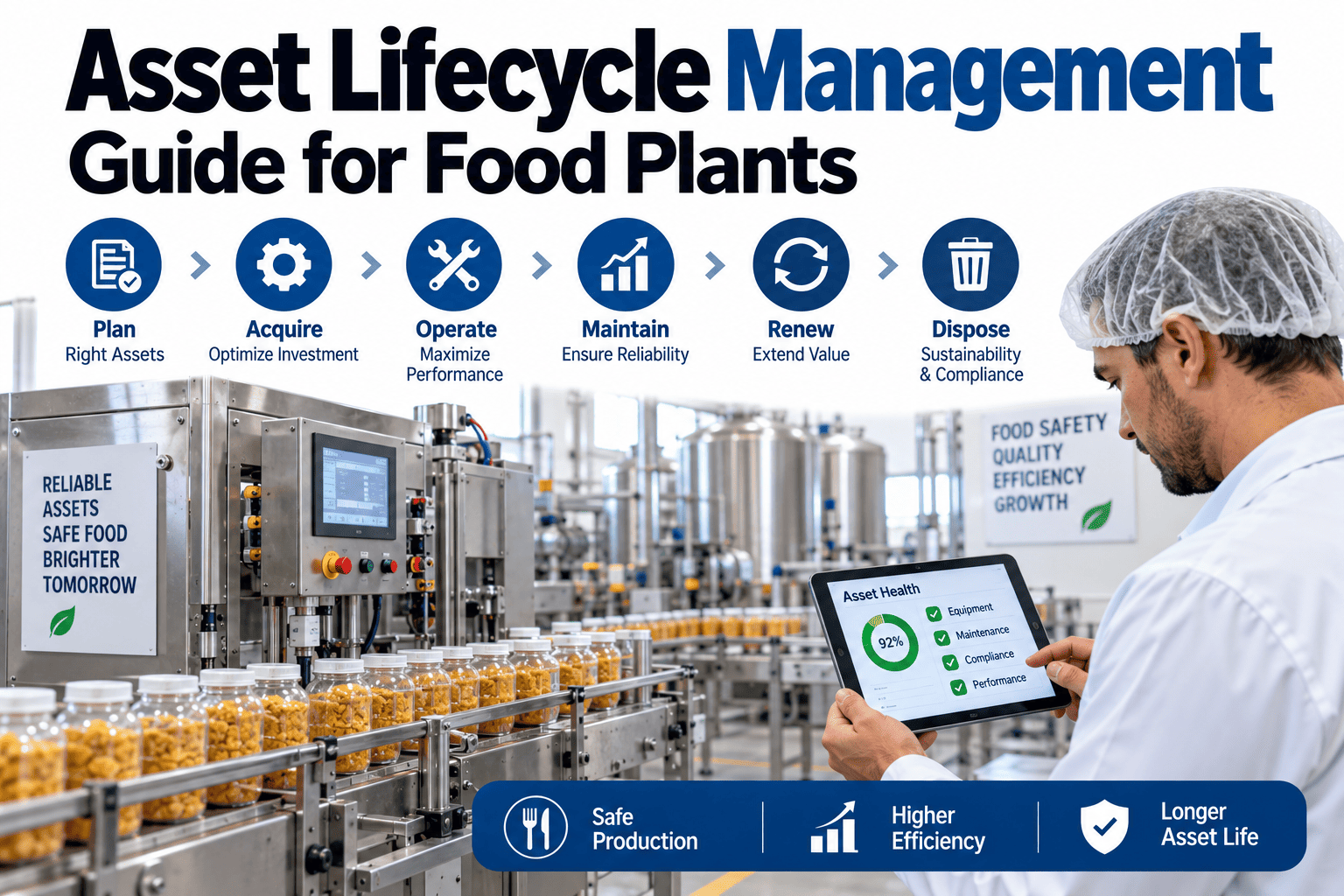
A piece of processing equipment in a food plant, a pasteurizer, a filler, a CIP skid, moves through a predictable arc from the day it's specified and purchased through commissioning, years of daily operation and maintenance, and eventually retirement and disposal, yet most plants track cost and performance data for only a fraction of that arc. Procurement teams track purchase price, maintenance teams track repair history, and finance tracks depreciation schedules, but rarely does anyone hold the full picture together in one place, which makes it nearly impossible to answer a question as basic as "what has this asset actually cost us, all in, since the day we bought it." Asset lifecycle management is the discipline of tracking cost, condition, and performance data continuously across every stage, from procurement through disposal, so that decisions at any point, whether to repair or replace, whether a new purchase is actually justified by total cost of ownership, get made with real data rather than institutional memory and gut feel. This page walks through what each lifecycle stage actually involves, where cost and data typically get lost between stages, and how to build a connected view that survives the inevitable turnover in who's responsible for a given asset over its multi-year life. You can book a demo to see how iFactory tracks food plant assets continuously across their full lifecycle.
Most Plants Track Fragments of an Asset's Life, Not the Full Story
iFactory connects procurement, commissioning, operations, maintenance, and disposal data into one continuous record for every critical asset in your plant.
The Decisions Made Before an Asset Ever Arrives Set the Trajectory for Everything After
Procurement decisions extend well beyond negotiating a purchase price. The specification chosen, the vendor selected, and the warranty and service terms agreed to all shape how much the asset will actually cost over its full life, not just what it costs to acquire. A slightly cheaper piece of equipment with a weaker service network or a shorter warranty period can easily end up costing more in total once maintenance and downtime costs over its operating life are factored in, but this trade-off is invisible if procurement's success metric is purchase price alone, disconnected from what happens to the asset afterward.
Choosing equipment specifications that match actual production requirements, not just the lowest-cost option that technically meets minimum requirements, sets the foundation for reliable long-term operation.
A vendor's parts availability and service response time directly affect future downtime cost, making this a legitimate procurement criterion, not just an operations concern to deal with later.
Warranty length and what it actually covers shapes early-life maintenance cost exposure, and this detail is easy to overlook when purchase price is the primary comparison point.
Ensuring complete technical documentation, spare parts lists, and maintenance requirements transfer cleanly from vendor to plant sets up the commissioning and operations stages for success.
Where Baseline Performance and Condition Data Should Be Captured, But Often Isn't
Commissioning is the one point in an asset's life when its performance and condition can be measured in a genuinely known-good state, before any wear, drift, or accumulated maintenance history complicates the picture. This baseline is enormously valuable for future condition monitoring, since deviations from a known commissioning baseline are far more meaningful than deviations from an assumed or estimated "normal" established after the fact. Yet in many plants, commissioning data gets captured in a startup report that's filed away and never referenced again, disconnected from the ongoing condition monitoring data collected once the asset enters routine operation.
Capturing throughput, cycle time, and efficiency metrics at commissioning provides the reference point against which future performance degradation can be measured meaningfully.
Vibration, temperature, and other condition indicators recorded at commissioning establish the known-good state that later condition monitoring compares against.
The Longest Stage, and Where Most Ongoing Cost Actually Accumulates
The operations and maintenance stage typically spans the vast majority of an asset's calendar life, and it's where the bulk of total cost of ownership actually accumulates through energy consumption, consumables, routine maintenance, unplanned repairs, and any production losses tied to unplanned downtime. Tracking this cost accurately requires connecting maintenance work order data, downtime records, and where relevant, energy or consumable usage data, to the specific asset over time, rather than treating each maintenance event as an isolated transaction disconnected from the asset's broader cost trajectory.
| Cost Category | Typical Data Source | Why It's Often Disconnected |
|---|---|---|
| Routine Maintenance | CMMS work orders | Rarely rolled up to a per-asset lifetime total automatically |
| Unplanned Repairs | CMMS + downtime logs | Downtime cost often tracked separately from repair labor and parts cost |
| Energy and Consumables | Utility metering, consumable inventory | Rarely attributed to individual assets rather than a plant-wide total |
| Production Loss | OEE/production data | Connected to downtime events but rarely rolled into asset-level TCO |
Closing the Loop So the Next Purchase Decision Learns From This One
When an asset finally reaches end of life, whether through obsolescence, escalating repair cost, or a planned capacity upgrade, the disposal stage is often treated as purely an administrative and logistical task, removing the asset and updating the fixed asset register. What gets lost in this handoff is the opportunity to feed the asset's full lifetime cost and performance history back into the next procurement decision, informing whether a similar specification, vendor, or maintenance strategy should be repeated or changed for the replacement asset.
Plants that close this loop, reviewing an asset's full lifetime cost against its original procurement assumptions before finalizing a replacement specification, tend to make measurably better purchasing decisions over time than plants where each procurement cycle starts from scratch without reference to how similar past decisions actually played out.
Different Teams, Different Systems, Different Time Horizons
Procurement's involvement typically ends once an asset is delivered, with no formal feedback loop connecting purchase decisions to how the asset actually performs afterward.
CMMS systems are often optimized for managing individual work orders rather than aggregating a clear lifetime cost trajectory per asset.
Depreciation schedules capture accounting value but rarely connect to the operational cost data that would reveal the true economic picture of an asset.
When the people who specified or commissioned an asset move on, the context behind key decisions often leaves with them unless it was formally documented and connected to the asset record.
What a Genuinely Connected Asset Record Actually Requires
Bringing procurement, commissioning, operations, maintenance, and disposal data together for a single asset requires more than good intentions; it requires a consistent identifier that every system involved actually uses, and a practical way to pull records from otherwise disconnected systems into a shared view without requiring every team to change the tools they use day to day.
Whether it's an asset tag, serial number, or internal ID, every system touching the asset's data needs to reference the same identifier reliably from day one.
Rather than forcing procurement, maintenance, and finance onto one shared tool, a reporting layer that pulls from each system's existing data preserves each team's workflow while still producing a unified view.
For assets already in service, linking available historical records under a shared identifier, even imperfectly, is usually more valuable than waiting to start tracking only newly purchased equipment.
Establishing how often each data source feeds into the shared record, in real time for some sources and periodically for others, keeps the record current without requiring constant manual reconciliation.
Sanitary Design and Regulatory Factors Add Extra Weight to Certain Stages
Food and beverage processing equipment carries lifecycle considerations that don't apply equally to every manufacturing sector, particularly around sanitary design standards and the regulatory documentation trail expected for equipment that contacts product. Procurement decisions need to weigh sanitary design certification alongside more general specification criteria, and commissioning needs to capture not just performance baselines but the sanitary validation documentation that may be required during a customer or regulatory audit years later.
Disposal decisions in food plants also sometimes carry additional considerations, such as ensuring equipment being retired doesn't inadvertently remain listed as active in a HACCP plan or sanitation schedule, a coordination gap that a genuinely connected lifecycle record, spanning maintenance, quality, and sanitation systems, is well positioned to prevent.
Connecting Lifetime Cost Data to Justify a Different Vendor Choice
A food plant had purchased a lower-cost filler from Vendor A over a higher-priced but better-supported option from Vendor B, based purely on purchase price comparison, with no mechanism in place to track how that decision actually played out over the equipment's operating life.
Once maintenance, downtime, and parts cost data were connected back to the original asset record, it became clear that Vendor A's lower purchase price had been more than offset by higher unplanned downtime and parts costs over five years of operation. That data directly informed the next filler purchase decision, where Vendor B was selected despite a higher upfront price, based on a defensible total cost comparison rather than repeating the same purchase-price-only evaluation.