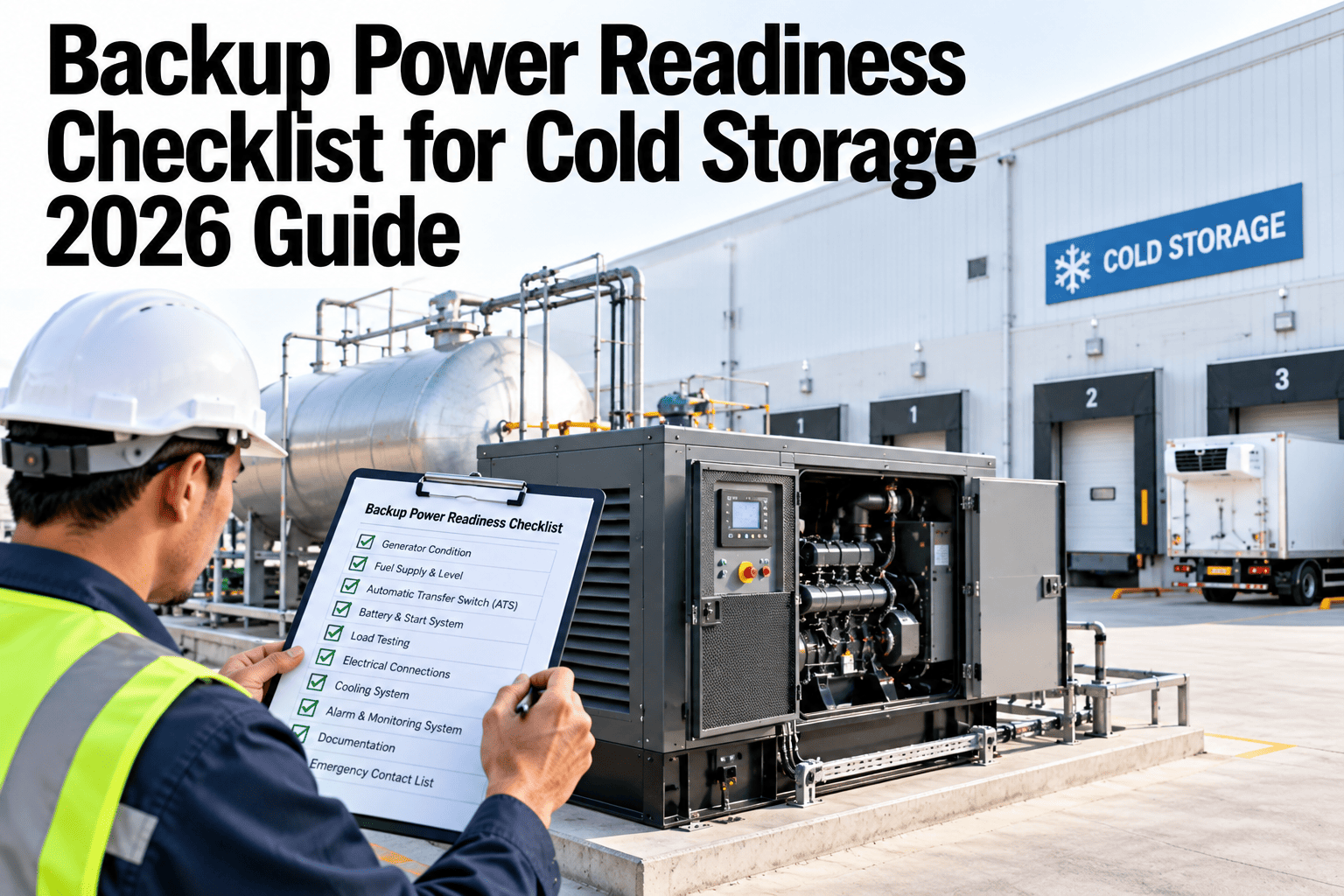
A four-hour power outage can be the difference between a normal day and a warehouse of lost inventory. Most plants own a generator, yet many have never tested it under real load, never checked fuel or never practised restarting refrigeration in the right order. This checklist walks through the power chain, the controls that must stay alive and the people who must know what to do. Use it as an audit before the next storm or grid failure. To plan your own readiness review, you can walk through a backup power audit with our team.
Cold storage resilience for food plants
Know Your Backup Power Will Work Before the Lights Go Out
iFactory AI monitors power events, room temperatures and alarms together, so teams can see the impact of an outage and respond in the right order.
Four things a backup plan must cover
PowerControlsAlarmsPeople
What an outage looks likeThe First Four Hours Decide Most of the Outcome
What happens depends on insulation, product load, door activity and how quickly power returns.
First minutes
Compressors stop and alarms start
First hour
Rooms begin to warm slowly if doors stay closed
Two hours
Risk builds in less insulated or busy areas
Four hours
Product safety decisions become urgent
How long a room holds temperature varies widely. Measure it with a controlled test instead of assuming.
Warming over timeAn Illustrative View of How Rooms Drift
The chart shows the idea that warming speeds up with time and with door openings. It is illustrative.
Closing doors and avoiding unnecessary openings is the cheapest backup there is.
The power chainFour Layers Between the Grid and Your Compressors
Utility supply
The grid feed and any planned or unplanned interruptions.
Transfer switch
Moves load to backup power automatically or manually.
Generator or backup source
Provides power for a defined set of loads.
Load priority
Decides which equipment gets power and in what order.
A failure in any layer can defeat the others, so each layer needs its own checks.
Test Your Backup Power Plan Before an Outage Does
Share your generator, switch and load details and see how iFactory AI could track outage impact and guide response.
Generator checklistFifteen Minutes of Checks That Can Save a Warehouse
Walk through these points on a regular schedule.
Generator starts and runs on a routine test
Fuel level is adequate and fuel quality is checked
Batteries and starter systems are in good condition
Cooling and ventilation for the generator are clear
Automatic transfer switch has been tested
Load on the generator matches its rating
Exhaust, enclosure and access are safe and clear
Test and fault logs are up to date
TestingFour Types of Test and What They Prove
| Test | What it proves | Notes |
|---|
| Routine run | Generator starts and runs | Standards such as NFPA 110 in the US describe testing for emergency and standby systems |
| Load test | Generator carries real load | Use planned load or a load bank |
| Transfer test | Switch moves load correctly | Plan around operations and safety |
| Full outage drill | People and systems work together | Highest value, needs careful planning |
Follow the standards, manufacturer guidance and rules that apply in your country. Frequencies and methods differ.
RestartRestore Refrigeration in the Right Order
1
Confirm safe power
Check that supply is stable before restart.
2
Start in sequence
Stagger large loads to avoid overload.
3
Protect product
Keep doors closed and monitor temperatures.
4
Return to normal
Confirm each room returns to range and record the event.
Starting everything at once can overload a generator or trip protection. A written sequence prevents that.
Controls and alarmsKeep Eyes and Brains Alive During an Outage
1
Control power
Controllers and sensors need backup power so data does not stop.
2
Alarm delivery
Alarms must reach people when the network or power is down.
3
Remote visibility
Ensure someone can see temperatures from home.
4
Call tree
Keep a current list of who to contact and in what order.
5
Data logging
Store readings locally if the network fails.
CoverageMatch Backup Cover to Room Criticality
Not every room needs the same cover.
Room profile
High-value product
Lower-value product
Backup covers the room
Well protected
Check regularly
Plan for partial cover
Reduce risk with insulation and contingency
No backup cover
Add cover
Highest priority gap
Accept or reduce
Lower risk, but plan carefully
Review priorities once a year or when product mix changes. To rank your rooms, ask our team for a room priority worksheet.
PractiseRun an Outage Drill
1
Plan the drill
Choose a time and set safety limits.
2
Simulate the outage
Switch to backup or run a tabletop exercise.
3
Time each step
Measure transfer, restart and alarm response.
4
Check product
Record temperatures and decisions.
5
Fix the gaps
Update the plan and repeat.
Master checklistCold Storage Backup Power Checklist
Generator tested under realistic load
Fuel supply and delivery plan confirmed
Transfer switch tested and logged
Restart sequence written and practised
Control and sensor power protected
Alarms reach people through more than one route
Call tree verified this quarter
Doors-closed rule briefed to all staff
Contingency for trailers or external storage agreed
Drill completed in the last twelve months
Expert reviewWhat a Facilities and Resilience Manager Would Check First
Expert review
Most backup failures are boring: an untested switch, low fuel or a missing contact. Routine, documented checks beat expensive equipment that has never been tried.
VerdictStrong when power, controls and people are tested together.
Watch forA generator that starts but cannot carry the real load.
Do nextRun a load test and a tabletop drill within the next quarter.
Frequently asked questionsWhat Food Plants Ask About Backup Power for Cold Storage
How long can a cold room hold temperature without power?
It varies widely with insulation, product mass, door activity and starting temperature. Measure it with a controlled test and record the results for each room, then plan decisions around those numbers.
Plan a hold-time test.
How often should we test the generator?
Follow manufacturer guidance and the standards that apply to you, such as NFPA 110 in the US. Many plants run routine tests regularly and add load and transfer tests on a schedule. Keep records of each test.
Ask about test planning.
Why stagger the restart of compressors?
Starting many large motors at once creates high inrush current that can overload a generator or trip protection. A written sequence brings loads on gradually and protects equipment.
Discuss restart sequencing.
What should we do with product during a long outage?
Keep doors closed, monitor temperatures and follow your food safety plan for decisions. Contingency options such as refrigerated trailers should be agreed in advance.
Ask about contingency planning.
How do we make sure alarms still work?
Power controllers and communications from a backup source and use more than one alarm route, such as local, mobile and call-out. Test the routes during drills.
Review alarm routes.
Test it before you need it
Be Ready Before the Next Outage
Book a session with iFactory AI to review your power chain, set up outage monitoring and plan a drill that proves your cold storage is protected.