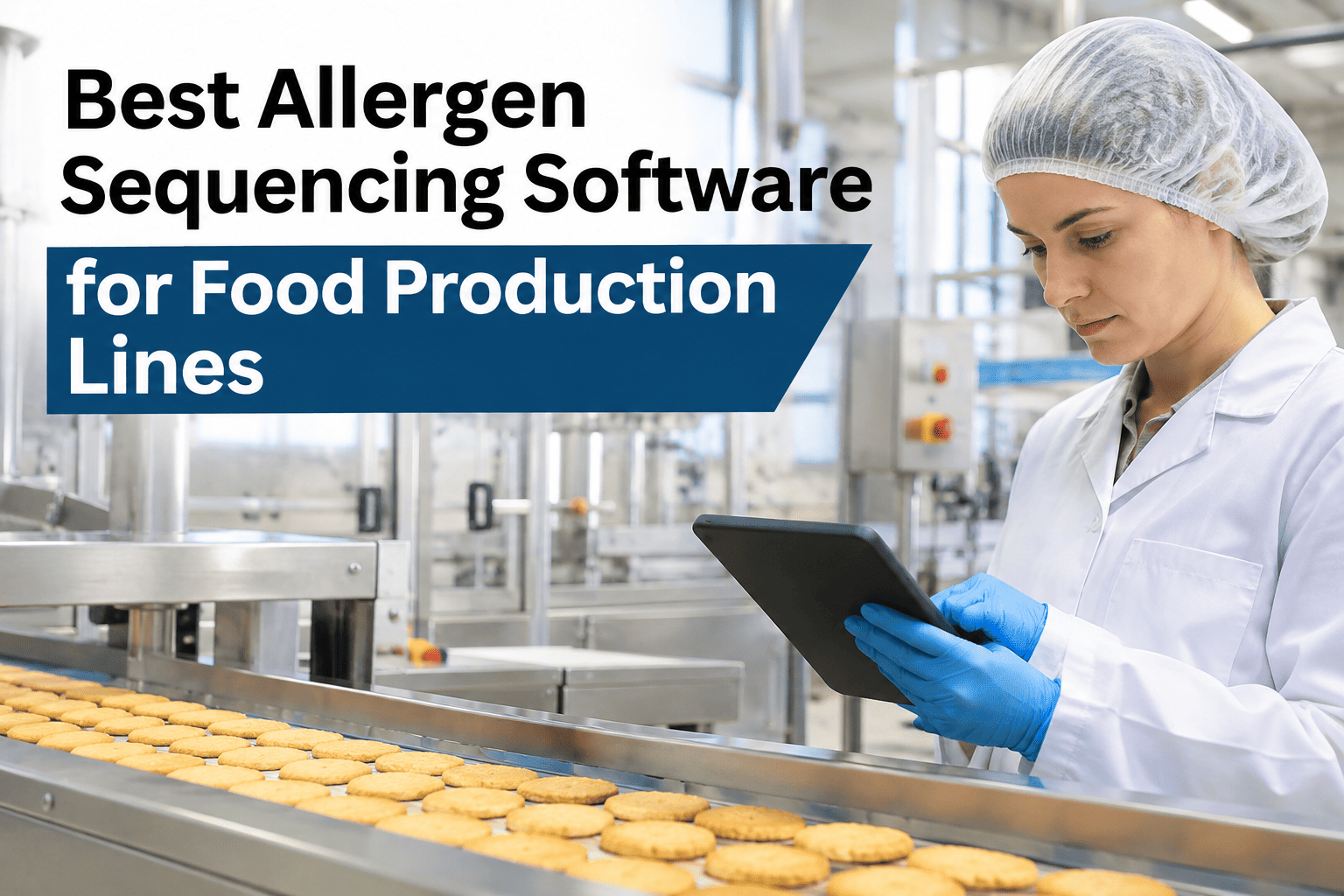
Running cheese first and peanut last on the same shift is not an accident on a well-sequenced line, it is the entire point of the schedule. Allergen sequencing software builds the production order automatically so allergen-free and lower-risk SKUs run before higher-risk ones, which cuts the number of full deep-clean changeovers a line needs across a week without touching a single sanitation procedure. iFactory AI, an on-premise AI platform for manufacturing, builds that sequence directly from a plant's own SKU list and allergen matrix, and scheduling teams can see their own weekly schedule re-ordered around allergen risk with our team.
Run Low-Risk First, High-Risk Last, Every Shift
Allergen sequencing software for food production lines automatically orders SKUs from allergen-free through highest-risk, cutting how many full deep-clean changeovers a line needs each week.
Why Order Matters as Much as Cleaning Itself
Every allergen changeover carries a cost in time and risk, and the number of changeovers a week is mostly a function of how many times the schedule swings from low-risk to high-risk and back again. A schedule that bounces between peanut and peanut-free three times in a shift forces three full deep cleans where a better-ordered schedule might need only one.
What a Few Fewer Changeovers a Week Actually Means
A full allergen deep clean is rarely a quick task. Between the extended cleaning time, the ATP and ELISA swab turnaround, and the line sitting idle while results come back, a single avoided deep clean can return a meaningful block of run time to the schedule. Multiply that across a week with several SKU transitions, and the cumulative time returned to production becomes one of the larger, least disruptive capacity gains a plant can find without buying anything.
Because this gain comes purely from reordering work that was already planned, it carries none of the implementation risk of a capital project. The line, the staff and the sanitation standard stay exactly the same; only the order in which SKUs run changes.
How the Sequence Actually Gets Built
See Your Weekly Schedule Re-Ordered
Share your current SKU list and allergen matrix, and iFactory AI will show how many fewer deep-clean events a re-sequenced week would need.
Sequencing Gets More Valuable With More Lines Involved
A single line benefits from sequencing on its own, but the bigger win often appears once a plant looks across several lines at once. A SKU that does not fit cleanly into one line's risk order might slot naturally into another line's schedule for that same week, and seeing all lines together lets a planner move product to wherever it creates the least changeover friction rather than forcing every line to solve its own sequencing problem in isolation.
This cross-line view is also where sequencing data starts to inform longer-term decisions, such as which SKUs might be worth dedicating to a single line permanently if their allergen profile keeps colliding with everything else scheduled around them.
A Week Before and After Sequencing
Getting the Allergen Matrix Right First
Sequencing is only as good as the allergen matrix behind it, which means every SKU needs an accurate, current list of what it actually contains, not what a label said two reformulations ago. A plant with a clean, current matrix can start sequencing almost immediately; a plant that has not reviewed its SKU allergen data in a while will find that reviewing it is the real first step, and a genuinely useful one regardless of whether sequencing software follows.
Once the matrix is current, sequencing logic itself is straightforward to apply, because it is fundamentally a sorting problem once every SKU's risk level is known with confidence.
What Sequencing Does Not Decide on Its Own
A good sequencing tool treats allergen risk as one strong input into the schedule, not the only one, and leaves room for a planner to adjust around the constraints that genuinely outrank it.
Sequencing Reduces Changeovers, Verification Proves Them
Fewer changeovers only matter if the ones that still happen are verified properly, which is why sequencing works best alongside, not instead of, a solid allergen changeover verification process. The two address different parts of the same risk: one reduces how often the line crosses an allergen boundary, the other proves each crossing that remains was handled correctly.
Plants that adopt both together tend to see the clearest result, because sequencing frees up time that would otherwise be spent on unnecessary cleans, and that freed time makes it easier for the sanitation crew to do the remaining required cleans thoroughly rather than rushed.
Mistakes That Undercut a Sequencing Rollout
A Week That Went From Five Deep Cleans to Two
Picture a snack line alternating between a plain variety, a peanut variety and a chocolate variety, scheduled purely by customer order dates. In a typical week, that order pattern forced five separate deep cleans as the line bounced between peanut and peanut-free repeatedly. Re-ordering the same five orders into a single block of plain and chocolate runs followed by one consolidated peanut block cut that to two deep cleans for the same total output, with every due date still met inside the new order.
Nothing about the sanitation standard changed in that example. The cleaning crew still ran the same full procedure every time a deep clean was required; there were simply fewer moments in the week where one was required at all.
What a Production Planner Would Check First
What Scheduling Teams Ask About Allergen Sequencing
Let the Schedule Do Some of the Work
Book a session with iFactory AI to see allergen sequencing built around your own SKU list and allergen matrix.