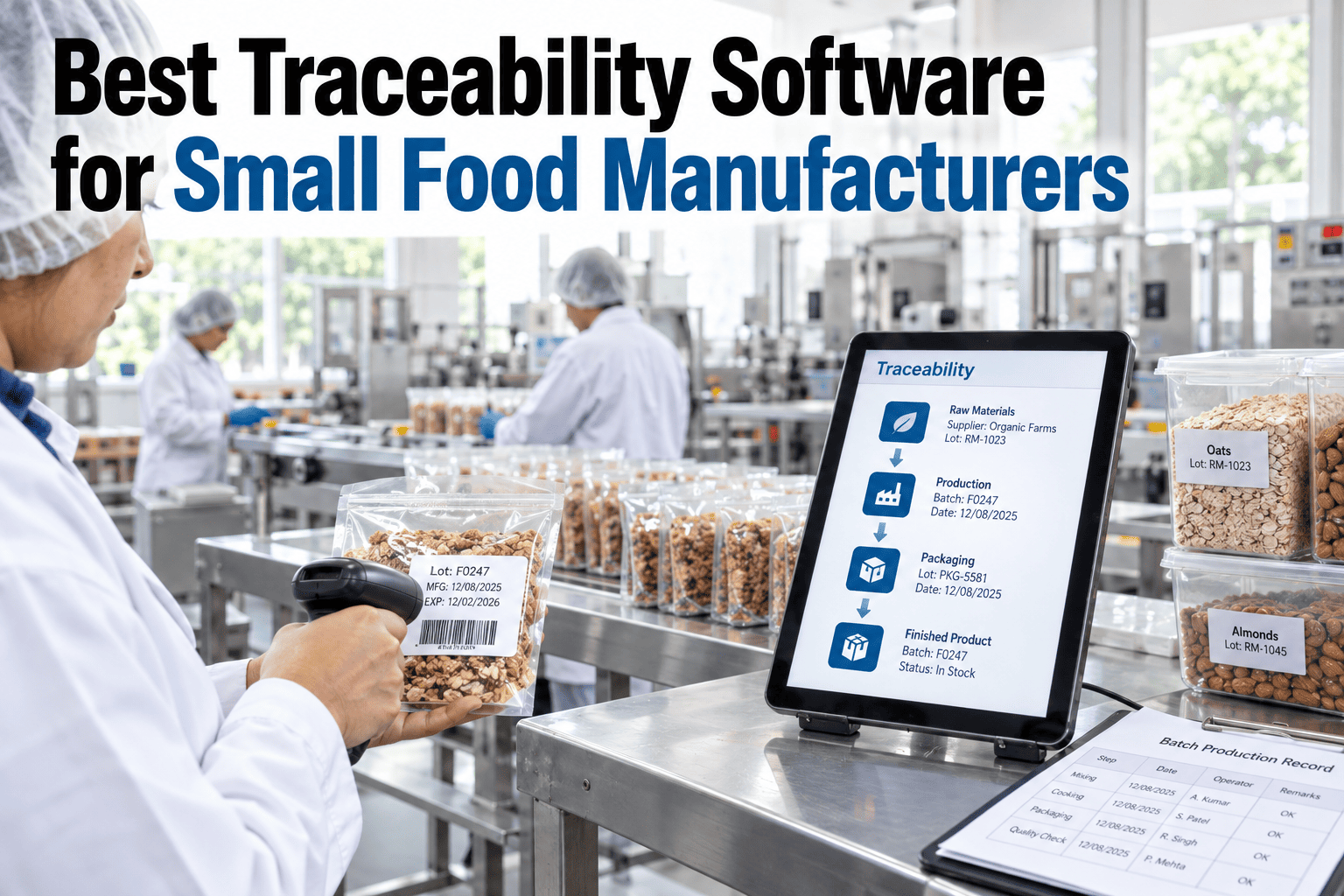
A small or mid-size food manufacturer doesn't need the same traceability platform an enterprise co-packer running a dozen plants deploys, and vendors pricing for that enterprise scale often price small producers straight out of the market before compliance even enters the conversation. The right traceability software for a smaller operation is feature-scoped deliberately, covering exactly what FSMA 204 and GFSI-aligned audits actually require without bundling in enterprise modules a five-line facility will never touch, and it should be achievable well under two thousand dollars a month for most single-site operations. Finding that fit means knowing which features are genuinely load-bearing for compliance and which are enterprise nice-to-haves before comparing a single price tag. Small and mid-size manufacturers evaluating their options can start that conversation with iFactory's support team.
You Don't Need the Enterprise Platform. You Need the Features That Actually Meet the Rule.
iFactory scopes traceability software to what small and mid-size food manufacturers genuinely need for FSMA 204 and GFSI compliance, priced for a single-site operation, not a co-packing network.
Why Enterprise Pricing Doesn't Fit a Small Manufacturer's Actual Need
Many traceability platforms are built and priced around the needs of large, multi-site operations managing dozens of suppliers and complex co-packing relationships, and applying that same pricing structure to a single-site producer means paying for capability that will simply never get used.
Multi-Site Modules Get Bundled Into Every Tier
Features built for coordinating across several facilities add cost without adding value for a producer running a single plant.
Per-Supplier or Per-Transaction Pricing Scales Against Small Operators
Pricing models built around large supplier networks can penalize a smaller manufacturer disproportionately relative to their actual usage.
Implementation Timelines Assume a Dedicated IT Team
A platform requiring months of custom integration work isn't realistic for a plant without a dedicated technical staff to manage it.
Compliance Gets Conflated With Enterprise Feature Depth
Meeting FSMA 204 and GFSI expectations doesn't require every advanced feature an enterprise platform offers, just the specific core capabilities the rules actually demand.
The Features That Are Genuinely Load-Bearing for Compliance
A short list of core capabilities covers what small and mid-size manufacturers actually need to satisfy FSMA 204 and GFSI-aligned audit expectations, without the enterprise bundling that inflates cost.
| Feature | Why It's Essential | What to Skip Paying For |
|---|---|---|
| Lot & CTE Tracking | Core requirement for any FSMA 204 covered facility | Multi-plant lot reconciliation across sites you don't have |
| 24-Hour Retrieval | Directly required by FSMA 204's response window | Advanced BI dashboards beyond basic retrieval reporting |
| Allergen Tagging | Prevents mislabeling risk across lot splits and blends | Enterprise supplier scorecard modules you won't use at scale |
| Audit-Ready HACCP Records | Needed for GFSI-aligned certification audits | Custom workflow builders meant for complex multi-line operations |
Evaluating a Platform Without Overbuying
A disciplined evaluation process keeps a small manufacturer focused on genuine compliance need rather than getting sold into enterprise capability that inflates cost without adding real value.
List Your Actual Compliance Requirements First
FSMA 204 coverage, GFSI certification scope, and any specific retailer requirements, documented before looking at any vendor.
Ask Vendors to Map Pricing to Your Specific Scope
Requesting a quote scoped to a single-site operation rather than accepting a default enterprise tier structure.
Confirm Implementation Fits Your Actual Team Capacity
A realistic setup timeline that doesn't assume dedicated IT resources you don't have on staff.
Verify the Core Compliance Features Directly
Testing 24-hour retrieval and lot tracking specifically, rather than trusting a general capability claim in a sales deck.
Get the Compliance Coverage Without the Enterprise Price Tag
iFactory scopes traceability software to what your single-site operation actually needs, keeping cost aligned with real usage, not enterprise assumptions.
A Composite Scenario: The Small Producer Who Almost Overbought
A composite specialty sauce manufacturer running a single facility had received a traceability software quote from an enterprise-focused vendor that included multi-plant supplier reconciliation, a custom workflow builder, and an advanced analytics module, pricing the platform well above three thousand dollars a month before any negotiation.
After mapping out the specific FSMA 204 and GFSI requirements actually applicable to their single-site operation, the team realized most of the quoted platform's premium features addressed problems they simply didn't have. Switching to a feature-scoped platform covering lot tracking, 24-hour retrieval, allergen tagging, and audit-ready HACCP records brought the cost under fifteen hundred dollars a month while still fully covering every compliance requirement the plant actually faced.
Common Mistakes When Choosing Traceability Software as a Small Manufacturer
Accepting a Default Enterprise Pricing Tier
Without requesting a scope specific to your operation, you risk paying for multi-site capability you'll never actually use.
Assuming Cheaper Always Means Less Compliant
A feature-scoped platform priced for small operations can fully satisfy FSMA 204 and GFSI requirements without the enterprise price.
Skipping a Direct Test of 24-Hour Retrieval
This specific requirement is worth verifying directly during evaluation rather than trusting a general claim of compliance.
Underestimating Implementation Effort for Your Team Size
A setup timeline that assumes dedicated IT resources you don't have can turn a reasonably priced platform into a difficult rollout.
Is Your Operation Ready to Evaluate Feature-Scoped Traceability Software
You've documented your specific FSMA 204 and GFSI requirements
A clear scope of what compliance actually requires is the foundation for evaluating any vendor fairly.
You know your realistic monthly budget range
Having a target range in mind before vendor conversations keeps the evaluation grounded in what's actually achievable.
You can identify your team's realistic implementation capacity
Knowing how much setup time and technical support your team can realistically provide shapes which platforms are a genuine fit.
You're prepared to test core features directly before committing
Verifying 24-hour retrieval and lot tracking firsthand protects against relying on a general compliance claim alone.
Frequently Asked Questions
What should a small food manufacturer realistically budget for traceability software?
Most single-site operations can find a feature-scoped platform covering core FSMA 204 and GFSI compliance needs somewhere under two thousand dollars a month, with simpler operations sometimes landing well below that depending on production complexity and the number of allergen categories being tracked. The key is mapping your specific requirements before evaluating vendors, since accepting a default enterprise pricing tier tends to inflate cost well beyond what a smaller operation actually needs. Manufacturers wanting help scoping their specific budget range can talk to iFactory support.
Can a lower-cost platform still meet the FSMA 204 24-hour retrieval requirement?
Yes, the 24-hour retrieval requirement is fundamentally about having electronic, connected records rather than paper or disconnected spreadsheets, which is a capability a well-designed feature-scoped platform delivers just as reliably as an expensive enterprise system. Verifying this directly during evaluation, by testing an actual retrieval scenario, is more useful than assuming price correlates with compliance capability.
What's the current FSMA 204 compliance deadline small manufacturers should be planning around?
The FDA extended the original January 20, 2026 compliance date by thirty months to July 20, 2028, giving covered facilities additional time to build compliant systems, though the underlying rule itself and its requirements remain unchanged. Many food safety leaders recommend treating the extension as preparation time rather than a reason to delay implementation, since the core recordkeeping and 24-hour retrieval requirements will still need to be operational well before the new deadline arrives.
Do we need separate software for HACCP documentation and traceability, or can one platform cover both?
A single platform covering both is generally more efficient for a small manufacturer than maintaining separate systems, since traceability records and HACCP documentation often need to reference the same lot and production data during an audit. Book a demo to see how combined traceability and HACCP documentation gets scoped for a single-site operation.
How do we avoid getting sold into enterprise features we don't need?
Documenting your specific compliance requirements and realistic scale before any vendor conversation, then asking each vendor to quote against that exact scope rather than their default tier structure, is the most effective way to avoid overpaying for enterprise capability. A vendor unwilling to scope pricing to your actual single-site needs is worth treating as a signal to keep evaluating other options.
Get Traceability Software Scoped to Your Actual Operation, Not an Enterprise Assumption
iFactory prices and scopes traceability capability around what a single-site food manufacturer genuinely needs for FSMA 204 and GFSI compliance.


-what-food-manufacturers-must-do-now.png)