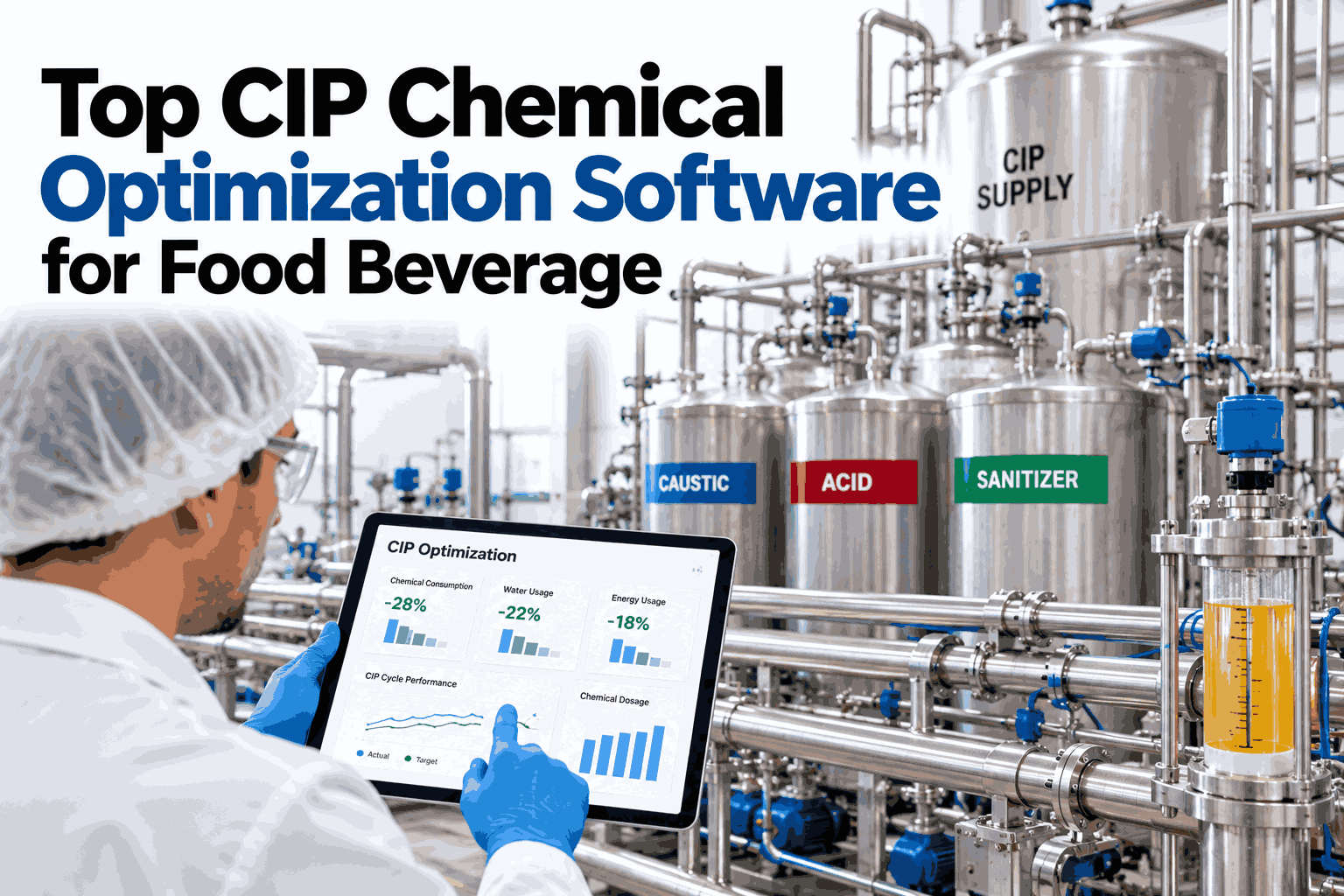
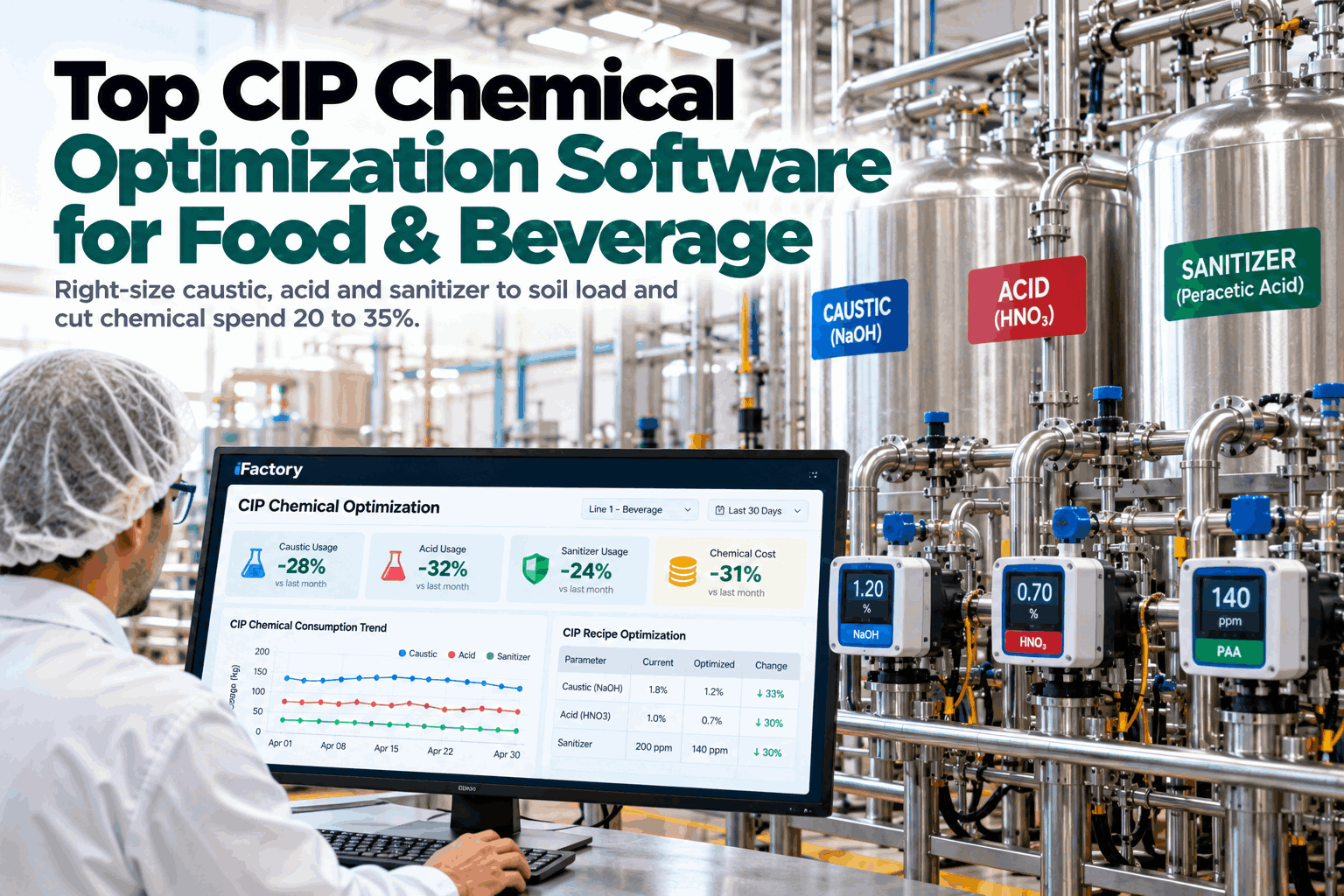
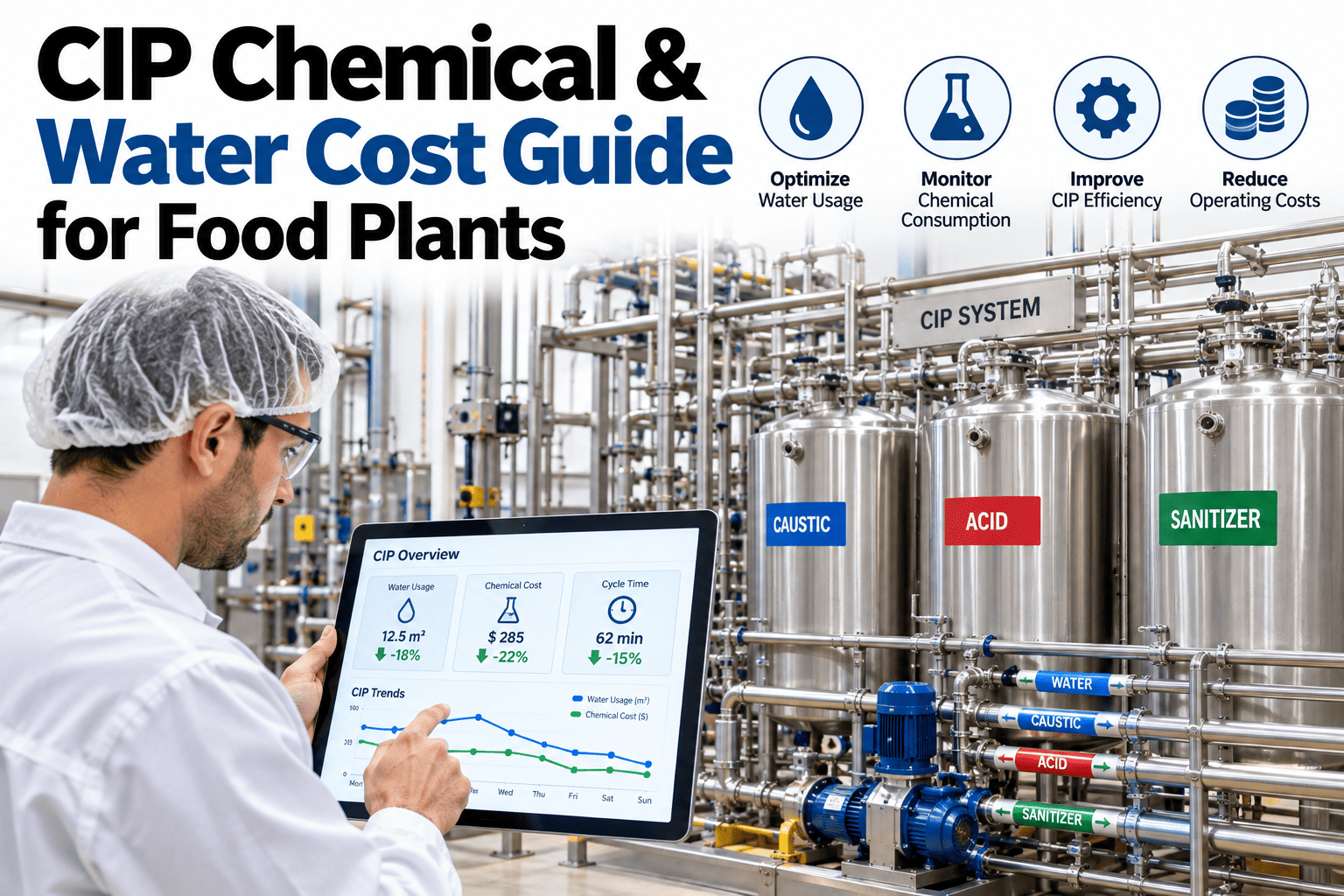
Picking the wrong CIP chemistry does not just waste money on detergent, it leaves soil behind that no amount of extra cycle time can fully compensate for. Fat-based soils, protein films, mineral scale, and biofilm each respond to different chemical mechanisms, and a one-size-fits-all caustic wash will consistently underperform against the soil type it was never designed to remove. Getting concentration, temperature, and contact time right for each chemistry is the fastest way to cut both cleaning failures and chemical spend, and it's the exact gap a Book a Demo chemistry review with iFactory is designed to close.
CIP CHEMISTRY · CAUSTIC · ACID · SANITIZER SELECTION
Match the Right CIP Chemistry to Every Soil Type
iFactory helps food and beverage plants select and dose caustic, acid, enzymatic, and sanitizer chemistries correctly for the soils they actually produce, not generic industry defaults.
Why Chemical Selection Is the Most Underrated CIP Variable
Plants routinely invest heavily in spray device engineering and cycle automation while leaving chemistry selection to whatever the original equipment supplier recommended at commissioning. But soil profiles change as product formulations evolve, and a chemistry program built for a dairy line five years ago may be a poor match for a reformulated high-fat product running through it today. The right selection process starts with soil characterization, not a chemical supplier's default recommendation sheet.
CIP Chemistry Selection Matrix by Soil Type
Chemistry Profiles
The Five Core CIP Chemistries and When to Use Each One
Most validated CIP programs draw from a defined chemistry library rather than improvising blends on the plant floor. Understanding what each chemistry actually does at the molecular level makes it much easier to diagnose why a wash is underperforming and what to change first.
Caustic Soda
Saponifies Fats, Breaks Down Protein
Sodium hydroxide remains the workhorse of food plant CIP because it saponifies fats into water-soluble soap and denatures protein structures, making it effective against the majority of dairy, meat, and bakery soils when dosed at the correct concentration and temperature.
Acid Cleaners
Dissolves Mineral Scale and Neutralizes Alkaline Film
Nitric and phosphoric acid cycles dissolve mineral scale deposits left by hard water and neutralize residual caustic film that a water rinse alone often fails to fully remove, which is why most validated protocols alternate caustic and acid phases.
Enzymatic Detergents
Targets Starch and Complex Carbohydrate Soil
Enzyme-based cleaners break down starch and sugar-heavy soils that caustic alone struggles to fully remove, and they typically operate at lower temperatures, which can reduce energy cost on lines with heavy carbohydrate residue.
Peracetic Acid Sanitizer
No-Rinse Microbial Kill Step
Peracetic acid decomposes into acetic acid, water, and oxygen, leaving no toxic residue and requiring no post-sanitizer rinse, making it a common final-step chemistry immediately before product changeover on dairy and beverage lines.
CIP CHEMISTRY REVIEW · DOSING OPTIMIZATION
Stop Guessing at CIP Chemical Concentrations
iFactory reviews your current soil profile and chemistry program and recommends a validated concentration, temperature, and contact time specification for every wash phase.
Dosing Errors
Common CIP Chemical Dosing Mistakes and What They Cost
Chemical dosing errors rarely announce themselves clearly. Instead they show up as slowly rising swab failure rates, unexplained chemical cost overruns, or equipment corrosion that gets blamed on water quality rather than the chemistry program itself.
01
Concentration Set by Timer, Not Conductivity
Dosing pumps set to run for a fixed duration rather than targeting a conductivity setpoint drift out of calibration over time, silently under-dosing chemistry long before anyone notices a swab test failure.
02
Wrong Chemistry for a Changed Soil Profile
Product reformulations that increase fat or sugar content often outgrow the original chemistry program, and nobody revisits the chemical selection until cleaning performance visibly degrades.
03
Temperature Running Below Chemistry Requirements
Caustic cleaning effectiveness drops sharply below its designed temperature range, and heat exchanger fouling or undersized heaters can quietly reduce wash temperature well below the validated setpoint.
04
Over-Concentration Driving Corrosion and Cost
Operators sometimes over-dose chemistry as a workaround for a spray coverage or flow problem, which accelerates equipment corrosion and gasket degradation while never actually fixing the underlying design issue.
Frequently Asked Questions
CIP Chemical Selection — Frequently Asked Questions
How do I know if my caustic concentration is correctly dosed?
In-line conductivity sensors provide the most reliable real-time confirmation of caustic concentration, since conductivity correlates directly with dissolved sodium hydroxide content. Titration testing on grab samples serves as a periodic cross-check, but conductivity monitoring catches dosing drift immediately rather than after the fact.
Can acid and caustic cycles be combined into a single wash phase?
No. Caustic and acid chemistries neutralize each other on contact, so they must run as separate phases with an intermediate rinse between them. Combining them not only wastes chemistry but leaves both fat-based and mineral-based soils inadequately addressed.
When should enzymatic detergents replace standard caustic washing?
Enzymatic detergents are worth introducing when starch, sugar, or complex carbohydrate soils remain even after a properly dosed caustic cycle, which typically shows up as persistent ATP swab failures on lines processing high-starch or high-sugar products despite otherwise correct chemistry parameters.
Is peracetic acid safe to use on all food contact surfaces?
Peracetic acid is compatible with most stainless steel and food-grade elastomer surfaces at labeled concentrations, but compatibility should always be confirmed against your specific gasket, seal, and equipment materials, since prolonged exposure at incorrect concentrations can degrade certain elastomers over time.
How often should CIP chemical concentration be re-validated?
Concentration should be re-validated whenever product formulation changes, dosing equipment is serviced or replaced, or on a fixed periodic schedule as part of the broader CIP validation program, since dosing pump calibration drift is one of the most common silent causes of cleaning failure.
CIP CHEMISTRY · FOOD SAFE CLEANING · 2026
Build a Validated CIP Chemistry Program for Every Soil Type
iFactory helps you select, dose, and monitor caustic, acid, enzymatic, and sanitizer chemistries correctly, backed by real-time conductivity verification.