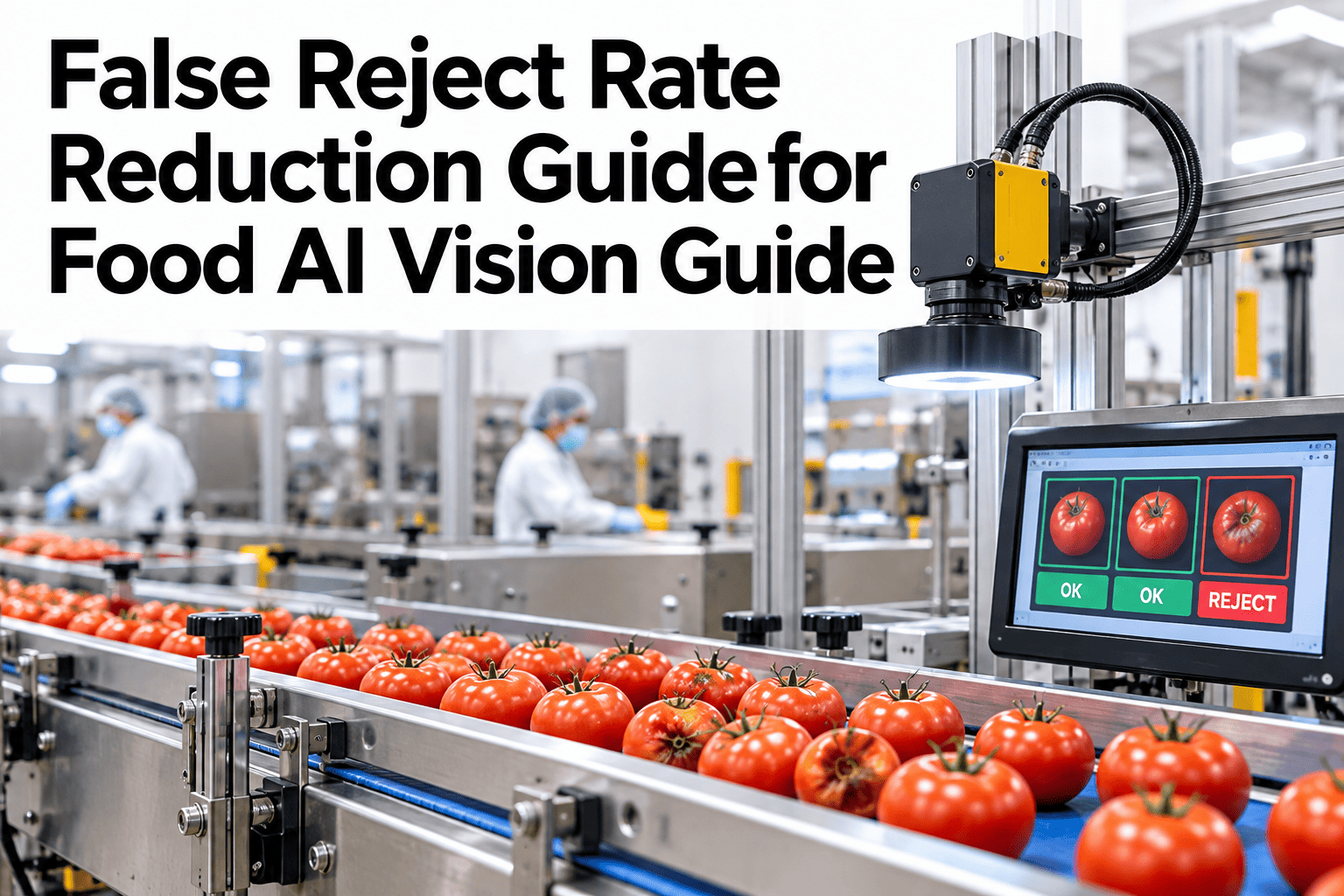
A false reject looks harmless in isolation, one good unit pulled from the line for no real reason, but at scale it quietly becomes one of the most expensive problems an AI vision deployment can have. A snack plant running even a small false-positive rate across a high-speed line can turn that into a six-figure quarterly cost once wasted product, rework labor and line slowdowns are added up. The fix is rarely a brand-new model, it's usually disciplined tuning, retraining and a verification gate before a reject becomes final. Plants can review their own false reject cost in a short session.
A Small False-Positive Rate Still Adds Up to Six Figures
iFactory tunes, retrains and gates rejects so good product stays on the line without missing real defects.
Why False Rejects Cost More Than They Look Like They Should
The direct cost of one rejected-but-good unit is small. The compounding cost comes from everything that happens after: an operator pulling it, a secondary check confirming it was fine, and the line running at reduced effective throughput the whole time.
| Cause | Mechanism | Fix |
|---|---|---|
| Threshold set too conservatively | Model flags borderline-normal variation as defect | Tune confidence threshold against labeled good product |
| Lighting or packaging drift | Model trained under different conditions than current line | Retrain on current conditions, not launch-day imagery |
| New product variant | Model has never seen the new SKU's normal variation | Add labeled examples of the new variant to training data |
| No verification step | Every flag becomes a final reject with no second check | Add a fast verification gate before a reject is finalized |
Get Your Current False Reject Rate Measured
Book a 30-minute session and iFactory will review your reject data to separate true defects from false positives.
Four Levers That Actually Reduce False Rejects
Threshold Tuning
Adjusting the confidence threshold against a labeled set of known-good product is often the fastest, lowest-cost fix available.
Scheduled Retraining
Models retrained periodically against current line conditions stay aligned as lighting, packaging and product drift over time.
Reject Verification Gate
A fast secondary check before a reject becomes final catches the borderline cases a single-pass model gets wrong.
Outcome Feedback Loop
Confirmed false rejects feed back into retraining, so the model actually improves from its own mistakes over time.
Before and After Tuning
One snack line tracked its false reject rate before and after a structured tuning pass against labeled good product.
Signals Your False Reject Rate Needs Attention
Where iFactory Fits
iFactory builds threshold tuning, scheduled retraining and verification gating into the inspection system from the start.
Data-Driven Threshold Tuning
Confidence thresholds are tuned against your own labeled product data, not a generic default.
Scheduled Model Retraining
Models are retrained on a regular cadence against current line conditions to prevent drift-driven false rejects.
Fast Verification Gating
Borderline flags route through a quick secondary check before becoming a final reject.
False Reject Cost Tracking
The true cost of false rejects is tracked and reported, making the ROI of tuning work visible.
Reviewed by iFactory's Vision Systems team for alignment with current AI inspection tuning practice. The cost breakdown and before/after figures shown are illustrative; actual false reject cost depends on line speed, product value and labor cost, and should be measured directly against your own line.
Frequently Asked Questions
Will reducing false rejects risk missing real defects?
Not when tuning is done correctly, since threshold adjustment and retraining target the specific cases causing false positives without lowering sensitivity to actual defects. True defect detection rate is tracked alongside false reject rate to confirm this throughout the process. Support can walk through how both rates are tracked together.
How often should a model be retrained?
This depends on how often product, packaging or lighting conditions change, but a regular cadence, often monthly or after any known change, keeps the model aligned with current line conditions rather than drifting unnoticed.
What does a verification gate actually involve?
It's typically a fast secondary check, either a second model pass or a brief human review, applied only to borderline-confidence flags rather than every unit, so it adds minimal time while catching cases a single pass gets wrong. See a verification gate designed for your own line speed in a short session.
How is false reject cost actually calculated?
It combines wasted product value, the labor time spent on rework and verification, and the throughput lost to line slowdowns caused by unnecessary rejects, measured against your own line's specific figures.
Does this apply to lines running below 600 units per minute?
Yes, false reject tuning matters at any line speed, though the cost impact scales with volume, so higher-speed lines tend to see the largest absolute savings. Ask support how this applies to your specific line speed.
Stop Paying for Rejects That Were Never Defects
iFactory tunes, retrains and gates your vision system to cut false rejects without missing real defects. Book a walkthrough on your own line.