The moment before a finished batch ships is the last point at which a food company has full control over what happens next. Once product leaves the dock, any gap in testing becomes someone else's problem — a retailer's shelf, a consumer's kitchen, or worst case, a recall notice with your brand name on it. Release criteria exist to make that last checkpoint rigorous rather than a rubber stamp, covering microbiological safety, chemical composition, and physical integrity before a Certificate of Analysis goes out with the shipment. Getting this checkpoint right consistently, batch after batch and shift after shift, is what separates a company that occasionally has a close call from one that eventually has an actual recall. Below is how a defensible release program is actually built, and where iFactory's Support Contact team helps plants close the gaps that manual release processes tend to leave open.
Every Batch Deserves the Same Rigor at the Final Gate
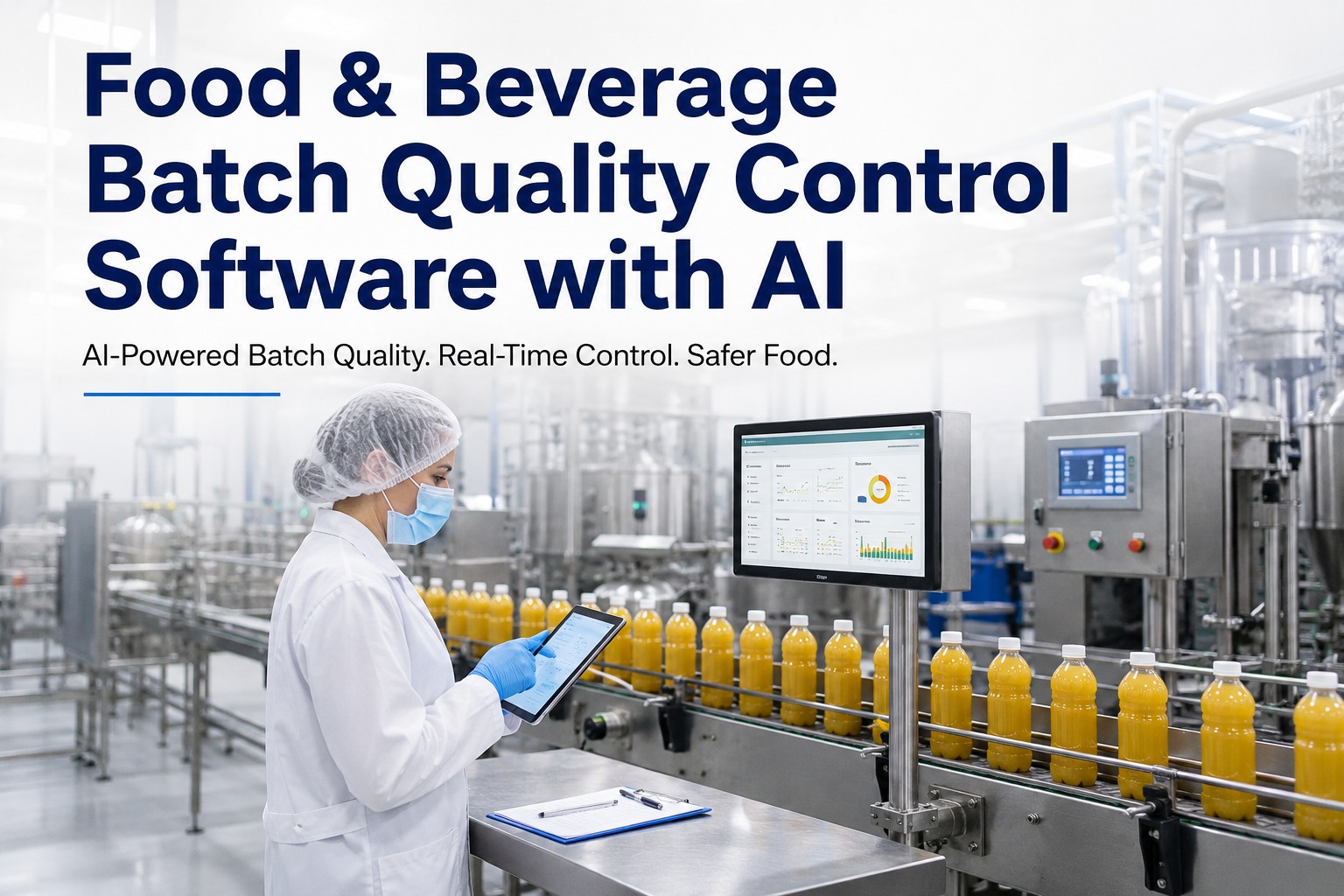
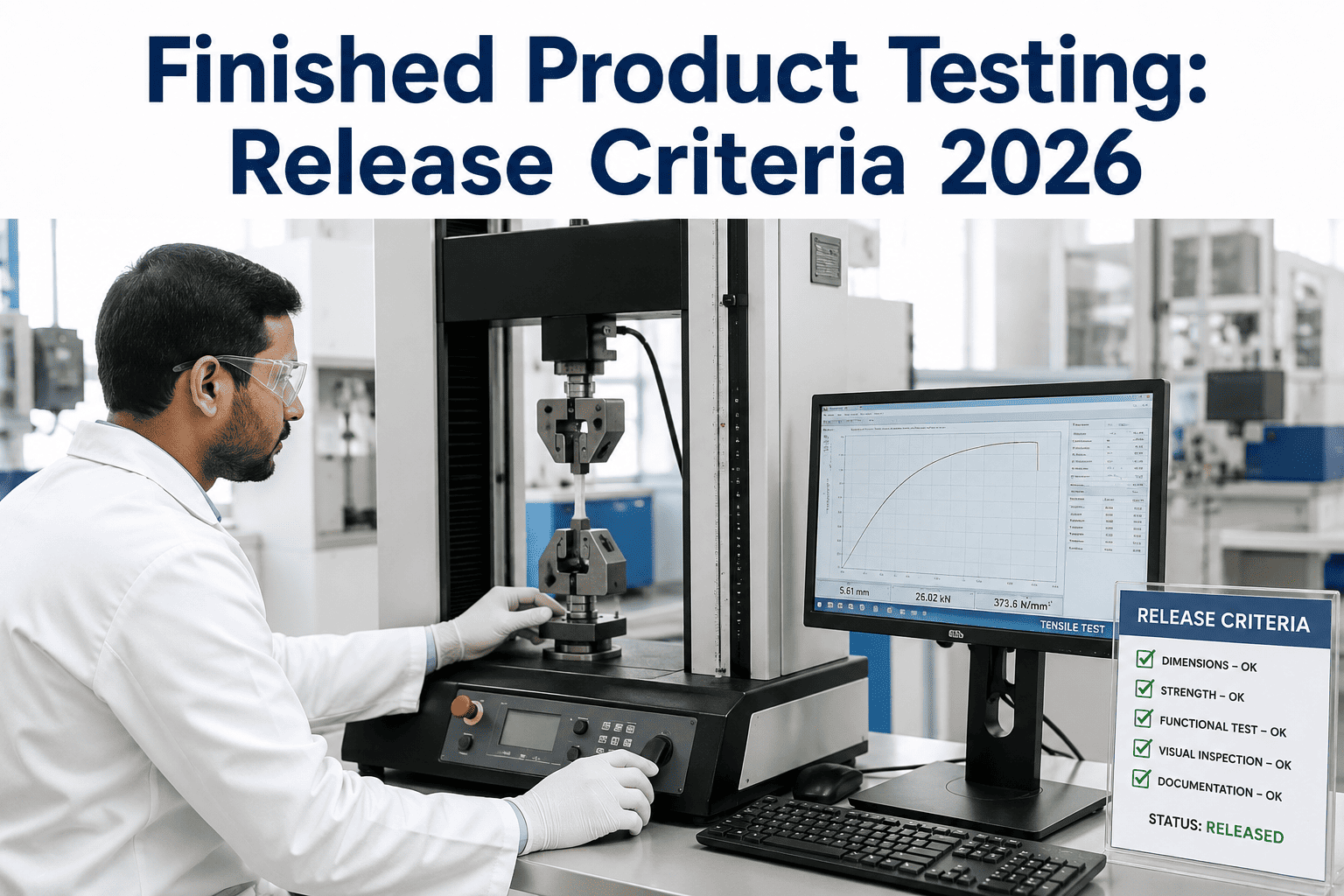
iFactory consolidates microbiological results, chemical analysis, physical inspection, and label verification into a single release record, so a batch cannot ship until every required test has cleared its defined limit — and a COA generates automatically the moment it does.
What Actually Belongs in a Release Package
A release decision built on a single test category is a release decision with a blind spot. Microbiological clearance says nothing about allergen labeling accuracy, and a passing chemical panel says nothing about a foreign material defect that a metal detector would have caught. A complete release package pulls from all four categories before a batch is cleared to ship, and the absence of any one of them from a routine release checklist is exactly the kind of gap that a root cause investigation later identifies as the point where a preventable issue slipped through.
Microbiological Testing
Pathogen testing for organisms relevant to the product category — Salmonella, Listeria monocytogenes, E. coli O157:H7, and others depending on the ingredient and process — along with indicator organism counts that signal broader sanitation or process control issues even when no pathogen is detected in the specific sample tested.
Chemical Analysis
Nutritional panel verification, allergen presence confirmation, pesticide residue screening where applicable, and any chemical parameter tied to product safety or label accuracy, checked against the specification the product was formulated and labeled to meet, with any deviation traced back to either the formulation or a specific ingredient lot.
Physical Inspection
Foreign material detection results, seal integrity, fill weight compliance, and visual defect rates rolled up from in-process data into a final physical quality summary for the batch as a whole rather than a single end-of-line sample that may not represent the full run.
Label and Documentation Verification
Confirmation that the label applied to the finished product matches the approved artwork, lists allergens accurately, and reflects the correct lot code and production date — a category of error that causes a disproportionate share of recalls despite having nothing to do with the product's actual safety or formulation quality.
See Your Release Gaps Before a Customer Does
iFactory shows you exactly which test categories are being verified consistently at release — and which ones depend on someone remembering to check.
Pass, Hold, or Reject — and Who Gets to Decide
A release decision is rarely a simple binary. Results come back at different times, some categories clear immediately while others are pending, and a genuinely defensible process needs a clear rule for what happens in every combination of outcomes rather than leaving each ambiguous case to individual judgment under shipping deadline pressure. The four scenarios below cover the overwhelming majority of situations a release reviewer will actually encounter, and having a documented rule for each one in advance removes the temptation to make an exception under pressure that would not hold up under later scrutiny.
All Categories Pass
Batch is cleared automatically, a Certificate of Analysis is generated with the full test result set attached, and the shipment is authorized without requiring a manual sign-off for every routine passing batch.
One Category Pending
Batch remains on hold in the system, physically segregated where possible, until the outstanding result returns — a rule that exists specifically to prevent a batch from shipping on the assumption that a pending pathogen result will probably come back clean, no matter how strong the historical pattern of clean results has been for that product line.
Marginal Result Requires Review
A result that is technically within limit but close enough to warrant a second look triggers a documented review by a senior quality reviewer rather than an automatic pass, capturing the judgment call in the record instead of leaving it invisible to anyone who later asks how that specific batch was evaluated.
Out-of-Limit Result
Batch is rejected or routed to a documented disposition process — rework, downgrade, or destruction — with the full test history retained and a root cause investigation opened before similar batches are affected.
Testing Turnaround Times by Category
Release scheduling has to account for the fact that not every test comes back at the same speed. Planning shipment dates around the slowest required result, rather than assuming everything will clear on the fastest possible timeline, avoids the pressure that leads to shortcuts under deadline stress. A production schedule built without this awareness inevitably creates the exact conditions where someone eventually decides a batch is probably fine to ship a few hours before the last confirming result actually arrives.
| Test Category | Typical Turnaround | Method | Hold Requirement |
|---|---|---|---|
| Pathogen screening | 24-72 hours | PCR or culture-based method | Full hold until result returns |
| Indicator organisms | 24-48 hours | Plate count method | Hold for perishable categories |
| Chemical / nutritional panel | 3-7 days | Lab analysis (in-house or third-party) | COA release contingent on result |
| Physical / foreign material | Immediate (in-line) | Metal detector, X-ray, checkweigher | Line-level reject, no batch hold needed |
| Label verification | Immediate | Visual and barcode scan check | Hold if mismatch detected |
Where a Spreadsheet-Based Release Process Actually Breaks
Most finished product release processes work fine until they don't — until a lab result lands in an inbox that nobody checks over a weekend, or a spreadsheet formula gets edited incorrectly and a marginal result reads as a clean pass. These are not hypothetical failure modes; they show up repeatedly in recall root cause reports as "administrative error" rather than an actual product defect, which is in some ways more troubling, because it means the product itself may have been fine and the failure was purely in the process meant to confirm that.
Spreadsheet and Email-Based Release
Lab results arrive by email or portal and are manually transcribed into a release spreadsheet, COAs are generated by copying values into a template, and the release decision depends on someone checking all four test categories before authorizing shipment — a process with no structural barrier against a missed or overlooked result.
iFactory Connected Release
Lab results are ingested directly into the release record, the system will not authorize shipment while any required category remains pending or out of limit, and the Certificate of Analysis is generated automatically from verified data rather than manually assembled — removing the transcription step where errors most often occur.
The Recurring Root Causes Behind Release-Stage Failures
Reviewing recall investigations across the food industry surfaces a short list of causes that repeat far more often than any exotic or unusual failure mode.
Shipping Ahead of a Pending Result
Under deadline pressure, a batch ships on the assumption that a still-pending pathogen result will clear, because it almost always has in the past. The rare time it does not clear turns a manageable hold into a field recall, which is why an automated release gate that physically cannot authorize shipment while a category is pending closes this gap regardless of deadline pressure, shift changes, or how confident the team feels about the likely outcome.
Label Verification Treated as an Afterthought
Because label errors do not show up in a lab result, they are often checked less rigorously than microbiological or chemical categories, even though undeclared allergen labeling is one of the most common causes of food recalls across the entire industry. Building label verification into the same release gate as the other three categories, rather than as a separate and less enforced step handled by a different team on a different timeline, closes this gap for good.
Manual COA Generation Introduces Transcription Errors
A Certificate of Analysis assembled by copying values from multiple lab reports into a template is vulnerable to simple transcription mistakes — a decimal point in the wrong place, a value copied from the wrong batch — that a system generating the COA directly from verified source data eliminates by design.
The COA Is a Promise — Make Sure You Can Back It Up
A Certificate of Analysis is not just a shipping document. It is a formal representation to your customer that the specific lot in their hands met every specification you attached your name to, and it is one of the first documents a regulator or customer auditor asks to see when a question arises about a specific batch. Treating COA generation as a final administrative task rather than the culmination of a rigorous release process is how plants end up issuing documents they cannot fully stand behind months later when a question surfaces.
This is particularly important for facilities supplying private label or retail customers, many of whom conduct their own periodic audits of supplier release records specifically to confirm that the COA they received actually reflects a completed, defensible test process rather than a template filled in from an assumption that the batch would probably pass. A release system that generates the COA automatically from verified lab data, only after every required category has genuinely cleared, gives you a document you can defend in full rather than one that depends on trusting that every step was followed correctly under time pressure.
Every Reviewer Should Reach the Same Decision on the Same Data
Release decisions made by different quality reviewers on different shifts should not vary based on who happens to be on duty when the last result comes in. A defensible release program removes as much individual judgment as possible from routine pass or fail decisions, reserving human review specifically for the marginal or ambiguous cases where judgment genuinely adds value. This is not about removing the quality team from the process — it is about making sure their attention goes to the decisions that actually require it rather than being spread thin across hundreds of routine releases that a clearly defined rule could handle consistently.
iFactory's release configuration works with your quality team to codify exactly which decisions are routine enough to clear automatically against a documented rule, and which require a named reviewer's sign-off before a batch can ship. Over time, this distinction also becomes a useful audit trail in its own right — a facility that can show exactly how many releases required senior review and why demonstrates a level of process maturity that a facility relying entirely on ad hoc judgment calls cannot.
We had a near miss two years ago where a batch shipped while a pathogen result was still technically pending, because the lab portal notification went to an inbox nobody was actively watching that Friday afternoon. It resolved clean, but it scared us enough to build a hard system gate instead of relying on someone checking an inbox before a truck left the dock. Since then, not a single batch has left our dock with an outstanding test result, and our COA turnaround time actually got faster because the document generates itself the moment the last result clears rather than waiting for someone to assemble it manually the next morning.
Frequently Asked Questions
Does iFactory perform the actual lab testing, or does it manage results from our existing labs?
iFactory manages and enforces the release logic around results from your existing in-house lab and third-party testing partners rather than replacing your testing relationships. Results are ingested from your lab's reporting system or entered by your quality team, and the platform applies your defined release rules consistently to every batch regardless of which lab produced the result, which is particularly useful for plants that split testing between an internal lab for routine parameters and an external accredited lab for pathogen confirmation. Contact Support Contact to discuss integration with your specific lab information management system.
Can release criteria differ by product line or customer requirement?
Yes, release rules are configured per product and can include additional testing categories or tighter limits required by a specific retail customer beyond your baseline regulatory requirement. When a customer requires an additional pathogen test or a stricter allergen threshold than your standard specification, that requirement is built into the release gate for shipments destined to that customer, so the system enforces customer-specific requirements without your team needing to remember which customer needs which additional check.
What happens to a batch that fails one test category but passes the others?
The batch is held in its entirety rather than partially released, since a failure in any required category means the batch as a whole has not met its release criteria, regardless of how well it performed on the other three. The specific disposition — rework, downgrade to a different product category if permissible, or destruction — depends on the nature of the failure and follows your documented non-conforming product procedure, with the full test history and disposition decision retained in the batch record for traceability and trend analysis across similar future batches.
How is the Certificate of Analysis generated, and can it be customized per customer?
The COA is generated automatically once all required test categories clear, pulling verified values directly from the ingested lab results rather than requiring manual entry into a template. Layout and included parameters can be customized per customer or per product line, since some customers require specific formatting or additional attestation language on the document. Book a Demo to see a sample COA generated from real batch data.
How does the system handle a marginal result that is within limit but close to the threshold?
Marginal results within a configurable proximity to the limit are flagged for mandatory senior review rather than passing automatically, so a human reviewer with full context makes the final call on results that a purely automated pass-fail gate might treat too rigidly in either direction. This review is documented in the release record, giving you a defensible account of the judgment applied to every marginal result rather than a silent automatic pass. Reach out via Support Contact to configure the proximity threshold appropriate for your product categories.
Make Your Last Checkpoint Your Strongest One
Walk through your current release process with our team and see exactly where a connected release gate would have caught your last near miss.