Every food safety failure that reaches a consumer started somewhere upstream of the plant floor — in a truck that sat too long at ambient temperature, a Certificate of Analysis that nobody actually cross-checked against the load, or a supplier substitution nobody flagged before it hit the mixing line. Receiving inspection is the cheapest place in the entire supply chain to stop a problem, and it is also the most rushed, squeezed between a truck on a tight dock schedule and a production line waiting on ingredients. A disciplined incoming inspection program treats receiving as a real quality gate rather than a paperwork formality, and pairs it with supplier performance data so problem suppliers get caught before their next shipment, not after. Book a receiving workflow review to see where your current dock process has gaps.
Stop Problems at the Dock, Not on the Line
A structured receiving inspection program with AI-assisted COA verification and supplier scorecarding catches contamination, temperature abuse, and specification drift before raw material ever reaches production.
Why Receiving Is the Highest-Leverage Quality Gate
A defect caught at receiving costs a rejected load. The same defect caught after it enters a batch costs the batch, the downstream product, and in the worst case a recall. The math is why receiving discipline pays for itself many times over.
typical cost multiplier for catching a defect after blending versus at the receiving dock
of food safety root causes trace back to an incoming ingredient or packaging issue
typical dock window available to inspect, sample, and clear a full truckload
of incoming lots that carry a COA discrepancy against the actual shipment when audited
The Five-Point Receiving Check
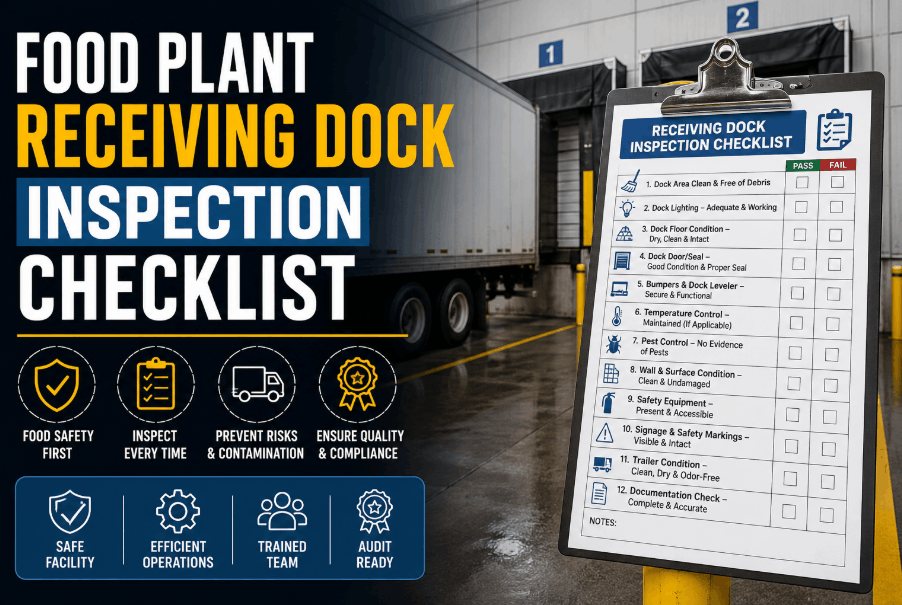
Every incoming lot, regardless of ingredient type, passes through the same five checks before it is released to inventory. Skipping any one of them is where most receiving failures originate.
Document match
Purchase order, bill of lading, and Certificate of Analysis cross-checked against each other before the truck is unloaded, not after.
Temperature verification
Product core and trailer temperature logged at arrival for any cold-chain ingredient, with automatic rejection triggers for excursions outside the defined range.
Physical and sensory check
Visual inspection for damage, off-odor, foreign material, and packaging integrity performed on a representative sample from each pallet position, not just the tailgate.
Specification and COA verification
Lab values on the COA compared against your written specification range, flagging any parameter outside tolerance for hold rather than automatic acceptance.
Lot traceability capture
Supplier lot number, internal lot assignment, and receiving timestamp logged together so any downstream issue can be traced back to this exact shipment in minutes.
Turn a 15-Minute Dock Window Into a Full Quality Gate
iFactory reads COAs automatically, cross-checks values against your specifications, and flags discrepancies before a truck leaves the dock — no added time on receiving staff.
Building a Supplier Scorecard That Actually Predicts Risk
A single rejected load is a data point. A pattern across a supplier's shipment history is a risk signal — and it is the difference between reacting to a problem and preventing the next one.
Delivery reliability against confirmed windows, since late deliveries correlate strongly with rushed dock inspection and missed checks.
Rate of COA values matching independent verification testing, exposing suppliers whose paperwork and product quietly diverge.
Percentage of lots rejected or held at receiving, tracked per supplier and per ingredient rather than as one blended plant-wide number.
Whether a supplier's lab values are trending toward the edge of tolerance over time, catching gradual drift before it crosses into an outright reject.
Inspection Intensity by Supplier Risk Tier
Not every supplier needs the same level of scrutiny. Risk-based receiving matches inspection depth to a supplier's track record, so effort concentrates where it actually reduces risk.
What Changes With AI-Assisted Receiving
Figures from typical deployments across ingredient-heavy manufacturers within the first two quarters of go-live.
A Quality Manager's View on Fixing Receiving First
We used to treat receiving as a formality — check the paperwork, sign it, move the pallet. Once we started actually cross-verifying COA values against our specifications automatically, we found a supplier whose moisture content had been drifting for three months without a single load ever crossing the reject threshold on its own. It was never a fail, but the trend was a warning we would have missed by looking at each shipment in isolation.
Frequently Asked Questions
How does automated COA verification actually work?
The system reads the incoming Certificate of Analysis, whether scanned, emailed, or entered by a supplier portal, and extracts the reported values for each tested parameter. Those values are then compared automatically against your written specification range for that ingredient, flagging anything outside tolerance for review before the lot is released. Book a demo to see it run against a real COA from one of your suppliers.
What should trigger a supplier moving to a higher risk tier?
A single rejected lot does not necessarily indicate a systemic problem, but a pattern does. Most programs escalate a supplier's tier after two holds within a rolling ninety-day window, a confirmed COA-to-lab discrepancy, or any food safety-relevant deviation regardless of how minor it appeared at the time.
How much independent lab testing is actually necessary if COAs are verified?
COA verification confirms the paperwork is internally consistent and within your spec, but it does not confirm the paperwork matches the actual shipment. Periodic independent testing, at a frequency matched to supplier risk tier, is what catches the rare but serious case of a COA that does not reflect the product that arrived.
Can receiving inspection data connect to our existing supplier management system?
Yes. Receiving results, COA verification outcomes, and reject history feed into supplier scorecards that can export to or sync with existing supplier quality management and ERP systems, so the data does not live in a separate silo from the rest of your procurement process.
What is a realistic timeline to stand up a risk-tiered receiving program?
Most plants can classify their existing supplier base into risk tiers within two to three weeks using historical reject and COA data already on file. Full automation of COA reading and specification matching typically layers in over four to six weeks alongside the tiering work. Talk to a specialist about your current supplier count and ingredient mix.
The Bottom Line on Incoming Raw Material Inspection
Receiving is the cheapest place in the entire operation to stop a problem, yet it is routinely the most rushed step in the whole quality system. A five-point check performed consistently, backed by supplier scorecards that catch drift before it becomes a reject, turns the dock from a bottleneck into the strongest quality gate a plant has.
Fix Receiving Before It Costs You a Batch
Book a 30-minute review. Bring your current supplier list and recent reject history, and iFactory will map your risk tiers and scope an automated COA verification rollout.