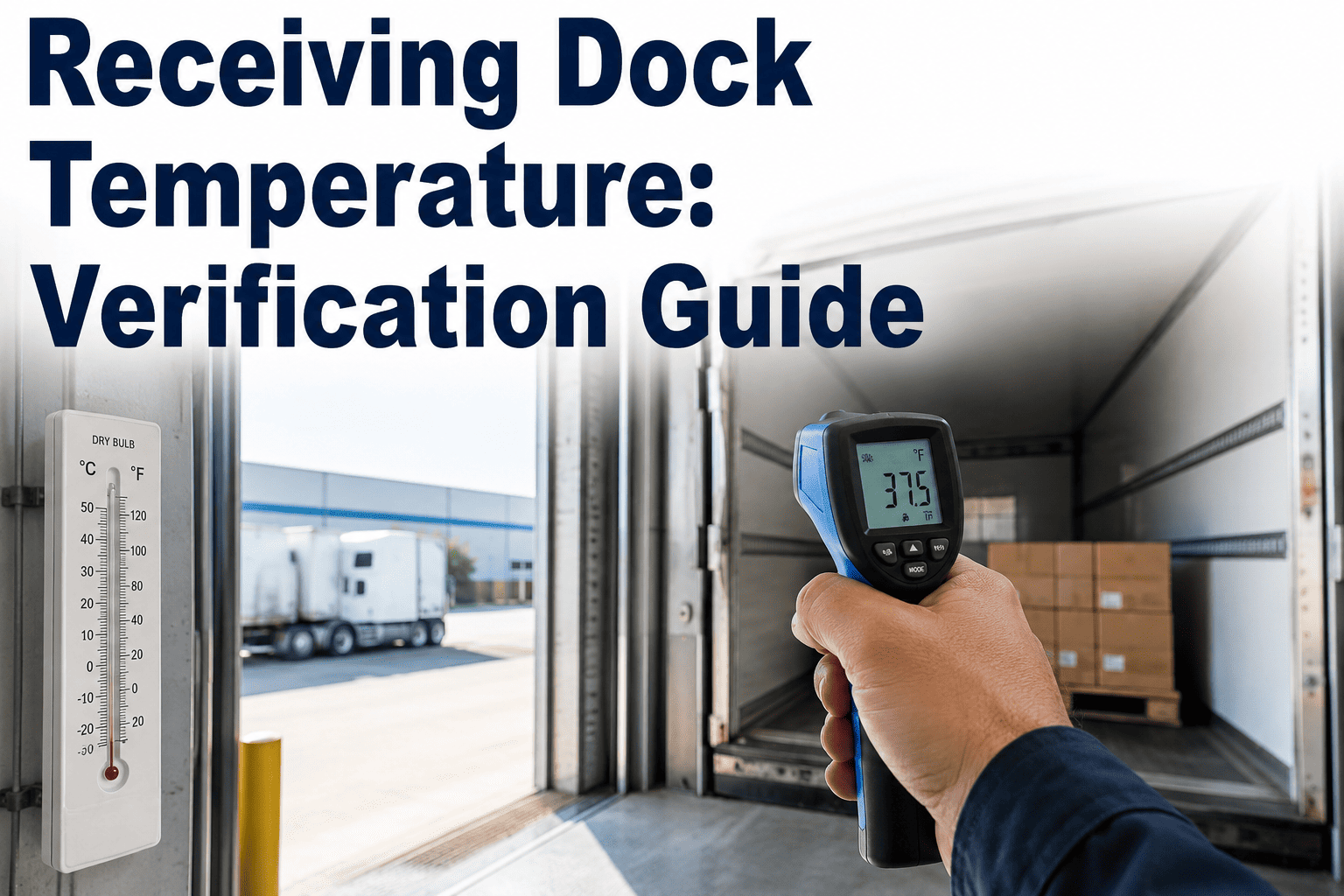
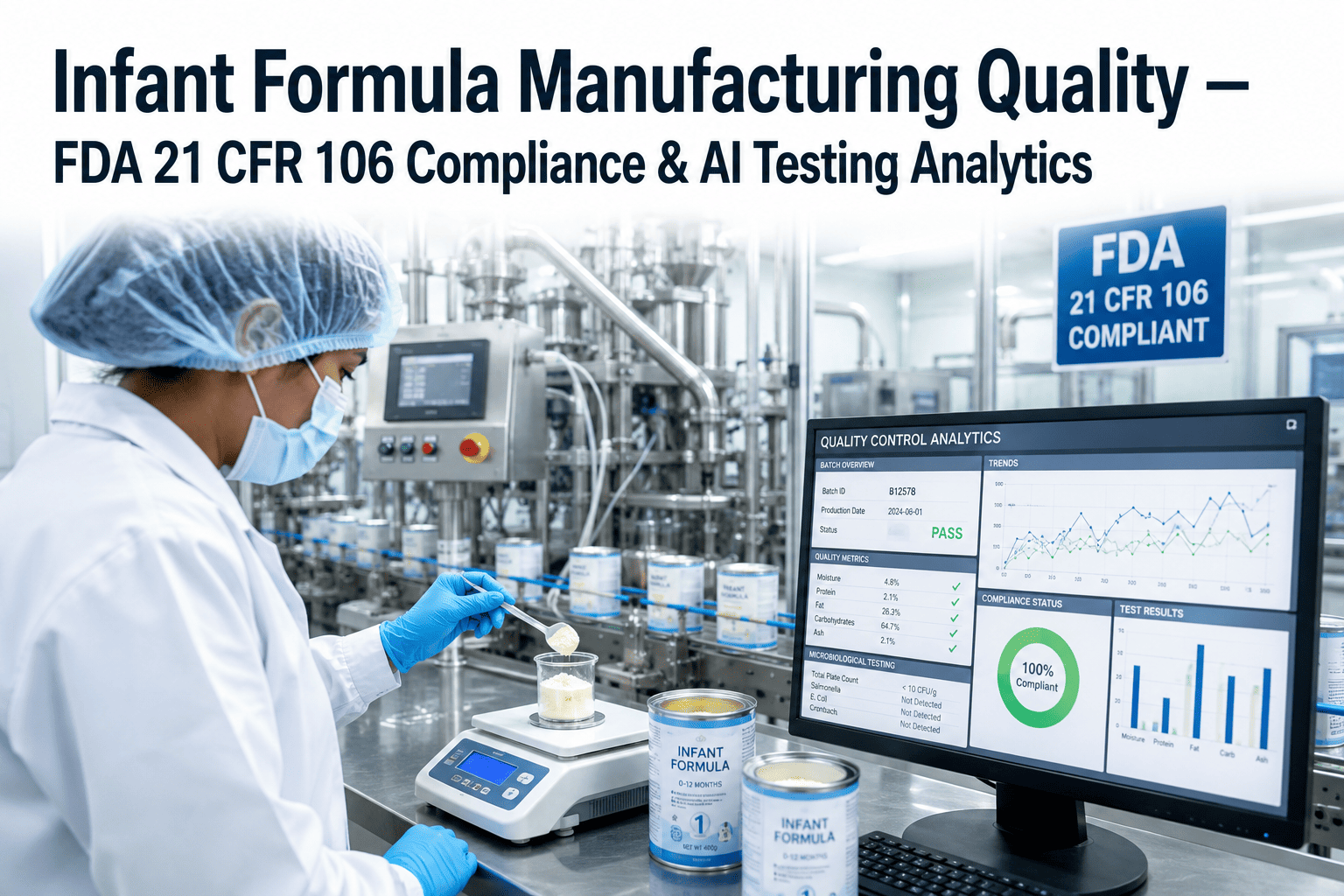
Every recall investigation eventually traces back to the same moment: a truck backed up to a receiving dock, and a decision got made about a lot of ingredients in less time than it takes to read this sentence. Food plants that treat that moment as a formality rather than a control point are the ones that end up issuing corrective action reports months later. The FDA's Food Safety Modernization Act requires documented supplier verification for exactly this reason, and the plants that take it seriously build a five-layer inspection discipline around every incoming shipment, applied the same way whether it is the first truck of the morning or the last one before shift change. Below is what that discipline actually looks like on a receiving dock, and how iFactory's Support Contact team helps plants put it on autopilot.
The Receiving Dock Is Your First Critical Control Point
iFactory turns incoming raw material inspection from a paper checklist into a connected, camera-and-sensor verified record — matched against supplier COAs, specifications, and approved supplier status before a single pallet moves onto the floor, so a deviation is caught while the truck is still at the dock rather than after the ingredient has already been blended into a batch.
What Happens in the Ninety Seconds Between Truck Door and Acceptance Stamp
Food quality control built around raw material acceptance covers five layers, and each layer depends on the one before it. Skip a layer under receiving-dock time pressure and the gap does not disappear — it just resurfaces three weeks later as a production hold or, worse, a customer complaint. iFactory's camera and sensor network captures all five layers automatically so no layer gets skipped when the dock is busy.
Supplier and Vehicle Qualification
Before a case is unloaded, the system confirms the supplier is on the current Approved Supplier List and that their food safety certification and audit report are still within their validity window. The delivery vehicle is checked for cleanliness, temperature compliance, and freedom from pest activity or structural damage that could allow contamination during transit.
Certificate of Analysis Verification
Every high-risk lot requires a Certificate of Analysis that matches the ordered specification, not just a signature confirming a delivery happened. iFactory's document capture reads incoming COAs and flags any lot where the analytical values, allergen declarations, or lot identifiers do not align with the purchase order before the material clears the dock.
Visual, Olfactory, and Tactile Inspection
Color, odor, texture, and the presence of foreign material are checked against defined acceptance attributes for the specific ingredient. AI-connected cameras flag deviations that a rushed visual check might miss, particularly for high-volume ingredients moving through the dock at pace during peak receiving hours.
Sampling and Rapid Testing
Ingredients flagged as high-risk in the hazard analysis are sampled according to a documented plan and either tested in-house or sent for third-party analysis. iFactory logs the exact sample location, quantity, and chain of custody so the result can be traced back to the specific pallet if a deviation surfaces later in the batch.
Disposition and Traceability Capture
The lot is accepted, held, or rejected, and that decision is logged with the lot code, supplier identifier, and receipt date required under FSMA's traceability rule. This record becomes the anchor point for every downstream Critical Tracking Event tied to that ingredient.
See What Your Dock Is Actually Missing
iFactory shows exactly which incoming lots are cleared on paper but flagged by camera and sensor verification — before they reach the production line.
Not Every Ingredient Deserves the Same Level of Scrutiny
Applying the same inspection intensity to every incoming ingredient wastes labor on low-risk materials while under-scrutinizing the ones that actually drive recalls. A risk tier structure, built from historical recall data, allergen presence, and process kill-step coverage, tells receiving staff exactly where to spend their attention. This tiering exercise should draw directly from the facility's existing hazard analysis rather than exist as a separate document — the ingredients already identified as carrying a biological, chemical, or physical hazard in the HACCP plan are, almost by definition, the ones that belong in the highest verification tier at receiving. Building the two documents from the same source data keeps them consistent and makes both easier to defend during an audit, since an auditor who spots a mismatch between the hazard analysis and the receiving risk tiers will reasonably ask which document reflects the facility's actual practice.
| Risk Tier | Example Ingredients | Verification Level | Sampling Frequency |
|---|---|---|---|
| Tier 1 — High Risk | Raw poultry, leafy greens, spices, dairy powders | Full COA match, third-party test, visual and vehicle check | Every lot |
| Tier 2 — Moderate Risk | Flour, sugar, packaging materials with allergen contact | COA review, visual inspection, periodic in-house test | 1 in 5 lots |
| Tier 3 — Lower Risk | Non-food-contact packaging, shelf-stable dry goods | Visual inspection, COA on file | Quarterly audit sample |
A Sampling Plan Is Only as Good as Its Documentation Trail
A sampling plan that lives only in the memory of an experienced receiving supervisor cannot survive an auditor's question, a supplier dispute, or a staff turnover event. It has to be written down, tied to the hazard analysis for each ingredient category, and applied consistently regardless of who is standing at the dock that morning. iFactory's sampling module enforces the plan automatically, prompting the assigned technician for the exact sample size, location, and container type specified for that ingredient before the lot can be marked accepted.
Sample Size Determination
Sample size should scale with lot size and ingredient risk, not default to a single fixed number regardless of shipment volume. A statistically defensible plan pulls more units from a full truckload of a Tier 1 ingredient than from a small pallet of a Tier 3 item, and the plan documents the rationale so it can be defended during an audit rather than justified after the fact.
Sample Location Within the Lot
Pulling every sample from the top layer of a pallet misses contamination that settles or concentrates elsewhere in the load. A defensible plan specifies sampling from multiple positions — top, middle, and bottom of representative containers — so the result reflects the lot as a whole rather than the most convenient part of it to reach.
Chain of Custody Documentation
Every sample needs a documented path from the pallet to the test result: who pulled it, when, from which specific container, and how it was transported to internal or third-party testing. Without this chain, a favorable test result cannot be reliably linked back to the lot it was meant to represent if a question arises weeks later.
Turnaround and Hold Management
Ingredients awaiting test results need a clear hold status that prevents accidental use before disposition, along with a realistic turnaround expectation that production scheduling can plan around. iFactory flags any lot still on hold past its expected turnaround window so quality teams can follow up with the lab before a scheduling conflict forces a rushed decision.
What an Auditor Actually Asks to See at the Receiving Dock
GFSI-benchmarked audits and FDA inspections both converge on the same question at receiving: can you prove, with contemporaneous records, that every ingredient in this batch was verified before it entered the process. Facilities that reconstruct this proof from memory or scattered paperwork lose credibility with the auditor even when the underlying practice was sound. iFactory keeps every receiving record, COA comparison, and disposition decision in a single searchable system so the answer to that question takes minutes rather than days to assemble.
The traceability requirements under FSMA's Rule 204 add another layer of pressure, requiring covered facilities to capture Critical Tracking Event data with specific Key Data Elements at each point an ingredient changes hands or form. Receiving is the very first Critical Tracking Event in that chain, which means any gap at the dock propagates through every downstream record for the life of the batch. A missing lot code or an unrecorded supplier identifier at receiving cannot be fixed retroactively once the ingredient has already been blended into a mixed batch — it becomes a permanent gap in that batch's traceability record. Building the discipline to capture complete data at the first Critical Tracking Event is, in practical terms, the single highest-leverage traceability investment a food plant can make.
The Cost of a Missed Deviation Rarely Shows Up at the Dock
A missed foreign-material flag or an unverified COA does not cost anything on the day it happens. It costs a full production run, three days of finished goods on hold, and a customer notification letter three weeks later. Connected receiving inspection closes that gap by catching the deviation while the truck is still at the dock.
Manual Checklist Receiving
Paper or spreadsheet logs completed under time pressure, COA review dependent on staff availability, foreign material checks limited to what the eye catches during a fast unload, and disposition decisions rarely linked electronically to the batch that later uses the ingredient.
iFactory Connected Receiving
Camera-verified visual inspection, automated COA-to-specification matching, vehicle and temperature checks logged automatically, and every disposition decision tied directly to the lot code that traceability regulations require — searchable the moment a question arises.
The gap between the two approaches rarely shows up as a dramatic single failure. It shows up as small, cumulative gaps — a COA reviewed thirty minutes after the ingredient was already staged near the line, a temperature log filled in from memory an hour after the truck left, a visual defect noticed by one receiving clerk but missed by another on a different shift because the acceptance criteria lived in experience rather than in a documented, enforced standard. Connected receiving does not just catch more deviations; it makes the standard the same regardless of which shift, which clerk, or which delivery hour a shipment happens to arrive during.
The Four Failure Modes That Show Up in Almost Every Recall Root Cause
Root cause investigations into ingredient-related recalls tend to surface the same handful of failure modes again and again, regardless of the specific product or hazard involved. Recognizing them ahead of time is far cheaper than discovering them during a corrective action review with a customer or regulator waiting on the answer.
Specification Drift Goes Unnoticed
A supplier gradually shifts a formulation, a moisture spec, or a particle size range over several shipments, and each individual COA passes review because no single deviation crosses the threshold. It is only when the cumulative drift is plotted over time that the pattern becomes visible, which is why iFactory tracks COA values on a trend line for every recurring ingredient rather than reviewing each lot in isolation.
Verification Happens After Use, Not Before
Under production pressure, it is common for an ingredient to be released to the floor with verification still pending, on the assumption that the paperwork will catch up before the batch ships. When it does not catch up, the plant is left explaining why product left the facility before its inputs were fully verified — a problem that hard system holds prevent by physically blocking the lot from being logged into a batch until disposition is complete.
Approved Supplier Status Lapses Silently
A supplier's food safety certification or audit report expires quietly in the middle of an ongoing relationship, and because shipments have been arriving without incident for years, nobody checks the expiration date on the next delivery. Automated expiration tracking flags this before the next truck arrives rather than after a lapsed-certification finding during a customer or regulatory audit.
Sampling Plans Exist on Paper but Are Not Followed Consistently
A written sampling plan that specifies pulling from three positions in the lot is worth nothing if time pressure at the dock results in a single quick grab from the most accessible pallet. Enforcing the plan through a guided digital workflow, rather than trusting it to be followed from memory, closes the gap between what the procedure says and what actually happens during a busy receiving shift.
Our receiving team was catching maybe seven out of ten COA mismatches on a busy morning, and we did not know that until we started measuring it. Once we had camera verification on the dock, the number of ingredient lots that reached the floor with an unresolved specification gap dropped by more than half within the first quarter, and our supplier corrective action requests actually became specific enough for suppliers to act on.
Frequently Asked Questions
Does iFactory replace our Certificate of Analysis review process entirely?
No — it strengthens the review your team already performs by automatically comparing the COA values on file against the specification for that ingredient and lot. Your quality team still makes the final disposition call, but they make it with the mismatch already flagged rather than discovered during a manual line-by-line comparison. This is particularly valuable during high-volume receiving windows when several trucks arrive within the same hour and a manual reviewer would otherwise have to prioritize which COAs get a careful read and which get a quick glance. Reach out through Support Contact to see how the matching logic is configured for your specification format and how exceptions are routed to the right reviewer.
How does the system handle ingredients that do not carry a COA at all?
Some lower-risk materials are received without a per-lot COA, and the platform is configured during onboarding to apply the appropriate verification path for those items — typically visual inspection plus confirmation that the supplier's on-file certification is current. The risk tier assigned to each ingredient during setup determines exactly what verification is required, so no material defaults to a one-size-fits-all check that either under- or over-inspects it.
Can incoming inspection data connect to the traceability records FSMA 204 requires?
Yes. Every accepted lot is logged with the Key Data Elements traceability rules require, including lot code, supplier identifier, and receipt date, linked directly to the Critical Tracking Event record. Because this data is captured automatically at receiving rather than transcribed later from paper logs, it is available immediately if a trace-forward or trace-back request comes from a regulator or a customer, and it stays linked to every downstream batch that ingredient is used in, so a single receiving record can support multiple future trace requests without additional manual work. Book a Demo to see a full traceability record generated from a single receiving event.
What happens when a shipment is flagged for rejection or hold?
The system generates an immediate alert to the quality team with the specific deviation documented — whether it is a COA mismatch, a vehicle condition issue, or a visual defect — along with photo evidence where applicable. The lot is marked on hold in the system so it cannot be inadvertently moved to production while the disposition decision is pending, and the full record including any supplier communication, corrective action request, and final disposition is retained for audit purposes and can be pulled up instantly the next time that supplier's performance history comes under review.
How long does it take to configure risk tiers and verification rules for our ingredient list?
Most facilities complete initial risk tier configuration within the first two weeks of onboarding, working from existing HACCP hazard analysis and approved supplier documentation already on file. The tiers are not static — they can be adjusted as new ingredients are added or as supplier performance history accumulates, and the Support Contact team assists with recalibration whenever your ingredient portfolio changes.
The Best Inspection Standard Is the One a New Hire Can Follow on Day One
A receiving inspection program that only works when the most experienced technician is on shift is not actually a program — it is a person, and people take vacation, change jobs, and get pulled to cover other stations during a staffing shortage. The measure of a genuinely robust incoming inspection standard is whether a technician on their second week can follow it and arrive at the same disposition decision an eight-year veteran would have made on the same lot. That requires the acceptance criteria, the sampling instructions, and the escalation path for a flagged deviation to be written down in enough detail that judgment calls are minimized rather than assumed.
iFactory supports this consistency by guiding the receiving technician through each step on a tablet or wall-mounted display rather than relying on a printed checklist that can be skipped or filled in after the fact. When a lot requires photo documentation of a defect, the system prompts for it at the point of observation. When a sample needs to be pulled from three specific positions in the load, the workflow will not let the technician mark that step complete until all three photos or entries are logged. Over time, this consistency shows up in audit results: fewer findings related to incomplete records, and fewer instances where two different shifts made different disposition calls on materially similar lots. It also shortens new-hire training time, since the system itself carries much of the institutional knowledge that would otherwise take months to transfer through shadowing an experienced colleague.
Stop Finding Out About Ingredient Gaps After the Batch Is Made
Bring your receiving dock workflow to a walkthrough and see exactly where camera and sensor verification would have caught your last supplier deviation.