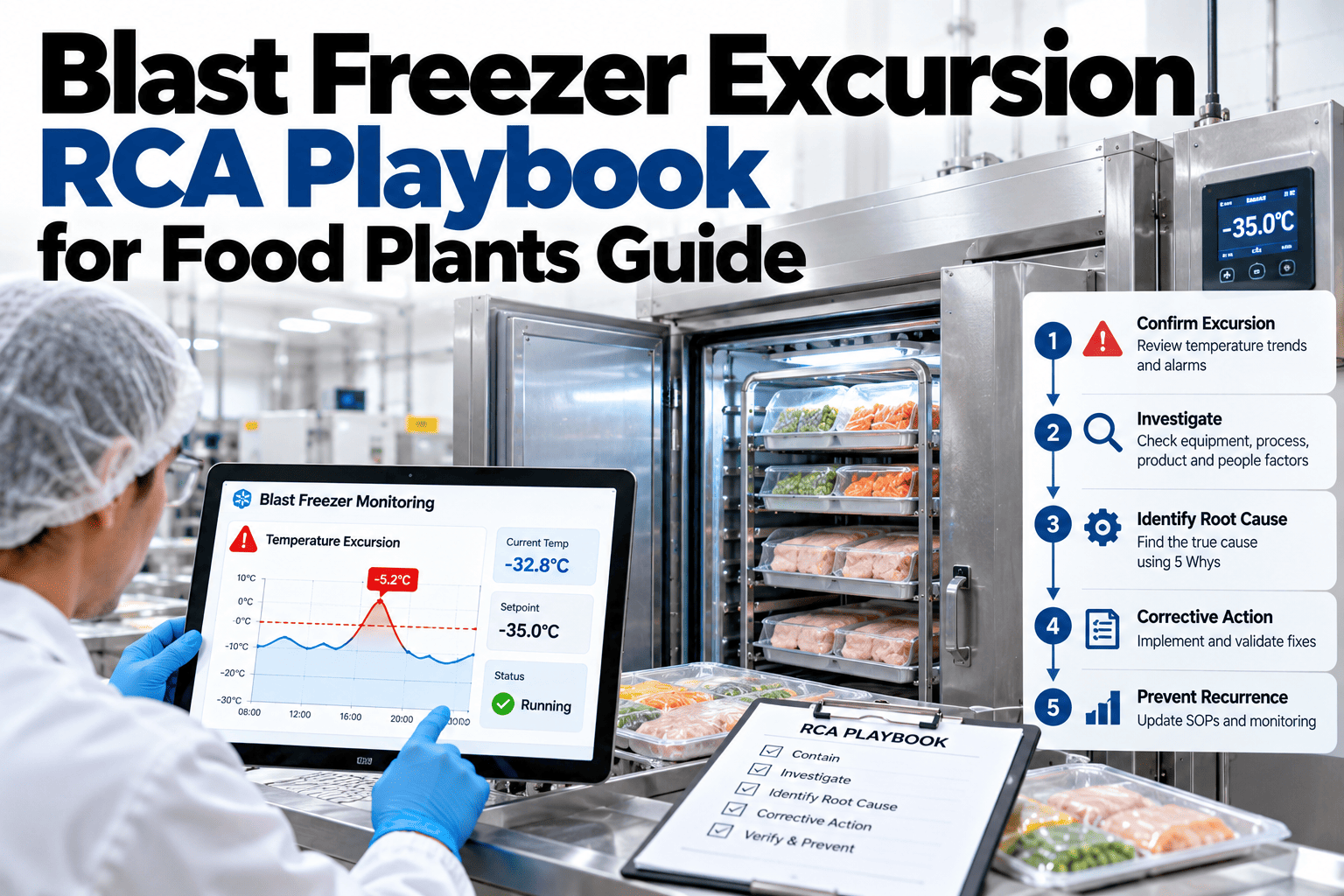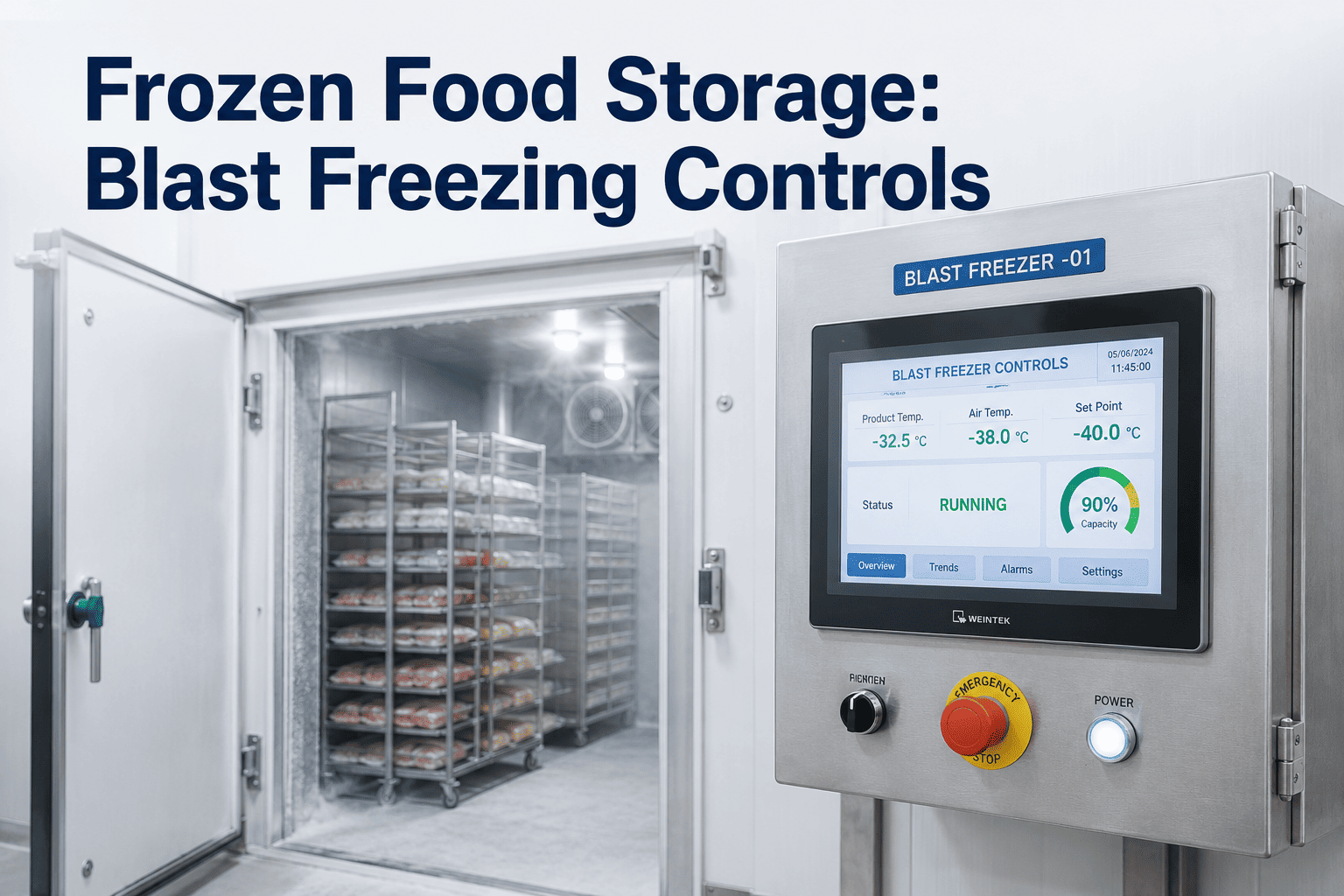
A blast freezer that drifts three degrees warmer than its setpoint for even twenty minutes can turn a batch of individually quick frozen berries into a clumped, ice-crystal-riddled mass that no amount of downstream processing fixes, and the operator on shift often has no way of knowing it happened until quality pulls a sample the next morning. Frozen storage looks stable from the outside because nothing is visibly spoiling, but the physics underneath is unforgiving: every partial thaw and refreeze cycle degrades cell structure and texture a little more, and those small degradations stack invisibly until a customer complaint traces back to a defrost cycle nobody flagged. iFactory's cold storage monitoring platform watches blast freezers and long-term frozen storage continuously, catching the drift before it becomes a quality claim.
Keep every freezer inside its window, every hour of every shift
iFactory monitors blast freezing and -18°C storage continuously, flags defrost anomalies automatically, and connects every reading to the lot it protects.
The three ways frozen product quietly degrades in storage
Frozen food quality management gets treated as simpler than chilled cold chain because there's a wider apparent safety margin, but three degradation mechanisms run constantly in the background regardless of whether temperature ever crosses into a technically unsafe range. Recrystallization happens whenever product temperature fluctuates even slightly, as tiny ice crystals melt and refreeze into larger ones that puncture cell walls and ruin texture on thaw. Freezer burn develops through slow sublimation whenever packaging isn't fully sealed against the freezer's dry air. And blast freezing itself, if it runs too slowly, produces larger initial ice crystals than a properly tuned rapid freeze, baking a quality problem into the product before it ever reaches long-term storage.
Fast, Controlled Blast Freeze
- Core reaches -18°C within the target window
- Small, uniform ice crystals form
- Cell structure stays largely intact
- Texture and yield preserved on thaw
Slow or Drifting Freeze
- Core temperature descent stalls or reverses
- Large, jagged ice crystals form
- Cell walls rupture during crystal growth
- Drip loss and mushy texture on thaw
Where most frozen storage excursions actually happen
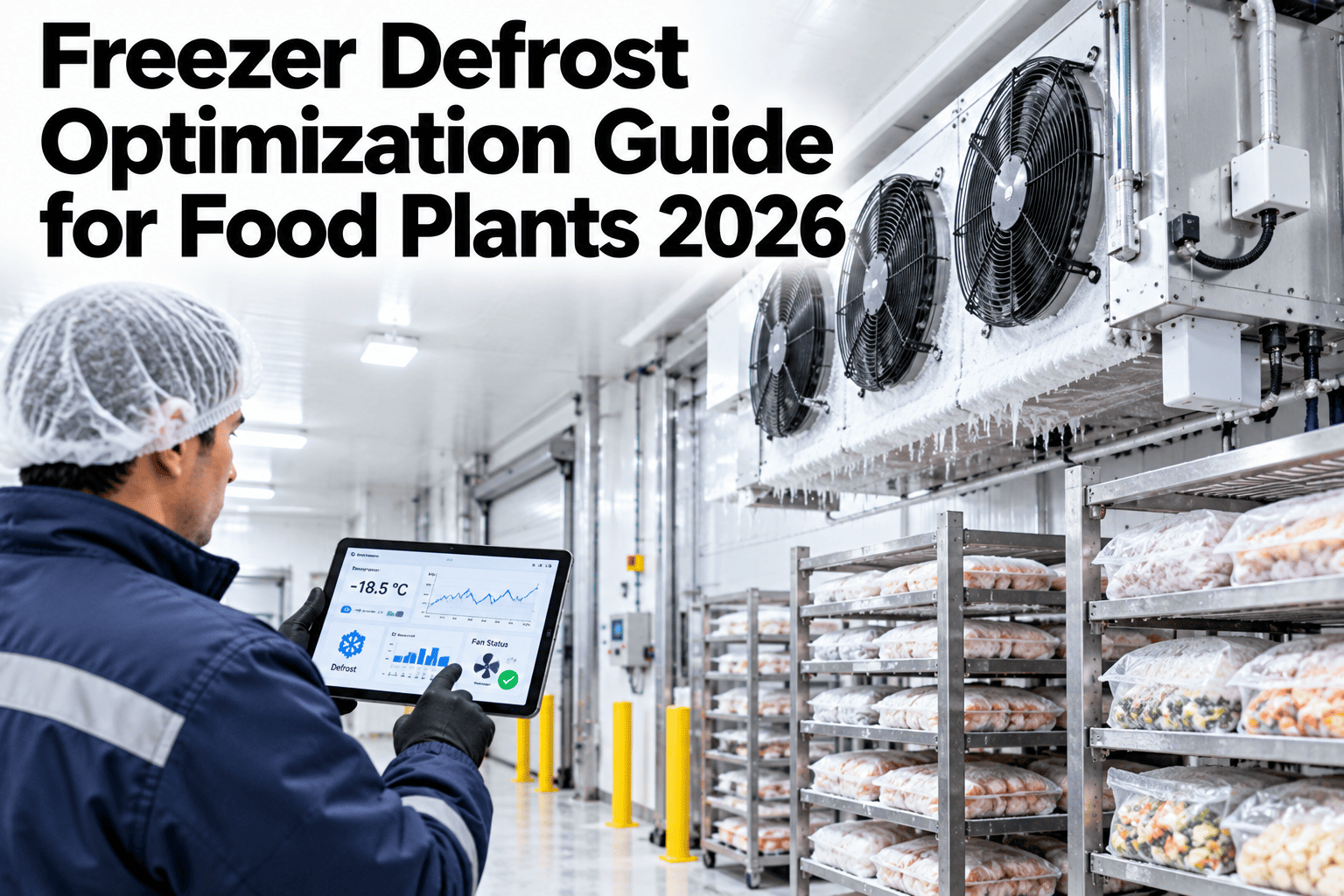
Ask a frozen storage manager where temperature problems come from and most point to the door or the compressor, but a large share of unrecorded excursions happen during routine automatic defrost cycles, when the evaporator coil is deliberately warmed to clear ice buildup and ambient chamber temperature climbs for a period before recovering. A well-tuned system recovers within minutes and never puts stored product at risk, but a defrost cycle that runs long, whether from a failing heater element or a miscalibrated timer, can push chamber air several degrees above target for far longer than anyone monitoring a daily log sheet would ever notice.
Defrost initiates
Evaporator coil heater activates on schedule to clear ice buildup.
Chamber warms
Ambient air temperature rises temporarily as the coil sheds heat into the space.
Cycle should end
Heater deactivates and compressor resumes normal cooling within a defined window.
If it doesn't
A stuck heater or failed timer keeps the chamber warm well past the safe recovery window.
iFactory watches recovery time on every defrost cycle across every freezer, flagging any cycle that runs past its expected duration long before the daily paper log would ever surface the pattern, which is usually only after several cycles have already compounded into a measurable quality shift.
A single defrost heater fault can quietly warm a chamber for hours before anyone notices on a manual round. Book a demo to see how continuous defrost monitoring catches it on the first occurrence.
What plants see after continuous monitoring goes live
Getting continuous coverage on your critical freezers
Sensor placement audit
Identify blind spots in current probe coverage, especially near doors and defrost coils.
Defrost cycle baselining
Establish normal recovery windows for each unit before setting anomaly thresholds.
Lot-to-temperature linkage
Connect every reading to the specific lots stored in that chamber during the reading window.
Alert routing setup
Send excursion and defrost anomaly alerts to the right shift and maintenance contacts automatically.
Frozen storage monitoring questions we hear most
Stop losing frozen product to invisible temperature drift
See exactly where your freezers are losing quality margin, before it shows up as a customer complaint.