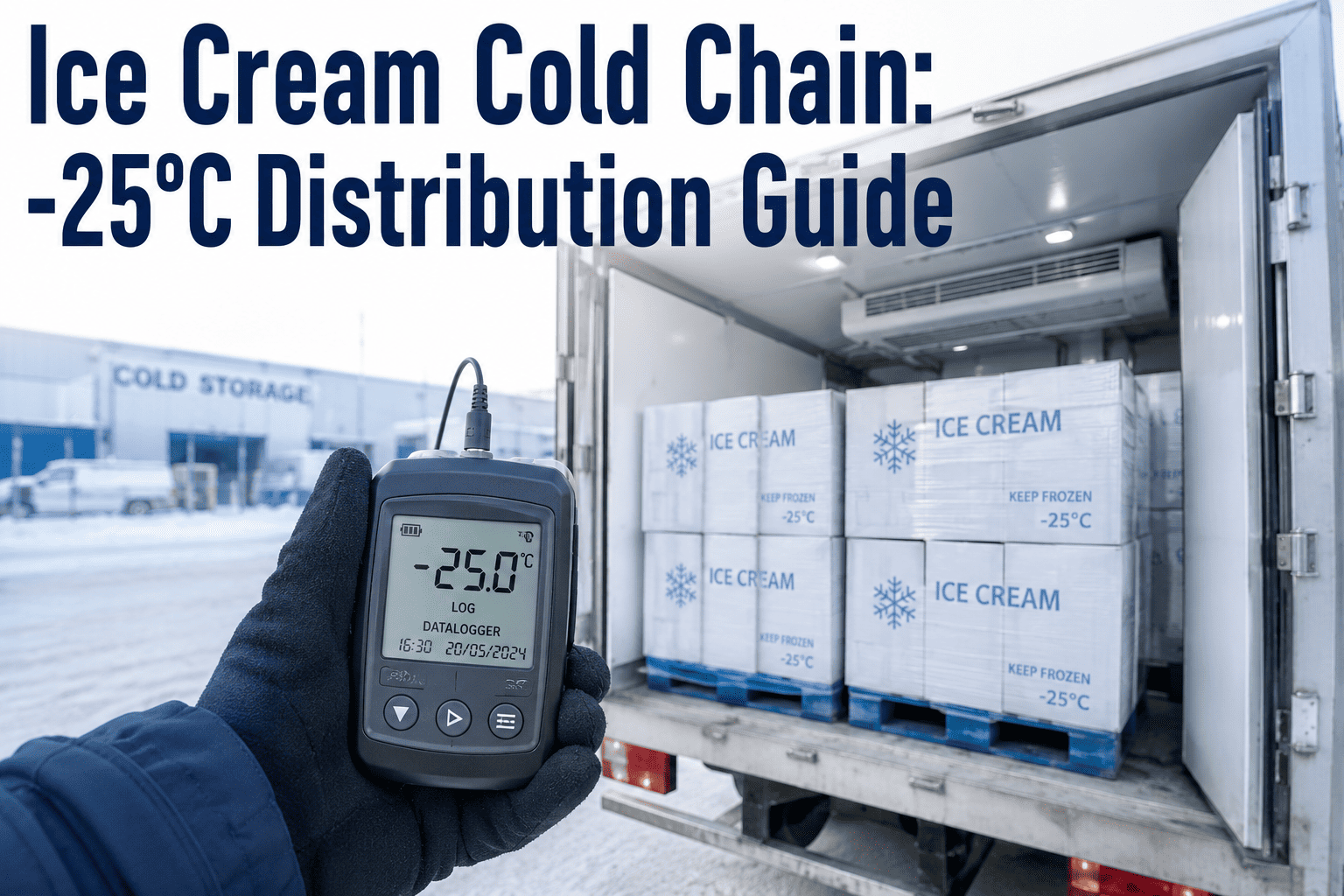
Ice cream and gelato are among the least forgiving products in frozen distribution because the very thing that makes them enjoyable, a smooth and creamy texture, is also the first thing destroyed by temperature instability. A pint that experiences even two or three cycles of partial thawing and refreezing during distribution develops visible ice crystals and a grainy mouthfeel long before it reaches a grocery freezer case. Most frozen dessert brands focus heavily on the -25C target at the manufacturing plant but lose visibility the moment product leaves for distribution, which is exactly where texture-destroying cycling tends to happen without anyone noticing until a customer complaint or a returned case reveals the damage through gaps that better monitoring would catch.
Protect Texture From Plant to Display Freezer
iFactory ultra-cold monitoring tracks -25C distribution continuously, catching temperature cycling before it degrades the product your customers actually taste.
Heat Shock Is About Cycling, Not Just Cold
Most frozen product quality failures are blamed on warm temperatures, but the more precise cause in ice cream and gelato is repeated cycling between two temperature states, a phenomenon known in the industry as heat shock.
The Distribution Points Where Cycling Most Often Occurs
Heat shock rarely happens because of one dramatic failure. It accumulates across a series of small, routine handling moments that individually seem harmless.
What Temperature Instability Does to Frozen Dessert Quality
The relationship between temperature cycling and perceived quality is well documented across the frozen dessert industry, and the numbers make clear why monitoring matters as much for taste as for safety.
Spot Checks Versus Continuous Freezer Monitoring
Many frozen dessert operations still rely on periodic manual temperature checks at each facility, which creates real gaps compared to continuous automated monitoring.
Stop Losing Texture Between the Plant and the Freezer Case
Get continuous visibility into every dock, cross-dock, and display freezer touchpoint that puts your frozen dessert product at risk.
Why the Retail Display Freezer Deserves Its Own Monitoring Plan
Even brands that fully control their own distribution fleet often lose visibility the moment product reaches a retail partner's display case, and this is where a surprising share of quality complaints originate.
Frequently Asked Questions
What is the ideal storage and distribution temperature for premium ice cream and gelato?
Most premium ice cream and gelato manufacturers target -25C for storage and distribution, which sits meaningfully colder than the -18C often cited as a general frozen food standard. The colder target gives more buffer against temperature cycling during handling, since a product starting at -25C can absorb brief warming events during dock transfers or cross-docking without ever crossing into the range where ice crystal formation begins. Gelato in particular benefits from the tighter target because its lower fat and higher water content compared to traditional ice cream makes it more susceptible to texture damage from even modest temperature swings. Book a demo to review temperature targets for your specific product formulations.
How can I tell if heat shock has occurred in a product without visible ice crystals yet?
Early-stage heat shock is genuinely difficult to detect visually before ice crystals become apparent, which is precisely why relying on visual inspection alone is an unreliable quality control method for frozen desserts. Continuous temperature data is the more reliable early indicator, since a logged history showing multiple excursions above the -18C threshold strongly correlates with texture degradation even before it becomes visible or noticeable in a taste test. Some manufacturers also use sensory panels on a sampling basis, but the temperature history remains the fastest and most scalable way to flag at-risk batches before they reach customers. Contact support to learn how excursion history connects to quality flags.
Is it possible to monitor temperature inside a retail partner's freezer case that we don't own?
Yes, many frozen dessert brands place their own compact wireless sensors directly inside retail display cases with the retailer's permission, independent of whatever monitoring system the retailer itself may or may not have in place. These sensors typically use Bluetooth or cellular connectivity to report back to the brand's own dashboard, giving visibility into equipment performance at the shelf level regardless of what the retailer's internal systems show. This approach has become increasingly common as brands recognize that the display case is often the largest blind spot in their entire cold chain, sitting outside their direct operational control but still directly affecting the customer's final experience of the product. Book a demo to see retail display monitoring options.
How much temperature cycling can gelato tolerate compared to standard ice cream?
Gelato generally has less tolerance for temperature cycling than standard ice cream because of its lower overrun, meaning less air is churned into the product during freezing, which results in a denser structure that is more sensitive to ice crystal growth when temperature fluctuates. Where standard ice cream might tolerate three to five cycling events before quality becomes noticeably compromised, gelato often shows detectable texture change after fewer cycles, making continuous monitoring even more valuable for gelato-focused brands than for conventional ice cream lines. This is one of the reasons gelato producers frequently set tighter internal alert thresholds than the broader frozen dessert industry standard. Contact support to configure gelato-specific alert thresholds.
What should happen operationally when a temperature cycling event is detected in transit?
When a monitoring system flags a cycling event, the first step is typically confirming the severity and duration of the excursion against pre-established thresholds to determine whether the affected batch requires further quality review or can continue in distribution as normal. For moderate excursions within tolerance, many brands simply log the event and continue, while more severe or repeated excursions on the same batch may trigger a hold for visual and sensory inspection before the product is released to retail. Building this response protocol in advance, rather than deciding case by case after an alert fires, is what allows teams to act quickly and consistently rather than debating the right response during a live event. Book a demo to design an excursion response workflow for your team.
Keep Every Pint as Good as the Day It Left the Plant
iFactory gives frozen dessert brands continuous cycling detection from production through the retail display case, protecting the texture customers actually taste.