Somewhere between 25 and 30 percent of quality-relevant measurements in food and beverage production trace back to a single number: pH. Add conductivity and dissolved oxygen to the mix, and you have the three inline parameters that quietly govern fermentation timing, CIP verification, and shelf-stable product safety across dairy, brewing, and beverage lines. Get any one of them wrong and the consequences range from an inconsistent batch to a genuine food safety failure. This guide covers what each parameter tracks, where sensors belong in the process, and how iFactory Support can help fit them into your existing line.
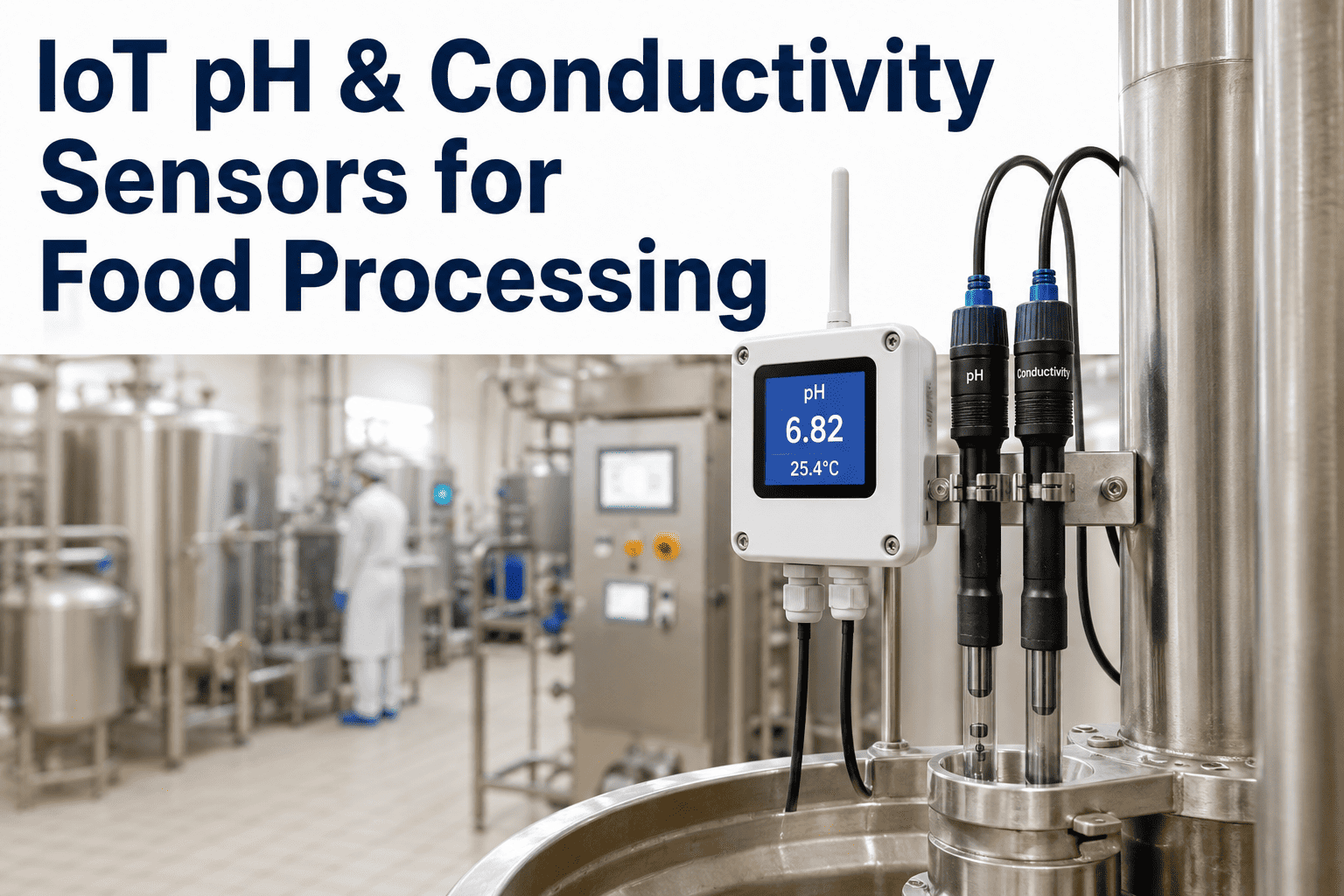
IoT pH, Conductivity & Dissolved Oxygen Sensors for Food Processing
Inline monitoring for dairy, beverage, and fermentation processes — with automated CIP verification built around continuous, not periodic, readings.
Three Parameters, Three Different Jobs
Acidity & Fermentation Control
Tracks the correct pH level for safety in acidified foods, monitors fermentation rate, and signals when fermentation is complete in dairy, brewing, and sauce production.
CIP Cycle Verification
Distinguishes rinse water from cleaning solution, confirming the correct chemical concentration is present before a CIP cycle is marked complete.
Aeration & Oxidation Control
Ensures proper aeration during beverage fermentation, and confirms oxygen levels stay low enough to prevent oxidation in beer, wine, and other oxygen-sensitive products.
Where Each Parameter Applies by Process
| Process | Primary Parameter | What It Confirms |
|---|---|---|
| Dairy fermentation | pH + temperature | Consistent yogurt or cheese culture development |
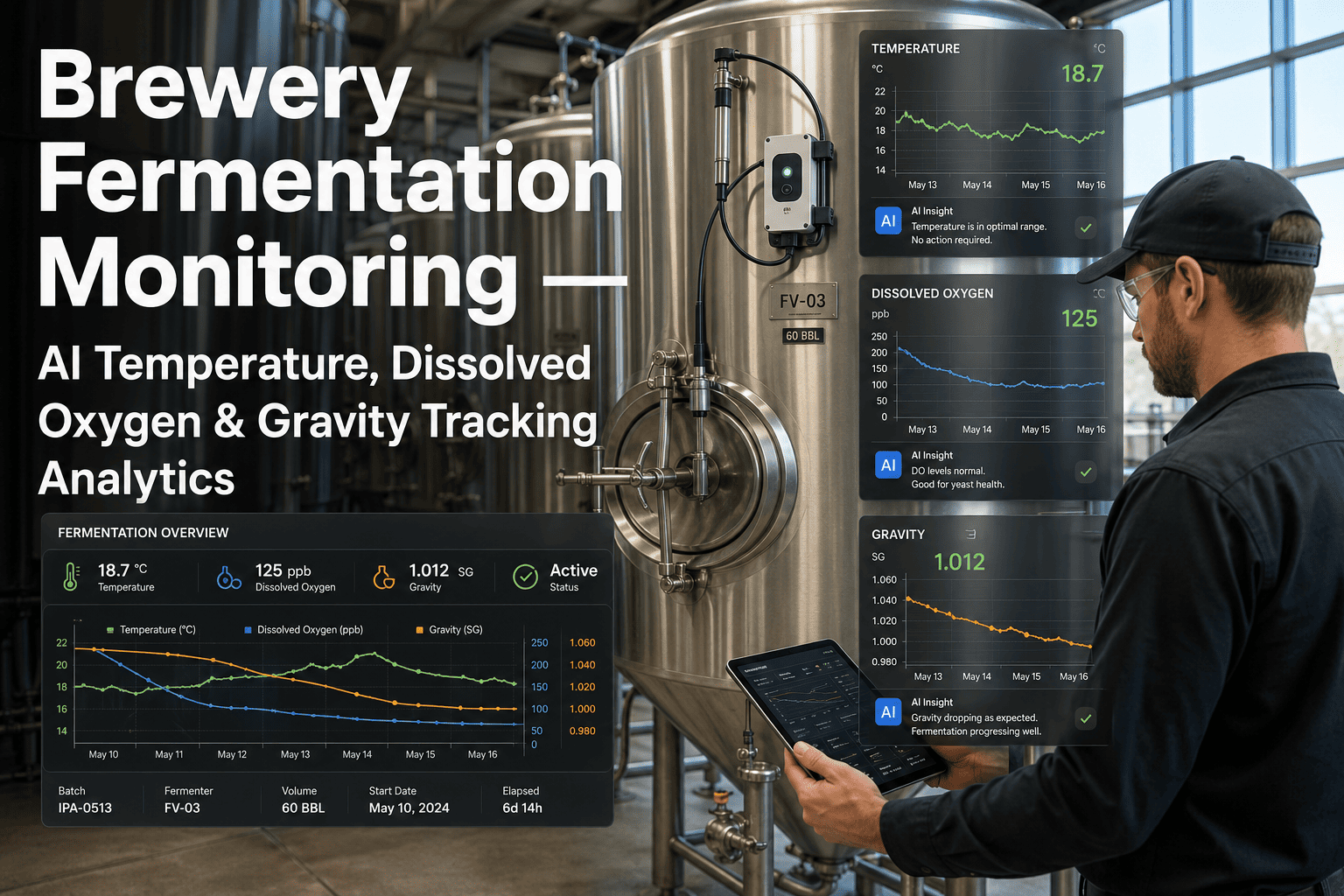
| Brewing | pH + dissolved oxygen | Fermentation progress and packaging-ready oxygen levels |
| Juice & soda production | Conductivity | Phase interfaces and CIP solution concentration |
| CIP systems, any line | Conductivity + pH | Cleaning solution strength before cycle sign-off |
Why Inline Beats Periodic Sampling
Traditional quality control pulled samples to a lab on a schedule — hourly, per batch, or per shift. Inline sensors mounted directly in the process flow instead deliver a continuous reading, which matters because fermentation, CIP effectiveness, and oxygen exposure all change faster than a sampling schedule can track. A batch that drifts out of range between two scheduled samples can already be lost by the time a lab result comes back, while inline monitoring flags the same drift in real time, before the batch is compromised.
See where inline analytics would pay off fastest on your line
iFactory reviews your current sampling schedule and process flow, then shows where continuous pH, conductivity, or dissolved oxygen monitoring would catch issues your current QC schedule misses.
Common Deployment Challenges
Frequently Asked Questions
Why does pH matter beyond taste and consistency?
While pH is often associated with flavor and texture, its primary role in many acidified food products is food safety — the correct pH level is what keeps certain pathogens from growing in the finished product. Roughly a third of quality-relevant measurements across food and beverage production relate back to pH in some form, which is why it is one of the first parameters most plants choose to monitor inline rather than by periodic sampling alone.
How does conductivity monitoring improve CIP verification?
Conductivity sensors can distinguish between plain rinse water and an active cleaning solution based on how well each conducts an electrical current, which lets the system confirm the correct chemical concentration was actually present during the cycle rather than assuming it based on time and temperature alone. This closes a common gap where a CIP cycle completes on schedule but without full confidence the solution reached the required strength throughout.
Why is dissolved oxygen control important in beverage production?
Dissolved oxygen sensors serve two opposite jobs depending on the stage of production: ensuring adequate aeration during active fermentation, where oxygen supports yeast activity, and then confirming oxygen levels are low enough before packaging to prevent oxidation that shortens shelf life and changes flavor in beer, wine, and similar products. Getting the timing wrong in either direction affects the finished product noticeably.
Can these sensors integrate with our existing temperature monitoring?
Yes, and doing so is generally recommended rather than optional. Multi-parameter sensor housings that combine pH, conductivity, dissolved oxygen, and temperature in one fitting are increasingly common, and feeding all of that data into a single monitoring platform lets you correlate a chemistry deviation against a temperature or flow event happening at the same time. iFactory Support can confirm compatibility with your current setup.
How often do inline probes need recalibration?
This varies by probe type and how aggressive your CIP chemistry is, since extreme pH conditions encountered during clean-in-place operations are a common cause of accelerated probe drift and protein adhesion on non-glass probes. Many plants build recalibration checks into their regular CIP schedule rather than treating it as a separate maintenance task, which keeps drift from silently affecting production data. Book a demo to review a calibration schedule suited to your process.
Bring pH, conductivity, and DO into one monitoring platform
iFactory connects inline process analytics alongside your temperature and vibration data, so quality deviations get caught and traced in real time, not after the batch is gone.