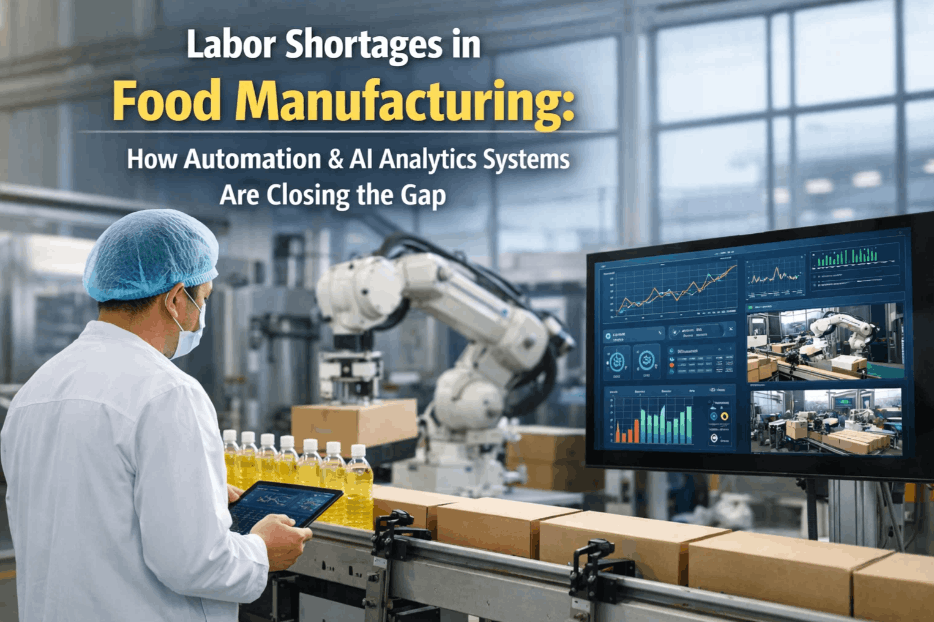
Food plants meticulously track machine uptime and speed, yet the most disruptive bottlenecks are often missing people, not broken equipment. When a forklift driver is absent, a manual packer falls behind, or a QA sampler delays a release, machines starve or block while the true constraint goes unmeasured. Detecting labor bottlenecks requires mapping manual task completion times directly against machine cycle speeds, and you can configure your labor constraint alerts with our team to find these hidden gaps.
2026 Labor Constraint Guide
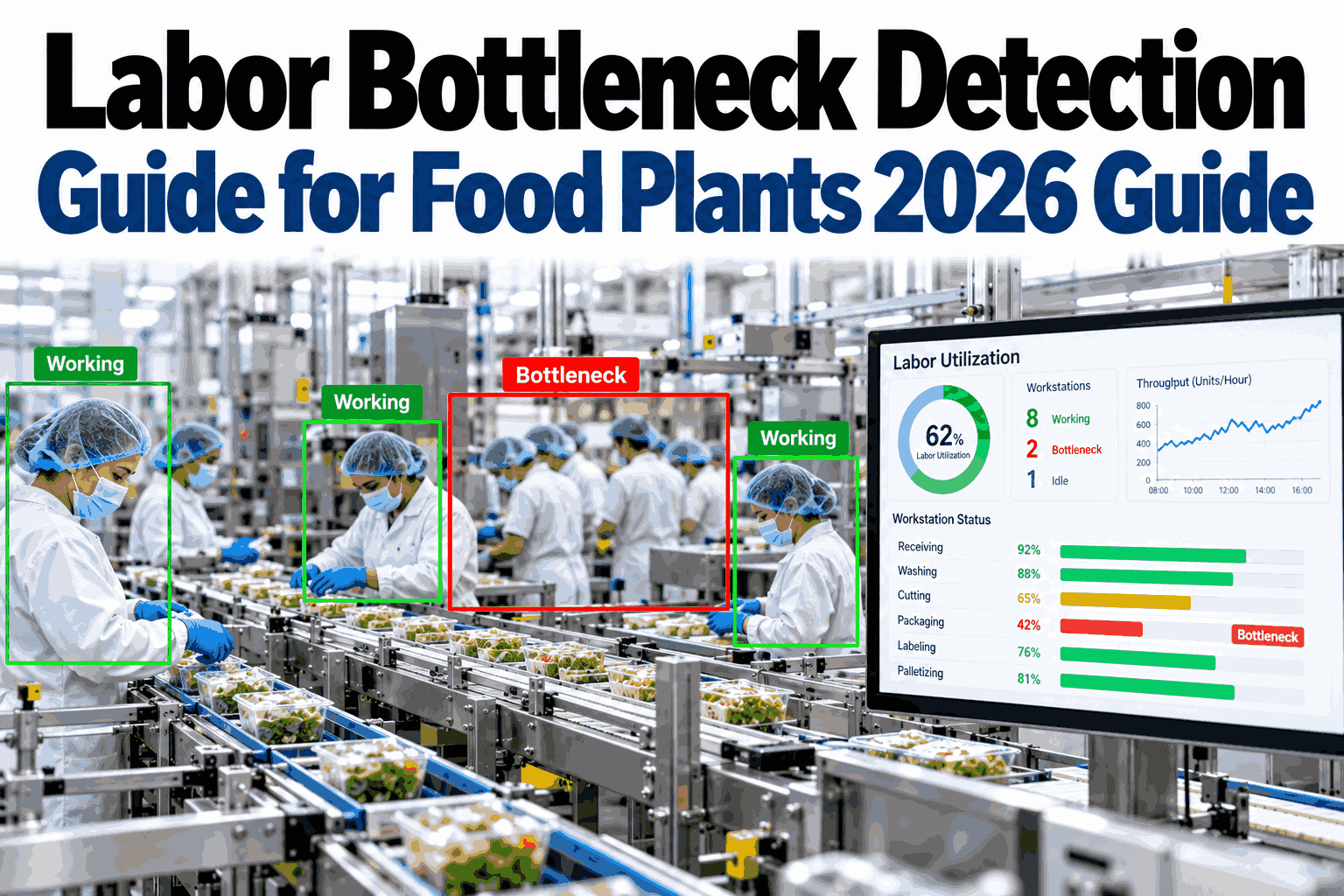
Labor Bottleneck Detection Guide for Food Plants
How to identify and resolve hidden labor constraints that starve machines, block packaging lines, and drag down overall plant throughput despite perfect equipment OEE.
38%Lines Constrained by Labor
12minAvg Delay Before Detection
4xROI of Early Alerting
The OEE blind spot
Why Machine Metrics Miss Labor Constraints
Standard OEE calculations blame the machine for starving or blocking, but the root cause is often a missing person upstream or downstream. Without labor context, plants fix the wrong problem.
01
Forklift Starvation
A packaging line shows zero downtime, but runs at half speed because pallets are not being removed fast enough. The machine is healthy, but the logistics labor is constrained.
02
Manual Packing Limits
An automated line feeds a manual packing station. If packers cannot keep up with the outfeed cycle, the accumulator fills and forces the upstream machine to halt unnecessarily.
03
QA Sampling Delays
If a quality technician is not available to release a batch at a hold point, finished product sits queued. The line appears blocked, but the constraint is a staffing gap in the lab.
Cycle time gap
Visualizing the Machine vs Labor Speed Gap
Labor bottlenecks emerge whenever the manual task cycle time exceeds the automated machine cycle time. Detecting this gap in real-time allows plants to rebalance labor before the line stops.
Machine Outfeed Cycle
2.0 seconds
Manual Packing Cycle
3.5 seconds
Forklift Move Cycle
5.0 seconds
When manual task cycles drift longer than machine cycles, the buffer between them fills. If the constraint is not resolved before the buffer capacity is reached, the machine must stop. Map your manual vs automated cycle times with iFactory AI.
Stop Letting Labor Constraints Hide Behind Machine Downtime
Deploy labor bottleneck detection on your most people-dependent lines and give supervisors the visibility to shift resources before throughput drops.
Bottleneck types
The Three Critical Labor Bottleneck Profiles
Food plants typically experience labor constraints across three distinct operational zones, each requiring different detection logic and resolution strategies.
Logistics and Material Handling
Forklift drivers and pallet jack operators must move raw materials to the line and finished goods to the warehouse. If travel distances increase or drivers are pulled for other duties, lines starve for packaging or block on outfeed. Detection requires tracking time-between-pallet-removals at the line end.
Manual Finishing and Packing
Hand-packing, labeling, or case erecting stations run at the speed of the operator. Fatigue, rotation breaks, or inexperienced temps slow the manual cycle. Detection requires comparing the manual station throughput against the upstream machine speed over rolling five-minute windows.
Quality and Compliance Holds
Product sitting at a CCP hold point waiting for a QA sampler or sign-off is a labor constraint. Detection requires monitoring queue depth at hold points and alerting if the wait time exceeds the standard sampling interval by more than twenty percent.
2026 visibility matrix
Labor Constraint Detection Matrix by Role
Mapping specific labor roles to their impact on line throughput allows the system to generate actionable alerts instead of generic downtime flags.
| Labor Role |
Primary Task |
Bottleneck Indicator |
System Alert Action |
| Forklift Driver |
Pallet removal at line end |
Time since last pallet pull exceeds 2x standard |
Route nearby driver or throttle line speed |
| Manual Packer |
Placing product into cases |
Accumulator before station rises above 60% |
Assign floater to station or pause upstream |
| QA Technician |
Hourly line sampling |
Hold queue depth exceeds 3 batches |
Escalate to QA supervisor for immediate release |
| Sanitation Crew |
End-of-shift CIP setup |
CIP start delayed past scheduled window |
Alert maintenance to prep manual override |
Generic downtime codes do not capture these nuances. By tying the delay directly to the labor role, supervisors know exactly who to dispatch to resolve the constraint. Ask support about role-based alerting for your plant.
Detection logic
How Smart Systems Catch Labor Constraints Early
Detecting a labor bottleneck requires software logic that understands the relationship between machine speed, buffer capacity, and manual task completion rates.
1
Ingest the real-time throughput of the automated machine feeding the manual station to establish the required demand rate for perfect labor balance.
2
Track the actual completion rate at the manual station using photo-eyes, scale feedback, or scanner reads at the palletizer to measure labor supply speed.
3
Calculate the differential between demand and supply. If manual speed lags machine speed by more than fifteen percent, trigger a warning constraint alert.
4
Project the time-to-block based on the accumulator size between the machine and the manual station, giving supervisors a countdown to act before the line stops.
The iFactory advantage
How iFactory AI Exposes Labor Bottlenecks
iFactory AI bridges the gap between machine telemetry and labor execution, providing supervisors with real-time visibility into the manual tasks dragging down line performance.
Task Tracking
Cycle Based
Measures the actual time between manual task completions to calculate true labor speed against machine demand.
Constraint Alert
Under 2 min
Fires alerts the moment a manual station falls behind, long before the accumulator fills and forces a machine stop.
Role Routing
Targeted
Sends alerts directly to the area supervisor with the specific labor role causing the gap, eliminating guesswork.
Auto-Throttle
Line Speed
Optionally reduces upstream machine speed to match the manual labor rate, gracefully lowering throughput instead of hard stopping.
Frequently asked questions
Labor Bottleneck Detection Questions
Do operators need to badge into stations for this to work?
While badge-in data helps confirm who is assigned where, iFactory AI primarily relies on the physical throughput of the station measured by sensors. If a station stops producing, the system flags the constraint regardless of badge status.
Ask support about sensor-driven tracking for your lines.
How does the system tell the difference between a break and a bottleneck?
The system correlates the manual station stoppage with the scheduled break calendar. If a stoppage occurs outside of scheduled breaks and the accumulator is filling, it flags a labor bottleneck rather than a planned pause.
Review break-logic filtering in a live demo.
Can we track temporary worker speed variations?
Yes, by analyzing completion rates per shift and per station, the software identifies periods where manual task cycles are significantly longer than baseline, often correlating with temp onboarding or shift rotations, prompting targeted intervention.
Discuss shift performance analytics with our team.
What hardware is needed to track manual packing speeds?
Most lines already have the necessary hardware. iFactory AI uses existing downstream scanner reads, scale trips, or even photo-eye breaks at the case sealer to calculate the packing station output rate without new sensors.
Check hardware requirements for your specific setup.
Will this system automatically call a forklift driver to the line?
The system can push priority dispatch alerts to forklift-mounted tablets or driver radios, but it does not autonomously redirect vehicles. It ensures the right driver knows the exact line needing immediate pallet removal.
Explore logistics alert routing with our specialists.
Expose the true constraint
Detect Labor Bottlenecks Before They Stop Your Lines
Book a session with iFactory AI to map your manual stations, define constraint thresholds, and give supervisors the real-time labor visibility they need to maintain throughput.