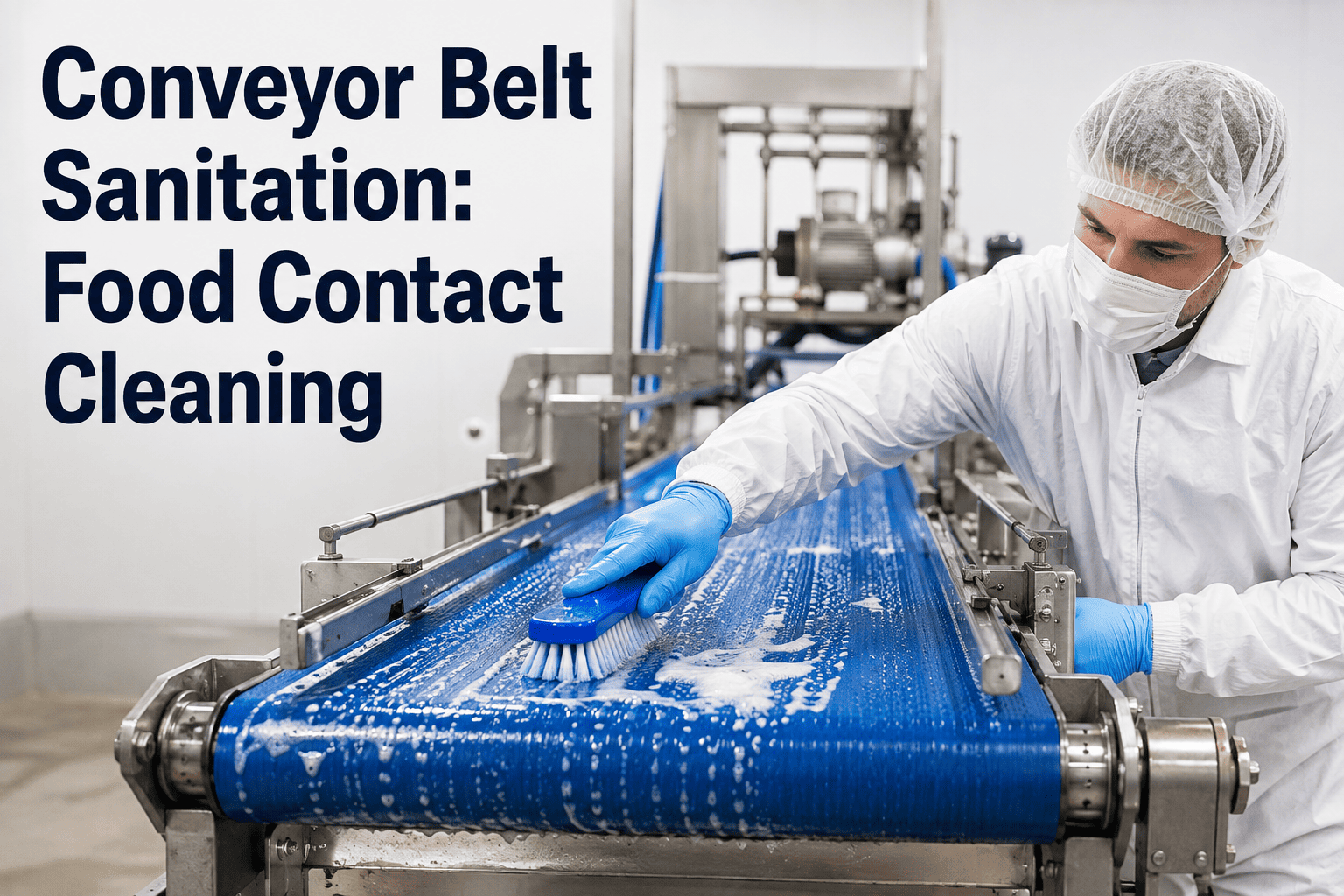
A predictive maintenance program can flag every failing bearing in the plant and still cost a food manufacturer a full shift of production if the handoff back to the line is not managed correctly. The moment a technician closes a work order on food-contact equipment, someone still has to verify sanitation, confirm the allergen changeover state, and clear the line for restart, and every minute spent figuring out who owns that step is a minute the line sits idle. Most maintenance teams have a tight process for diagnosing and repairing equipment but a loose, verbal process for handing that equipment back to production, which is exactly where documented gates start paying for themselves. Plants that have mapped this handoff into a formal, gated workflow rather than a hallway conversation between the shift lead and the maintenance supervisor can walk through how it works with iFactory in a short working session. The plants that get this right treat the handoff as a process worth designing on purpose, not an afterthought that happens automatically once the wrench work is done.
Every Restart Needs a Gate, Not a Guess.
iFactory turns the handoff from maintenance back to production into a documented sequence of verification gates — sanitation, allergen state, and QA sign-off — instead of a verbal all-clear.
Why the Handoff Is Where Food Plants Lose the Most Restart Time
The repair itself is often the fastest part of a maintenance event on a food line. What eats the clock afterward is the sequence of confirmations that have to happen before product can flow again: sanitation has to re-verify any surface the technician touched, QA has to confirm the allergen changeover status has not been compromised, and the shift lead has to confirm the line is mechanically ready before pressing start. When these steps live in someone's head or on a whiteboard, they get skipped under time pressure, done out of order, or duplicated because nobody is sure what already happened. A documented handoff workflow does not make the individual steps faster — it makes sure none of them get skipped, and it removes the time lost to two departments independently re-checking the same thing because neither trusted that the other had done it.
Five Gates Between Work Order Closure and Line Restart
A gated handoff workflow breaks the path from "repair complete" to "line running" into discrete checkpoints, each with a clear owner and a clear pass or fail condition. No gate can be skipped, and each one is timestamped so the full sequence can be reconstructed later if a quality question comes up. The structure below reflects the sequence most food and beverage plants converge on once they move away from verbal handoffs.
Work Order Closure
Technician documents the repair performed, parts used, and confirms all tools and loose parts have been removed from the equipment before it is released back toward sanitation or production.
Sanitation Re-Verification
Any surface the technician accessed gets re-cleaned and re-verified against the facility's sanitation standard, with the verification result logged against the specific work order that triggered it.
Allergen State Confirmation
QA confirms the repair did not disturb the current allergen changeover status, or if it did, that the appropriate allergen clean has been completed and verified before the gate is cleared.
Mechanical Readiness Check
Shift lead or line lead performs a short functional check — guards in place, e-stops tested, sensors reading correctly — before the line is cleared to run at full production speed.
Production Restart Sign-Off
Final sign-off releases the line to production, with the complete gate sequence attached to the work order record for traceability against the lots produced immediately afterward.
Who Owns Each Gate When Three Departments Touch One Restart
Handoff delays usually trace back to unclear ownership rather than unclear process — everyone agrees sanitation needs to re-verify a surface, but nobody has written down which specific role is accountable for triggering that re-verification and confirming it happened. A simple responsibility matrix, attached to the same workflow that tracks the gates themselves, removes that ambiguity.
| Gate | Responsible | Accountable | Consulted |
|---|---|---|---|
| Work Order Closure | Maintenance Technician | Maintenance Supervisor | — |
| Sanitation Re-Verification | Sanitation Lead | QA Shift Supervisor | Maintenance Technician |
| Allergen State Confirmation | QA Technician | QA Shift Supervisor | Production Lead |
| Mechanical Readiness Check | Line Lead | Production Supervisor | Maintenance Technician |
| Production Restart Sign-Off | Production Supervisor | Plant Manager or Delegate | QA Shift Supervisor |
Restart Faster Without Cutting a Single Verification Step.
iFactory links work orders, sanitation logs, and QA sign-off into one gated handoff record, so restart time drops without any gate getting skipped.
Where a Verbal Handoff Process Breaks Down First
The gate structure above only works if it is enforced consistently, and the plants that struggle most with handoffs tend to share the same handful of failure points regardless of what they manufacture. Recognizing these patterns is usually the fastest way to decide which gate needs the most attention when a formal workflow is first introduced.
Shift Change Mid-Handoff
A repair finishes right before shift change, and the incoming shift has no record of which gates were already cleared, so they either re-verify everything unnecessarily or, worse, assume steps were completed that were not.
Sanitation and QA Working From Different Records
Sanitation logs the re-clean in one system while QA tracks allergen status in another, and nobody notices the two records disagree until an audit or investigation forces someone to compare them line by line.
Production Pressure Skips the Mechanical Check
Under pressure to hit a production target, the line lead skips the functional check and restarts the line directly after the repair, only to have the equipment fail again within the hour because the guard was never reseated properly.
No Record Tying the Restart to Affected Lots
When a quality question comes up weeks later, nobody can quickly confirm which production lots ran immediately after a specific maintenance event, turning a five-minute lookup into a multi-day investigation.
Four Steps to Formalize the Handoff at Your Plant
Moving from a verbal handoff to a documented gate system does not require a large project. Most plants can stand up the core workflow in a matter of weeks by starting with the highest-friction line and expanding from there once the gate structure proves out.
Map the Current Handoff
Shadow a handful of real restarts and write down exactly who talks to whom, in what order, and where delays actually happen — not the process as it is supposed to work on paper.
Assign Explicit Ownership
Turn the informal handoff into the five-gate structure with a named responsible and accountable role for each gate, so there is never a question of whose job it is to trigger the next step.
Digitize the Sign-Off Chain
Move the gate sign-offs into a shared digital record instead of separate paper logs, so sanitation, QA, and production are all reading from the same real-time status for every open work order.
Tie Restarts to Lot Data
Link the completed gate record to the production lots that ran immediately after restart, so any future quality investigation can pull the full maintenance-to-restart history in seconds.
How a Handoff Gap Multiplies Across a Multi-Line Plant
A single ungated handoff on one line looks like a minor coordination hiccup in isolation, but the cost compounds quickly once a plant is running multiple lines through the same shared maintenance and sanitation teams. Every technician pulled into an ambiguous handoff conversation on Line 2 is a technician not available to close out a work order on Line 5, so the delay does not stay contained to the line where it started. Sanitation crews working from verbal confirmations rather than a shared digital status often end up re-verifying surfaces that were already cleared, burning labor hours that should have gone toward the next scheduled CIP cycle. QA teams juggling allergen confirmations across several simultaneous restarts have no reliable way to prioritize which line needs attention first without a shared queue showing gate status in real time. None of these individual delays look dramatic on their own, but added together across a full shift, a plant running five or six lines can lose the equivalent of an entire line's worth of production time purely to handoff friction rather than to the underlying mechanical issues that triggered the maintenance events in the first place. This is the pattern that tends to convince plant leadership that the handoff process deserves the same rigor as the repair process itself, not less.
Tracking Whether the Gated Workflow Is Actually Working
Once a gated handoff process is in place, plants need a small set of metrics to confirm it is delivering real time savings rather than simply adding paperwork on top of the existing delays. The most useful measure is total handoff time — the elapsed time from work order closure at Gate 1 to production restart sign-off at Gate 5 — tracked as its own metric separate from repair time. A second useful measure is gate failure rate by gate, which shows which checkpoint is catching the most issues and therefore where training or process investment will have the biggest impact. A third is the percentage of handoffs completed without any gate being skipped or performed out of order, which is a direct measure of process discipline rather than speed. Plants that start tracking these three numbers typically find that handoff time drops noticeably within the first month simply because visibility into the bottleneck creates pressure to fix it, even before any process redesign happens. Over a longer horizon, the gate failure data becomes one of the most useful inputs into where to focus continuous improvement effort, because it points directly at the specific step in the restart sequence that is most often the source of delay or rework, rather than leaving that judgment to instinct or the loudest complaint in the last shift meeting.
A Rollout Checklist for Your First Gated Line
Plants introducing this workflow for the first time get the most reliable results by proving it out on one line before expanding plant-wide. The checklist below reflects the order most teams follow when standing up their first gated handoff, and each item is small enough to complete within a normal week of plant operations rather than requiring a dedicated project team or extended downtime.
Pick the line with the most frequent maintenance events and the most restart friction, since that line will show the clearest before-and-after improvement.
Name the responsible and accountable role for each of the five gates, and confirm every named person understands what "cleared" actually means for their gate.
Set up a shared digital status view so maintenance, sanitation, QA, and production are all reading the same real-time gate state instead of separate logs.
Run the gated process for two full weeks on the pilot line, tracking total handoff time and gate failure rate before making any process adjustments.
Review the two weeks of data with all four departments together, adjust ownership or gate criteria where friction showed up, and lock the revised version in.
Expand the proven gate structure to the next line using the same templates, roles, and digital tracking rather than redesigning the process from scratch each time.
Maintenance-to-Production Handoffs — Common Questions
How is a gated handoff workflow different from a standard work order closure process?
A standard work order closure typically ends when the technician documents the repair and marks the ticket complete, which is where most CMMS workflows stop. A gated handoff workflow treats that closure as only the first of several checkpoints that still have to happen before the line is actually cleared to run, explicitly tracking sanitation re-verification, allergen state confirmation, and mechanical readiness as separate, owned steps rather than assuming they happen automatically once the ticket is closed. The distinction matters most during an investigation, when being able to show the exact sequence and timestamp of every gate — not just that the repair was completed — is what demonstrates the line was genuinely safe to restart. Plants building this out can book a session with iFactory to see how the gate sequence attaches to the existing work order record.
Does adding verification gates slow down the restart compared to a verbal handoff?
In practice it usually speeds restarts up rather than slowing them down, because the delay in a verbal handoff is rarely the verification work itself — it is the time lost figuring out whether a step has already happened, chasing down the right person to confirm it, or redoing a check that was actually already completed by someone else. A digitized gate sequence shows every department the current status in real time, so sanitation is not waiting to hear from maintenance and QA is not waiting to hear from sanitation before starting their own step. The net effect for most plants is a shorter total restart time even though the number of documented checkpoints has gone up, because coordination friction drops more than the verification time itself increases.
What happens if a gate fails during the handoff sequence?
A failed gate stops the sequence at that point and routes back to the responsible role rather than allowing the workflow to continue forward with an open exception. If sanitation re-verification fails, for example, the line does not proceed to the allergen confirmation gate until the surface has been re-cleaned and passes verification again. This fail-closed structure is the core value of a gated system over a verbal one — a verbal handoff has no natural mechanism to stop the sequence when something is not actually ready, while a documented gate makes it structurally impossible to skip ahead. The failure and the resolution both get logged, which also gives the plant a running record of which gate fails most often and where process or training investment would have the biggest impact.
Can smaller plants with fewer staff realistically run a five-gate process?
Yes, though in smaller plants the same person often holds accountability for more than one gate rather than each gate requiring a dedicated role. A plant with a combined QA and sanitation function, for instance, might have one supervisor accountable for both the sanitation re-verification and allergen confirmation gates, while still keeping the two checks distinct and separately logged. What matters is that each gate is still explicitly checked and recorded, not that five different people are involved. The iFactory Support team frequently helps smaller plants configure a leaner version of the gate sequence that fits a combined-role staffing model without dropping any of the underlying verification steps.
How does this workflow help during a regulatory audit or customer complaint investigation?
A gated, timestamped handoff record gives an auditor or investigator a complete, chronological answer to the question of what happened between a repair and the next production run without requiring anyone to reconstruct events from memory or cross-reference multiple paper logs. Because the gate record is tied to the specific work order and, in a mature setup, to the lots produced immediately after restart, a question about a specific batch can be traced back to whether any maintenance event occurred nearby and exactly what verification took place before the line ran again. This turns what is often a multi-day investigation involving several departments into a lookup that takes minutes, which matters both for regulatory response time and for maintaining trust with customers when a complaint needs to be resolved quickly.
Turn Your Restart Process Into a Traceable, Gated Workflow.
Talk to iFactory about connecting work orders, sanitation verification, and QA sign-off into one handoff record your whole plant can trust.