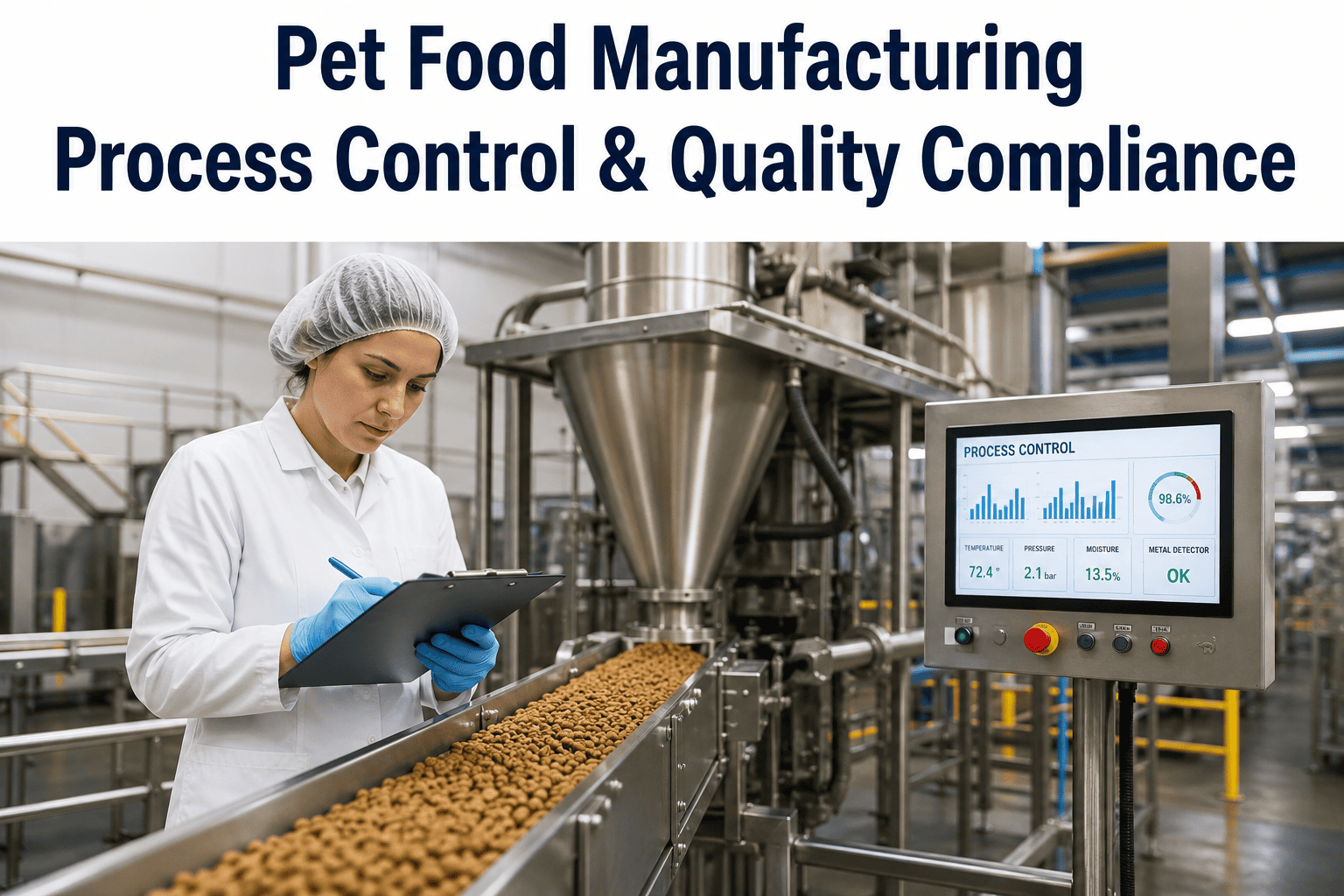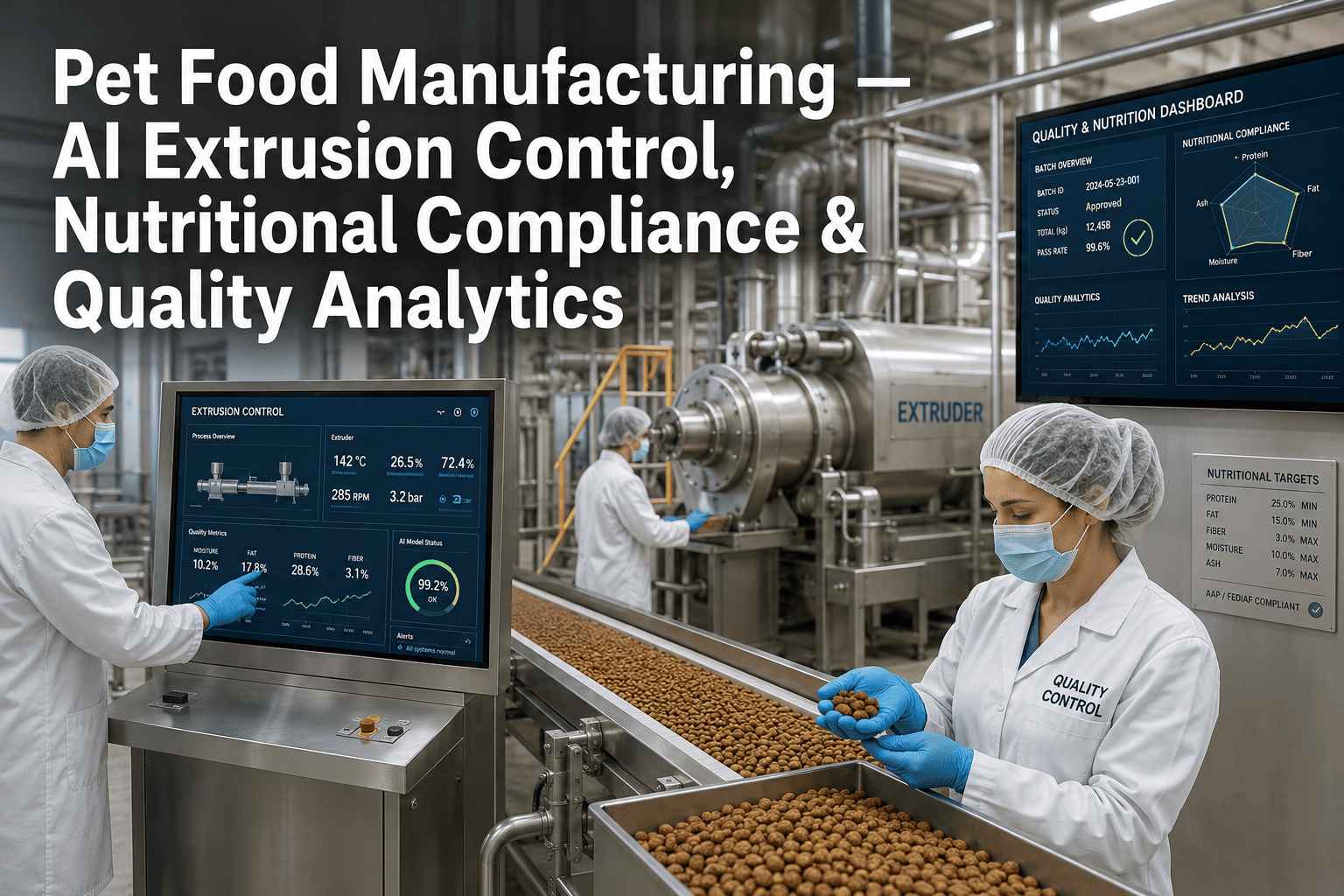
The pet food manufacturing industry is undergoing a profound transformation, driven by the integration of artificial intelligence and advanced analytics into every stage of production. For plant managers and operations directors, the challenge is no longer just about meeting demand but ensuring absolute precision in extrusion control, nutritional consistency, and regulatory compliance with AAFCO standards. Traditional methods relying on manual sampling and reactive adjustments are rapidly becoming obsolete as AI-powered systems deliver real-time parameter optimization, predictive quality assurance, and automated documentation. This comprehensive guide explores how AI-driven extrusion control, nutritional analysis verification, kibble density monitoring, palatability prediction, and compliance documentation are reshaping pet food manufacturing. By leveraging machine learning algorithms trained on historical production data, facilities can achieve unprecedented levels of efficiency, reduce waste, and guarantee that every batch meets exacting nutritional profiles. Book a Demo to see how iFactoryApp can transform your production line.
Transform Your Pet Food Production with AI
Achieve perfect extrusion control and nutritional compliance. Discover how iFactoryApp's predictive analytics can reduce waste by 30% and improve consistency.
AI-Driven Extrusion Control: The New Standard
Extrusion is the heart of pet food manufacturing, where raw ingredients are transformed into kibble through precise combinations of temperature, pressure, moisture, and screw speed. AI-driven control systems continuously analyze data from hundreds of sensors embedded in the extruder, adjusting parameters in real time to maintain optimal conditions. Unlike traditional PID controllers that react to deviations, machine learning models predict process drift before it occurs, enabling proactive corrections. For example, if a sensor detects a slight drop in moisture content, the AI can adjust water injection rates and screw speed simultaneously to prevent under-gelatinization. This results in consistently high-quality kibble with uniform texture and density, reducing the need for rework and scrap. Plant managers report up to a 25% increase in throughput after implementing AI extrusion control, as the system eliminates downtime caused by manual adjustments and reduces the frequency of cleaning cycles.
Real-Time Parameter Optimization
AI models analyze over 50 variables per second, including barrel temperature, die pressure, and moisture levels. The system automatically adjusts screw configuration and feed rates to maintain target values within 0.5% tolerance. This level of precision ensures that each batch meets the exact nutritional profile required for the specific pet food formula.
Predictive Maintenance for Extruders
By monitoring vibration patterns, motor current, and wear indicators, AI predicts when extruder components need replacement. This reduces unplanned downtime by up to 40% and extends equipment life. Maintenance is scheduled during planned outages, preventing costly production interruptions.
Energy Consumption Optimization
AI algorithms balance energy usage across extruder zones, reducing electricity consumption by up to 15%. The system learns the optimal heating and cooling patterns for each formula, minimizing thermal cycling and improving overall efficiency. This contributes to sustainability goals and reduces operational costs.
Step-by-Step Implementation of AI Extrusion Control
Sensor Integration
Install advanced sensors on extruders to capture temperature, pressure, moisture, and torque data in real time. This data is fed into the AI platform for analysis.
Model Training
Historical production data is used to train machine learning models that predict optimal parameter settings for each recipe. Models are validated against lab results to ensure accuracy.
Closed-Loop Control
The AI system is integrated with the extruder's PLC to enable closed-loop control. Parameters are adjusted automatically without operator intervention, with overrides for safety.
Continuous Learning
The AI continuously learns from new data, refining its models to adapt to ingredient variations, seasonal changes, and equipment wear. Performance metrics are tracked and reported.
Nutritional Analysis Verification: Ensuring Every Batch Meets Standards
Nutritional analysis is critical for pet food manufacturers to comply with AAFCO nutrient profiles and meet brand promises. Traditional lab testing takes days, causing delays in release and potential recalls if deviations are discovered late. AI-driven nutritional analysis verification uses near-infrared (NIR) spectroscopy and predictive modeling to estimate protein, fat, fiber, and moisture content in real time as kibble exits the dryer. The system compares these estimates against target values and flags any batch that falls outside acceptable ranges. By integrating with the extrusion control system, the AI can adjust upstream parameters to correct deviations before the entire batch is produced. For example, if protein content is trending low, the system can increase meat meal dosing in the blender. This closed-loop approach ensures that 99.2% of batches meet nutritional specifications on the first pass, reducing rework and ingredient waste. Plant managers gain confidence that every bag of pet food delivers the promised nutrition.
Key Nutritional Parameters Monitored by AI
| Parameter | Target Range | AI Accuracy | Correction Action |
|---|---|---|---|
| Crude Protein | 22-28% | ±0.3% | Adjust meat meal ratio |
| Crude Fat | 10-15% | ±0.2% | Modify fat spray rate |
| Crude Fiber | 3-5% | ±0.1% | Change fiber source blend |
| Moisture | 8-10% | ±0.2% | Adjust dryer temperature |
| Ash | 5-8% | ±0.15% | Optimize mineral addition |
Real-Time NIR Integration
Near-infrared sensors mounted on the production line continuously scan kibble samples, providing instant nutritional estimates. The AI correlates these readings with lab results to refine its models, ensuring long-term accuracy.
Batch-Level Traceability
Each batch is assigned a unique digital ID that links nutritional data, extrusion parameters, and ingredient lots. This enables full traceability for audits and recalls, supporting AAFCO compliance documentation.
Automated Release Decisions
When nutritional analysis confirms a batch meets all specifications, the AI automatically generates a release certificate. Batches with deviations are quarantined and flagged for review, reducing manual inspection time.
Kibble Density Monitoring: Consistency from First to Last Piece
Kibble density is a critical quality attribute that affects packaging weight, palatability, and shelf life. Variations in density can lead to underfilled bags, customer complaints, and inconsistent cooking times. AI-powered kibble density monitoring uses computer vision and weight sensors to measure the density of individual kibble pieces as they exit the extruder. The system analyzes shape, size, and weight distribution in real time, identifying trends that indicate process drift. For example, if density begins to decrease, the AI can adjust the die plate temperature or screw speed to restore target values. This proactive approach prevents large-scale quality issues and ensures that every bag contains the same number of pieces with consistent texture. Plant managers report a 20% reduction in customer complaints related to kibble quality after implementing density monitoring. The system also provides data for continuous improvement, helping R&D teams optimize new formulas for better density control.
Palatability Prediction: Ensuring Pets Love Your Food
Palatability is the ultimate measure of pet food quality, but it is traditionally assessed through expensive and time-consuming feeding trials. AI-driven palatability prediction models analyze formulation data, processing parameters, and kibble characteristics to estimate how well pets will accept the food. By training on historical trial results, the AI identifies correlations between ingredient ratios, extrusion conditions, and palatability scores. For example, the model might learn that a specific level of fat coating combined with a certain kibble size maximizes acceptance. This allows manufacturers to optimize formulations for palatability before committing to full-scale production. The AI also provides real-time predictions during production, alerting operators if process changes are likely to reduce palatability. This capability reduces the need for feeding trials by up to 60%, saving time and resources while ensuring that every batch is optimized for pet satisfaction. Plant managers can confidently launch new products knowing that palatability has been validated by AI.
Formulation Optimization
AI analyzes thousands of formulations to identify the combination of ingredients that maximizes palatability while meeting nutritional targets. This accelerates product development and reduces trial costs.
Process Parameter Correlation
The model links extrusion parameters like die temperature and screw speed to palatability scores. Operators receive recommendations for adjustments that enhance taste and texture.
Virtual Feeding Trials
Using predictive models, the AI simulates feeding trials based on historical data. This provides reliable palatability estimates without the need for live animal testing, supporting ethical practices.
Ready to Optimize Your Pet Food Production?
Implement AI-driven control and quality analytics to achieve perfect consistency and compliance. See results in weeks, not months.
AAFCO Compliance Documentation: Automating Regulatory Reporting
Compliance with AAFCO nutrient profiles is non-negotiable for pet food manufacturers, but the documentation process is often manual, error-prone, and time-consuming. AI automates the generation of compliance reports by integrating nutritional analysis data, ingredient sourcing records, and production logs. The system ensures that every batch meets the required nutrient levels for the specific life stage and species claimed on the label. When a deviation is detected, the AI automatically quarantines the batch and generates a corrective action report. This reduces the time spent on documentation by 50% and virtually eliminates compliance-related recalls. The AI also tracks changes in ingredient composition and updates nutrient profiles accordingly, ensuring that formulations remain compliant even when suppliers change. Plant managers can access real-time compliance dashboards that show the status of all batches, making audits effortless. This level of automation not only saves labor but also provides peace of mind that regulatory requirements are consistently met.
AAFCO Compliance Documentation Features
| Feature | Description | Benefit |
|---|---|---|
| Automated Report Generation | AI creates batch-level compliance reports including nutrient analysis and ingredient sources. | Reduces manual documentation time by 50% |
| Real-Time Deviation Alerts | System flags batches that fall outside AAFCO nutrient ranges. | Prevents non-compliant product from shipping |
| Ingredient Traceability | Links each batch to specific ingredient lots and supplier certificates. | Supports rapid recall and audit readiness |
| Regulatory Updates | AI monitors changes in AAFCO guidelines and updates compliance rules automatically. | Ensures ongoing compliance without manual review |
Integration with Existing MES and ERP Systems
For AI to deliver maximum value in pet food manufacturing, it must integrate seamlessly with existing manufacturing execution systems (MES) and enterprise resource planning (ERP) platforms. iFactoryApp's AI layer sits on top of these systems, pulling data from sensors, PLCs, and databases to provide a unified view of production. The integration is non-invasive, using standard protocols like OPC-UA and MQTT to ensure compatibility with legacy equipment. Once connected, the AI enriches existing data with predictive insights, such as recommending optimal extruder settings based on the current batch and ingredient properties. This integration enables plant managers to make data-driven decisions without replacing their entire infrastructure. The AI also writes back to the MES, updating production orders and quality records automatically. This creates a closed-loop system where insights from AI directly influence production execution, reducing latency and improving responsiveness. Plant managers can monitor the entire production line from a single dashboard, with AI-driven alerts and recommendations that enhance decision-making.
OPC-UA Connectivity
Standardized protocol ensures reliable data exchange with extruders, dryers, and coaters. Supports both new and legacy equipment without custom drivers.
ERP Data Synchronization
AI updates ERP systems with production yields, quality metrics, and compliance status in real time. Enables accurate inventory and cost tracking.
Dashboard Integration
Unified dashboard displays AI insights alongside MES data. Operators and managers access the same information, improving collaboration and response times.
Case Study: How a Major Pet Food Manufacturer Reduced Waste by 30%
A leading pet food manufacturer producing over 200,000 tons annually implemented iFactoryApp's AI platform across three extrusion lines. Prior to implementation, the plant experienced 12% waste due to off-spec kibble, nutritional deviations, and startup scrap. After deploying AI extrusion control and nutritional analysis verification, waste dropped to 8% within the first quarter and further to 5% after six months. The AI system identified that moisture variability during startup was a major contributor to waste, and it optimized the ramp-up sequence to reduce scrap by 40%. Additionally, real-time nutritional analysis caught deviations early, preventing the production of non-compliant batches. The plant also reduced AAFCO documentation time by 60%, freeing up quality assurance staff for other tasks. Overall, the manufacturer saved $2.5 million annually in ingredient costs and waste disposal. This case demonstrates the tangible ROI of AI in pet food manufacturing, with payback periods of less than 12 months.
Frequently Asked Questions
How does AI improve extrusion control in pet food manufacturing?
AI improves extrusion control by continuously analyzing sensor data and adjusting parameters in real time to maintain optimal conditions. Unlike traditional controllers that react to deviations, AI predicts process drift and makes proactive corrections. For example, the system can adjust temperature, pressure, and moisture simultaneously to prevent under-gelatinization or over-processing. This results in consistent kibble quality, reduced waste, and higher throughput. Plant managers can monitor the system via dashboards and receive alerts when manual intervention is needed. Book a Demo to see how AI extrusion control can benefit your facility.
What nutritional parameters can AI verify in real time?
AI can verify crude protein, crude fat, crude fiber, moisture, and ash content in real time using NIR spectroscopy and predictive models. The system compares estimates against target values and flags any batch that falls outside acceptable ranges. This enables immediate corrective actions, such as adjusting ingredient dosing or processing parameters. The AI also correlates its estimates with lab results to ensure long-term accuracy. This real-time verification reduces the need for lab testing and speeds up batch release. Contact Support for more details on integration.
How does AI ensure AAFCO compliance documentation is accurate?
AI ensures AAFCO compliance documentation accuracy by automatically generating reports that include nutritional analysis data, ingredient sourcing records, and production logs. The system checks each batch against AAFCO nutrient profiles for the specific life stage and species. If a deviation is detected, the batch is quarantined and a corrective action report is generated. The AI also tracks changes in ingredient composition and updates nutrient profiles accordingly. This automation reduces human error and ensures that all documentation is complete and consistent. Book a Demo to learn more.
Can AI predict palatability without feeding trials?
Yes, AI can predict palatability by analyzing formulation data, processing parameters, and kibble characteristics. The model is trained on historical feeding trial results to identify correlations that influence pet acceptance. For example, the AI might find that a specific fat coating level and kibble size maximize palatability. This allows manufacturers to optimize formulations before production, reducing the need for costly feeding trials by up to 60%. The AI also provides real-time predictions during production, alerting operators if process changes are likely to affect palatability. Contact Support for case studies.
What is the typical ROI for implementing AI in pet food manufacturing?
The typical ROI for implementing AI in pet food manufacturing is a payback period of less than 12 months, with annual savings of $2-3 million for medium to large facilities. Savings come from reduced waste (up to 30%), lower ingredient costs, increased throughput (up to 25%), and reduced labor for documentation and inspections. Additionally, AI minimizes the risk of recalls and compliance penalties, which can be financially devastating. Plant managers also report improved customer satisfaction due to consistent product quality. Book a Demo to calculate your potential ROI.
Take Control of Your Pet Food Production Quality
Implement AI-driven extrusion control, nutritional verification, and compliance automation. Start your digital transformation today.