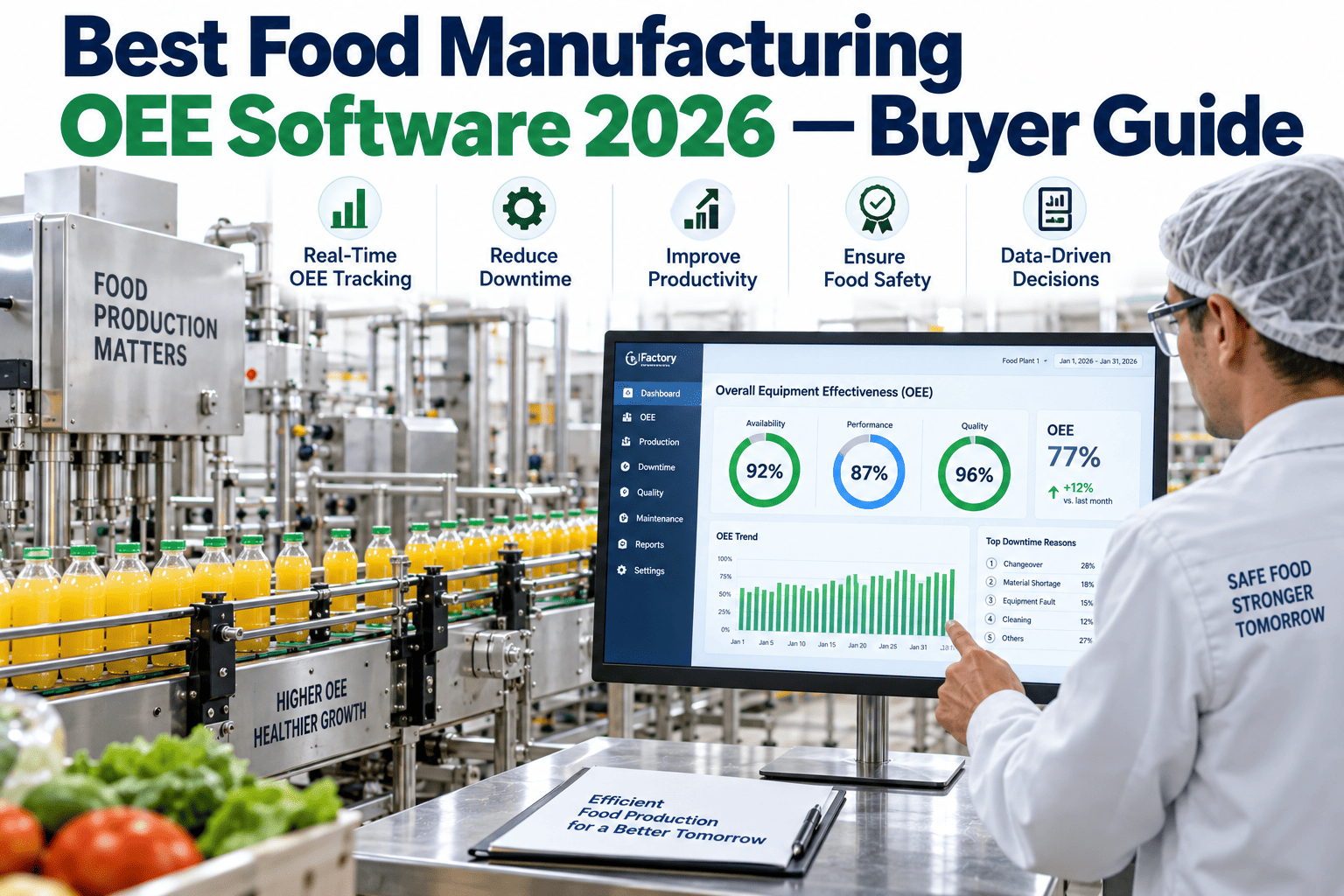
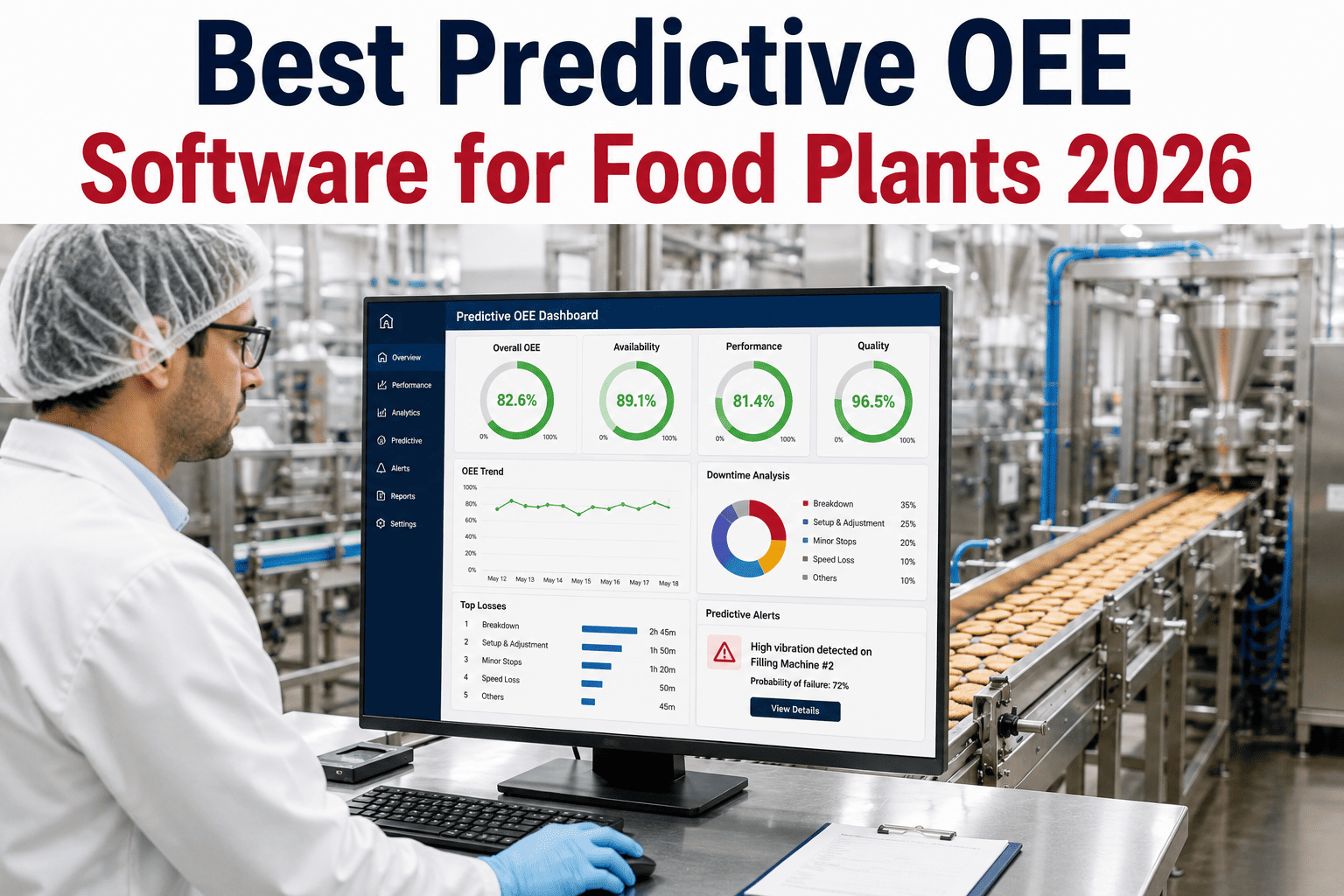
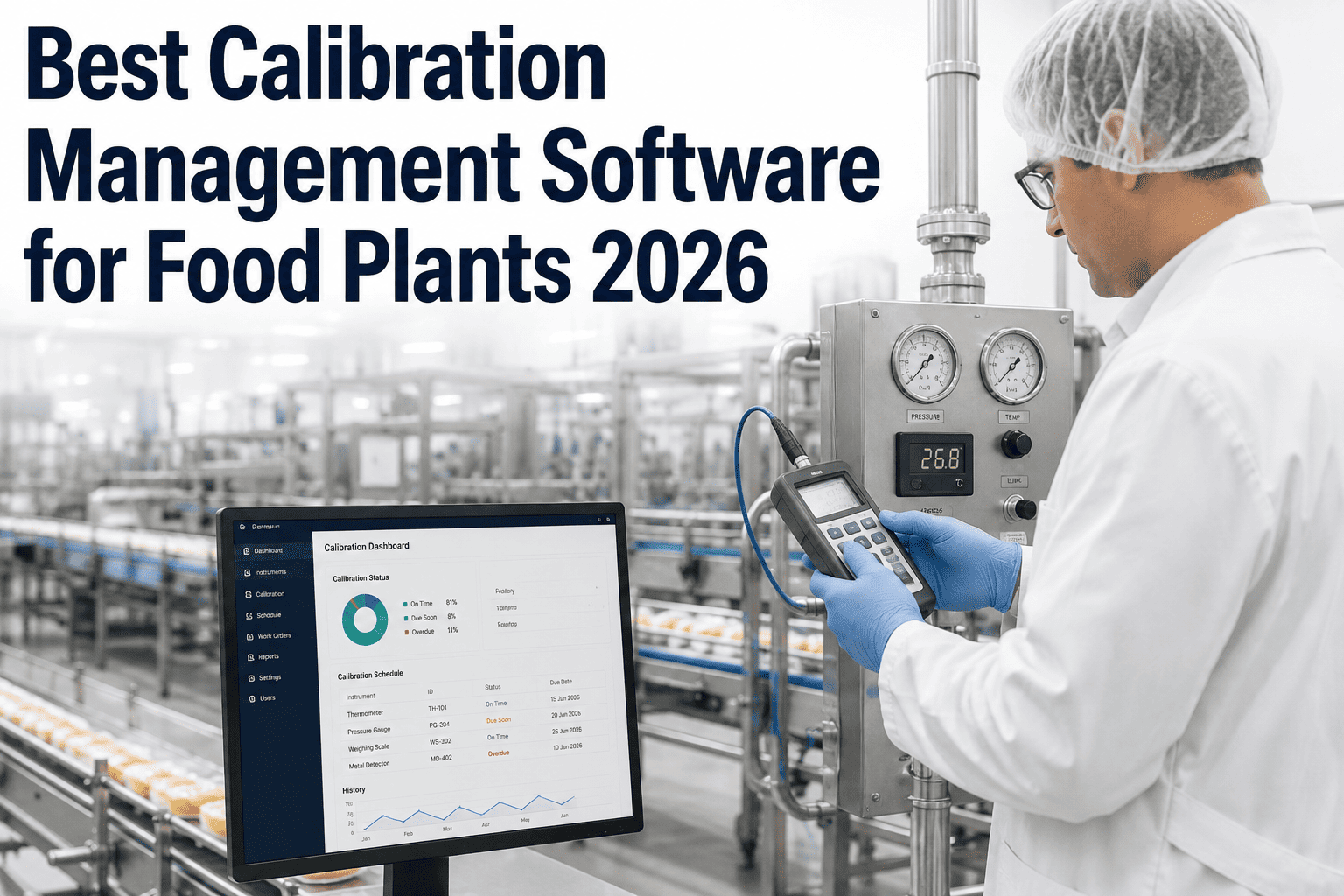
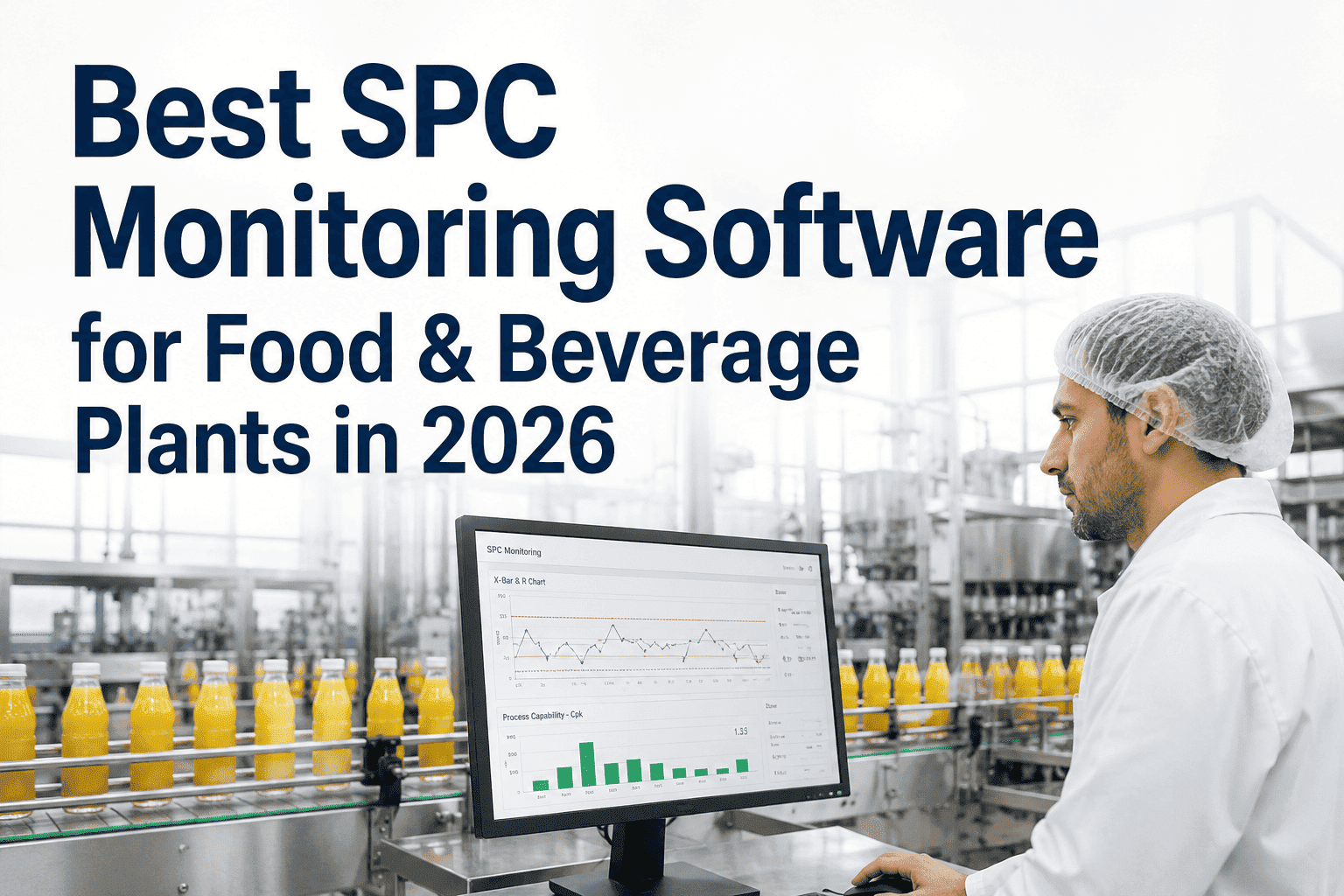
Most OEE software demos follow the same script: a clean dashboard, a handful of pre-loaded charts, and a confident walkthrough that never touches the messy realities of an actual food plant floor. The vendor controls every variable in that demo, which means the questions a buyer asks are the only thing standing between a polished sales pitch and a system that actually holds up against CIP cycles, allergen changeovers, and SKU-heavy packaging lines. Food production has enough operational quirks that a generic manufacturing OEE tool often looks fine in a demo and then quietly under-delivers once it meets a real production schedule. iFactory was built around the specific patterns of food and beverage operations, and this list of twenty demo questions is meant to help any buyer, evaluating us or anyone else, separate a real fit from a good presentation. If you would rather skip straight to the answers, you can book a demo and run this list against us directly.
BUYER'S GUIDE · DEMO EVALUATION · FOOD & BEVERAGE OEE
Twenty Questions That Separate A Real Fit From A Good Pitch
Use this checklist in your next OEE software demo to test micro-stop capture, CIP handling, changeover measurement, and SKU-level analytics against your actual production patterns.
5
Food-Specific Questions
4
Implementation Questions
WHY GENERIC DEMOS MISS THE POINT
A Manufacturing Demo Is Not A Food Plant Demo
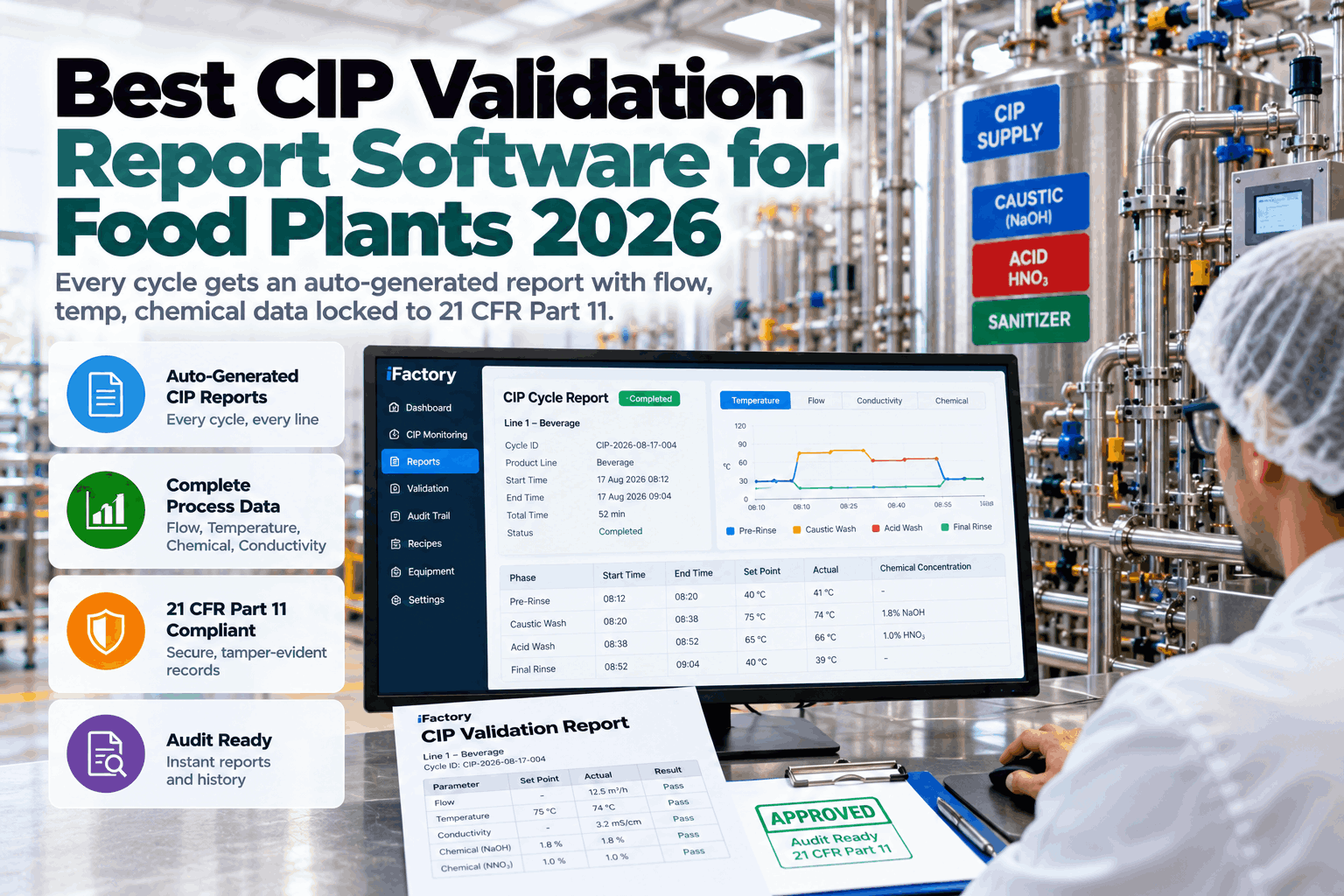
Most OEE platforms were originally built for discrete manufacturing, where a stop is a stop and a changeover means swapping a tool. Food plants deal with CIP cycles that are not downtime in the traditional sense, allergen changeovers that require a specific sequence, and micro-stops that repeat dozens of times a shift without ever showing up as a single large event. A demo that never surfaces these distinctions is not necessarily a bad product, but it is an incomplete evaluation.
40%+
Share of food plant downtime commonly hidden inside micro-stops under one minute
2-3x
Typical evaluation cycle length when the right demo questions are not asked upfront
6-9 mo
Average time to detect a poor OEE software fit after go-live without a structured evaluation
DATA CAPTURE QUESTIONS
Ask These Before Anything Else
Everything downstream in an OEE system depends on how cleanly and automatically the underlying data gets captured, so these questions belong at the very start of any evaluation.
01
How do you capture stops under 60 seconds?
Ask for a live example on a real filling or packaging line, not a slide describing the concept.
02
What happens when a PLC signal drops out mid-shift?
Ask how gaps in the data stream are flagged, backfilled, or excluded from OEE calculations.
03
Can operators reclassify a reason code after the fact?
Ask about the edit workflow and whether changes are logged for audit purposes.
04
How is manual data entry handled where automation is not feasible?
Ask what the operator-facing entry screen looks like and how fast it is to use mid-shift.
05
What protocols and controllers do you integrate with out of the box?
Ask for a specific list rather than a general claim of broad compatibility.
06
How long does raw data stay queryable at full resolution?
Ask about retention policy before data gets aggregated or archived.
Run This Full Checklist Against iFactory Live
Bring this list to your demo and we will answer every question against your own line data, not a canned example. Book a session and see it firsthand.
FOOD-SPECIFIC QUESTIONS
The Questions Generic Vendors Struggle To Answer
These questions target the parts of food and beverage production that discrete manufacturing tools were never designed around, and the quality of the answer here tends to predict the quality of the whole fit.
How is CIP time classified in OEE?
Ask whether CIP is separated from unplanned downtime and how that affects the availability calculation.
Can allergen changeovers be tracked as their own category?
Ask if allergen-specific changeover sequences and durations are reportable separately from standard changeovers.
How does the system handle SKU-level performance targets?
Ask whether ideal run rate adjusts automatically by SKU or requires manual reconfiguration each time.
Is shelf-life or batch traceability data connected to OEE events?
Ask whether quality holds and rework can be linked back to the specific downtime event that caused them.
SCORING YOUR DEMO
What A Strong Versus Weak Answer Looks Like
Not every answer needs to be perfect, but the pattern across all twenty questions tells you more than any single response. Use a simple scoring approach to compare vendors fairly.
| Signal |
Strong Answer |
Weak Answer |
| Micro-stops |
Live example on a real line, sub-minute capture shown |
General statement with no live demonstration |
| CIP handling |
Separate category with its own reporting view |
Lumped into general unplanned downtime |
| Integration |
Specific protocol and controller list provided |
Vague claim of universal compatibility |
| Implementation |
Clear timeline with named milestones |
No timeline offered until after contract signing |
WHO SHOULD BE IN THE ROOM
Bring The Right People To The Demo
The quality of a demo evaluation depends heavily on who is asking the questions, since different roles will catch different gaps in a vendor's answers.
Plant Or Operations Manager
Focuses on reporting structure, cross-line benchmarking, and how OEE ties to cost targets.
Shift Supervisors
Tests the operator-facing workflow for realism against actual shift pace and interruptions.
Quality Or Food Safety Lead
Pushes on CIP, allergen changeover, and traceability integration specifics.
IT Or Controls Engineer
Validates integration claims against your actual PLC and historian environment.
FREQUENTLY ASKED QUESTIONS
Common Questions About The Evaluation Process
How long should a proper OEE software demo take?
A demo thorough enough to cover data capture, food-specific handling, and analytics usually runs sixty to ninety minutes rather than a rushed thirty-minute overview, since rushing tends to skip exactly the questions that matter most for a food plant. It is reasonable to ask for a second, more technical session if the first covers only the high-level pitch.
Book a demo and we will structure the time around your checklist.
Should we ask for a demo using our own production data?
Yes, wherever possible, a vendor should be willing to walk through a sample export of your own PLC or historian data rather than relying entirely on a pre-built demo environment, since your real data will expose integration gaps a canned demo cannot. Not every vendor can do this on short notice, but the willingness to try is itself informative.
Contact our support team to arrange a session using your own sample data.
What if a vendor cannot answer a question during the demo?
An honest "we would need to check and follow up" is a reasonable answer to a specific technical question, and how quickly and thoroughly that follow-up arrives is itself part of the evaluation. What matters more is whether the vendor avoids the question entirely or redirects to an unrelated feature instead of addressing it.
Book a demo and hold us to a documented follow-up on anything we cannot answer live.
Is it worth involving IT this early in the evaluation?
Yes, waiting until after a vendor is selected to validate integration feasibility with IT or controls engineering is one of the more common causes of a stalled or failed rollout, since incompatibilities discovered late can force a restart of the entire evaluation. Involving that person in even one demo session tends to catch issues far earlier.
Contact our support team to schedule a technical-focused session for your controls team.
How many vendors should realistically be evaluated with this checklist?
Three to four vendors is usually enough to see meaningful contrast in answers without dragging the evaluation out for months, provided each demo is structured around the same question list so comparisons stay fair. Evaluating too many vendors tends to blur distinctions rather than sharpen them.
Book a demo to see how we compare against your shortlist.
Bring This Checklist To Your Next Demo
iFactory is built specifically around food and beverage production patterns, from CIP handling to sub-minute micro-stop capture. Book a demo and ask us every question on this list.